Key Moments
How this helicopter survived 1004 days on Mars, then disappeared...
 Veritasium
Want to know something specific about what's covered?
We've already dissected every moment. Ask and we will deliver (with timestamps).
Key Moments
Ingenuity helicopter's 3-year Mars mission: survival, tech advances, and lessons learned.
Key Insights
Ingenuity, built with off-the-shelf parts, exceeded its 30-day mission, flying for over 1000 days.
The helicopter faced extreme Martian conditions, including frigid temperatures, dust storms, and reduced sunlight, requiring constant adaptation.
Navigation challenges, particularly with visual odometry and communication delays, necessitated autonomous flight and software solutions.
Ingenuity's survival of extreme cold and component failures demonstrated the resilience of consumer-grade electronics in space.
The loss of Ingenuity led to an "air crash investigation" on Mars, revealing rotor blade procession as its fatal flaw.
Lessons from Ingenuity are guiding the development of future, more capable Mars helicopters like "Dragonfly."
A Skeptical Beginning and Unprecedented Success
(On Earth, Ingenuity weighs around 1800g, but on Mars, it's 680g.) NASA initially viewed Ingenuity, costing $80 million, as a modest technology demonstration with a strict 30-day mission. The project scientist himself opposed its inclusion, deeming it a distraction from core scientific goals. However, the ambitious team, working against skepticism and with a fraction of the budget of major Mars missions, successfully landed Ingenuity on Mars attached to the Perseverance rover on February 18, 2021. This marked the beginning of a mission that would far surpass all initial expectations, proving flight was possible on the Red Planet.
Conquering the Martian Atmosphere
Flying on Mars, with an atmosphere only 1% as dense as Earth's, presented immense challenges. Ingenuity's design prioritized being ultra-light, and its blades required spinning at over 2,400 RPM to generate sufficient lift. After rigorous system checks, Ingenuity achieved humanity's first powered flight on another planet on Sol 58, just 120 years after the Wright brothers' historic achievement on Earth. The initial success led NASA to extend its mission, tasking Ingenuity with assisting the Perseverance rover in scouting for signs of ancient life.
Navigational Hurdles and Autonomous Flight
The significant communication delay between Mars and Earth (at least 6 minutes round trip exceeding Ingenuity's 2-minute flight time) mandated autonomous flight. Ingenuity relied on a sophisticated navigation system using two cameras to identify surface features and track its movement, akin to how an optical mouse works on a surface. This visual odometry method, while innovative, encountered issues, such as a desynchronization error during flight six that caused severe wobbling, nearly leading to a crash. A late-addition color camera compounded this problem, but a software patch ultimately corrected the issue.
Enduring Extreme Martian Conditions
Ingenuity proved remarkably resilient against Mars' harsh environment. It survived extreme temperature fluctuations, plummeting to -85°C at night, which caused expansion and contraction of its components and could freeze battery electrolytes. Dust storms were another major threat, reducing solar panel efficiency by 18% and clogging mechanical parts. Despite these challenges, Ingenuity adapted, using heaters to maintain critical component temperature (consuming up to 75% of its battery power at night) and devising workarounds for stuck servos, demonstrating exceptional survivability.
The Unforeseen Demise and In-Depth Investigation
After over 70 successful flights, Ingenuity's mission concluded on flight 72. A previous hard landing (flight 71) due to a lack of identifiable landmarks in a dune-filled area damaged its navigation system. During the subsequent flight 72, while attempting to land after an ascent to scan surroundings, the damaged system led to a self-destruction event. The subsequent 'air crash investigation' on Mars revealed that the rotor blades, weakened by procession torque from the hard landing's forces, snapped at a critical stress point, leading to the helicopter's demise in a controlled crash.
Legacy and Future Martian Aviation
Despite its end, Ingenuity's legacy is profound. Its survival and operations proved the viability of heavier-than-air flight on Mars, paving the way for future missions. The lessons learned, particularly regarding rotor blade design and resilience in harsh environments, are directly informing the development of the next generation of Mars helicopters like 'Dragonfly,' which will be more capable, carry scientific payloads, and communicate directly with orbiters. Ingenuity's scrap of fabric from the Wright Flyer, now on Mars, symbolizes the continued human drive for exploration and innovation across planets.
Technological Resilience and Component Durability
A key aspect of Ingenuity's success was the unexpected resilience of its off-the-shelf components, including parts from smartphones like a Samsung Galaxy S5 processor and Google Pixel 3 sensors. These components, not designed for the harshness of space, proved surprisingly robust against cosmic rays and extreme temperatures. This finding challenges the traditional reliance on expensive, radiation-hardened parts, suggesting that selecting and testing batches of consumer-grade electronics could offer a more cost-effective approach for future space missions, significantly impacting the economics of space exploration.
Ingenuity's Post-Mission Role
Even after its final flight and crash, Ingenuity continues to contribute to Martian science. It is now functioning as an impromptu weather station, capturing daily photos and temperature measurements. This was entirely unplanned, highlighting the helicopter's remarkable durability and the unexpected scientific value that can be derived from long-lasting robotic missions. The team’s pride in Ingenuity’s accomplishments stems from its longevity and the extraordinary data it has provided under the most challenging conditions imaginable.
Mentioned in This Episode
●Products
●Software & Apps
●Organizations
●Books
●Concepts
●People Referenced
Common Questions
Ingenuity landed on Mars on February 18th, 2021, attached to the Perseverance rover.
Topics
Mentioned in this video
The smartphone model from which some of Ingenuity's sensors, including the IMU, were sourced.
Parts from an Android smartphone were used in the construction of Ingenuity.
The specific smartphone model whose processor was used in Ingenuity.
The next-generation Mars helicopter concept, designed with reinforced blades, six rotors, and direct communication capabilities.
The first helicopter designed to fly on another planet, made from off-the-shelf parts, which vastly exceeded its planned mission duration and capabilities.
More from Veritasium
View all 99 summaries 42 min
The Man Who Worked At Subway, Then Solved An "Impossible" Problem
 35 min
What Is Disrupting GPS Over Europe?
 30 min
How Does Google Maps Actually Work?
 22 min
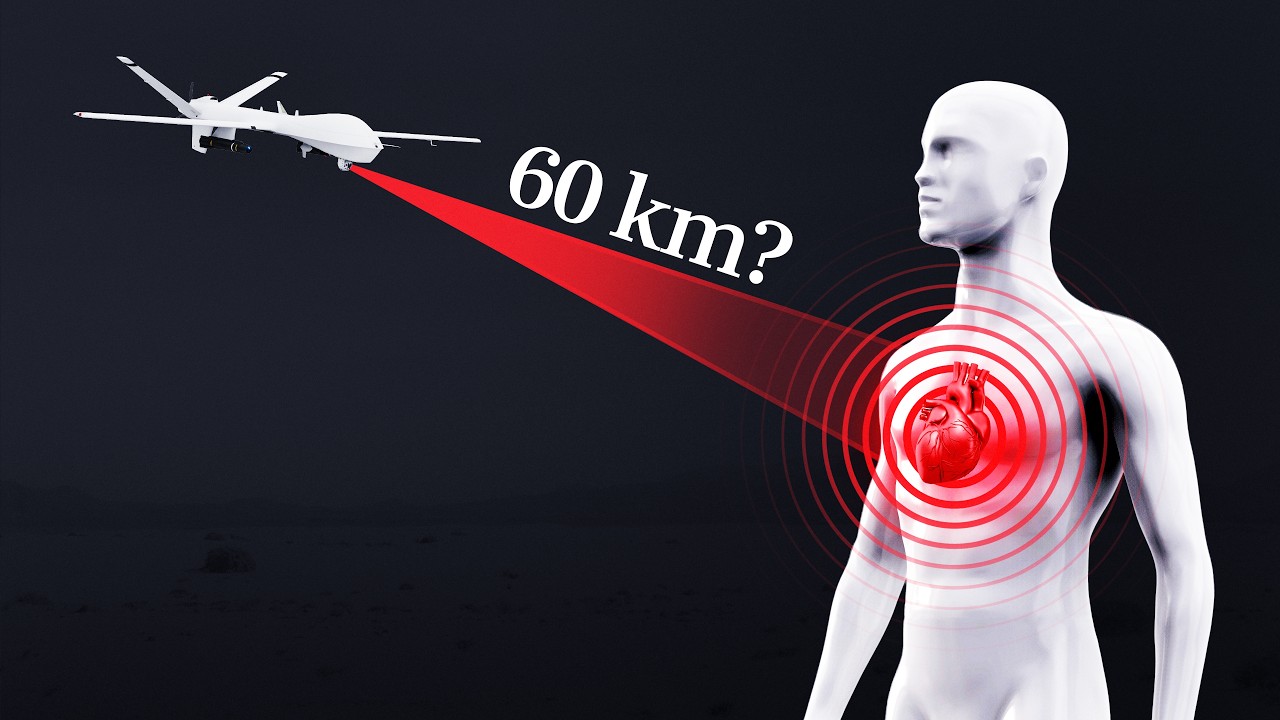
Can a quantum sensor detect your heartbeat from 60 km away?
Ask anything from this episode.
Save it, chat with it, and connect it to Claude or ChatGPT. Get cited answers from the actual content — and build your own knowledge base of every podcast and video you care about.
Get Started Free