Key Moments
How Does the War in Ukraine End?: A Conversation with Ian Bremmer (Episode #277)
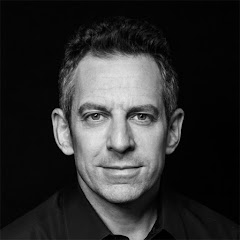 Sam Harris
Want to know something specific about what's covered?
We've already dissected every moment. Ask and we will deliver (with timestamps).
Key Moments
War in Ukraine reshapes global order, prolongs conflict, and tests Western unity against Russia's aggression.
Key Insights
The war in Ukraine signifies the end of the post-Cold War 'peace dividend' and is forcing a fundamental shift in European security priorities.
NATO's unity and decisive action, despite Ukraine not being a member, have surprised Russia and China, demonstrating a strengthened Western resolve.
While sanctions are significantly damaging Russia's economy, they are unlikely to force Putin's capitulation due to global economic divisions and support from countries like China and India.
The debate around regime change in Russia is complex; while many desire Putin's ouster, directly advocating for it risks escalating the conflict due to Putin's perceived cornered position.
Finding a feasible 'off-ramp' for Putin is extremely difficult, especially if Russia succeeds in annexing more Ukrainian territory, which would hinder future negotiations and sanctions relief.
Maintaining Western unity in the long term will be challenging as differing strategic interests emerge, particularly between nations seeking immediate de-escalation and those aiming for greater damage to Russia.
THE END OF THE PEACE DIVIDEND AND A EUROPEAN SECURITY SHIFT
The conversation highlights that the war in Ukraine marks the end of the 'peace dividend' enjoyed since the Cold War's conclusion. This era saw reduced defense spending and expanded European integration, but Putin's actions have shattered this paradigm. European nations, particularly Germany, are now prioritizing national security and defense, a generational shift analogous to 9/11 for Americans. This renewed focus on defense, driven by the immediate threat, is expected to solidify European security cooperation for the foreseeable future.
UNITED WESTERN RESPONSE AND ITS GLOBAL IMPACT
The robust response from NATO and Western allies, including unprecedented sanctions like freezing Russian central bank assets, has been a significant factor. This unified action, even for a non-NATO country like Ukraine, has surprised Russia and China, demonstrating a level of Western cohesion previously underestimated. The substantial military and intelligence support provided to Ukraine has been crucial in its defense, preventing a swift Russian victory and significantly weakening Putin's position.
THE COMPLEXITY OF SANCTIONS AND GLOBAL ECONOMIC DIVISIONS
While Western sanctions are inflicting severe economic damage on Russia, causing a projected GDP contraction of 10-15%, they are unlikely to force Putin's capitulation. This is due to significant economic ties and differing geopolitical alignments with major global players like China and India. Many developing nations continue to engage with Russia, and even China's trade, while reduced due to sanctions concerns, remains substantial enough to prevent Russia from becoming completely isolated.
THE IMPLICATIONS OF REGIME CHANGE TALK AND PUTIN'S POSITION
The discussion touches upon the debate surrounding regime change in Russia, particularly following President Biden's remarks. While many are eager for Putin's removal, directly framing the conflict as necessitating his ouster could be counterproductive. Putting Putin in a corner might incentivize extreme escalation, including the use of tactical nuclear or chemical weapons. Therefore, creating a potential 'off-ramp' is seen as crucial, though challenging to design without compromising Ukraine's sovereignty.
CHALLENGES IN FINDING A VIABLE 'OFF-RAMP'
Identifying a feasible 'off-ramp' for Vladimir Putin is one of the most significant challenges. His miscalculations regarding Western reactions and Ukrainian resistance have left him in a weakened, yet potentially more dangerous, position. An outcome where Russia annexes additional Ukrainian territory would make negotiations and sanctions relief nearly impossible, solidifying a protracted, unstable global order characterized by an angry, isolated Russia.
MAINTAINING LONG-TERM WESTERN UNITY
The initial unity displayed by Western nations is commendable but faces long-term challenges. As the conflict progresses, differing strategic viewpoints, particularly between nations seeking to cripple Russia and those desiring a swifter negotiated settlement, could create friction. The longer the war persists, the more these latent differences will surface, making it harder to maintain a cohesive strategy and achieve desired outcomes.
Mentioned in This Episode
●Products
●Organizations
●Books
●Concepts
●People Referenced
Common Questions
Ian Bremmer suggests the war is not heading towards a clear 'end' but rather a more unstable global order with an emboldened and isolated Russia. He notes that Putin's initial misjudgments have led to a worse position for Russia, but he is still likely to remain in power.
Topics
Mentioned in this video
Political scientist, founder of Eurasia Group, author, and guest on the podcast discussing the war in Ukraine.
The leader of China, whose alignment with Putin's worldview and China's economic relationship with Russia are discussed as significant factors in the global order.
Mentioned as an example of someone on the far-right who agrees with the idea that the US should not be involved in the conflict.
Mentioned as an example of someone on the far-left who agrees with the idea that the US should not be involved in the conflict.
The US President whose statements on regime change in Russia are discussed as a 'gaffe' that some believe inadvertently hardened Putin's position.
Mentioned as a previous podcast guest who advocated for a stronger stance against Putin.
The Russian President whose actions in Ukraine are central to the discussion, with his misjudgments and potential for escalation being key concerns.
Host of the Making Sense podcast, discussing the war in Ukraine.
The country at the center of the current war, its resistance, and its non-member status in NATO are discussed.
Its non-aligned stance, relationship with Russia (defense and energy), and its position relative to China and the Quad are discussed, highlighting the complexity of global allegiances.
A Ukrainian city that has been devastated and heavily contested during the war, serving as an example of the costly fighting.
The country waging war in Ukraine, its economic situation, military capabilities, and its global standing are discussed.
A NATO member state bordering Russia, mentioned in the context of collective security and the US commitment to defend its allies.
Used as a comparison for a potential future state for Russia if completely cut off from the West, though Bremmer argues Russia has too many resources to become like North Korea.
Mentioned in the context of the Cuban Missile Crisis, used as a historical parallel to potential future escalations related to the Russia-NATO conflict.
The eastern Ukrainian region where intense fighting is occurring and territorial control is crucial for negotiations and potential annexation by Russia.
Its global economic influence, alignment with Russia's worldview, and its trade relationship with Russia are discussed in the context of sanctions and the future world order.
An institution where Ian Bremmer was once a national fellow.
A political risk research and consulting firm founded by Ian Bremmer.
The EU's role in European security, its expansion, and its response to the war, including increased defense spending and energy diversification.
The North Atlantic Treaty Organization, its role in the conflict and its importance are discussed, particularly in contrast to Ukraine's non-member status.
Where a significant number of democracies voted to censure Russia, highlighting the global division on the issue.
The idea of providing a way for Putin to de-escalate or withdraw from the conflict without complete humiliation, which is discussed as difficult to find.
The idea of removing Putin from power, discussed in relation to Biden's controversial statement and the potential risks of such a policy.
The fear of a large-scale global conflict, including nuclear war, is a recurring theme that influences decision-making regarding the war in Ukraine.
The doctrine of military strategy and national security policy in which a full-scale use of nuclear weapons by two or more opposing sides would cause the complete annihilation of both the attacker and the defender.
The Quadrilateral Security Dialogue, an informal strategic forum involving India, the US, Japan, and Australia, is mentioned in the context of India's foreign policy alignments.
The period of reduced military spending and perceived lower geopolitical risk following the collapse of the Soviet Union, which is now considered over due to the war in Ukraine.
More from Sam Harris
View all 300 summaries 34 min
Is Psychedelic Therapy Ready for FDA Approval?
 26 min
You Lose Interest the Moment You Realize It's AI
 28 min
Michael Pollan on Consciousness, Psychedelics, and the Limits of Neuroscience
 22 min
Why the Stock Market Has Become a Casino
Ask anything from this episode.
Save it, chat with it, and connect it to Claude or ChatGPT. Get cited answers from the actual content — and build your own knowledge base of every podcast and video you care about.
Get Started Free