Key Moments
HERESIES — Exploring Animal Communication, Cloning Humans, The Dangers of The American Dream, & More
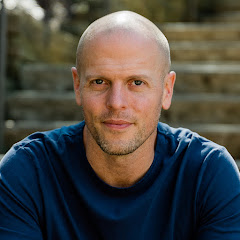 Tim Ferriss
Want to know something specific about what's covered?
We've already dissected every moment. Ask and we will deliver (with timestamps).
Key Moments
Heresies explored: teaching listening over talking, overrated constitutions, the American Dream's pitfalls, and human cloning. (184)
Key Insights
Effective listening is a learnable skill that needs more emphasis than public speaking or debating.
Written constitutions can be overrated, as their rigidity may hinder adaptation, and unwritten traditions or customary law might be more resilient.
The modern American Dream, with its emphasis on individualistic success and strict timelines, contributes to social isolation, mental health issues, and disillusionment, particularly for young men.
Advancements in AI, sensory augmentation, and potentially psychedelics could enable meaningful communication with animals within five years, revolutionizing our understanding and ethical considerations.
Human cloning, while facing taboos, is ethically sound, akin to natural twinning, and should be an available option rather than prohibited, though regulation would be necessary.
The concept of 'heresy' as a personal, independently arrived-at belief that challenges one's social circle is a valuable tool for cultivating independent thought.
THE POWER OF LISTENING OVER TALKING
Josh posits that societies overemphasize teaching public speaking and debating, while neglecting the crucial skill of listening. This 'heresy' suggests that meaningful relationships and understanding are built on effective listening, which is often treated as an innate talent rather than a teachable skill. The discussion highlights active listening techniques, such as empathy and curiosity, as essential for bridging divides and fostering genuine connection, even amidst disagreement.
CONSTITUTIONS: WRITTEN WORDS VS. LIVING AGREEMENTS
Noah argues that written constitutions are overrated, drawing parallels to personal contracts and even marriage vows. He suggests that the emphasis on fixed written texts can hinder adaptation and that real agreements are maintained through mutual willingness and evolving social dynamics. Examples like the unwritten British constitution and the wampum belts of the Haudenosaunee Confederacy illustrate how governance can persist and adapt through living traditions and shared understanding, rather than rigid documentation.
THE AMERICAN DREAM'S TOXIC CULTURAL IMPACT
Maggie's heresy asserts that the modern American middle-class culture, particularly its version of the 'American Dream,' is detrimental. This cultural brand, emphasizing leaving home early, nuclear families in anonymous suburbs, and relentless individual achievement, leads to social isolation, anxiety, and a sense of failure, especially for young men. The discussion points to a disconnect from community and a focus on superficial metrics eroding well-being and contributing to societal dysfunction.
THE ETHICS AND POTENTIAL OF ANIMAL COMMUNICATION
Tim shares a forward-looking heresy: within five years, meaningful communication with animals will be possible through AI, sensory augmentation, and possibly psychedelics. This could profoundly impact animal rights and consumption habits. While acknowledging the potential for polarization and manipulation of this technology, the conversation explores how enhanced understanding of animal sentience could shift ethical paradigms and encourage more plant-based or synthetic diets.
HUMAN CLONING: A MATTER OF CHOICE AND VARIATION
Kevin's heresy champions the ethical acceptability of human cloning, drawing a parallel between serial clones and naturally occurring twins. He argues that prohibition stems from unfounded fears and that cloning should be an available option, subject to regulation rather than outright ban. The discussion delves into the potential for human cloning to bring back lost loved ones, the inherent genetic variation even in twins, and the risks of eugenics or creating societal stratification through selective cloning.
THE VALUE OF CULTURAL ROOTS AND COMMUNITY
A recurring theme, particularly in Maggie's and Josh's contributions, is the erosion of community and the importance of place-based identity. They advocate for celebrating localized employment opportunities and strong interpersonal networks over forced mobility or the pursuit of a standardized American Dream. This perspective contrasts with the potential downsides of globalization and highlights the benefit of multi-generational living and deep-rooted community bonds for individual well-being.
Mentioned in This Episode
●Products
●Organizations
●Drugs & Medications
●People Referenced
Common Questions
A heresy, in this context, is a belief held by an individual that people they most admire or their social circle would disagree with or find shocking. It represents an independently arrived-at idea, not something inherited or absorbed passively.
Topics
Mentioned in this video
Referenced in the context of 'Utopia' when discussing the ideal scenarios proposed in the heresy discussions.
Journalist who pointed to research related to MDMA for social anxiety, which is suggested as a compound that could facilitate sensory augmentation for communication.
Researcher whose work on using AI and machine learning to decode and produce animal communication, particularly with whales and dolphins, supports the heresy about meaningful animal communication.
Neuroscientist whose work on sensory augmentation, such as suits for blind or deaf individuals that provide tactile feedback, is cited as a potential vehicle for animal communication.
Author who wrote an article called 'The Intelligent Plant' in The New Yorker, cited in the discussion about plant sentience and its ethical implications for plant-based diets.
Famous sprinter, used as an example of a 'super successful' person who might be cloned to create an elite class.
Former US President, mentioned in the context of contrasting regional perceptions and how stereotypes (e.g., 'con man snake oil salesman from New York') can be challenged by personal experience.
Fictional character from 'Mad Men', used as an archetype for the 'American dream' and the toxic individualism that Maggie's heresy criticizes.
An article written by Michael Pollan in The New Yorker in 2013, discussing the potential sentience and sensitivity of plants.
A book by Dr. Seuss, invoked as a symbol of environmental advocacy and the potential politicization of animal and plant communication.
A science fiction film mentioned in the context of cloning, representing the fear of creating an elite class based on genetic engineering and the potential for a dystopian society.
More from Tim Ferriss
View all 700 summaries 88 min
The Legendary Hollywood Power Broker — Guy Oseary on 36 Years of Managing Madonna, 26 IPOs, and More
 77 min
The Many Benefits of Coca — The “Divine Leaf” with 8,000+ Years of Use
 100 min
Inside The AI Race: DeepMind, OpenAI, Anthropic, China, and The Race to Superintelligence
 108 min
The Path from The Soviet Union to Building Multi-Billion Dollar Companies — Max Levchin
Ask anything from this episode.
Save it, chat with it, and connect it to Claude or ChatGPT. Get cited answers from the actual content — and build your own knowledge base of every podcast and video you care about.
Get Started Free