Key Moments
Greg Lukianoff: Cancel Culture, Deplatforming, Censorship & Free Speech | Lex Fridman Podcast #397
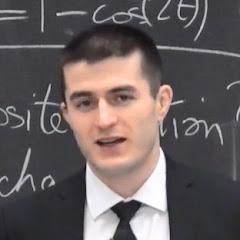 Lex Fridman
Want to know something specific about what's covered?
We've already dissected every moment. Ask and we will deliver (with timestamps).
Key Moments
Free speech is vital for knowledge; cancel culture harms discourse, driven by fear and poor rhetorical tactics.
Key Insights
Cancel culture, defined as campaigns to get individuals fired or de-platformed for speech, has significantly increased since 2014, creating a climate of fear.
Freedom of speech is intrinsically linked to the pursuit of knowledge and scientific advancement, as it allows for the testing of ideas and the discovery of ignorance.
The First Amendment's principles, particularly viewpoint discrimination, offer a robust framework for understanding and defending free speech, even beyond legal application.
Cancel culture manifests on both the left and the right, though it is more prevalent in academia, and impacts various sectors, including K-12 education and professional spheres.
The rise of cancel culture is exacerbated by flawed rhetorical tactics like 'whataboutism' and 'straw manning,' which dismiss arguments rather than engaging with their substance.
Universities, particularly elite institutions, suffer from a lack of viewpoint diversity, contributing to an environment where censorship and de-platforming are more likely.
While hate speech is a difficult category, banning it is seen as a dangerous precedent, potentially enabling broader government control over speech and hindering the pursuit of truth.
Technological advancements like social media, while democratizing information, also amplify cancel culture and require cultural adaptation for healthier discourse.
The solution lies in fostering intellectual humility, curiosity, and high-integrity discourse, rather than succumbing to fear or punitive measures.
The historical parallels with the printing press and the Red Scare highlight the long-term benefits of free expression, despite short-term disruptions and anxieties.
THE RISE AND DEFINITION OF CANCEL CULTURE
Cancel culture, as defined by Greg Lukianoff, refers to campaigns initiated around 2014 to have individuals fired, expelled, or de-platformed for speech that would typically be protected. This phenomenon has created a pervasive climate of fear, where holding an unpopular opinion can lead to severe professional repercussions. The term, while often abused, describes a tangible increase in these actions, observed across various institutions, particularly in academia. This shift is not subtle; it represents a significant change in how public discourse and professional accountability are perceived and enacted.
FREEDOM OF SPEECH AS A FOUNDATION FOR KNOWLEDGE
Lukianoff emphasizes the profound connection between freedom of speech and the advancement of human knowledge. He argues that true understanding of the world necessitates knowing what people genuinely think, and suppressing speech deprives us of this crucial data, leading to 'preference falsification.' This, in turn, creates an inaccurate picture of reality, potentially fueling misconceptions and biases. The historical parallel with the Scientific Revolution and the Enlightenment underscores how open inquiry and the challenging of accepted norms are essential for intellectual progress and the discovery of ignorance.
THE FIRST AMENDMENT AS A MODEL FOR FREE EXPRESSION
As a First Amendment attorney, Lukianoff posits that this amendment embodies a core ideal: to eliminate reasons for human conflict based on opinion and belief. While the First Amendment legally protects against government censorship, its principles, such as the prohibition of viewpoint discrimination, offer a pragmatic framework for free speech culture more broadly. This involves not just allowing speech but valuing the robust exchange of ideas, even controversial ones, as essential for a healthy intellectual environment.
CANCEL CULTURE'S MANIFESTATIONS AND IMPLICATIONS
Cancel culture is not confined to one political ideology; it impacts both the left and the right, though its prevalence in academia is notable. This includes attempts to ban books, restrict topics in higher education (like Florida's 'Stop Woke Act'), and punish professors. The expansion of these dynamics to K-12 education and administrative overreach in universities highlights the pervasive nature of this challenge. The consequences extend beyond individual reputations, potentially reshaping societal norms and chilling intellectual exploration.
RHETORICAL TACTICS AND THE EROSION OF TRUTH
Lukianoff details 'cheap rhetorical tactics' used to 'win arguments without winning arguments.' These include 'whataboutism,' which deflects criticism by pointing to others' wrongdoings, and 'straw manning,' misrepresenting opposing views. The 'perfect rhetorical fortress' of the left and the 'efficient rhetorical fortress' of the right are analyzed as mechanisms to dismiss rather than engage with ideas. These tactics, amplified by social media's virality, consume intellectual energy, hinder progress towards truth, and can ruin lives through relentless criticism and misrepresentation.
THE ACADEMIC ENVIRONMENT AND LACK OF DIVERSITY
A significant concern is the lack of viewpoint diversity in many university departments, creating 'sacred ideas' and making dissent difficult. This homogeneity, particularly in elite institutions, contributes to more successful attempts to punish professors and censor speech. Data shows a substantial increase in professors being targeted and fired, numbers comparable to or exceeding those during the Red Scare, but occurring in an era with stronger legal protections for speech. This environment fosters self-censorship among both students and faculty.
DEI INITIATIVES AND THEIR COMPLEX IMPACT
While Diversity, Equity, and Inclusion (DEI) initiatives often stem from good intentions to foster understanding, their implementation can inadvertently divide rather than unite. Some DEI frameworks, influenced by critical race theory, can lead to alienation and the imposition of ideological litmus tests in hiring and admissions. This can exacerbate the problem of viewpoint homogeneity, creating an environment where only certain ideas are sanctioned, effectively policing thought and expression, and undermining academic freedom.
THE CHALLENGE OF HATE SPEECH AND THE PURSUIT OF TRUTH
The concept of 'hate speech' as an unprotected category is a significant innovation with academic origins, aimed at banning offensive speech. However, Lukianoff argues that banning speech based on offensiveness is subjective and dangerous, potentially providing governments with a broad tool for censorship. Instead, he advocates for a 'pure informational theory' of free speech, where open discourse, even with offensive ideas like white supremacy, is crucial for understanding and ultimately combating falsity and moving towards truth, drawing parallels to figures like Daryl Davis who de-radicalized KKK members through engagement.
SOCIAL MEDIA, TECHNOLOGY, AND CULTURAL ADAPTATION
The advent of technologies like the printing press and now social media presents unavoidable periods of 'epistemic anarchy' characterized by disruption and misinformation. While these platforms can amplify cancel culture, they also offer unprecedented opportunities for knowledge dissemination and problem-solving. The challenge lies in culturally adapting to these tools, developing mechanisms for higher integrity discourse, and moving beyond the 'cat videos and canceling' phase to harness their potential for intellectual progress and societal benefit.
BUILDING A CULTURE OF FREE SPEECH AND HIGH INTEGRITY
Combating cancel culture requires cultivating curiosity, intellectual humility, and a willingness to engage with views one dislikes. This involves creating alternative pathways for demonstrating excellence beyond elite institutions, fostering streams for creative problem-solving, and encouraging critical engagement with information. The example of Wikipedia, despite its biases, demonstrates the potential for collective intelligence when editors declare their biases and strive for accuracy. The ultimate goal is to develop an environment where integrity is valued, and truth can be pursued through open, rigorous debate.
PERSONAL STRUGGLES WITH DEPRESSION AND THE CULTURE WARS
Lukianoff shares his personal battle with depression, exacerbated by the intense pressures of the culture war and the internal conflicts it generated. He highlights the effectiveness of cognitive behavioral therapy in managing internal catastrophizing and overgeneralization. This personal experience fuels his commitment to free speech, as he witnessed firsthand how societal pressures and the demand for ideological conformity can take a severe psychological toll, sometimes leading to tragic outcomes like the suicides of individuals targeted by cancellation campaigns.
THE IMPACT OF CANCELLATION AND THE CRUELTY OF DISCOURSE
The pain caused by cancellation, even without job loss, can be profound, impacting individuals through online harassment and personal attacks. This cruelty, often justified in the name of social justice, can lead people to become the worst versions of themselves. The notion that 'words can hurt' is a stark reality, and the ease with which people can be targeted on the internet underscores the need for greater empathy and a recognition of the real human beings behind abstract causes. This pervasive negativity erodes faith in humanity and hinders constructive dialogue.
HOPE FOR THE FUTURE: CULTURAL ADJUSTMENT AND INTEGRITY
Despite the current challenges, hope for the future lies in the growing weariness with censorship and inauthenticity. Lukianoff believes that cultural adjustments, rather than top-down regulations, are key. This includes fostering intellectual curiosity, promoting high-integrity discourse on platforms like X, and developing new ways to demonstrate excellence and solve problems. By valuing integrity and truth-seeking, society can navigate the current anarchical period and eventually harness technology's power for positive societal change and deeper human understanding.
Mentioned in This Episode
●Products
●Software & Apps
●Companies
●Organizations
●Books
●Concepts
●People Referenced
Common Questions
Greg Lukianoff defines cancel culture as an uptick in successful campaigns, starting around 2014, to get people fired, expelled, or de-platformed for speech that would normally be protected by First Amendment norms. It also encompasses the resulting climate of fear that people can lose their jobs for holding the 'wrong opinion'.
Topics
Mentioned in this video
Book written by Greg Lukianoff in 2014.
Book from 2015 that documented the phenomenon of public shaming.
Religious text Greg plans to read.
Book by Evan Mandery exposing how elite higher education replicates class privilege.
Book written by Greg Lukianoff.
Book of the Bible mentioned by Greg as unexpectedly engaging.
New book by Greg Lukianoff and Rikki Schlott, providing a definitive account of cancel culture's history, present, and future.
Ranked number one in FIRE's college free speech rankings.
Ranked poorly in FIRE's college free speech rankings.
Prestigious university that did really well in FIRE's college free speech rankings.
College where Sam Abrams faced attempts to be fired.
Ranked number two in FIRE's college free speech rankings.
Ranked poorly in FIRE's college free speech rankings.
Ranked poorly in FIRE's college free speech rankings, identified as having a 100% success rate of de-platforming attempts.
Friend of Greg Lukianoff who faced attempts to get him fired at Sarah Lawrence College.
Author of 'So You've Been Publicly Shamed', documenting the phenomena of public shaming around 2015.
Protege of Harvey Silverglate and former Dean of Stanford Law School, who recommended Greg Lukianoff to FIRE.
Free Speech Advocate, First Amendment attorney, President and CEO of FIRE, and author.
Co-founder of FIRE and a leading expert on the Enlightenment, particularly Voltaire.
Author of a book on Buddhism, discussed in the context of using social media from a Buddhist perspective.
Political strategist quoted on cancel culture in 'The Canceling of the American Mind'.
Runs an invite-only conference called 'Dialogue' to bring people across the political spectrum together for off-the-record conversations.
Author of 'Poison Ivy'.
Co-author with Greg Lukianoff of 'The Canceling of the American Mind', described as a 23-year-old genius journalist.
Critic of FIRE's de-platforming database, arguing it restricts student protest.
Famous civil liberties attorney and co-founder of FIRE.
Fifth Circuit Judge who was shouted down at Stanford Law School.
Legal director of FIRE, co-wrote about free speech challenges on Facebook.
More from Lex Fridman
View all 553 summaries 193 min
Khabib Nurmagomedov: Dagestan, MMA, UFC, Islam, Conor, Fedor & Football | Lex Fridman Podcast #500
 227 min
Gary Gallagher: American Civil War, Slavery, Lincoln, Grant & Lee | Lex Fridman Podcast #499
 232 min
The Rise and Fall of the Roman Empire and the Byzantine Empire | Lex Fridman Podcast #498
 174 min
Biggest Mysteries in Physics: Antimatter, Dark Energy & ToE - Don Lincoln | Lex Fridman Podcast #497
Ask anything from this episode.
Save it, chat with it, and connect it to Claude or ChatGPT. Get cited answers from the actual content — and build your own knowledge base of every podcast and video you care about.
Get Started Free