Key Moments
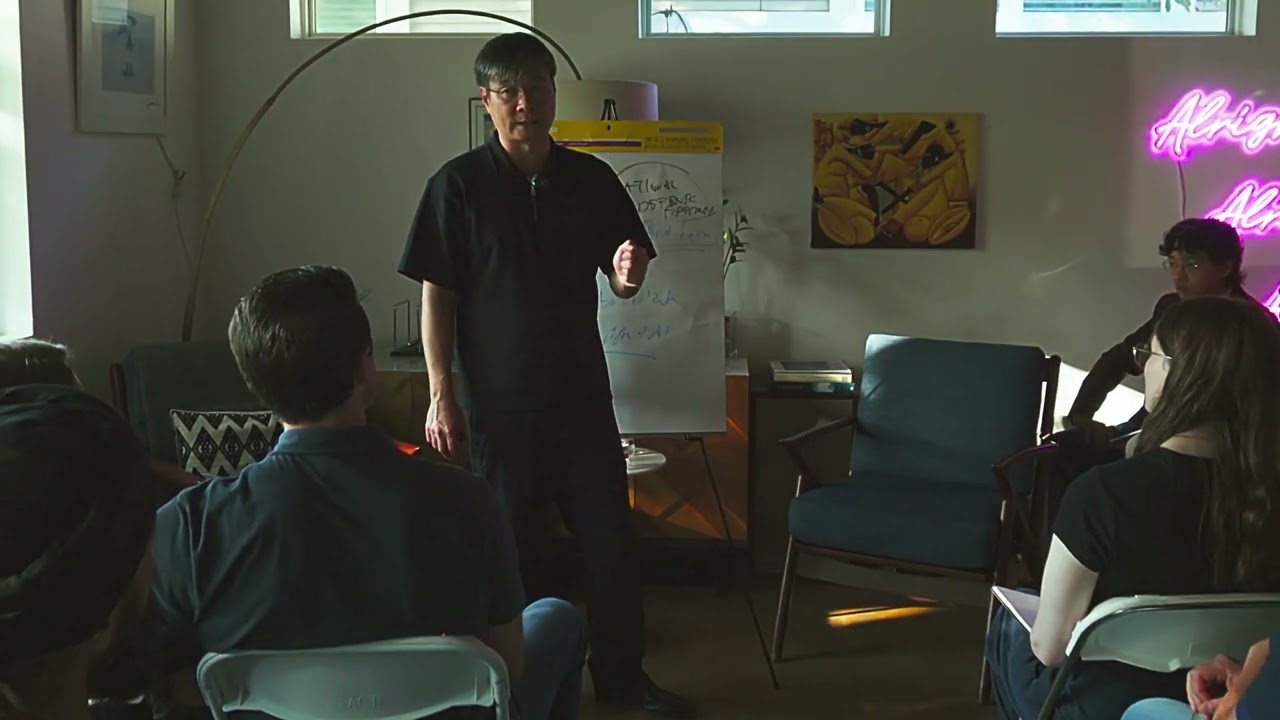
Global Meet-Up #6 (Montreal): The Supremacy of Sin
 Predictive History
Key Moments
The elite amass power not through intelligence or hard work, but through a profound capacity for sin, which Sabbatean-Frankism reinterprets as a path to redemption, justifying their actions as divinely ordained.
Key Insights
The elite's "superpower" is their amorality and capacity to sin without guilt, which allows them to accumulate wealth and power far beyond that of ordinary individuals.
Sabbatean-Frankism offers a philosophical framework that reframes sin not as a transgression, but as a necessary step towards redemption and fulfilling a divine mission.
The Protestant Reformation's emphasis on predestination and the pursuit of wealth as a sign of divine favor paved the way for modern capitalism, creating a void that Sabbatean-Frankism later filled for Jewish capitalists.
The manipulation of young women (aged 14-17) on Jeffrey Epstein's island was framed as an attempt by powerful billionaires to find love and resolve the contradiction between power and genuine affection, leveraging their malleability.
The core tenet of Sabbatean-Frankism is that sin is not a hindrance but a tool for achieving the end times and bringing God to Earth, liberating the elite from moral constraints.
The movement of ideas, particularly Sabbatean-Frankism, has infiltrated various institutions and ideologies, including Freemasonry and the concept of AI as a divine force, driving historical change unconsciously.
The psychology of power and the 'superpower' of sin
The lecture begins by positing that individuals who amass extraordinary power, wealth, and fame—such as billionaires and political leaders—do so not because they are inherently smarter or more hardworking, but because they possess a greater capacity for amorality and sin. This is illustrated through a thought experiment where individuals are offered increasing sums of money to commit a violent act. While most people freeze due to moral or conscious inhibitions, the elite can act without such constraints. This capacity to sin is framed as their "superpower," enabling them to bypass conventional limitations and accumulate dominance. However, this superpower also generates anxiety, prompting a need for a philosophical or religious framework to rationalize their actions and find others like them to consolidate power.
Sabbatean-Frankism: A religion of sin and redemption
The core ideology discussed is Sabbatean-Frankism, presented as the religion of the elite. This movement provides a justification for the elite's actions by reframing sin. Instead of being a transgression, sin becomes a path to redemption and a necessary component of a divine mission to usher in the end times. Sabbatean-Frankism claims that by committing sin, particularly through actions that would be considered immoral by conventional standards, one is actively working towards God's plan and ultimately bringing about a perfected world. This ideology liberates the elite from guilt and anxiety, allowing them to pursue power and control without moral hesitation, as their actions are reinterpreted as fulfilling a higher purpose.
The historical roots of capitalism and the void filled by Sabbatean-Frankism
The lecture traces the historical development of capitalism, starting with Max Weber's argument that the Protestant Reformation, particularly Calvinism, fostered a capitalist ethos. The emphasis on predestination and the pursuit of wealth as a sign of divine favor led individuals to accumulate and invest money rather than spend it on social status or charity. This created a secularized pursuit of wealth. However, this explanation was seen as incomplete, lacking a parallel for Jewish capitalists. Sabbatean-Frankism is then presented as the ideology that filled this void within the Jewish diaspora, offering a similar philosophical justification for wealth accumulation and power, albeit through a different theological lens rooted in Kabbalistic interpretations. This dual ideological foundation—Protestantism for Christian capitalists and Sabbatean-Frankism for Jewish capitalists—is argued to underpin the modern global financial system.
The Kabbalah and the cosmic reassembly of God's sparks
The lecture delves into the Kabbalah, a mystical tradition within Judaism, explaining its hermetic philosophy that views the material world as an illusion and energy/consciousness as reality. It posits that God, an infinite source, retreated into himself, creating a broken vessel (Adam Kadmon) that shattered into "sparks of light" scattered throughout the universe. The purpose of existence, according to this view, is to redeem these sparks and reassemble the vessel to bring God back to Earth (Tikkun Olam). This cosmic narrative is interpreted to mean that Jews are these sparks, and the Messiah's role is to find them, even if it requires conversion to other religions to infiltrate and gather them. This concept is used to explain the actions of figures like Sabbatai Zevi and Jacob Frank, who seemingly embraced or converted to other faiths as part of this grander, redemptive mission.
The elite's quest for love and control: The Epstein Island case study
Jeffrey Epstein's island operations are analyzed through the lens of Sabbatean-Frankism, suggesting that the elite seek not just power but also love. The contradiction between immense power and genuine affection is a significant problem for billionaires, as it's difficult to discern true love amidst adulation. The targeting of young, malleable women (14-17 years old) on the island is presented as a strategy to engineer affection and control, rather than genuine love. This suggests that the elite's perceived 'sins' and exploitative behaviors are partly driven by a profound loneliness and a misguided attempt to resolve the inherent conflict between their power and their desire for connection.
Sabbatean-Frankism's infiltration and impact on global institutions
The lecture argues that Sabbatean-Frankism has infiltrated various powerful institutions, including the Vatican, Freemasonry, and even elements of modern financial systems. The Freemasons, with their emphasis on reason and building a "temple of reason," are seen as attempting to create a perfectly ordered society through logic and mathematics. The emergence of AI is framed as the ultimate realization of this goal: to transform humanity into perfect, controllable "cubes of reason." This infiltration is not necessarily conscious or overt, but rather the adoption of underlying ideas and motivations that align with the Sabbatean-Frankist worldview—that control, power, and a redefinition of sin are paramount for achieving a grander purpose.
The individual's role in a world of 'NPCs' and spiritual warfare
The speaker emphasizes that individuals have free will and can choose to resist the dominant, often materialistic and power-driven, ideologies. The concept of being a "spark of light" or a "true human" is central, suggesting that personal consciousness, love, generosity, and imagination are the true powers that counter the elite's pursuit of sin-driven control. The speaker advocates for non-compliance with systems that enforce conformity, particularly schooling, and for focusing on family and personal spiritual growth. The overarching message is that while spiritual forces and a cosmic battle between good and evil exist, individuals can choose their allegiance, and that a life lived with love and consciousness is the most powerful resistance against forces that seek to control and dehumanize.
The nature of sin and the elite's inherent disposition
The lecture clarifies that the elite's capacity for sin is not necessarily a conscious choice to be evil, but an inherent disposition akin to psychopathy, where they lack the typical moral compass and guilt that inhibit most people. They don't feel regret for their actions, allowing them to operate without the anxiety that sin typically causes. While conventional morality dictates that sin leads to negative consequences, Sabbatean-Frankism reframes this: for the elite, sin is a pathway to greater power and a means to fulfill a perceived divine mission. This perspective challenges the notion of a simple good versus evil dichotomy, suggesting a more complex interplay where perceived 'evil' actions by the elite are justified within their ideological framework as necessary steps towards a greater, albeit controversial, end goal.
Mentioned in This Episode
●Products
●Software & Apps
●Companies
●Organizations
●Books
●Concepts
●People Referenced
Common Questions
The speaker argues that the elite's superpower is their capacity to sin, meaning they are more amoral and can commit acts without feeling guilt or conscience, enabling them to accumulate more power, wealth, and fame.
Topics
Mentioned in this video
Mentioned as an example of an elite individual with power, fame, and wealth, whose psychology is discussed in the context of sin as a superpower.
Mentioned as an example of an elite individual with power, fame, and wealth, whose psychology is discussed in the context of sin as a superpower.
A famous German sociologist, considered the father of sociology, who wrote 'Capitalism and the Protestant Work Ethic', arguing that the Protestant Reformation enabled capitalism.
Mentioned as an influential figure the speaker studies to understand how prophets in the next era might think and act.
Mentioned as an example of an elite individual who possesses the 'superpower to sin' and is unique in their capacity for amorality.
Considered the reincarnation of Sabbatai Zevi, he converted to Catholicism and instructed his followers to infiltrate various religions to find 'sparks of light' and bring about eternal peace.
Mentioned as an example of an elite individual who possesses the 'superpower to sin' and is unique in their capacity for amorality.
A key figure in the Protestant Reformation who created Calvinism, a theological system emphasizing double predestination to counter the Catholic Church's power.
Mentioned as a Jewish banking family who became followers of Sabatean Frankism, benefiting from its ideology to justify their wealth and power.
Mentioned as an example of a public figure often associated with Jeffrey Epstein, but the speaker dismisses the blackmail theory in favor of the Frankist explanation.
Cited as an example of a successful entrepreneur who, in a different era, would have been considered a prophet due to his storytelling, messianic mission, and energetic vision.
Discussed as a figure in the AI industry whose superpower is not programming skill but rather the capacity to 'cheat, lie, and steal' to achieve his goals.
A key figure in the Protestant Reformation who opposed the corruption of the Catholic Church.
The author of the Zohar in the 13th century, which became the basis of the Cabala.
Mentioned as an influential figure who the speaker studies to understand how prophets in the next era might think and act.
Presented as a figure assembling dictatorial power to serve the interests of the British Empire and the City of London, exemplified by his political maneuvers in Canada.
His work on sex magic is discussed in the context of Kabbalah and Jewish beliefs about sexual energy, thesis/antithesis/synthesis, and manifestation.
An Enlightenment philosopher whose ideas of natural rights (life, liberty, and property) were used to justify the new financial system created by the Bank of England.
A Christian theologian who believed humanity is born to sin and needs the church for guidance, contrasted with the messianic views of Protestants.
Mentioned as an influential figure who the speaker believes will become stronger due to his 'martyrdom' and persecution, suggesting he embodies the future archetype of a prophet.
A banker mentioned as a follower of Sabatean Frankism, whose island activities are reinterpreted through the lens of elite psychology and the Frankist ideology of sin and control.
A 17th-century figure who declared himself the Jewish Messiah in 1666, challenging rabbinic authority by claiming sin was abolished, leading many Jews to follow him and convert to other religions.
Conflated with 'David Monroe' by an audience member, the speaker dismisses the idea of Satan worship as elite belief, but acknowledges its usefulness for understanding predictive history.
A Protestant theological system created by John Calvin, proposed to counter the Catholic Church's power through the idea of double predestination, ultimately fostering the capitalist mindset.
A new form of Judaism at the time Jacob Frank was active, emphasizing direct connection to God and joyful celebration, which Frankists sought to infiltrate.
A Jewish messianic movement that emerged as a response to rabbinic corruption, proposing a radical interpretation of sin and redemption, which the speaker argues became the ideology of Jewish capitalists.
A Jewish mystical tradition that attempts to explain the Bible through a hermetic lens, interpreting stories like Adam and Eve cosmically and incorporating ideas of infinite dimensions and spiritual vibrations.
The official religion of the Persians, which heavily influenced the Jews during the Babylonian exile, leading to monotheism and segregation.
Became the wealthiest society in the world due to the new system of capitalism, creating the stock market, banking, and modern equity.
Its actions in the Middle East, specifically in Gaza, are explained through the eschatology of Sabatean Frankism, seeing it as part of a plan to 'repair the world' (Tikkun Olam).
The world power in the 17th century where Sabbatai Zevi was active; its Sultan gave Zevi the choice to convert to Islam or be killed.
The location of Jeffrey Epstein's alleged activities, explained by the speaker as an attempt by lonely billionaires to find love and control, aligned with the Frankist view of sin and power.
Chartered in 1694, it revolutionized finance by allowing merchants to issue currency backed by Parliament, reducing risk for war financing.
A Canadian newspaper whose reporting is cited to support claims about Mark Carney's dictatorial actions and sidelining of cabinet ministers.
An organization infiltrated by Sabatean Frankists, whose core ideas involve deism, perfecting the world through reason, and creating a 'holy temple of reason'.
Mentioned as one of the agencies pointing towards a one-world government, in the context of the existence of an evil force.
A foundational text of Kabbalah, written in the 13th century by Moses de León, that explains Jewish faith through hermetic philosophy.
A biblical text referenced in a question about a one-world government and the 'mark on your hand or forehead', tying into the idea of an evil force.
An influential essay by Max Weber arguing that the Protestant Reformation was crucial for the emergence of capitalism.
The Mosaic law, which Jewish people must follow to avoid sin according to rabbinic authority; it represents the written law in Judaism.
An AI assistant used as an example of how AI is pushed to make people think in a certain way, controlling their thoughts.
An AI tool mentioned as an example of how AI is being pushed to control how people think and access information.
A form of AI that is questioned as potentially becoming 'God' by some, but the speaker dismisses this idea as elite narrative rather than genuine belief.
More from Predictive History
View all 188 summaries 182 min
Emergency Discussion #3: Xi Visits Trump
 156 min
Global Meet-Up #5 (Toronto): Canada's Corporate Re-Structuring
 181 min
Paid Subscriber Zoom Discussion
 149 min
Global Meet-Up #4 (Austin, Texas): American Prophecy
Ask anything from this episode.
Save it, chat with it, and connect it to Claude or ChatGPT. Get cited answers from the actual content — and build your own knowledge base of every podcast and video you care about.
Get Started Free