Key Moments
Geo-Strategy Update #5: The Universal Law of Game Theory
 Predictive History
Want to know something specific about what's covered?
We've already dissected every moment. Ask and we will deliver (with timestamps).
Key Moments
Game theory explains Christian Zionism's dominance in US Middle East policy and the historical role of religious narratives, linking to Muhammad as the Jewish Messiah.
Key Insights
US Middle East policy is driven by four converging factions: Christian Zionists, Zionists, the global financial elite, and the American Empire, each with distinct motivations.
The 'Universal Law of Game Theory' posits that success is determined by Mass x Energy x Coordination, with Coordination being the most critical factor.
Powerful, internally resonant stories, such as Plato's Allegory of the Cave and the crucifixion/resurrection of Jesus, are crucial for subconscious coordination among groups.
Christian Zionism's compelling narrative, which addresses fundamental human questions, makes it an exceptionally powerful and motivating force.
Historically, around 600 CE, a messianic narrative emerged in Arabia, leading to the development of Islam, with Muhammad viewed by some Jews as fulfilling prophecies and ushering in an era of peace.
The emergence of a 'world historical figure' or 'Übermensch' can alter the predictable course of game theory dynamics, with Vladimir Putin identified as a potential current example.
THE COALITION DRIVING AMERICAN MIDDLE EAST POLICY
The current American policy regarding the Middle East is shaped by a coalition of four major factions, each with its own agenda. Christian Zionists are motivated by fulfilling biblical prophecy, while Zionists aim to achieve the Greater Israel project, believing in a divinely promised land. The global financial elite, including Wall Street and the City of London, are driven by economic interests, seeking to control Iran's oil and global trade, thereby undermining initiatives like BRICS and the Silk Road. Finally, the American Empire, represented by the military-industrial complex and the deep state, seeks to maintain global hegemony and a unipolar world order by controlling the Middle East.
THE UNIVERSAL LAW OF GAME THEORY
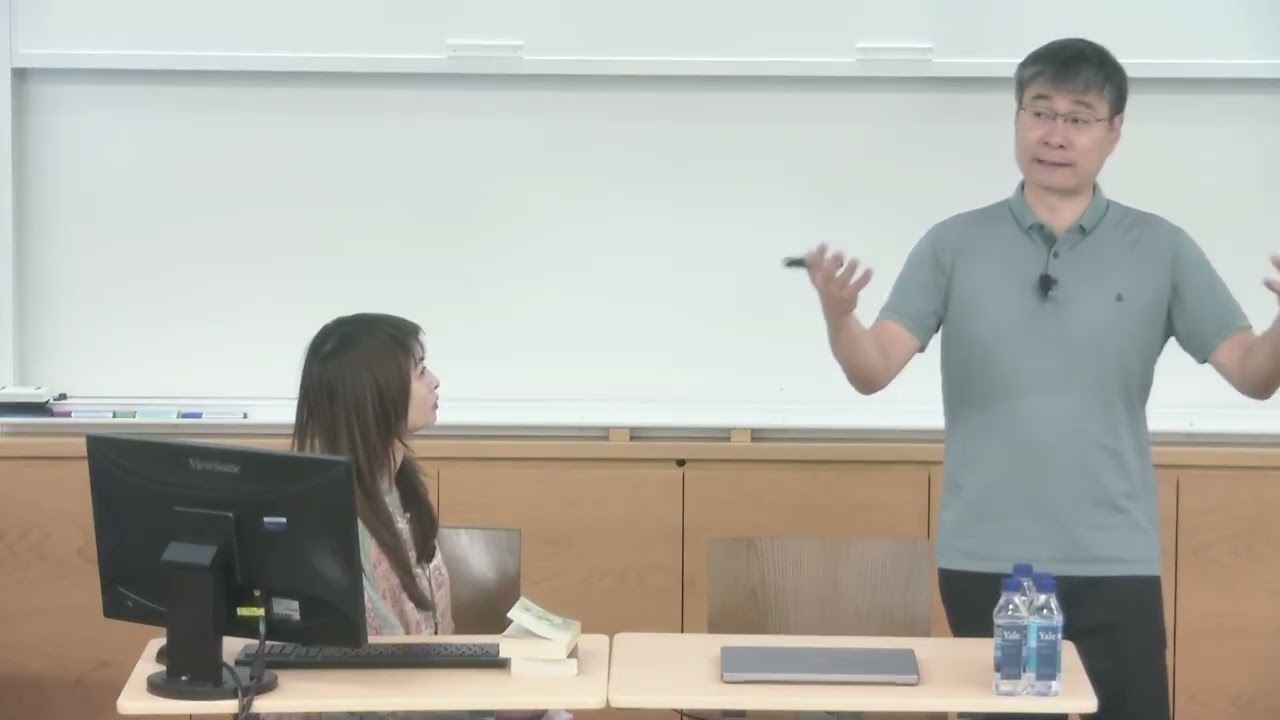
Professor Jiang introduces the 'Universal Law of Game Theory,' a framework for understanding global dynamics. This law states that the power of any group can be measured by the formula: Mass x Energy x Coordination. Within this equation, coordination is the most significant factor, weighted at least three times more than mass. Energy, representing motivation, is weighted twice as much as mass. This formula suggests that even a smaller group with high energy and exceptional coordination can overcome a larger, less organized one.
UNDERSTANDING THE COMPONENTS OF GAME THEORY
Mass, in this context, refers to the number of people involved, but significantly, it also considers their cohesion and willingness to work together. Energy is defined as the level of mental motivation, characterized by a group's openness to self-reflection, admitting limitations, and committing to self-improvement. This is more crucial than mere physical exertion. Coordination can be conscious (led by a specific figure or bureaucracy) or subconscious (where individuals align naturally, like a dance). Subconscious coordination is deemed more powerful, enabling frictionless cooperation, possible deniability, and secrecy, unlike open conspiracies which are prone to leaks and internal conflict.
THE POWER OF STORYTELLING IN COORDINATION
The most effective way to achieve subconscious coordination is through a powerful story. These narratives frame our understanding of the world and provide a script for behavior. Iconic stories like Plato's Allegory of the Cave, the crucifixion and resurrection of Jesus, and the second coming of Jesus are deeply memorable because they address fundamental human questions about origin, purpose, and destiny. Christian Zionism, with its compelling narrative of fulfilling prophecy and achieving a divine plan, taps into these deep-seated needs, making its adherents highly motivated and committed.
HISTORICAL PARALLELS: THE EMERGENCE OF ISLAM
The video draws a parallel between the enduring power of religious narratives and historical events. Around 600 CE, amidst widespread devastation and the displacement of Jews, a messianic narrative gained traction in the Arabian desert. This process of syncretization, blending Jewish beliefs with local paganism, eventually led to the development of Islam. Muhammad, viewed by some Jews as fulfilling prophecies, united various groups by proclaiming himself the Jewish Messiah, emphasizing Abrahamic lineage, advocating for social justice (canceling debt and slavery), and promoting religious tolerance. This created a global revolution and, for many Jews, represented the fulfillment of prophecy, ushering in the Islamic Golden Age.
THE ROLE OF THE PROPHET AND THE RISE OF SUPERNATURAL FIGURES
The narrative highlights how figures who can articulate and embody a compelling story can unite masses and initiate significant change. Muhammad's articulation of a unifying message, emphasizing shared heritage and the pursuit of a just society, allowed him to lead a revolution against the established order. While he died before completing his mission, the transformation of Jerusalem, the construction of the Al-Aqsa Mosque (seen as a third temple), and the subsequent Islamic Golden Age were interpreted by many Jews as the fulfillment of biblical prophecies, leading to widespread conversion and significant Jewish contributions to the era. This historical example underscores the profound impact of powerful, faith-driven narratives.
PREDICTING HISTORY AND THE EMERGENCE OF NEW PLAYERS
Applying game theory suggests that Christian Zionists are poised to become the dominant force in the Middle East, driving US policy and potentially leading to military action in Iran. However, game theory also acknowledges that when a game's trajectory and players seem clear, a new, 'world historical figure' or 'Übermensch' can emerge. This individual can manipulate events to their own ends, fundamentally altering the course of history. Vladimir Putin is presented as a contemporary example of such a figure, whose actions could redefine current geopolitical dynamics and challenge predictable outcomes.
Mentioned in This Episode
●Products
●Software & Apps
●Organizations
●Books
●Concepts
●People Referenced
Game Theory Formula Components and Relative Importance
Data extracted from this episode
| Component | Role | Relative Weighting (Approximate) |
|---|---|---|
| Coordination | Ability to work together towards a common goal | 3x Mass |
| Energy | Level of motivation, particularly mental energy | 2x Mass |
| Mass | Number of people involved | Base Unit |
Dominant Nation-States by Region (According to Game Theory)
Data extracted from this episode
| Region | Dominant Nation-State |
|---|---|
| Western Hemisphere | United States |
| Europe | Germany |
| Southeast Asia | Japan |
| Middle East | Israel |
Common Questions
The four factions are Christian Zionists (driven by biblical prophecy), Zionists (pursuing the greater Israel project), the global financial elite (seeking control of Iran's resources and trade), and the American Empire (aiming to maintain global hegemony).
Topics
Mentioned in this video
The central theme driving American Middle East policy and presented as a powerful global force due to its compelling narrative and motivated adherents.
The goal of Zionists in the anti-Iran coalition, aiming to establish a larger Israeli state based on historical and religious claims.
A faction (including Wall Street and the City of London) motivated by wealth and seeking to control Iran for its oil and global trade, thereby negating projects like BRICS and China's Silk Road.
A faction, including the military-industrial complex and deep state, interested in maintaining global hegemony through control of the Middle East.
One of the three most memorable stories, signifying the end of history, the achievement of paradise, and reconciliation with God.
A project that would be negated by controlling Iran's resources and global trade, aligning with the interests of the global financial elite.
A faction in the anti-Iran coalition focused on achieving the 'greater Israel' project, believing it's a divinely promised land.
Presented as a key story in human history, mirroring Plato's allegory of the cave and representing a truth-teller who is killed.
Referred to as part of the American Empire, suggesting bureaucratic interests in maintaining power and funding through foreign policy.
More from Predictive History
View all 164 summaries


Ask anything from this episode.
Save it, chat with it, and connect it to Claude or ChatGPT. Get cited answers from the actual content — and build your own knowledge base of every podcast and video you care about.
Get Started Free