Key Moments
Exploring Consciousness and Non-Ordinary Religion, Panpsychism, and Heretical Ideas — Philip Goff
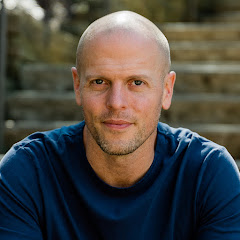 Tim Ferriss
Want to know something specific about what's covered?
We've already dissected every moment. Ask and we will deliver (with timestamps).
Key Moments
Philip Goff discusses panpsychism, consciousness, and integrating mystical experiences with traditional religions.
Key Insights
Panpsychism, the view that consciousness is fundamental to reality, is gaining traction in academia despite initial ridicule.
Consciousness is defined as subjective experience, encompassing simple sensations in fundamental particles to complex human awareness.
Roger Penrose and Integrated Information Theory (IIT) offer scientific perspectives that align with or support panpsychist ideas.
The 'hard problem' of consciousness stems from Galileo's separation of subjective experience from objective, mathematical science.
William James and Bertrand Russell are influential thinkers who support exploring consciousness and the limits of scientific materialism.
A 'heretical Christian' approach integrates spirituality and community with traditional religion, focusing on mystical experiences and diverse interpretations of scripture.
Fine-tuning of physical constants for life suggests a potential cosmic purpose, challenging purely atheistic or materialistic views.
The value of religion lies in community, structured practice, and meaning-making, even when belief is uncertain or interpreted metaphorically.
Direct experiences, including psychedelic-induced ones and numinous feelings, can inform spiritual understanding and the search for reality's nature.
Humility, contribution to the world, and embracing present moment richness are key to a meaningful life, transcending personal success.
THE ASCENDANCE OF PANPSYCHISM
Philip Goff expounds on panpsychism, a philosophy positing consciousness as a fundamental aspect of the universe, extending even to its basic building blocks. He notes its surprising rise from a ridiculed idea to a mainstream academic concept. This resonates with individuals, particularly those with psychedelic experiences, who sense a deeper consciousness pervading existence. Unlike animation, panpsychism suggests fundamental particles possess extremely simple forms of consciousness, not complex emotions or thoughts. This view aims to solve paradoxes and mysteries surrounding consciousness through logical, intellectual arguments rather than solely empirical observation.
DEFINING CONSCIOUSNESS AND SCIENTIFIC PERSPECTIVES
Goff clarifies that 'consciousness' in his context refers to subjective experience—'what it's like to be you.' This ranges from simple sensations in fundamental particles to complex human awareness. He discusses how figures like Nobel laureate Roger Penrose connect quantum mechanics to consciousness, and the Integrated Information Theory (IIT) proposes consciousness arises from information integration, potentially extending to non-biological systems. Despite a lack of neuroscientific consensus on consciousness's seat, these theories suggest it's more pervasive than commonly believed, challenging purely materialistic explanations.
GALILEO'S LEGACY AND THE HARD PROBLEM
Goff argues that current difficulties in explaining consciousness stem from Galileo's intentional separation of subjective experience from the objective, mathematical study of the physical world. By stripping qualities like color and sound from objects and assigning them to the observer's mind (or soul), Galileo enabled a purely quantitative science. This created an 'explanatory gap,' making it difficult for physical science, which deals with objective, third-person data, to account for qualitative, first-person conscious experience. Reintegrating consciousness requires rethinking these foundational assumptions.
PHILOSOPHICAL FOUNDATIONS AND EMERGENT VS. FUNDAMENTAL CONSCIOUSNESS
The discussion contrasts emergentist views, where consciousness arises from complex physical systems like brains, with panpsychist perspectives, where consciousness is fundamental. Integrated Information Theory (IIT), though providing a scientific framework, is also interpreted by leading proponents as supporting a fundamental view of consciousness. This echoes statements from early quantum physicists like Max Planck, who considered consciousness primary. The transition from a materialist view post-WWII to this earlier perspective is noted as a significant philosophical shift.
SPIRITUALITY, RELIGION, AND 'HERETICAL CHRISTIANITY'
Goff outlines his personal journey from atheism back to a form of 'heretical Christianity.' This approach values the community, ritual, and tradition of religion while questioning dogmatic certainties. Influenced by William James' 'the right to believe,' he emphasizes engaging with faith as a commitment or trust rather than strict intellectual assent. This perspective embraces mystical traditions, the symbolic interpretation of scripture, and the teachings of Jesus that challenge worldly values, offering a more inclusive and personally resonant spiritual framework.
THE 'WHY' OF EXISTENCE AND COSMIC PURPOSE
The fine-tuning of the universe's physical constants for life suggests a potential cosmic purpose, challenging a purely random, atheistic worldview. Goff explores middle-ground options, such as laws of nature with inherent purposes or a conscious universe, sidestepping the problem of suffering often associated with traditional, omnipotent deities. This search for meaning and purpose, separate from personal success, offers a deeper orientation for life and acknowledges the human need for connection and belonging in a complex world.
THE ROLE OF EXPERIENCE AND MYSTICAL TRADITIONS
Goff highlights the primacy of direct experience, whether through psychedelics, meditation, or numinous feelings, in understanding consciousness and spirituality. He finds resonance in Christian mystical traditions, particularly the Eastern Orthodox emphasis on unity with God and others, which he contrasts with the purely absorptive goal in some Hindu mysticism. The exploration of Sufi poetry and other mystical writings provides a way to engage with profound experiences without rigid dogma, emphasizing beauty, commitment, and the present moment.
ADDRESSING THE COMBINATION PROBLEM AND THE FUTURE OF EXPLORATION
The 'combination problem'—how simple conscious entities merge into complex consciousness—remains a challenge for panpsychism, though figures like William James grappled with it early on. Goff advocates for continued philosophical and scientific exploration, even when ideas seem unconventional. He suggests that the success of science derived from its initial separation of consciousness implies that reintegrating it requires rethinking foundations. This open-mindedness, combined with a focus on making a contribution rather than seeking personal success, is presented as a path toward deeper understanding and fulfillment.
Mentioned in This Episode
●Software & Apps
●Organizations
●Books
●Drugs & Medications
●Concepts
●People Referenced
Common Questions
Panpsychism is the philosophical view that consciousness is a fundamental property of the universe, extending down to its most basic building blocks, like electrons and quarks. It suggests that consciousness comes in all shapes and sizes, from complex human awareness to incredibly simple forms of experience in fundamental particles.
Topics
Mentioned in this video
Philip Goff's friend and a proponent of panpsychism, though she believes the term 'panpsychism' needs rebranding. She also believes literally everything is conscious and has an audio documentary related to consciousness.
A rigorous philosopher who, with Daniel Nolan, provided a detailed mathematical account of teleological laws, which proposes laws of nature with built-in purposes.
A young panpsychist theologian who writes on how panpsychism fits with a spiritual conception of reality, inspiring Philip Goff's return to religion.
An author who wrote 'The Year of Living Biblically,' an informative and humorous book about following all Old and New Testament rules, raised Jewish.
Pulitzer Prize-winning author whose interview was one of the most viewed articles in Scientific American in 2020, discussing Philip Goff's work on consciousness and panpsychism.
A rigorous philosopher who, with John Hawthorne, provided a detailed mathematical account of teleological laws, which proposes laws of nature with built-in purposes.
An influential Christian thinker from the 2nd century in the early church, who had the idea of three levels of understanding scripture: literal, moral, and allegorical.
A neuroscientist who champions the Global Neuronal Workspace Theory.
A neuroscientist at UC Berkeley and clinical psychologist who edited 'Mind Beyond Brain', a book that explores consciousness beyond the brain.
A biblical scholar whose recent book on the resurrection explores non-standard versions, such as visionary experiences rather than physical observation.
Mentioned by the host as someone with whom he had a discussion on quantum computing.
An influential Christian philosopher with traditional views, with whom Philip Goff debated about panpsychism and the resurrection.
A very secular atheist panpsychist, mentioned as part of the divide among panpsychists regarding religion.
A scientific panpsychist philosopher who believes literally everything is conscious.
A scientist from Johns Hopkins who wrote 'The Varieties of Spiritual Experiences,' a newer book on mystical experiences.
Author of 'Dominion,' who discusses the radical impact of Christian ideas on the Roman Empire and the origins of human dignity.
An 18th-century figure who, annoyed by David Hume's argument against miracles, developed Bayes' theorem as a mathematical way of understanding evidence.
Thomas Nagel's book, similar in theme to Philip Goff's 'Why,' which explores consciousness and the universe but was met with significant backlash.
A collection of writings edited by David Presti, exploring consciousness as potentially non-localized or not limited to the brain.
Philip Goff's book arguing that Galileo's exclusion of consciousness from science is at the root of modern challenges in explaining it.
An essay by William James, later re-titled 'The Right to Believe,' arguing that it can be rational to choose to believe in certain uncertain circumstances.
Philip Goff's book exploring the middle ground between God and atheism, addressing the fine-tuning of physics for life.
A book by A. J. Jacobs detailing his attempt to follow all rules of the Old and New Testaments.
A book by Bertrand Russell that the host mentions in the context of Philip Goff's own journey with Christianity.
A book by Tom Holland about the history of Christianity's influence, highlighting the radical idea of identifying God with the poor and the impact on Roman society.
David Chalmers' recent book exploring the simulation hypothesis.
A book by David Yaden, offering 21st-century research and perspectives on mystical experiences.
A mathematical formula for calculating conditional probabilities, developed by Rev. Thomas Bayes, important for understanding evidence and used in tracking the COVID pandemic.
A theory suggesting that consciousness arises from the integration of sensory information in the frontal parts of the brain, acting as a broadcast system.
Philosophical term for the subjective, qualitative properties of conscious experience, such as the redness of red or the smell of coffee.
More from Tim Ferriss
View all 703 summaries 70 min
Q&A with Tim — The Art of Male Friendship, Reinvention in The Age of AI, & More
 125 min
Dr. Andrew Huberman — Peptides, Performance, and Protocols
 112 min
The Random Show! Mortality, AI, Supplements, Rock Climbing, & More
 88 min
The Legendary Hollywood Power Broker — Guy Oseary on 36 Years of Managing Madonna, 26 IPOs, and More
Ask anything from this episode.
Save it, chat with it, and connect it to Claude or ChatGPT. Get cited answers from the actual content — and build your own knowledge base of every podcast and video you care about.
Get Started Free