Key Moments
E50: Crypto investing deep dive, Facebook's whistleblower fallout, Chappelle's new special & more
 All-In Podcast
Want to know something specific about what's covered?
We've already dissected every moment. Ask and we will deliver (with timestamps).
Key Moments
Dissecting crypto, Facebook's whistleblower impact, and societal issues.
Key Insights
The crypto market is complex, with rapid innovation requiring specialized knowledge; investing strategies should focus on managers or diversified approaches like ETFs.
Facebook's whistleblower, Frances Haugen, raised concerns about the platform's impact on young users and proposed regulatory oversight, sparking debate on platform responsibility and free speech.
The discussion on crypto regulation highlights the need for clear rules, balancing innovation with investor protection, and the potential for user-driven or decentralized solutions.
The proliferation of crypto and NFTs presents challenges in defining them as securities versus collectibles/utility tokens, with ongoing legal and regulatory debate.
Concerns about misinformation and algorithmic amplification on social media are complex, with arguments for free speech, more speech, and potential regulatory interventions.
Dave Chappelle's latest special is seen as a courageous but potentially less comedic exploration of cancel culture and societal pressures, with implications for future content platforms.
CRYPTO MARKET DYNAMICS AND INVESTMENT STRATEGIES
The conversation delves deep into the cryptocurrency market, emphasizing its complexity and rapid evolution. Solana is highlighted as a competitor to Ethereum, noted for its speed and lower transaction fees, attracting significant investor interest. The panelists stress that navigating this space requires specialized knowledge, given the constant innovation. For individual investors, relying on experienced fund managers or diversified products like crypto ETFs is recommended over picking individual tokens, to manage risk and benefit from meta-education across the sector. The distinction between investment, trade, and long-term holding is crucial for portfolio management.
FACEBOOK WHISTLEBLOWER FALLOUT AND REGULATORY DEBATES
Frances Haugen's testimony regarding Facebook's internal research on its negative impact, particularly on young users and body image, is a central theme. Her proposed solutions, including a dedicated regulatory body and reforming Section 230 concerning algorithms, sparked a debate on platform accountability. The discussion contrasts the proposed regulation with historical cases like Microsoft's antitrust issues and questions whether decentralization could offer a viable alternative to current social media structures, while acknowledging the difficulty of regulating such platforms.
REGULATORY CHALLENGES AND THE FUTURE OF CRYPTO
The panelists explore the regulatory landscape for cryptocurrencies, noting statements from Jerome Powell and Gary Gensler acknowledging crypto's permanence. The need for clear regulatory frameworks, including simpler on-ramps like ETFs and potential self-regulating bodies within the crypto community, is emphasized. A significant point of contention is the classification of tokens: are they utility tokens or securities? The discussion touches on the implications for tax revenue and investor protection, with a call for predictability and safe harbors for entrepreneurs to foster innovation.
DEFINING UTILITY TOKENS VERSUS SECURITIES
A key aspect of the crypto discussion revolves around whether tokens should be classified as utility tokens or securities. The argument is made that if buyers acquire tokens primarily for speculation rather than utility, they could be deemed securities subject to traditional regulations. However, the complexity of proving utility and the subjective nature of valuation make this a contentious issue. The potential for this to be litigated and set precedents is high, with calls for clear guidelines to prevent entrepreneurs from using the 'utility token' label to evade regulation.
THE ALGORITHM, MISINFORMATION, AND SOCIAL MEDIA'S ROLE
The conversation critically examines social media algorithms and their amplification of content, particularly polarizing or extreme material. While some argue algorithms merely reflect consumer demand and human psychology, others contend they actively fuel division. The debate around misinformation highlights concerns that regulatory powers could be used for censorship, with historical examples used to illustrate partisan bias. The proposed solution of 'more speech' is contrasted with the potential need for platform-level interventions to slow down the viral spread of content.
FREEDOM OF SPEECH AND THE CHALLENGES OF DECENTRALIZATION
The podcast explores the tension between free speech principles and the need to curb harmful content on social media. Decentralized social networks are discussed as a potential alternative to monolithic platforms, offering greater user control and harder-to-regulate environments. However, concerns are raised that decentralization might not solve the fundamental issues of human psychology driving content consumption and could lead to a fragmented, unregulated digital landscape. The challenge lies in balancing innovation with societal well-being, even as the nature of digital communication evolves at an unprecedented pace.
DAVE CHAPPELLE'S LATEST SPECIAL AND CANCEL CULTURE
The discussion turns to Dave Chappelle's new special, 'The Closer,' with panelists offering varied reactions. While many acknowledge its courage in addressing sensitive topics and challenging 'cancel culture,' some felt it leaned more towards personal catharsis than pure comedy, with a lower joke-to-commentary ratio than his previous work. The special's uncomfortableness at times is noted, and its potential as either a final statement or an act of defiance against prevailing cultural norms is considered, sparking thoughts about creating comedian-owned content platforms as an alternative to traditional media.
Mentioned in This Episode
●Software & Apps
●Companies
●Organizations
●Concepts
●People Referenced
Common Questions
The main discussion revolved around crypto investing strategies, including how to manage risk, the role of specialized venture firms like Multi Coin Capital, and the evolution from Bitcoin and Ethereum to newer projects like Solana.
Topics
Mentioned in this video
A company that announced a deal to acquire Bitco (institutional custody) for $1.2 billion, highlighting crypto's move towards institutional adoption.
The streaming platform hosting Dave Chappelle's 'The Closer', with speculation about whether they might take it down.
Mentioned in discussions about content moderation, flagging, and algorithmic amplification, and as a platform where the hosts spend more time than Facebook.
Subject of whistleblower allegations regarding its impact on young users and internal research. Its algorithms and content moderation policies were heavily debated.
Used as an analogy for how government intervention (antitrust case) can slow down innovation, similar to potential outcomes for Facebook.
A company that created an ETF for crypto, offering a monthly rebalanced portfolio of top cryptocurrencies, which was eventually approved by the SEC.
A crypto venture firm that was an early investor in Solana, founded by Kyle and Tushar, whom David Sacks and Chamath Palihapitiya invested in.
Mentioned as being on the board of Facebook and part of a group supporting Facebook, in contrast to the whistleblower's allegations.
A comedian mentioned as being very funny.
An individual who helped set up Multi Coin Capital and brought Sacks and Palihapitiya in as early investors.
Comedian whose Netflix special 'The Closer' was discussed, with opinions on its commentary on cancel culture and his personal 'agenda'.
Chairman of the Senate Judiciary Committee, who proposed a dedicated oversight body for social media platforms.
The Chair of the Federal Reserve, who, along with Gary Gensler, stated that crypto is 'here to stay' and would not be banned.
A comedian mentioned as being 'legit'.
Mentioned in the context of being labeled for his subjective opinion on AOC's dress, highlighting the partisan use of labeling and 'misinformation'.
The Chair of the SEC, who, along with Jerome Powell, indicated that crypto is here to stay and would not be banned. He also compared utility tokens to speculative investments.
A democratic operative mentioned as working for Frances Haugen, suggesting coordination behind the whistleblower's public appearances.
The Facebook whistleblower who revealed herself on 60 Minutes and testified before Congress, alleging negative impacts of Facebook and Instagram on young people.
A comedian praised for his fundniness, with a Netflix special and potential for a self-owned comedy streaming platform.
CEO of Facebook, who reportedly defended the company's actions and product development in response to whistleblower claims.
The new Daniel Craig James Bond movie (likely No Time to Die, though not explicitly named) was mentioned with excitement.
The U.S. Securities and Exchange Commission, which approved the Bitwise crypto ETF and whose approval is sought for other crypto ETFs.
The Financial Industry Regulatory Authority, cited as an example of a self-regulating body in traditional finance, suggesting a similar model for the crypto community.
A programmable blockchain and competitor to Ethereum, noted for its faster and cheaper transactions, with a market cap of $50 billion at the time of discussion.
A competitor stablecoin from Circle, whose CEO reportedly would switch to 100% cash equivalents, aligning with the demand for stablecoins to be treated like money market funds.
A stablecoin that is raising concerns about its backing, with reports suggesting it loans money to crypto projects and holds Chinese paper.
Mentioned as the first step in crypto investment, considered 'new money' and 'better money' due to its resistance to counterfeiting.
Considered a key blockchain platform beyond just digital money, with competitors like Solana aiming to potentially displace it.
More from All-In Podcast
View all 426 summaries 102 min
Socialists Sweep NYC, China Catches Up in Coding, AI Memory Crunch, Micron's Blowout Quarter
 64 min
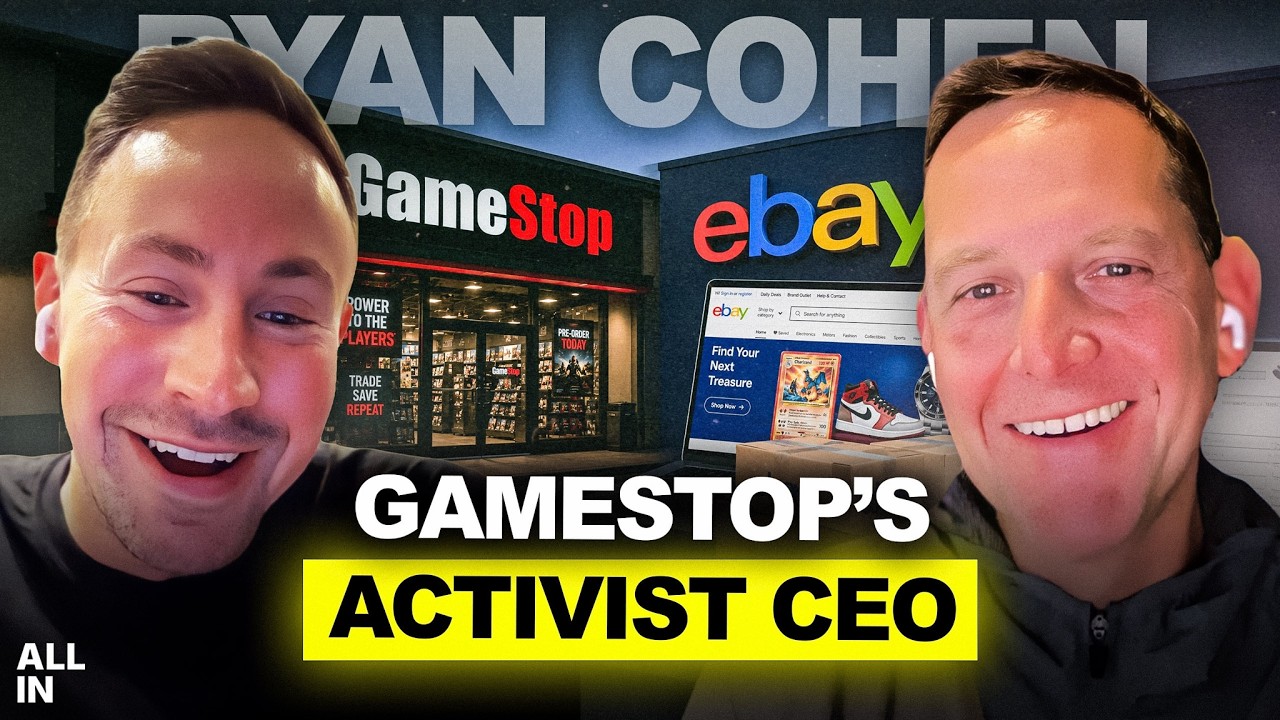
GameStop CEO Ryan Cohen’s $56B Plan to Take Over eBay
 85 min
World's First Trillionaire, Anthropic Fable Banned, The New Oligarchs, Iran Peace Deal
 102 min
Anthropic's Fable Backlash, Nationalizing AI, Inflation Heats Up & California’s Broken Elections
Ask anything from this episode.
Save it, chat with it, and connect it to Claude or ChatGPT. Get cited answers from the actual content — and build your own knowledge base of every podcast and video you care about.
Get Started Free