Key Moments
E19: Robinhood's GameStop decision: Why did it happen and how can it be prevented in the future?
 All-In Podcast
Key Moments
Robinhood's GameStop decision sparks debate on market manipulation, regulation, and the future of trading.
Key Insights
The GameStop saga highlights the power of retail investors organized through social media platforms like WallStreetBets.
Robinhood's decision to restrict trading was likely driven by liquidity issues and margin requirements, not regulatory mandates.
The episode discusses how payment for order flow (PFOF) is Robinhood's primary revenue source, raising questions about conflicts of interest.
Concerns are raised about the increasing prevalence of gamified trading and 'synthetic casinos' over traditional investing in capital markets.
Proposed solutions include leveraging blockchain for share tracking, implementing leverage limits for hedge funds, and improving disclosure rules.
The debate touches upon the societal implications of social media enabling both organized movements and uncontrolled mobs, impacting finance and politics.
THE ORIGINS OF THE GAMSTOP SAGA
The GameStop short squeeze originated on the WallStreetBets subreddit, where users identified a high short interest in the stock. A user, 'DeepF—ingValue,' began buying call options in June 2019, betting on a significant price increase by January 2021. This thesis was later supported by Michael Burry and Ryan Cohen, who disclosed significant positions, further fueling interest and fundamental arguments for the stock's potential recovery and transformation.
INSTITUTIONAL SHORTING AND RETAIL COUNTER-OFFENSIVE
Hedge funds, notably Melvin Capital, held substantial short positions in GameStop. The high short interest, combined with a new console cycle and strategic investments from figures like Ryan Cohen, created a scenario ripe for a short squeeze. Retail investors, recognizing this vulnerability, aggressively bought shares and call options, forcing hedge funds to cover their shorts at increasingly higher prices, driving the stock price exponentially upward.
ROBINHOOD'S DECISION AND ITS FALLOUT
Robinhood's controversial decision to restrict buying of certain stocks, including GameStop, was largely attributed to the immense pressure on its clearinghouse and the need to meet increased margin requirements. The platform's business model, reliant on payment for order flow from market makers like Citadel, was scrutinized. This move was seen by many as an arbitrary restriction that protected hedge funds at the expense of retail investors, sparking outrage and investigations.
THE DEBATE OVER MARKET STRUCTURE AND GAMIFIED TRADING
The discussion delved into whether the stock market has transformed into a 'synthetic casino' rather than a mechanism for capitalizing businesses. Arguments were made that the prevalence of shorting, margin trading, and derivatives prioritizes speculation over long-term investment, potentially siphoning capital away from productive economic activity and job creation. The GameStop event is seen as a symptom of this larger systemic issue.
PROPOSED SOLUTIONS AND REGULATORY REFORMS
Several potential solutions were proposed to prevent future market disruptions. These included leveraging blockchain technology for transparent share tracking to prevent overselling, implementing stricter leverage limits on hedge funds similar to banks, and enhancing disclosure requirements by the SEC. The idea of a short-term trading tax and a revised capital gains tax structure was also discussed as ways to incentivize long-term investment.
SOCIAL MEDIA, MOB BEHAVIOR, AND THE FUTURE OF ORGANIZATION
The conversation broadened to the societal impact of social media in enabling both organized movements and uncontrolled mobs. The GameStop saga and events like the Capitol riot were presented as examples of how social platforms can be used to aggregate belief and action, sometimes with volatile or negative consequences. The challenge lies in harnessing the power of decentralized organization for positive change while mitigating the risks of mob mentality and censorship.
THE ROLE OF LEADERSHIP AND THE NEED FOR DECENTRALIZATION
The discussion touched upon the qualities of effective leadership, particularly in unpredictable times, advocating for individuals who can synthesize diverse information rather than simply delegate. There was a strong push for decentralization across various sectors, including finance, healthcare, and education, suggesting that centralized authorities can be prone to control and manipulation. The idea is to empower individuals and foster more democratic systems where manipulation is harder.
THE ENDGAME FOR GAMSTOP AND RETAIL INVESTORS
While acknowledging the significant potential for financial losses for retail investors who bought GameStop at peak prices, the participants debated the ultimate outcome. Some posited that the shorts have not yet been fully covered, suggesting continued volatility. The overarching sentiment was caution, with warnings that the 'house always wins' and that speculative bets, however well-intentioned, carry inherent risks and are unlikely to lead to long-term wealth compared to diversified index investing.
Mentioned in This Episode
●Companies
●Organizations
●Concepts
●People Referenced
GameStop Saga and Market Mechanics
Practical takeaways from this episode
Do This
Avoid This
GameStop Short Interest Timeline
Data extracted from this episode
| Date | Event | Short Interest (%) |
|---|---|---|
| August 2020 | Wall Street Bets post highlights shorts | 120 |
| January 2021 | Shorts overleveraged, margins called | 140 (estimated) |
Robinhood's Payment for Order Flow Revenue (Q3)
Data extracted from this episode
| Category | Revenue (Millions USD) |
|---|---|
| Citadel Payment | 60 |
| S&P 500 Stocks | 7.5 |
| Non-S&P 500 Stocks | 31 |
| Total Quarterly (approx.) | 98.5 |
| Annualized Run Rate | 400 |
Common Questions
Wall Street Bets is a subreddit where retail investors discuss and coordinate trades. They identified GameStop as a potential short squeeze target due to high short interest, leading to a massive surge in its stock price.
Topics
Mentioned in this video
Famous from 'The Big Short', he disclosed a significant position in GameStop and analyzed its fundamentals.
Mentioned in the context of Tesla's success being driven by belief and vision, similar to how retail investors supported GameStop.
Co-host of the podcast, referred to as 'the dictator'. He discusses Robinhood's actions and the broader market implications.
Founder of Chewy, who took a significant stake in GameStop and joined its board, advocating for its transition into a technology company.
Co-host of the podcast, known for his involvement in venture capital and discussions on markets. He engages in debate about Robinhood and market dynamics.
A senator mentioned as an example of bipartisan agreement with AOC on certain issues, highlighting potential political realignments.
The current Governor of California, whose potential recall is discussed in the latter part of the podcast.
The e-commerce company founded by Ryan Cohen, whose success was cited as a reason for optimism regarding GameStop's potential.
Another brokerage firm mentioned in the context of restricting trades alongside Robinhood.
A hedge fund heavily shorting GameStop, which received significant capital injections from Citadel and other investors after facing losses during the short squeeze.
Recommended as a safe investment strategy for listeners, suggesting index funds with low fees.
Mentioned as a historical example of a financial institution that collapsed due to a liquidity crisis, drawing parallels with Robinhood's situation.
Mentioned multiple times as an example of a rapidly scaling startup facing challenges and as a comparison for Robinhood's business model and growth.
The central company at the core of the discussion, whose stock surged due to retail investor activity.
Another defunct financial institution from the 2008 crisis, used as a comparison point for Robinhood's potential failure.
A research firm that published a bearish report on GameStop, which was significantly impacted by the short squeeze.
Cited as an example where a company's stock value was driven by belief and vision, not just traditional financial metrics, similar to the GameStop situation.
The Securities and Exchange Commission, which may or may not have influenced Robinhood's trading restrictions.
A major financial firm that provided liquidity to Melvin Capital and was also involved in Robinhood's order flow, raising questions about conflicts of interest.
A hedge fund that collapsed in 1998 due to extreme leverage, used as a historical example of systemic risk.
More from All-In Podcast
View all 403 summaries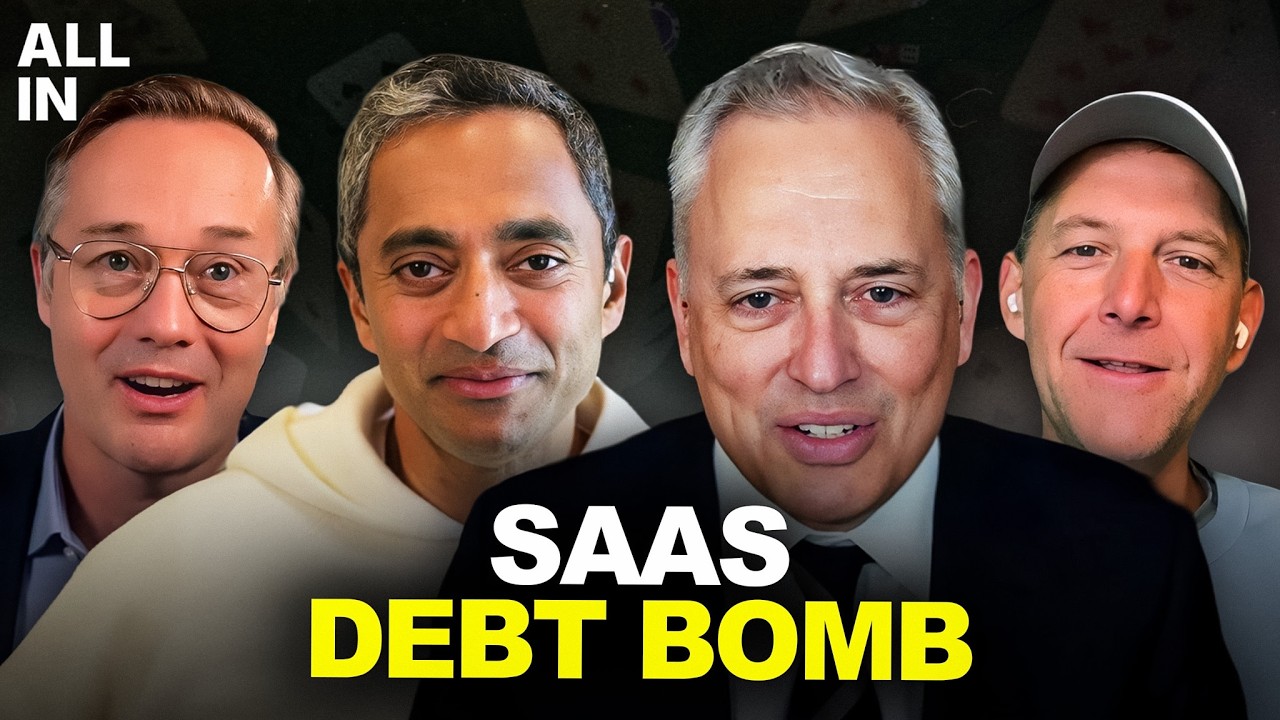 91 min
SpaceX-Cursor Deal, SaaS Debt Bomb, New Apple CEO, SPLC Indictment, Colon Cancer Spike
 91 min
OpenAI's Identity Crisis, Datacenter Wars, Market Up on Iran News, Mamdani's First Tax, Swalwell Out
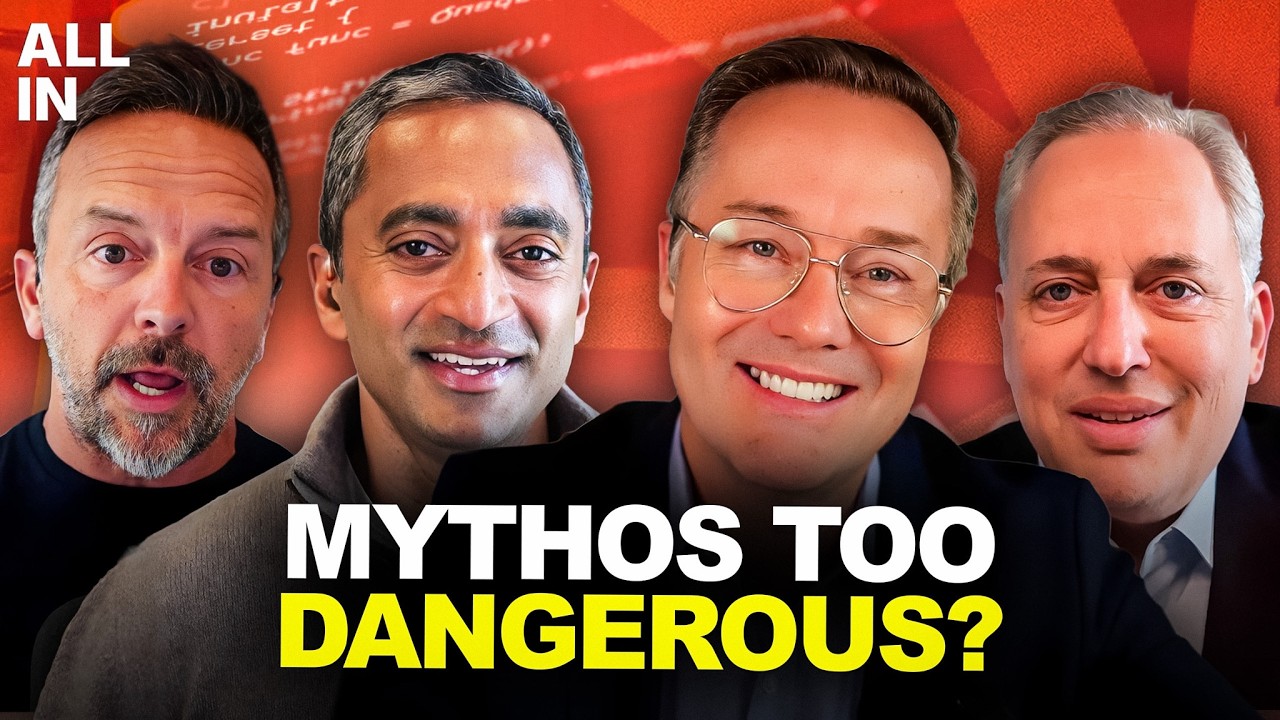 90 min
Anthropic’s $30B Ramp, Mythos Doomsday, OpenClaw Ankled, Iran War Ceasefire, Israel's Influence
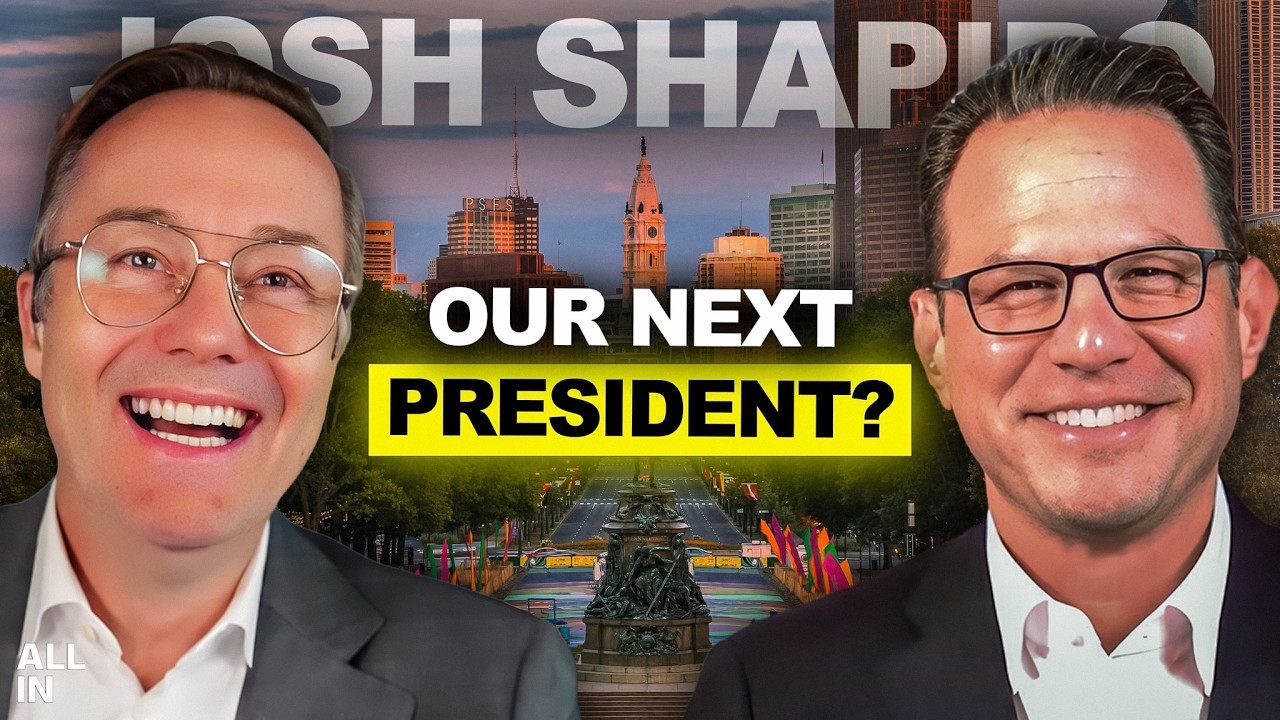 62 min
Josh Shapiro on Trump, Iran War Chaos, Israel's Failure, the Economy, and 2028 Race
Found this useful? Build your knowledge library
Get AI-powered summaries of any YouTube video, podcast, or article in seconds. Save them to your personal pods and access them anytime.
Get Started Free