Key Moments
E16: Reflecting on the riots at the US Capitol, plus: Georgia runoffs, vaccine distribution & more
 All-In Podcast
Key Moments
All-In podcast hosts discuss Capitol riots, vaccine rollout, and DA Chesa Boudin.
Key Insights
The January 6th Capitol riot is seen as a dangerous event instigated by President Trump, with ongoing debate about his culpability and potential prosecution.
The vaccine rollout is criticized as slow and politically motivated, with suggestions for a more centralized, military-style operation.
The effectiveness and philosophy of progressive District Attorneys like Chesa Boudin are questioned following a rise in crime and a tragic death in San Francisco.
The political landscape is deeply divided, with discussions on the role of "the big lie," tribalism, and the need for de-escalation.
The Georgia Senate runoffs are analyzed, with Trump's influence cited as a key factor in Republican losses.
The concept of celebrity politicians and the potential for figures like Kim Kardashian to enter politics is explored.
THE CAPITOL RIOTS AND TRUMP'S CULPABILITY
The podcast begins with a discussion of the January 6th Capitol riots, describing it as a surreal and dangerous event. The hosts debated President Trump's role in inciting the riot, with many believing he is directly responsible for encouraging the mob. The conversation touched on the lack of preparedness by Capitol security and the stark contrast in how this event was perceived compared to Black Lives Matter protests. The presence of individuals in cosplay outfits was juxtaposed with the tragic death of a protestor, highlighting the severity of the situation.
PROSECUTING TRUMP AND POLITICAL DIVISION
A significant portion of the discussion centered on whether former President Trump should be prosecuted for inciting the riot. Some argued that while legally challenging, it is a necessary step for accountability, while others expressed concern that it would further divide the nation. The concept of 'the big lie' as a propaganda technique was explored, linking it to Trump's continued claims about the election being stolen. The hosts debated the potential consequences of prosecuting Trump, including its impact on the Republican party and national unity.
VACCINE ROLLOUT CRITICISMS AND PROPOSALS
The vaccine distribution process was heavily criticized for being slow and inefficient, falling far short of initial targets. The hosts suggested that political motivations and bureaucratic hurdles, such as prioritizing certain groups over others or imposing fines for out-of-turn vaccinations, were hindering progress. Ideas for improvement included a centralized, military-style operation, leveraging the National Guard, and incentivizing healthcare professionals. A market-based approach, similar to Israel's strategy of rapid vaccination, was also proposed as a more effective solution.
THE CASE AGAINST PROGRESSIVE PROSECUTORS
The discussion then shifted to the controversial tenure of San Francisco District Attorney Chesa Boudin. Referencing an article by David Sacks, the hosts detailed how Boudin's philosophy of decarceration and reduced prosecution for crimes like property theft and burglary has allegedly led to an increase in crime. A tragic hit-and-run death, where the perpetrator had been released by Boudin's office, exemplified the perceived negative consequences of this approach. The deep personal history of Boudin's parents, described as domestic terrorists, was also brought up as a potential influence on his political outlook.
CALIFORNIA'S POLITICAL TURMOIL AND RECALL EFFORTS
Following the critique of Boudin, the conversation touched upon broader political dissatisfaction in California, specifically mentioning the recall effort against Governor Gavin Newsom. The idea of unconventional candidates, like Kim Kardashian, running for office was floated as a reflection of the public's weariness with traditional politicians. The hosts debated whether celebrity status or policy should drive political success, citing past examples of entertainers entering politics.
THE GEORGIA RUNOFFS AND REPUBLICAN CHALLENGES
The Georgia Senate runoff elections were analyzed, with the consensus being that Donald Trump's actions and rhetoric significantly contributed to the Republican party's losses. The hosts noted that Republican candidates Kelly Loeffler and David Perdue were perceived as weak and struggled to effectively campaign, partly due to Trump's continued focus on the 2020 election results. The subsequent backlash against those who opposed the election certification, like Josh Hawley and Ted Cruz, was also discussed, suggesting a detrimental impact on their political aspirations.
PSYCHOLOGICAL AND ECONOMIC DRIVERS OF DIVISION
The conversation explored the underlying psychological and economic factors fueling political division. The hosts suggested that people are often programmed to be unhappy, with manipulated expectations driving dissatisfaction. The narrative that economic inequality, rather than ideology, has historically driven American uprisings was highlighted. The power of reductionist advertising and social media in exacerbating tribalism and pushing individuals to extremes was also examined.
THE ROLE OF SYSTEMS AND NORMS
The hosts reflected on how traditional systems, built on norms and trust, are being stressed by unconventional political figures. They discussed how leaders like Donald Trump operate outside these established parameters, leading to unpredictable outcomes. While acknowledging the system was tested, many felt it largely held, though the remaining weeks of Trump's presidency were seen as a period of potential instability, necessitating a sense of caution.
Mentioned in This Episode
●Products
●Software & Apps
●Companies
●Organizations
●Drugs & Medications
●Studies Cited
●Concepts
●People Referenced
Common Questions
The podcast primarily discusses the events of the US Capitol riots on January 6th, including Donald Trump's culpability, the response of law enforcement, and the potential for prosecution. It also touches on vaccine distribution challenges and political dynamics in Georgia and San Francisco.
Topics
Mentioned in this video
Mentioned in a humorous tweet about the Constitution.
The discussion heavily revolves around his actions leading up to and during the Capitol riots, his rhetoric, and his potential culpability.
His speech questioning election fraud claims is highlighted as evidence against Trump's narrative.
Mentioned as an example of a leader in tit-for-tat political phenomena.
Mentioned in the context of political processes and potential future actions.
Mentioned for his policy of a one million dollar fine for vaccine distribution outside of the intended line.
A young woman killed in a hit-and-run, whose death is linked to Chesa Boudin's policies.
The Governor of California, facing a recall effort with a significant number of signatures already collected.
Mentioned as someone who went to jail for unrelated reasons.
Identified as a leader in the WNBA players' movement.
The District Attorney of San Francisco whose policies on decarceration and crime prosecution are heavily criticized.
Cited as an example of a celebrity transitioning into politics.
One of the hosts of the podcast, referred to as 'rain man'. Involved in discussions about the Capitol riots, COVID-19, and politics.
Mentioned as a centrist candidate the Republican party could endorse.
His campaign against Kelly Loeffler in Georgia is detailed, with her political actions and team's support for him noted.
Cited as an example of a celebrity transitioning into politics.
Mentioned as having told Trump he would not support his efforts during the certification process.
Mentioned as a centrist candidate the Republican party could endorse, and as having given an eloquent speech.
Suggested as a potential candidate for the Gavin Newsom recall, noted for her intelligence, likability, and recognition.
CEO of SoFi, mentioned as an incredible leader.
One of the hosts of the podcast, referred to as 'the dictator'. Participates in discussions on various political and social topics.
His TED Talk on the role of District Attorneys in changing the criminal justice system is referenced.
One of the hosts of the podcast, referred to as 'the queen of quinoa'. Contributes to the discussion on vaccine rollout and other topics.
His concept of 'the big lie' is discussed as a propaganda technique, with parallels drawn to the election denial claims.
Mentioned as an example of a leader in tit-for-tat political phenomena.
Cited for statistics regarding early vaccine distribution rates.
Cited as an example of a celebrity transitioning into politics.
Chesa Boudin's parents were associated with this group, which is described in the context of domestic terrorism.
Discussed in comparison to the Capitol riot response, with arguments about perceived differences in law enforcement and media reactions.
Mentioned in the context of early COVID-19 fatality rate estimates.
Mentioned as having a unified condemnation of the Capitol storming.
More from All-In Podcast
View all 409 summaries 77 min
Trump-Xi Summit, Benioff: "Not My First SaaSpocalypse," OpenAI vs Apple, Multi-Sensory AI, El Niño
 96 min
How We Grew Koch Inc. to $150 Billion Without Going Public: Charles & Chase Koch
 72 min
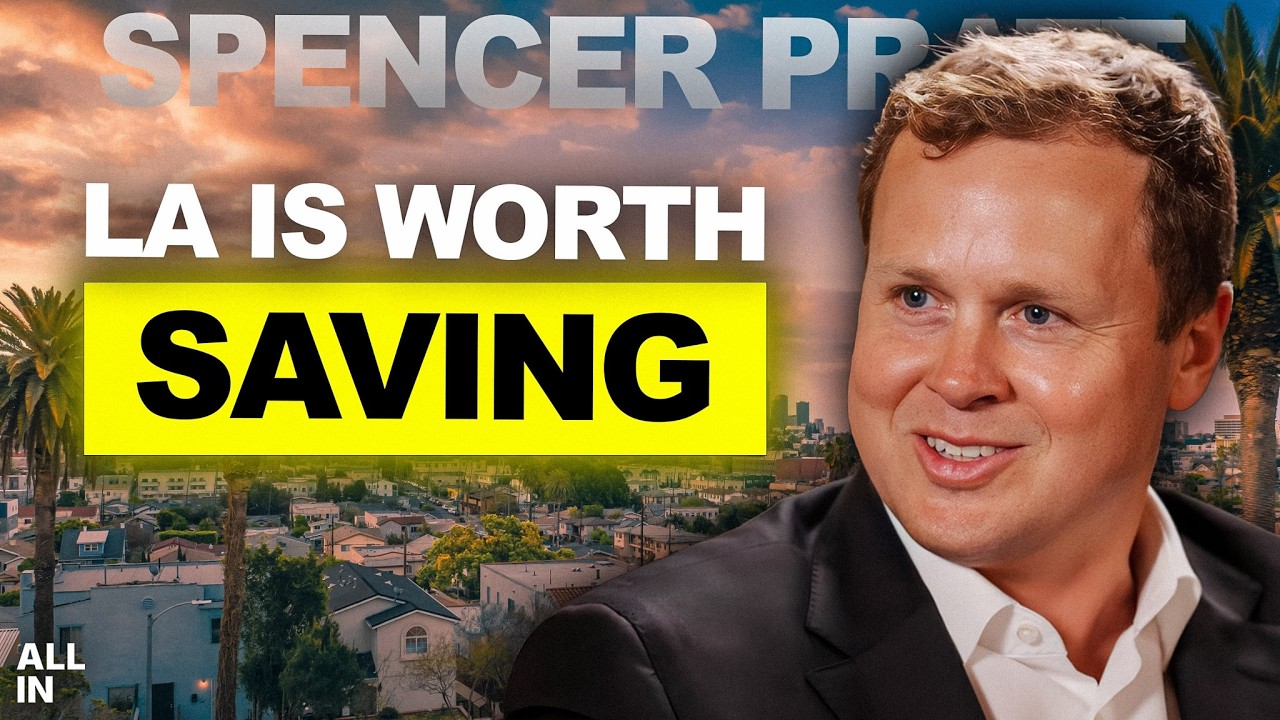
Spencer Pratt on Fixing LA: Wildfires, Homelessness, Corruption & the Fight to Take It Back
 83 min
Elon’s Anthropic Deal, The Next AI Monopoly?, “FDA for AI” Panic, Trading the AI Boom
Ask anything from this episode.
Save it, chat with it, and connect it to Claude or ChatGPT. Get cited answers from the actual content — and build your own knowledge base of every podcast and video you care about.
Get Started Free