Key Moments
Diane Greene's Advice for Founders
 Y Combinator
Want to know something specific about what's covered?
We've already dissected every moment. Ask and we will deliver (with timestamps).
Key Moments
Diane Greene built 3 successful startups, including VMware which launched a $19.1B IPO, by focusing on founder alignment, making innovation non-disruptive, and fostering the right culture, but warns that even the best ideas need the right team and adaptable execution to succeed.
Key Insights
VMware, co-founded by Diane Greene, launched the virtualization revolution and went public with a market cap of $19.1 billion.
The strategy for VMware's innovation adoption involved creating a tool that seamlessly migrated workloads from physical to virtual machines, making integration non-disruptive.
Greene's third startup, bbop, pivoted after its initial design was "off," demonstrating the importance of perseverance and design thinking in overcoming setbacks.
Building an enterprise startup within a mega-company like Google Cloud requires careful attention to the cultures of both the parent and the in-house startup.
A key lesson from Greene's sailing experience, which she likens to building a company, is the paramount importance of selecting the right, harmoniously working crew.
The ultimate commitment to building a company stems from enjoying the process of creating value for customers and partners, not solely the pursuit of financial fortune.
Navigating the entrepreneurial seas through sailing analogies
Diane Greene draws a powerful parallel between building a company and sailing a sailboat, emphasizing the need for keen observation, adaptability, and decisive action. Just as a sailor must interpret wind and water to chart a course, founders must analyze market signals and adapt their plans in real-time as circumstances change. This requires being present, questioning decisions, and making swift choices when faced with challenges like shifting winds or unexpected competition. Paramount to successful sailing, and by extension, company building, is the selection of a capable and harmonious crew. Greene's personal experiences, from winning national dinghy championships to windsurfing long distances, highlight the development of independence, self-reliance, and the conviction in one's own vision, all crucial traits for a founder navigating the uncertainties of the startup world.
Foundational principles for startup success
Greene outlines several core tenets for founding and running a successful company. Firstly, she stresses the importance of founder alignment. At V extreme, her first startup developing low-bandwidth streaming video which sold to Microsoft for $75 million, she learned that a limited number of solidly aligned founders can significantly improve a startup's chances. Too many co-founders can lead to complications, and it is critical to assemble a team with the right mix of talents and personalities, recognizing that no single individual is indispensable. This focus on people and their roles forms a recurring theme throughout her entrepreneurial journey.
Driving market adoption of profound innovation
With VMware, Greene experienced firsthand the challenge and strategy of introducing a major innovation – virtualization. The key to successfully inducing the market to accept such a profound change was to make its adoption non-disruptive and easily integrable with existing systems. A prime example was the development of a tool that could seamlessly migrate workloads from physical machines to virtual ones, allowing everything to run as before. This significantly eased adoption fears and acted as a powerful sales enabler, demonstrating that even revolutionary technologies need a practical on-ramp to gain widespread acceptance. This strategic approach was instrumental in VMware's journey to a $19.1 billion market cap upon its IPO.
Resilience in the face of setbacks
Setbacks are an inevitable part of the startup journey, and Greene emphasizes the need for tenaciousness and alternative thinking. At VMware, the company faced a significant hurdle when they learned they could not sell through IBM directly due to intellectual property issues. Instead of abandoning the opportunity, they pivoted their strategy, turning it into an agency model that leveraged IBM's extensive network of resellers. This experience reinforced the idea that if one path to solving a problem is blocked, there are always other avenues to explore through careful navigation and a refusal to stop thinking creatively when faced with obstacles.
Cultivating a vital corporate culture
The creation of the right corporate culture is vital, as demonstrated at both VMware and bbop. At VMware, efforts were made to foster a sense of individual importance and clarity on each person's role in achieving company objectives. They aimed for an open culture that facilitated communication, collaboration, and idea-sharing, even influencing the physical design of their campus. Similarly, when Greene's co-founder left bbop, she and the team persevered through initial design challenges, ultimately making bbop a powerhouse for design thinking and tools for enterprise applications. This shows how fostering a supportive and collaborative environment can help teams overcome creative hurdles and achieve significant results.
Building within a corporate giant
Greene's current role leading Google Cloud offers lessons on building an enterprise startup within a massive organization. She notes that once again, the cultures of both the parent company and the internal startup are crucial for success. While Google Cloud operates as a large entity serving billions of users across various applications, the principles of having the right people in the right roles and an unwavering focus on creating value for customers and partners remain paramount.
The intrinsic reward of the endeavor
Ultimately, Greene concludes that the commitment to building a company arises from a deep respect for the goal and an enjoyment of the process itself. The satisfaction comes from building and creating value, and this passion is what sustains founders through adversity, making them unafraid of failure. While financial success may be an outcome, it is incidental if the goals are worthy. The continuous process of sailing forward with all one's effort, regardless of winning or losing individual races, is where true pleasure and strength are found. This perspective provides a powerful emotional and strategic framework for navigating the demanding path of entrepreneurship.
Mentioned in This Episode
●Companies
●People Referenced
Founder's Playbook: Lessons from Diane Greene
Practical takeaways from this episode
Do This
Avoid This
Common Questions
Diane Greene emphasizes the importance of founder alignment, keeping the founding team small, and designing innovations that are easy to integrate. She also highlights the need for resilience in the face of setbacks and the critical role of a positive, open corporate culture.
Topics
Mentioned in this video
A gaming developer platform company that Diane Greene advised and provided seed money to.
Acquired B-Bop in 2015. Diane Greene currently heads Google Cloud.
Diane Greene's first startup, founded in 1995, which developed low-bandwidth streaming video technology.
A company where Diane Greene worked after Sbase, helping create a hybrid architecture for transaction processing.
A database company that Diane Greene's early work at Sbase aimed to outperform in benchmarks.
Acquired Diane Greene's first startup, V Extreme, in 1997, using its technology as the basis for its movie player.
Was involved in an interactive television project with SGI where Diane Greene developed streaming video solutions.
A company whose founders came from the same group involved in the Time Warner Interactive television project.
A public company that Diane Greene advised and provided seed money to as a tech investor.
A public company that Diane Greene advised and provided seed money to as a tech investor.
A company co-founded by Diane Greene that launched the virtualization revolution.
Diane Greene's third startup, founded in 2013, which was sold to Google in 2015.
A company where Diane Greene worked before her startups, developing streaming video solutions.
A company that initially presented IP issues for VMware's sales but later partnered for reseller access.
More from Y Combinator
View all 600 summaries 43 min
The Age Of The 40-Year-Old Solo Founder Is Here
 31 min
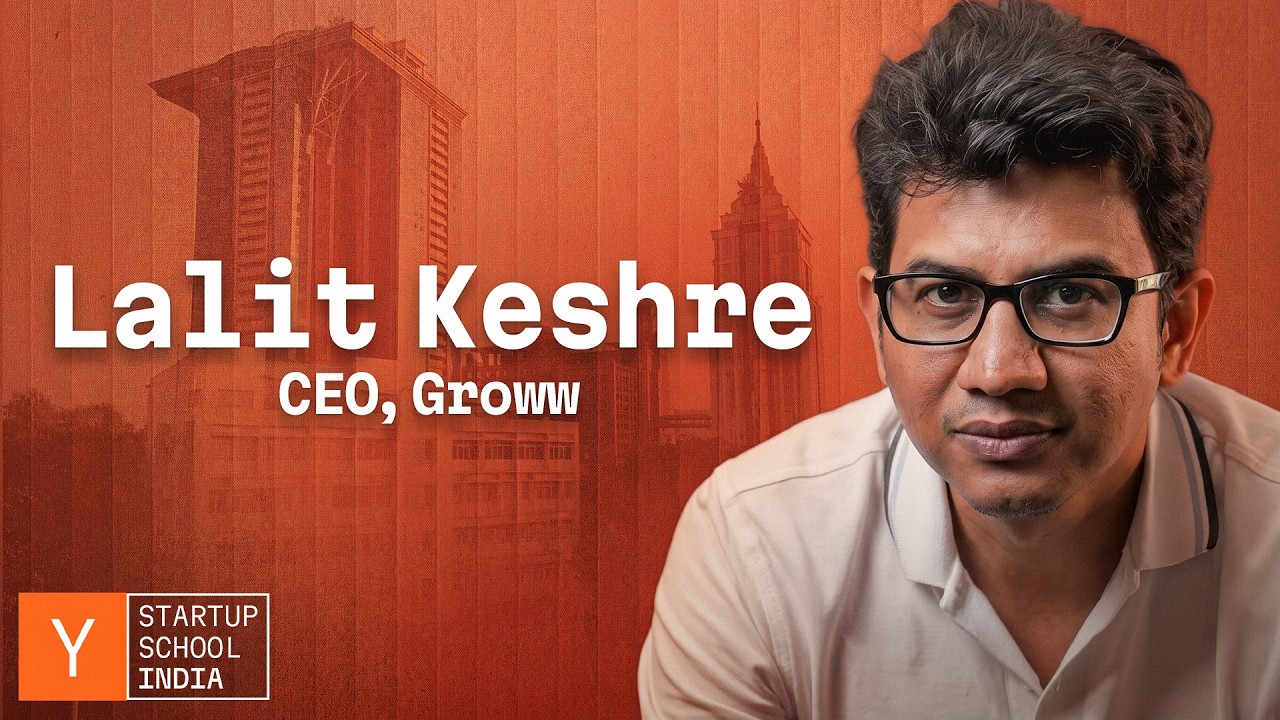
Groww: If Your Customers Don't Love It or Hate It, You've Already Lost
 77 min
5 Papers That Show Where AI Research Is Heading Right Now
 31 min
How Meesho Became India’s Biggest Shopping App
Ask anything from this episode.
Save it, chat with it, and connect it to Claude or ChatGPT. Get cited answers from the actual content — and build your own knowledge base of every podcast and video you care about.
Get Started Free