Key Moments
Dennis Whyte: Nuclear Fusion and the Future of Energy | Lex Fridman Podcast #353
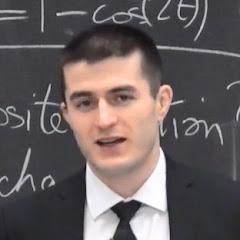 Lex Fridman
Want to know something specific about what's covered?
We've already dissected every moment. Ask and we will deliver (with timestamps).
Key Moments
Fusion energy, a carbon-free power source like stars, is shifting from science fiction to reality, driven by innovative magnet tech and collaborative efforts.
Key Insights
Nuclear fusion, the process powering stars, involves fusing light elements (hydrogen) into heavier ones (helium), releasing immense energy due to mass-energy conversion (E=mc²).
Fusion offers virtually unlimited, cheap fuel with no greenhouse gas emissions and intrinsic safety, as it cannot run away or cause a meltdown like fission.
Plasma, the fourth state of matter, is essential for fusion, requiring extreme temperatures (100 million °C) and effective confinement (magnetic or inertial).
The recent breakthrough in inertial confinement at NIF achieved scientific breakeven (Qp > 1), demonstrating more fusion energy output than laser input to the plasma.
Magnetic confinement, particularly the Tokamak, is the most mature approach, with MIT's SPARC project aiming for high-gain, compact fusion using novel high-temperature superconducting magnets.
Commercialization efforts, driven by private-sector companies like Commonwealth Fusion Systems, aim to accelerate fusion development by focusing on cost reduction and efficiency, projecting pilot plants in the early 2030s.
Addressing societal concerns—such as waste disposal and public trust—is crucial for the widespread acceptance and economic viability of fusion power, alongside continued interdisciplinary collaboration.
THE FUNDAMENTAL PRINCIPLE OF NUCLEAR FUSION
Nuclear fusion is the universe's foundational energy process, compelling lighter atomic nuclei, typically hydrogen isotopes, to merge into heavier elements like helium. This transformation, governed by Einstein's E=mc², converts a small amount of mass into a colossal release of kinetic energy, far surpassing chemical reactions. In stars, including our Sun, enormous gravitational forces create the extreme pressure and temperatures necessary for hydrogen to fuse into highly stable helium nuclei, sustaining energy output for billions of years.
THE PHYSICS OF FUSION: TEMPERATURE AND FORCES
Achieving fusion on Earth requires overcoming the electrostatic repulsion between positively charged nuclei. This necessitates heating the fuel to extraordinary temperatures, typically 50 to 100 million degrees Celsius, to give particles enough kinetic energy to approach within the range of the powerful, short-range strong nuclear force. Quantum tunneling also plays a critical role, allowing nuclei to overcome potential barriers even if their classical kinetic energy is insufficient. This delicate balance of forces and energies underpins all fusion reactions.
FUSION: CLEAN, SAFE, AND ABUNDANT
Nuclear fusion offers an inherently clean and safe energy source. Its primary fuel, derived from hydrogen isotopes, is virtually limitless and inexpensive, with minimal environmental impact. Unlike fossil fuels, fusion produces no greenhouse gases or atmospheric pollutants. Safety is paramount: the extreme temperatures of a fusion plasma mean it must be completely isolated from its terrestrial environment. Its low particle density means minimal energy is stored per unit volume, making a runaway reaction physically impossible. Any disruption causes the plasma to cool instantly and self-extinguish, preventing meltdowns like those seen in fission reactors.
DISTINGUISHING FUSION FROM FISSION
Fusion and fission, while both nuclear processes, are fundamentally opposite. Fission splits heavy, unstable elements like uranium, usually at room temperature, releasing energy via a controlled chain reaction. This process is used in nuclear weapons and current power plants, requiring stringent control to prevent exponential energy release. Fusion, conversely, combines light elements at ultra-high temperatures and does not involve a chain reaction. Its inherent thermal stability means it cannot run out of control, making it intrinsically safe from weaponization for energy purposes.
PLASMA: THE FOURTH STATE OF MATTER
Plasma is a state of matter beyond solid, liquid, and gas, occurring when gases are heated to such high temperatures (above 5,000-10,000°C) that electrons are stripped from their atoms, creating a soup of free ions and electrons. This charged medium behaves uniquely, with particles interacting over long distances via electromagnetic forces rather than direct collisions. Over 99% of the visible universe consists of plasma, including stars and phenomena like lightning. In fusion, understanding these complex plasma dynamics is crucial for achieving and maintaining the conditions necessary for sustained reactions.
KEY REQUIREMENTS FOR FUSION: TEMPERATURE, DENSITY, AND CONFINEMENT
The Lawson Criterion defines the three essential parameters for achieving net energy gain from fusion: sufficient temperature (around 100 million °C), adequate fuel density, and effective energy confinement time. Confinement is critical to prevent the superheated plasma from rapidly losing energy to its surroundings, much like insulating a home. The goal is to reach a point where the energy released by fusion reactions itself becomes the dominant heating source, making the process self-sustaining, akin to how a star maintains its own heat without external input.
INERTIAL CONFINEMENT FUSION: THE NIF BREAKTHROUGH
Inertial confinement fusion (ICF) uses powerful lasers to rapidly compress a small, frozen pellet of fusion fuel (deuterium and tritium). Lasers ablate the pellet's surface, creating a rocket-like force that implodes it, adiabatically compressing the core to extreme densities and temperatures. This creates a tiny, transient 'hot spot' where fusion begins and ideally propagates throughout the remaining cold fuel before the inertia allows it to expand. The recent NIF breakthrough represents a significant scientific milestone, achieving net energy gain from the plasma itself (Qp > 1), signifying that the fusion reactions substantially altered the plasma's state through self-heating.
MAGNETIC CONFINEMENT FUSION: THE TOKAMAK APPROACH
Magnetic confinement fusion (MCF) utilizes powerful magnetic fields to contain the superheated, charged plasma, preventing it from touching the reactor walls. The most mature MCF device is the Tokamak, a donut-shaped vacuum vessel where magnetic fields loop back on themselves and twist, forcing plasma particles to orbit field lines and maintain confinement. This approach leverages the Lorentz force, which exerts force on charged particles in a magnetic field. Stronger magnetic fields enhance confinement effectiveness, keeping the plasma further from terrestrial materials.
SUPERCONDUCTING MAGNETS AND SPARK
MIT and Commonwealth Fusion Systems (CFS) have pioneered compact, high-field Tokamaks like SPARC, made possible by breakthroughs in high-temperature superconducting (HTS) magnets. HTS materials conduct electricity with zero resistance, allowing for much stronger and more efficient electromagnets compared to traditional copper coils. This technological leap enables the design of significantly smaller, more powerful fusion devices. SPARC, 40 times smaller than the international ITER project, aims to achieve net energy gain and self-heating dominance, demonstrating commercial viability in a compact footprint.
THE ITER PROJECT: INTERNATIONAL COLLABORATION
ITER (International Thermonuclear Experimental Reactor), currently under construction in the south of France, is a mega-project involving a consortium of nations, including the US, EU, China, India, Japan, Russia, and South Korea. Its scientific objective is to achieve a significant amount of self-heating (Qp around 10) and produce 500 megawatts of fusion power, demonstrating fusion at a relevant scale for the first time. ITER represents unprecedented international collaboration in science, though its multi-national governance has led to significant challenges in project speed and decision-making.
THE RISE OF PRIVATE SECTOR DRIVEN FUSION
The landscape of fusion development has rapidly evolved, with a burgeoning private sector now complementing publicly funded initiatives. Companies like CFS, spun out of MIT, are leveraging venture capital and commercial drives to accelerate technology. This private-sector push introduces a focus on cost reduction, efficiency, and aggressive timelines, with goals to deploy pilot fusion power plants delivering electricity to the grid by the early 2030s. This model, inspired by successes like SpaceX, emphasizes rapid iteration and the relentless pursuit of commercial viability.
CHALLENGES AND THE PATH TO COMMERCIALIZATION
Despite significant progress, several hurdles remain for commercial fusion. The high cost of building single fusion units, which inherently require a minimum scale (e.g., 50 megawatts electric) to be self-sustaining, is a major challenge. Achieving and maintaining the precise plasma conditions for high-gain fusion is still technically demanding. The biggest engineering tasks involve efficiently extracting the energetic particles from fusion reactions and converting them into grid-ready electricity. Integrating these complex systems into a reliable, economically competitive power plant is the ultimate test.
THE MULTIDISCIPLINARY NATURE OF FUSION
Fusion is an inherently multidisciplinary field, intertwining nuclear physics, plasma physics, and nearly every branch of engineering: electrical, computer, computational, materials, and cryogenic. The complexity arises from designing, modeling, and building systems that push materials to their limits, control extreme temperatures, and ensure seamless operation. Developing a new generation of scientists and engineers capable of navigating these diverse challenges is crucial. The field requires innovative design philosophies, modular problem-solving, and the integration of advanced computation, including AI and machine learning, to accelerate progress.
VISIONS OF THE FUTURE AND SOCIETAL IMPACT
Fusion power promises to revolutionize global energy, potentially lifting billions out of poverty and enabling advanced societal development, including interstellar travel and colonization. This potential underscores the need for proactive engagement with societal concerns, addressing issues like waste disposal, safety, and public trust transparently. While the physics of fusion is universal, its practical application will likely lead to diverse reactor designs, each with unique tradeoffs, akin to the varied transportation solutions meeting different needs. The drive for fusion is fueled by an optimistic vision for humanity's future, embracing the awe of scientific discovery and the responsibility to harness its power wisely.
THE PHILOSOPHY OF SCIENCE AND HUMAN ENDEAVOR
The pursuit of fusion, like all major scientific endeavors, reflects humanity's enduring quest for understanding the universe. From Feynman's atomic theory to Rutherford’s discovery of the nucleus, scientific progress has repeatedly reshaped our perception of reality. While progress is often incremental, punctuated by 'days the universe changed' moments, it requires scientists to cultivate self-doubt and demand empirical proof. The possibility of AI driving future discoveries and the existential questions posed by the Fermi Paradox about the rarity of advanced life underscore profound philosophical implications. Despite challenges, the human spirit of curiosity, collaboration, and resilience offers hope for overcoming global challenges and expanding our civilization's reach and impact.
Mentioned in This Episode
●Products
●Software & Apps
●Companies
●Organizations
●Concepts
●People Referenced
Common Questions
Nuclear fusion is the process that powers the universe, where lighter elements, typically hydrogen isotopes, are fused together into heavier elements like helium. This rearrangement of nuclear structure releases kinetic energy due to a decrease in rest mass, as described by E=mc².
Topics
Mentioned in this video
It describes the equivalence of mass and energy, explaining how fusion releases large amounts of energy due to a change in rest mass.
Used as an analogy for how private sector funding and commercial drives can accelerate technological development, achieving orbital launches more cheaply than traditional public entities like NASA.
An automotive company known for its semi-autonomous driving and autopilot features, achieving higher scale in deployment but not full autonomy like Waymo in its early stages.
Mentioned for their efforts in using reinforcement learning for control algorithms in nuclear fusion, highlighting the role of AI in computational modeling for fusion design and operation.
An autonomous vehicle company (part of Alphabet) that focuses on achieving full autonomy in specific cities with actual passengers, contrasting with Tesla's broader, semi-autonomous approach.
Conducted the first sustained nuclear fission chain reaction under a squash court at the University of Chicago campus.
An MIT physics professor and pioneer in fusion research who, along with Ron Parker, blended science and engineering to establish the Plasma Science and Fusion Center.
A science historian who created the series 'The Day the Universe Changed,' illustrating how fundamental insights transform human perception of the universe.
An experimental physicist who discovered the atomic nucleus through an extraordinary experiment with alpha particles and gold foil, profoundly changing the understanding of matter as mostly empty space.
An MIT professor in Electrical Engineering and Nuclear Engineering, a pioneer in fusion research who blended science and engineering to establish the Plasma Science and Fusion Center.
A celebrated physicist known for bringing wonder to equations and relationships, who posited that the universe operates because all matter is made up of interacting particles and forces.
The podcaster quotes Einstein at the end: 'There are two ways to live your life. One is as though nothing is a miracle. The other is that everything is a miracle.'
Attributed with the quote, 'Never doubt that a small group of dedicated persons will change the world,' emphasizing the power of passionate individuals and small teams in driving significant change.
The laboratory where the National Ignition Facility's breakthrough in inertial confinement fusion took place, funded by the US Department of Energy.
A private sector company spun out of MIT, focused on commercializing fusion power plants, particularly through the SPARC and ARC projects. They leverage new superconducting magnet technology for compact, high-field tokamaks.
Dennis Whyte is the director of this center, which conducts research in nuclear fusion and plasma science.
A Department of Energy facility at Lawrence Livermore National Laboratory where a breakthrough in laser-based inertial confinement fusion was achieved.
An international nuclear fusion mega-project under construction in the south of France, aimed at demonstrating large net energy gain and fusion power at a relevant scale (Qp of 10, 500MW fusion power).
The U.S. public entity for space exploration, contrasted with SpaceX to highlight the different purposes and drivers of public versus private sector funding in technological advancement.
The US government entity that funded the National Ignition Facility's laser-based inertial confinement fusion research.
The National High Field Magnet Laboratory at MIT, which was instrumental in developing strong magnetic fields, contributing to the origins of the Plasma Science and Fusion Center.
A large-scale government-funded project for mapping the human genome, used as an analogy to illustrate the foundational role of public, curiosity-driven research, later disrupted by faster private-sector technology.
A formulation by UK scientists in 1956/57 that outlines the basic requirements (temperature, density, confinement time) for a fusion reaction to achieve net energy gain.
A method of classifying civilizations based on their energy use, from Type 1 (harnessing all energy on their home planet) to Type 2 (harnessing the entire energy output of their star).
The contradiction between the high probability of extraterrestrial life and the lack of observed evidence, with discussions around human uniqueness, self-destruction, and the vastness of space.
A quantum physics effect where particles can pass through energy barriers without sufficient classical energy, crucial for fusion reactions in stars and on Earth.
A Russian acronym for a donut-shaped device that uses magnetic coils to confine plasma for fusion, significantly advanced by the Soviet Union in the 1960s and forms the basis for ITER and SPARC.
More from Lex Fridman
View all 550 summaries 174 min
Biggest Mysteries in Physics: Antimatter, Dark Energy & ToE - Don Lincoln | Lex Fridman Podcast #497
 259 min
FFmpeg: The Incredible Technology Behind Video on the Internet | Lex Fridman Podcast #496
 124 min
Vikings, Ragnar, Berserkers, Valhalla & the Warriors of the Viking Age | Lex Fridman Podcast #495
 146 min
Jensen Huang: NVIDIA - The $4 Trillion Company & the AI Revolution | Lex Fridman Podcast #494
Ask anything from this episode.
Save it, chat with it, and connect it to Claude or ChatGPT. Get cited answers from the actual content — and build your own knowledge base of every podcast and video you care about.
Get Started Free