Key Moments
Deep Learning for Natural Language Processing (Richard Socher, Salesforce)
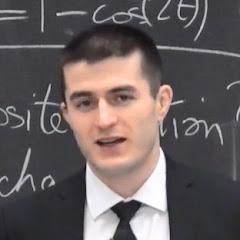 Lex Fridman
Want to know something specific about what's covered?
We've already dissected every moment. Ask and we will deliver (with timestamps).
Key Moments
Deep learning for NLP with word vectors and recurrent neural networks, enabling advanced question answering and visual question answering.
Key Insights
Natural Language Processing (NLP) aims for computers to understand and process human language for useful tasks.
Deep learning significantly improves NLP, often bypassing traditional steps like morphological or syntactic analysis.
Word vectors represent words as numerical vectors, capturing semantic relationships through distributional similarities.
Recurrent Neural Networks (RNNs), particularly Gated Recurrent Units (GRUs), are essential for processing sequential data like text.
Dynamic Memory Networks (DMNs) integrate various NLP tasks (sentiment analysis, QA, POS tagging) and extend to visual question answering.
The field is moving towards more modular, end-to-end trainable architectures for complex reasoning and novel applications.
UNDERSTANDING NATURAL LANGUAGE PROCESSING
Natural Language Processing (NLP) is an interdisciplinary field combining computer science, AI, and linguistics. Its primary goal is to enable computers to process and, in a sense, 'understand' human language to perform useful tasks like question answering. While perfect language understanding remains an elusive AI-complete problem, NLP often breaks down language into levels such as speech, phonemes, morphology, syntax, semantics, and discourse. Deep learning has shown remarkable success in improving state-of-the-art results, particularly in speech recognition, syntax, and semantics, often by directly learning representations that skip intermediate linguistic analyses.
THE CHALLENGES AND APPLICATIONS OF NLP
NLP faces significant challenges due to the complexity of representing and learning linguistic, situational, and world knowledge. Ambiguity, coreference resolution (e.g., determining who 'she' refers to), and context-dependent meanings make language difficult for computers to process. Applications range from simple tasks like spell checking and keyword search to more complex ones like named entity recognition, sentiment analysis, machine translation, question answering, and spoken dialogue systems. Deep learning has made substantial progress in these areas, though achieving human-level accuracy remains an ongoing pursuit.
WORD VECTORS AND DISTRIBUTIONAL SEMANTICS
Traditional NLP relied on discrete representations like WordNet, which struggled with nuances, new words, and subjective definitions. Deep learning for NLP often begins with word vectors, which represent words as dense, low-dimensional numerical vectors. These vectors are typically learned using distributional semantics, where the meaning of a word is derived from its context (i.e., words that frequently appear nearby). Models like Word2Vec and GloVe learn these vectors by predicting words in a given window or by modeling co-occurrence statistics, effectively capturing semantic and syntactic relationships, as demonstrated by word analogies (e.g., 'king' - 'man' + 'woman' ≈ 'queen').
RECURRENT NEURAL NETWORKS (RNNS) FOR SEQUENCES
Words rarely appear in isolation; understanding their context is crucial. Recurrent Neural Networks (RNNs) are designed to process sequential data. Unlike standard neural networks, RNNs have shared weights across time steps, allowing them to maintain a hidden state that summarizes past information. This enables them to condition predictions on previous words, which is vital for tasks like language modeling. Gated Recurrent Units (GRUs) and Long Short-Term Memory (LSTM) networks are advanced RNN variants that use 'gates' to selectively remember or forget information, mitigating the vanishing gradient problem and allowing the model to capture long-range dependencies more effectively.
ADVANCEMENTS AND NOVEL ARCHITECTURES
Recent research has focused on improving NLP models beyond basic RNNs. One significant development is the pointer-generator network, which combines a standard softmax classifier with a pointer mechanism. This allows models to both predict words from the training vocabulary and copy words from the input context, enabling them to handle out-of-vocabulary words and improve performance, as measured by perplexity in language modeling. This capability is crucial for adapting to new terms and improving generalization.
DYNAMIC MEMORY NETWORKS (DMNS) AND MULTIMODAL LEARNING
Dynamic Memory Networks (DMNs) represent a step towards unifying various NLP tasks under a single framework, treating them as question-answering problems. DMNs utilize an episodic memory module that allows the model to make multiple passes over the input, paying attention to relevant facts and reasoning to answer questions. This architecture has achieved state-of-the-art results on tasks like logical reasoning, sentiment analysis, and part-of-speech tagging. Intriguingly, by modifying the input module, DMNs can also be applied to Visual Question Answering (VQA), demonstrating the potential for multimodal learning by integrating image region features with text-based reasoning capabilities.
Mentioned in This Episode
●Software & Apps
●Companies
●Concepts
●People Referenced
Deep Learning for NLP: Key Concepts
Practical takeaways from this episode
Do This
Avoid This
Common Questions
NLP is a field at the intersection of computer science, AI, and linguistics that focuses on enabling computers to process and understand human language to perform useful tasks. It aims to go beyond simple text processing to capture meaning and context.
Topics
Mentioned in this video
A model introduced by Thomas Mikolov in 2013 that trains word vectors by predicting words in a window, offering faster training and vocabulary expansion compared to older methods.
A lexical database of English that groups words into sets of synonyms called synsets, providing hypernyms and hyponyms. It was a traditional method for representing word meaning.
Global Vectors for Word Representation, a model introduced by Jeffrey Pennington in 2014 that combines aspects of matrix factorization and local context window methods to efficiently train word vectors.
A large dataset of internet data used to train models like GloVe, containing billions of tokens.
Recurrent Neural Network, a type of neural network designed to handle sequential data by maintaining a hidden state that captures information from previous steps.
Long Short-Term Memory, a type of recurrent neural network unit that is more advanced and influential than GRUs. A lecture by Kwok on LSTMs is mentioned.
An architecture designed to tackle arbitrary question-answering tasks by allowing multiple 'glances' at input data, utilizing GRUs and attention mechanisms.
Mentioned as an example of a figure discussed in an article, whose name might not have appeared in training data but should be predictable in context.
Mentioned in relation to the GloVe model, though the transcript incorrectly attributes it to Geoffrey Pennington. Geoffrey Hinton is a prominent figure in deep learning, particularly known for his work on neural networks.
Introduced the GloVe model in 2014, which efficiently trains word vectors by leveraging global co-occurrence statistics.
Associated with memory networks, which share similarities with Dynamic Memory Networks but use different foundational blocks.
Mentioned as having pushed performance down further in language modeling, though the name provided in the transcript might be a misinterpretation or similar-sounding name (e.g., Yann Gull).
Convolutional Neural Network, used as the input module for visual question answering in the DMN architecture, processing image regions into vectors.
Gated Recurrent Unit, a type of recurrent neural network unit that is a special case of LSTMs, designed to better capture long-term dependencies through gates that control information flow.
More from Lex Fridman
View all 550 summaries 174 min
Biggest Mysteries in Physics: Antimatter, Dark Energy & ToE - Don Lincoln | Lex Fridman Podcast #497
 259 min
FFmpeg: The Incredible Technology Behind Video on the Internet | Lex Fridman Podcast #496
 124 min
Vikings, Ragnar, Berserkers, Valhalla & the Warriors of the Viking Age | Lex Fridman Podcast #495
 146 min
Jensen Huang: NVIDIA - The $4 Trillion Company & the AI Revolution | Lex Fridman Podcast #494
Ask anything from this episode.
Save it, chat with it, and connect it to Claude or ChatGPT. Get cited answers from the actual content — and build your own knowledge base of every podcast and video you care about.
Get Started Free