Key Moments
David Senra — How Extreme Winners Think and Win: Lessons from 400+ of History’s Greatest Founders
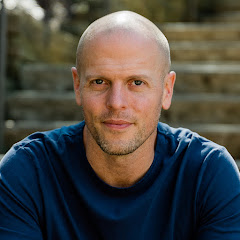 Tim Ferriss
Key Moments
David Senra shares insights from studying history's greatest founders, emphasizing differentiation, resilience, and product obsession while launching a new podcast.
Key Insights
Differentiation is crucial for success; don't do what others can do.
True learning involves changing behavior, not just memorizing information.
Many extreme winners are driven by negative motivations, but a rare few operate from love or positive principles.
Identifying and taking inspiration from historical figures and their core ideas is a powerful learning strategy.
A deep obsession with product quality and retaining long-term control often leads to financial success, even for 'anti-business' billionaires.
Finding one's 'mission in life' and focusing intensely on it (low introspection thereafter) can be a profound driver of achievement.
Authenticity and working on something 'natural to you' are essential for long-term endurance and success.
THE IMPORTANCE OF DIFFERENTIATION AND UNCONVENTIONAL THINKING
David Senra, host of the Founders podcast, highlights the critical yet often misunderstood concept of differentiation in business. He cites Edwin Land's motto: 'Don't do anything that someone else can do,' and James Dyson's philosophy of making products 'different, even if it's worse.' This emphasis on uniqueness, rather than mere incremental improvement, is a recurring trait among extreme winners. Additionally, Dyson, a Harvard dropout, believes anything worth doing is worth doing to excess, challenging conventional business school wisdom.
DIVERSE MOTIVATIONS OF EXTREME WINNERS
David observes that many highly successful entrepreneurs are driven by 'dark' motivations, such as childhood insecurity or poverty. However, he identifies a rare few who operate from more positive places. Brad Jacobs, the only person to start eight separate billion-dollar companies, stands out for his lack of negativity and drivenness by love. Ed Thorp, the legendary mathematician who beat roulette and the market, and Sol Price, who pioneered the warehouse model (mentoring Costco's founder), are noted for achieving mastery without sacrificing their personal lives. Brunello Cucinelli, a luxury cashmere entrepreneur, embodies a soulful approach, prioritizing work-life balance and community reinvestment over relentless pursuit of wealth.
THE ROLE OF FEAR AND POSITIVE DRIVES
Michael Dell, another example of a positively driven founder, is motivated by a significant fear of failure, a trait David shares. This fear, while often productive, can also manifest as negative self-talk, which Tim Ferriss cautions against as potentially damaging to relationships and overall well-being. Jensen Huang, founder of NVIDIA, exemplifies a hardcore, self-critical drive, even after immense success. The discussion explores the fine line between productive pain and destructive suffering, emphasizing the importance of nuanced self-talk and avoiding the trap of believing that pain is always a measure of effort.
LEARNING AS BEHAVIORAL CHANGE AND THE POWER OF RELATIONSHIPS
David Senra defines learning not as memorizing information, but as changing one's behavior. He likens his extensive reading of biographies to 'one-sided conversations' with history's greatest entrepreneurs, which he then condenses and applies to his own business. This process attracted prominent figures like Michael Dell, who became fans and offered invaluable advice. David emphasizes that successful individuals throughout history, from Caesar to Steve Jobs, have studied their predecessors. He views his podcast as a 'tuning fork' that attracts others who share a deep love of history and learning, fostering relationships at scale.
DAVID SENRA'S UNIQUE NOTE-TAKING AND RESEARCH METHODOLOGY
David details his highly intuitive, "arts and crafts" approach to reading and note-taking. He uses physical books, a pen, a 6-inch ruler for straight lines, Post-it notes, and scissors. He underlines key sentences and, driven by intuition, immediately jots down associated ideas or parallels to other historical figures on Post-it notes, which he then meticulously cuts to fit the page. This labor-intensive process, including manual input into Readwise, ensures deep engagement and repeated exposure to the material. He compares his process to Cormac McCarthy's method of writing from the subconscious, eliminating anything that obstructs the essence.
PERSONAL REDEMPTION AND THE ORIGINS OF DRIVE
David shares a deeply personal account of his challenging childhood, marked by undiagnosed mental illness in his family and a difficult home life that led to him being kicked out at 18. This early adversity, including witnessing family members go to prison, fueled a powerful 'this can't be my life' motivator. He reflects on how his mother's tragic experience with cancer and her vulnerability to fraudulent religious figures influenced his commitment to genuine, inspiring content. This background explains his 'pulpit preacher' fervor and the underlying mission to spread valuable knowledge rather than exploit others.
THE EVOLUTION OF PODCASTING AND BUSINESS MODELS
David recounts the struggle of his early podcasting years, when advertising models were not viable for small shows. He discovered the subscription model through a socialist podcast, Chapo Trap House, which successfully monetized content on Patreon. He adopted this for Founders, envisioning 'dentist money' from 3,000 subscribers. This subscription model, though it slowed growth, connected him with an audience of high-caliber founders and VCs. A pivotal moment came when Patrick O'Shaughnessy, a prominent investor and fellow podcaster, endorsed Founders, leading to a surge in subscriptions and eventually a partnership with Patrick's Colossus network, allowing him to transition to an ad-based model.
THE INFLUENCE OF MENTORS AND HISTORICAL THINKERS
David emphasizes the importance of identifying and studying the influences of one's heroes. He learned from Charlie Munger, who in turn was influenced by Henry Singleton and David Ogilvy, who acknowledged Claude Hopkins. This lineage reveals that ideas are often built upon past wisdom. Edwin Land, the founder of Polaroid, is Steve Jobs's 'patron saint of founders,' with Jobs directly adopting Land's ethos of building companies at the intersection of liberal arts and technology and creating 'magical consumer products.' This historical tracing reinforces the idea that true innovation often comes from reinterpreting and applying enduring principles.
ARCHETYPES OF ENTREPRENEURSHIP: GRINDERS VS. ANTI-BUSINESS BILLIONAIRES
David and Tim discuss different entrepreneurial archetypes. Bill Gates is presented as a 'grinder,' relentlessly focused on work, while Larry Ellison is a 'sprinter,' alternating intense work periods with lavish relaxation. David also identifies the 'anti-business billionaire' archetype, embodied by figures like Steve Jobs, James Dyson, and Yvon Chouinard (Patagonia). These individuals are fundamentally obsessed with product quality and maintaining long-term control, often making non-financial decisions. Ironically, this product obsession, coupled with control, often leads to immense wealth. Michael Dell's advice, 'You're not going to be taken out by competition. You're going to sabotage yourself,' underscores the importance of relentless focus and avoiding complacency.
THE POWER OF INTUITION, FOCUS, AND THE 'NATURAL' BUSINESS
David highlights Steve Jobs's belief that intuition and perseverance are more critical than intelligence. He aims for a business that feels 'natural' to him, as exemplified by Michael Dell's ability to thrive when others burned out because his business aligned with his intrinsic drive. David believes that ultimate success comes from identifying one's mission, working relentlessly and authentically, and constantly striving to improve. His own obsession with his product prevents him from outsourcing core tasks, embodying the philosophy of 'the hard way is the right way.' He focuses on building a business that is an extension of himself, not constrained by external goals.
THE VALUE OF TRUTH-TELLERS AND DIVERSE PERSPECTIVES
David emphasizes the importance of surrounding oneself with people who will tell the truth, citing Michael Ovitz's value for Rick Gerson's honesty. He notes that highly successful individuals are often surrounded by 'yes-men,' leading to isolation from reality. Jim Casey, founder of UPS, actively sought feedback from frontline employees away from his executives to understand actual operations. This principle is crucial for avoiding self-sabotage and maintaining a grounded perspective. While acknowledging the presence of 'psychopaths' in entrepreneurship, David looks for the underlying ideas that can improve one's own business, rather than blindly modeling potentially destructive behaviors.
THE 'CAN'T BE MY LIFE' MOTIVATOR AND LOW INTROSPECTION
The 'this can't be my life' mindset, driven by escaping undesirable circumstances, is a potent motivator for many entrepreneurs, including Michael Ovitz. Seeing what one *doesn't* want can be more powerful than visualizing what one *does* want. David also discusses the concept of 'low introspection' among successful founders like Sam Walton; once they find their mission, they are not consumed by self-doubt or philosophical contemplation but rather by continuous iteration and improvement within their chosen domain. This singular focus, while not always healthy, is often a hallmark of extreme achievement.
THE ART OF DEAL-MAKING AND THE PRIVATE JET EQUATION
Eddie Lampert, a highly successful investor, enlightened David on the distinction between an investor and a dealmaker. The best dealmakers, like Richard Rainwater and David Geffen, are judged not just by return on invested capital but by their ability to generate 'all returns, no capital,' leveraging influence and relationships to gain equity. Rainwater, in particular, built such an influential position that people would simply give him equity. Sam Zell's philosophy that 'the things you own start to own you' and that a private jet is the 'only true luxury in life' (due to its efficiency) underscores how certain high-achievers prioritize maximizing efficiency and maintaining liquidity to further their ventures.
BALANCING GROWTH AND PRESERVING THE 'MAGIC' IN PODCASTING
David's decision to launch a new interview-based podcast stems from his natural inclination to engage in long conversations with founders, combined with encouragement from mentors like Patrick O'Shaughnessy and Daniel Ek. He aims to produce multiple conversations per week, contrasting with the solitary, book-intensive process of Founders. The new show leverages his unique ability to connect historical insights with modern entrepreneurs, creating a 'human LLM' effect. He is building a dedicated team for the new show to avoid compromising the quality or 'magic' of his existing Founders podcast, which he continues to hand-edit out of deep passion for the craft. His success, he believes, will come from being proud of his product, regardless of metrics.
THE ENDURING POWER OF OBSESSION AND IMPACT OVER HAPPINESS
David attributes his longevity and quality in podcasting to a fundamental obsession, echoing Joe Rogan's sentiment that obsession negates the need for discipline or willpower. He views his work as an 'outgrowth' of his intrinsic enjoyment, sustaining him through years when no one was listening. Daniel Ek's advice—that 'life is not about happiness; it's about impact'—resonates deeply with David, who seeks to have a positive impact by spreading valuable entrepreneurial ideas. He sees his chosen path as creating a 'unique experience generator,' fostering connections and opportunities that can't be bought, fueled by his 'ruthless competitive drive' and dedication to continuous improvement.
Mentioned in This Episode
●Products
●Software & Apps
●Companies
●Organizations
●Books
●Studies Cited
●Concepts
●People Referenced
Common Questions
David Senra highlights Ed Thorp, Sol Price, and Brunello Cucinelli as rare examples of prolific entrepreneurs who maintained a positive personal life and didn't sacrifice relationships for wealth, in contrast to many others he's studied.
Topics
Mentioned in this video
Obsessed over by James Dyson, an influential figure whose ideas informed many successful entrepreneurs.
Close friend of David and Tim, described as generous, thoughtful, intense, and a master of finance, known for his ability to identify important deals.
Inventor of the warehouse model (Costco). Known for being a good husband and father who prioritized life balance over chasing more money after achieving enough.
Famous Japanese swordsman, whose historical novel 'Musashi' was discussed on a 5-hour podcast episode with Jocko Willink.
The hosts of 'Invest Like the Best' podcast, compared to Oprah Winfrey for their ability to build trust and influence purchasing decisions.
An Italian entrepreneur who sells luxury sweaters, known for fostering a soulful, balanced work environment in his rural hometown which he helped rebuild.
A legend who beat roulette and the market, an exception among extreme winners for not sacrificing his personal life for business mastery.
Founder of Patagonia, categorized as an 'anti-business billionaire' due to his obsession with product quality and retaining company control.
New York real estate developer who invented the 'Hawaiian technique' of parceling out buildings. Influenced Sam Zell.
A prominent engineer mentioned as an influential figure for James Dyson.
Founder of Polaroid, considered the 'patron saint of founders' by David Senra and a key role model for Steve Jobs. Inventor of instant photography with a motto of not doing anything someone else can do.
Founder of Duolingo, mentioned as an example of an engineer founder archetype.
Brought in by Michael Dell when Dell was 21, and who quit after four years due to the intense pressure of scaling the company, illustrating the difference in what feels 'natural' to entrepreneurs.
Founder of UPS, who realized the dangers of relying only on top executives and sought direct feedback from service personnel.
Co-founder of CAA, once the most powerful man in Hollywood, described as a 'shark' and one of the best salespeople alive. Emphasizes spending time with people who tell you the truth.
A platform that uses the Patreon API to show people building membership communities, where David discovered Chapo Trap House's subscription model.
A podcast by Dan Carlin, David Senra's favorite and an inspiration for his own work, known for its deep dives into historical topics.
A shorter biography of Edwin Land (250 pages) written by a long-time colleague, recommended as an accessible starting point.
An extremely popular historical novel about the Japanese swordsman Miyamoto Musashi, read by David Senra due to the podcast episode with Jocko.
Biography of Edwin Land, considered by David Senra to be the most comprehensive, though some readers find it dry.
The biography of Steve Jobs by Walter Isaacson, where Edwin Land is mentioned multiple times, highlighting Land's lasting influence on Jobs.
Another book about Bill Gates, written by the same authors as 'Hard Drive', emphasizing his intense drive.
A book by Ralph Potts, recommended by Tim Ferriss as a philosophical operating system for long-term world travel.
Bill Gates' autobiography covering his first 20 years, contrasted with 'Hard Drive' for its potentially sanitized perspective.
An early biography of Bill Gates, considered by David to be more accurate than Gates' own autobiography due to being written closer to the events it describes.
An autobiography providing a different perspective on Bill Gates, used by David to cross-reference and understand Gates' early career.
More from Tim Ferriss
View all 692 summaries 89 min
From Food Stamps to the Super Bowl War Room — NFL Chief Security Officer Cathy Lanier
 55 min
From Dad’s Basement to Selling Two Companies — 4-Hour Workweek Success Story
 184 min
Daredevil Michelle Khare — How to Become a YouTube Superstar
 81 min
Q&A with Tim — The Upcoming AI Tsunami and Building Offline Advantage
Ask anything from this episode.
Save it, chat with it, and connect it to Claude or ChatGPT. Get cited answers from the actual content — and build your own knowledge base of every podcast and video you care about.
Get Started Free