Key Moments
Dante Livestream #11 (Friday, June 26 10AM)
 Predictive History
Want to know something specific about what's covered?
We've already dissected every moment. Ask and we will deliver (with timestamps).
Key Moments
Dante's cosmology, a radical reinterpretation of divine justice, posits that free will is the universe's foundational law, making purgatory accessible and redemptive for everyone, not just the wealthy—a concept so groundbreaking it challenges both traditional theology and even Virgil's own understanding of love and salvation.
Key Insights
Dante's unique cosmology fundamentally reframes purgatory from a Catholic backdoor for the wealthy and the unbaptized to a democratic and hopeful process for everyone, emphasizing individual action and internal change over external compliance, a stark contrast to the church's view around 1300 AD.
The placement of sins in Purgatory is inverted compared to Inferno, with 'too much love' (lust, gluttony, greed) at the bottom and 'love perverted' (pride, envy, wrath) at the top, suggesting a hierarchy that measures proximity to God through the nature of one's love.
The concept of 'universal consciousness' or 'Indra's Net' is introduced as a more accurate model for memory and inspiration, where emotions and memories are stored externally in an infinite, eternal grid, enabling profound insights, artistic creation, and even precognition; this contrasts with the neuroscientific model that categorizes memories by emotional value within the individual brain.
Virgil and Dante's differing views on love are central: Virgil sees love as a desire to 'possess' or 'dominate' the beloved, while Dante views it as an act of 'giving' and 'devotion,' highlighting a critical philosophical divergence that ultimately leads to their separation in the narrative.
Statius, a pre-Christian Roman poet, is depicted as ascending to heaven after secretly converting to Christianity, demonstrating that salvation is attainable even for pagans who recognize divine truth within classical texts, a notion that challenges Virgil's rigid belief system.
Dante suggests that 'free will' is the universe's ultimate law, ensuring moral accountability and allowing individuals to choose their path to redemption; sins are seen as self-imposed burdens, and penance is a voluntary act to achieve self-worth before God, challenging the predetermined fate espoused by some theologians.
A democratic and hopeful purgatory for all
Dante profoundly redefines Purgatory, challenging the traditional 1300 AD Catholic Church's view that it was a 'backdoor into heaven' accessible primarily through wealth or special intercession. Instead, Dante presents a democratic system where 'anyone, everyone can participate,' regardless of social status or wealth. This new purgatory is hopeful, allowing even those who repent at the last minute or perform a single act of charity to gain entry. The critical difference is 'easy to get into, hard to advance,' with individual conviction, devotion, and prayer significantly impacting the journey. This aligns with Dante's overarching belief that the path to God is open to all who genuinely seek redemption, contrasting sharply with a system where the church determined entry and duration based on indulgences, effectively creating a theological loophole for the privileged. This shift emphasizes personal responsibility and internal transformation over external compliance, making it a truly revolutionary concept for its time.
Love as the seed of all virtue and punishment
A central tenet of Dante's cosmology is that all human actions, whether virtuous or sinful, originate from love. Virgil explains that the soul is 'created quick to love,' responding to what pleases it. Good love is directed towards the 'first good' (God) and secondary goods 'with measure.' However, mental love can 'twist toward evil' or 'tend to good with more or less care than it should.' This framework posits that 'love is the seed in you of every virtue and of all acts deserving punishment.' This is why Purgatory's structure is fundamentally about correcting misdirected love. The terraces address sins like pride, envy, and wrath (love perverted or lacking) and greed, gluttony, and lust (love excessive or distorted), moving from sins of deficient love at the bottom to those of misplaced or excessive love at the top. This structure directly contradicts the Catholic view of 'compliance' and 'obedience,' instead highlighting individual agency in aligning one's love with divine will.
Cosmic consciousness and the power of imagination
Dante's journey highlights a profound theory of mind and memory, contrasting conventional neuroscience with a concept akin to a 'universal unconscious' or 'Indra's Net.' This theory posits that emotions and memories are not stored within the individual brain but in an infinite, eternal cosmic grid. Artistic creation, dreams, and ecstatic visions (like those Dante experiences) are portals or mechanisms to connect to this universal consciousness. This explains how figures like Virgil can be 'summoned' rather than merely 'created' by Dante's individual imagination, possessing distinct personalities and contradictions not easily fabricated. The more virtuous one's life, the stronger their connection to this divine web, leading to more vivid visions and insights that transcend time and space. This suggests that profound understanding and creative genius stem from an ability to channel this collective wellspring, rather than solely from personal emotional experience. This 'divine spark' residing in the soul, an 'electrical field' around us, allows for telepathic connection and even precognition, as evidenced by character experiences within the narrative.
The turning point: Virgil's possessive love versus Dante's selfless devotion
A pivotal dialogue between Dante and Virgil in Canto 18 explicitly defines their divergent understanding of love, foreshadowing their eventual separation. Virgil, representing the classical pagan worldview, perceives love as a desire to 'possess' or 'dominate' the beloved. For him, free will allows one to pursue this possession relentlessly, and 'love is neither good or evil' in itself; its moral value depends on whether it leads to a 'good place' or an 'evil place,' which free will then enables one to deny. This perspective stems from his belief that love is essentially lust, driving actions aimed at acquisition. Dante, however, strongly refutes this, declaring that 'love can never be evil; love is always good.' If an attraction is merely based on wanting to 'have sex,' it's 'lust,' not 'love.' For Dante, true love is 'giving yourself,' fostering the beloved's well-being, and being a friend—a selfless devotion that is inherently virtuous. This fundamental disagreement exposes Virgil's intellectual limitations and sin (his inability to admit error and his service to empire), while affirming Dante's path towards divine love. This moment crystallizes the essence of their journey: Virgil leads Dante through reason and human wisdom, but divine love and ultimate truth, which Virgil cannot fully grasp, must be revealed by Beatrice.
Self-punishment and the pursuit of divine worthiness
The punishments in Purgatory are not external impositions by an angry God, but rather a profound manifestation of free will and self-purification. As Statius explains, souls in Purgatory have the 'will to climb,' but this is 'opposed by longing to do penance.' This implies that individuals choose their suffering to 'make themselves worthy of God,' cleansing themselves of sins not out of coercion, but out of a deep personal desire for moral perfection. The tremors of the mountain, signaling a soul's completion of penance and ascent to heaven, are thus celebrations of self-mastery and redemption, rather than simply divine judgment. This democratic, self-driven expiation stands in stark contrast to the church's use of indulgences and reinforces the idea that true salvation is an internal journey chosen by the individual, making the punishments both just and merciful because they are embraced for self-improvement rather than endured as mere retribution.
Pagan salvation and the universality of divine justice
Dante's narrative strikingly expands the scope of salvation, challenging the rigid Christian dogma of his era. While Statius, a Roman poet, explains his secret conversion to Christianity as his path to heaven, the appearance of Rifaeus, a Trojan hero, in Paradise 20 presents a more radical concept. Rifaeus lived centuries before Christ and even the Hebrew prophets, making secret conversion impossible. Virgil himself created Rifaeus as 'the most just of all the Trojans,' but noted 'the gods decided otherwise.' Dante directly contradicts Virgil by placing Rifaeus in heaven, asserting that divine justice extends beyond Christian baptism or specific beliefs. This implies that inherent righteousness, justice, and virtue, regardless of one's historical context or explicit faith, can lead to salvation. This universality is a direct rebuke to Virgil's own self-imposed exclusion from heaven due to his paganism, highlighting that his 'free will' choice to serve empire and rationalize his actions ultimately blinded him to this broader truth, a truth he himself inadvertently illuminated through his creation of Rifaeus.
Mentioned in This Episode
●Companies
●Organizations
●Books
●Concepts
●People Referenced
Common Questions
The tree represents a goal or knowledge, blocked by a river (flow of time/change), leading to the realization that the reflection (looking inward) holds the answer. This parallels Dante's vision in Purgatory, where a tree speaks and reflects a deeper truth.
Topics
Mentioned in this video
The central work being discussed, examined for its cosmological unity, structure of heaven, hell, and purgatory, and philosophical themes.
The first part of the Divine Comedy, whose nine circles of hell are mentioned and contrasted with Purgatory's structure.
Augustine's work, cited as describing heaven as a concept rather than a fully developed world like Dante's.
Where the story of St. Stephen can be found.
Cited as an example of Shakespeare's realistic and distinct characters.
Virgil's epic poem, extensively discussed as the source of Virgil's persona and how Dante engages with it. Its themes and ideas are said to have convinced Statius to convert to Christianity.
Phil Knight's bestselling book, described as not well-written but bringing tremendous joy to the author.
Mentioned in relation to the fear of summoning historical figures like Thomas Aquinas.
Mentioned as someone whose reincarnation was feared by the Catholic Church, relating to the act of summoning.
The author of the Divine Comedy, the protagonist of Purgatory, a poet, and a character in the class's discussion.
Mentioned in the context of original sin and the metaphor of seed and plant related to 'tree of knowledge'.
Used as an example of an individual who went straight to heaven because she lived a sinless life, but with limited understanding/faith in God.
Listed as one of the individuals who went straight to heaven. Later mentioned as who Dante will see in Paradise and who Virgil says defines free will.
His traditional understanding of faith, hope, and love are contrasted with Dante's. His 'City of God' is mentioned as describing heaven in concept rather than as a fleshed-out world.
Mentioned as a poet, and his teaching about the poor inheriting the kingdom of heaven is used to support Dante's democratic Purgatory.
The first martyr of the Christian tradition, whose story of forgiveness while being stoned is used as an example of dealing with wrath.
Mentioned due to her ecstatic visions, compared to Dante's lucid daydreaming.
Mentioned as a great writer who creates realistic characters that are distinct from himself, posing a challenge to the neuroscience theory of memory.
Incorrectly referred to as Valentino Borgger in transcript, but assumed to be the historical figure. Mentioned as an example related to Machiavelli.
His concept of universal consciousness where emotions and memories are stored is referenced.
His concept of universal consciousness where emotions and memories are stored is referenced.
Mentioned as a famous writer published by Amelia Nancy Crawford.
Mentioned as a famous writer published by Amelia Nancy Crawford.
The billionaire founder of Nike, who was obsessed with writing a book, eventually publishing 'Shoe Dog'.
Mentioned as a famous writer whose success is downplayed in the context of 'prophetic' writers who change history.
Luke's father in Star Wars, whose death is part of the 'killing the father' metaphor for Dante's separation from Virgil.
Star Wars character, whose act of 'killing his father' is used as a metaphor for Dante's necessary separation from Virgil.
Encountered in the terrace of avarice, he admits to his extreme ambition as pope and his current penance of lying prostrate.
Mentioned by a student in a dream, compared with other stories.
J.K. Rowling's series, mentioned in the context of her writing process and childhood experiences.
Criticized as an example of 'bad writing' that is pretentious and signifies nothing.
Referenced in a metaphor about killing the father (Luke killing Darth Vader) as a turning point in maturation.
A metaphorical concept (also referred to as Indra's Pearl) used to explain the interconnectedness of the universe and universal consciousness, visible through fractals.
Mentioned as a concept in Hinduism and Yoga, where self-denial and meditation lead to visions and connections to a higher consciousness.
The Oedipus complex is referenced in the context of Dante's psychological development and separation from Virgil, seen as 'killing of one's father'.
More from Predictive History
View all 174 summaries 247 min
Dante #11: Purgatory Cantos 15-25
 300 min
Dante #10: Purgatory Cantos 5-14
 305 min
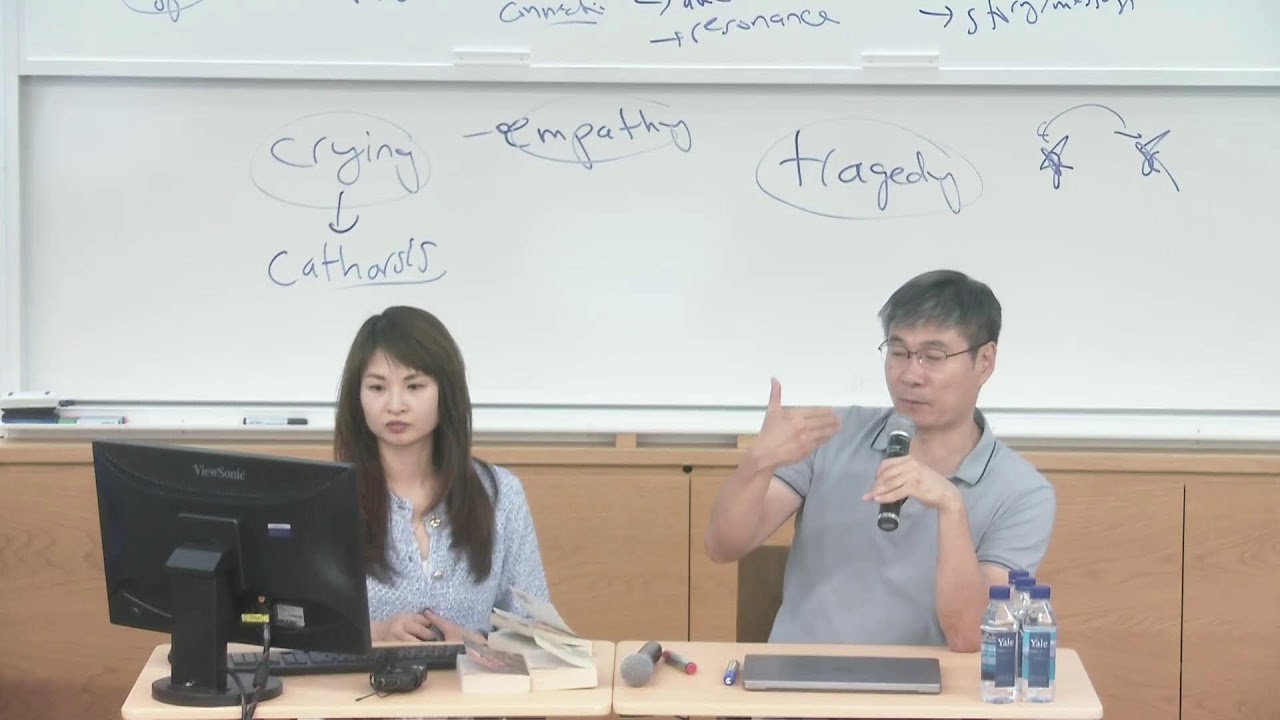
Dante Livestream #10 (Thursday, June 25 9AM)
 242 min
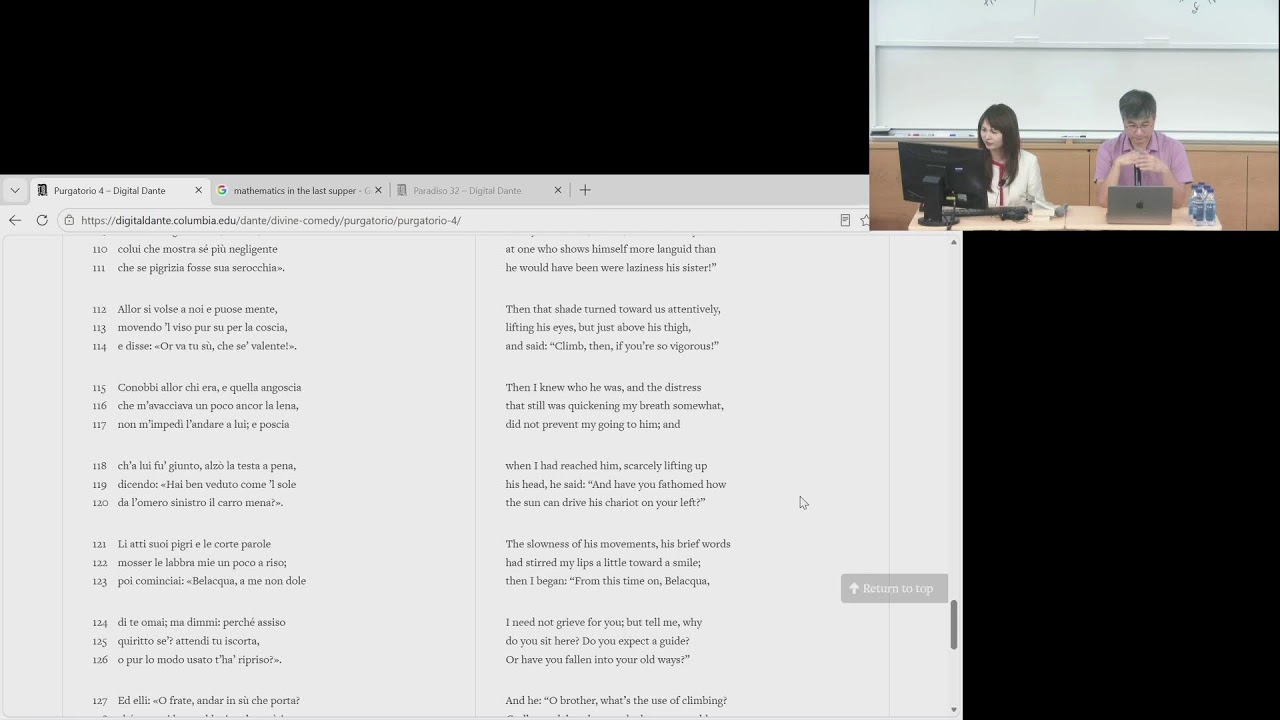
Dante Livestream #9 (Wednesday, June 24 10AM)
Ask anything from this episode.
Save it, chat with it, and connect it to Claude or ChatGPT. Get cited answers from the actual content — and build your own knowledge base of every podcast and video you care about.
Get Started Free