Key Moments
Books I’ve Loved — Ann Miura Ko | The Tim Ferriss Show
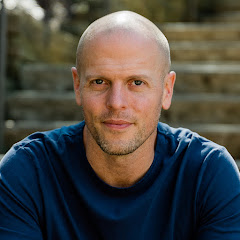 Tim Ferriss
Key Moments
Ann Miura Ko shares three life-changing books: "How Will You Measure Your Life?", "The Dovekeepers", and "The Righteous Mind."
Key Insights
"How Will You Measure Your Life?" by Clayton Christensen offers frameworks for balancing career and personal life, emphasizing both deliberate and emergent life strategies.
The 'job to be done' concept, originally from business, can be applied to understand the needs of children, spouses, and parents, fostering better relationships.
Equipping children with self-advocacy skills is crucial, as demonstrated by a 12-year-old successfully navigating a challenging school situation.
"The Dovekeepers" by Alice Hoffman is a compelling historical fiction that inspired a trip to Masada, highlighting the power of narrative.
"The Righteous Mind" by Jonathan Haidt explains how morality binds and blinds us, revealing that people reason to solidify judgments rather than question them.
Understanding 'WEIRD' (Western, Educated, Industrialized, Rich, Democratic) societies as outliers in moral frameworks encourages empathy for diverse perspectives.
INTRODUCTION TO THE SERIES AND SPEAKER
Tim Ferriss introduces a special series, "Books I've Loved," featuring guests sharing influential books. Ann Miura Ko, a venture capitalist and Stanford lecturer, joins to discuss books that have profoundly impacted her life. Her expertise spans early-stage startup investment, entrepreneurship education, and cybersecurity, with a notable career backing companies like Lyft and Refinery29. She co-founded ALL, a nonprofit focused on diversity in funding and founding.
MEASURING LIFE: DELIBERATE VS. EMERGENT STRATEGIES
Ann discusses Clayton Christensen's "How Will You Measure Your Life?" which explores life balance and happiness, especially after the author's health struggles. Christensen's framework of emergent vs. deliberate strategies is applied to life decisions. Ann highlights how often unplanned, emergent opportunities, combined with thoughtful planning for 'making oneself lucky,' have guided her career, with decisions often driven by the inspiration provided by mentors.
THE 'JOB TO BE DONE' IN HUMAN RELATIONSHIPS
Drawing from Christensen's 'job to be done' concept, initially studied at McDonald's regarding milkshake purchases, Ann applies it to personal relationships. She emphasizes understanding what 'job' a child, spouse, or parent needs her to 'hire' her for. By reflecting each morning on the needs of loved ones rather than her own immediate desires, she gains clarity and effectiveness in her interactions.
EQUIPPING CHILDREN FOR LIFE'S CHALLENGES
A key lesson from Christensen's work is the importance of helping children learn to navigate difficult situations. Ann shares an example of her 12-year-old daughter needing to advocate for herself to drop an unsatisfactory class. By not intervening directly and instead prompting her daughter to create a comprehensive plan, Ann fostered self-reliance, confidence, and problem-solving skills, demonstrating a crucial parenting role.
HISTORICAL FICTION AND THE INSPIRATION OF MASADA
Ann then shifts to a fictional recommendation, Alice Hoffman's "The Dovekeepers.” This novel recounts the siege of Masada, where 900 Jews held out against Roman forces. The story focuses on the rumored survival of two women and five children. The compelling narrative has inspired Ann to visit Masada, the historical site of this event, and she plans to reread the book before her family trip to Israel.
UNDERSTANDING MORAL DIVISIONS WITH 'THE RIGHTEOUS MIND'
Jonathan Haidt's "The Righteous Mind: Why Good People Are Divided by Politics and Religion" is Ann's third key book. It explains how morality binds and blinds us, driven by a deep need to belong. Haidt suggests that reasoning is often used not to re-evaluate judgments but to persuade others to join them. This explains how people can hold strong, differing moral beliefs.
MORALITY AS MULTIFACETED 'TASTE BUDS'
Haidt's work highlights that 'WEIRD' societies (Western, Educated, Industrialized, Rich, Democratic) are moral outliers compared to the global majority's emphasis on community and tradition. He proposes six universal moral 'taste buds': care, fairness, loyalty, authority, liberty, and sanctity. Different cultures prioritize and interpret these values uniquely, leading to misunderstandings and divisions, even when people agree on the importance of a concept.
EMPATHY AND OPEN-MINDEDNESS THROUGH MORAL LENSES
Ann found "The Righteous Mind" invaluable for opening her mind to diverse perspectives and understanding her own biases. The book explains how concepts like 'care' can manifest as freedom from oppression or support for group sacrifices, and 'fairness' can mean equal rights or proportional reward. Recognizing these different interpretations fosters empathy and more considered dialogue across political and religious divides.
CONCLUDING THOUGHTS AND CALL TO ACTION
Ann reiterates her three core book recommendations: "How Will You Measure Your Life?" for personal and professional guidance, "The Dovekeepers" for its narrative power and historical inspiration, and "The Righteous Mind" for understanding societal divisions and fostering empathy. She encourages listeners to reflect on these books for potential life-changing insights and applications in their own lives.
Mentioned in This Episode
●Products
●Companies
●Organizations
●Books
●Concepts
●People Referenced
Common Questions
This series on The Tim Ferriss Show features past guests and friends sharing their favorite books that have influenced and transformed them.
Topics
Mentioned in this video
Sponsor of the 'Books I've Loved' series, offering audiobooks, Audible Originals, news digests, and guided meditation programs.
A seed-stage venture capital firm where Ann Miura Ko is a co-founding partner.
A program at Stanford co-directed by Ann Miura Ko.
Company considered by Ann Miura Ko for employment before its IPO; its IPO made her question her decision to pursue a PhD.
A company Ann Miura Ko backed before it was well-known.
Restaurant chain where Clayton Christensen's 'job to be done' framework was initially studied, focusing on milkshake purchases.
A company Ann Miura Ko backed before it was well-known.
Co-founding partner at Floodgate, a seed-stage venture capital firm, lecturer at Stanford, and co-director of the Mayfield Fellows program.
Author of 'The Dovekeepers,' described as one of Ann Miura Ko's favorite authors.
Harvard Business School professor and author of 'How Will You Measure Your Life?', who wrote the book after overcoming significant health issues.
Social psychologist and author of 'The Righteous Mind,' who explores morality, politics, and religion.
Author of 'Essentialism: The Disciplined Pursuit of Less.'
Author of 'The Graveyard Book,' noted for his calming voice.
City in California where Floodgate venture capital firm is located.
Desert region in Israel where Masada is located.
Region in California where a volunteer dental event was held.
State where an event of providing free dental work to people in need took place, organized mostly by church volunteers.
An acronym for Western, Educated, Industrialized, Rich, Democratic people, used by Jonathan Haidt to describe a group that is statistically an outlier in moral reasoning.
A framework discussed by Clayton Christensen, applies to both business and life, differentiating planned actions from unplanned occurrences.
A philosophy focused on calmness under duress, mentioned in relation to 'The Tao of Seneca.'
A business framework developed by Clayton Christensen, focusing on the underlying needs a product or service fulfills. Applied by Ann Miura Ko to relationships and parenting.
A recommended book by Seneca that touches on Stoic philosophy and calmness under duress.
A principle that 'Essentialism' combines well with, suggesting focus on the most impactful elements.
A fiction book recommended by Neil Gaiman, suggested even for non-fiction readers.
A historical fiction novel by Alice Hoffman set during the siege of Masada, focusing on the experiences of women and children.
A book by Jonathan Haidt that explores the psychological and moral underpinnings of political and religious divides.
A book by Greg McKeown about the disciplined pursuit of less, useful in conjunction with the 80/20 principle.
A book by Clayton Christensen that explores balancing career and personal life, and finding happiness.
More from Tim Ferriss
View all 694 summaries 34 min
PRISONER NO MORE: The True Story of Tae Jin Park
 71 min
The Most Incredible Transformation I’ve Ever Seen — Jerzy Gregorek on Cerebral Palsy and Coaching
 89 min
From Food Stamps to the Super Bowl War Room — NFL Chief Security Officer Cathy Lanier
 55 min
From Dad’s Basement to Selling Two Companies — 4-Hour Workweek Success Story
Ask anything from this episode.
Save it, chat with it, and connect it to Claude or ChatGPT. Get cited answers from the actual content — and build your own knowledge base of every podcast and video you care about.
Get Started Free