Key Moments
Asbestos is a bigger problem than we thought
 Veritasium
Key Moments
Asbestos is far more pervasive and deadly than commonly believed, across work, homes, and environment.
Key Insights
Asbestos is not a single mineral but a family of minerals with durable, fireproof fiber structures that made it ubiquitous in industry and consumer products for decades.
Industry manipulation and regulatory loopholes (e.g., the 1% rule) enabled continued use and delayed recognition of health risks, delaying bans and safeguards.
Exposure is not limited to workers; consumer products, schools, homes, and even natural environmental deposits can disperse dangerous fibers into the air and dust.
Detection methods matter: PLM misses small fibers and low concentrations; TEM reveals more extensive contamination, complicating safety assessments and public policy.
Public health crises emerged in places like Libby, Montana, illustrating how mining and manufacturing practices can poison communities for years and across generations.
Policy progress has been slow and uneven, with partial bans and ongoing legal and regulatory battles; globally, usage remains significant in several countries.
What counts as 'asbestos' in regulations is contested, leading to gaps between health risks and what is measured or banned in practice.
Media literacy and independent investigations are crucial to counter corporate spin, with tools like Ground News helping reveal bias and coverage gaps.
ORIGIN AND STRUCTURE OF ASBESTOS
Asbestos is not a single mineral but a group of silicate minerals whose fibers are extraordinarily resistant to heat and chemical breakdown. The core building block is a silicon atom bonded to four oxygens, forming silica tetrahedra that link into sheets and eventually into long, tough fibers. Some forms (serpentines like chrysotile) form flexible sheets, while amphiboles (like amosite and crocidolite) create rigid, needle-like bundles. This structural chemistry explains both the material’s ancient appeal and its persistent health risks, since inhaled fibers can lodge in lungs for decades.
A MIRACLE MATERIAL: FIREPROOFING AND INDUSTRIAL USES
In the 19th and 20th centuries, asbestos earned the nickname a miracle material due to its resistance to heat and fire. Henry War Johnson’s 1868 fireproofing approach—using tiny asbestos fibers in coatings—led to widespread adoption in roofing, insulation, and fireproof textiles. The material helped reduce urban fire losses and became integral to building codes, shipyards, brake systems, and even consumer goods. Its ubiquity grew from brutal city fires to wartime shipbuilding, cement panels, and consumer products—from toasters to cosmetics—cementing asbestos in everyday life for generations.
HEALTH IMPACT AND DISEASE
Health consequences of asbestos exposure accumulate over time. When inhaled, fibers persist in lung tissue, triggering inflammatory responses and scarring (asbestosis). Workers with long or intense exposure show markedly higher disease rates: significant early studies found thousands of cases and cancer risks rising with duration of exposure. Mesothelioma, a rare cancer of lining tissues, and various lung and gastrointestinal cancers became strongly linked to asbestos. The biology is straightforward but devastating: longer fibers are harder to clear, provoking chronic inflammation and DNA damage that can lead to cancer decades later.
INDUSTRY COVER-UPS AND RECKONING
From the 1930s onward, some corporate leaders and research outfits concealed or downplayed asbestos risks to protect profits. Documents revealed that companies like Johns Manville suppressed adverse findings, edited or buried internal research, and coordinated to minimize publicity about asbestosis and cancer. The combined effect was a long-running ‘conspiracy of silence’ that delayed regulation and limited worker protections. Public health advocates and researchers eventually organized, exposed the hidden data, and spurred lawsuits and policies that shifted public perception and accountability.
LIBBY, MONTANA: THE EPICENTER OF CONTAMINATION
Libby’s vermiculite mine, contaminated with amphibole asbestos, became a stark case study of industrial poisoning. The mine supplied insulation and other products nationwide, spreading dangerous fibers through homes and workplaces. The town suffered widespread illness and elevated mortality, prompting EPA action in 2009 as a public health emergency—the worst case of industrial poisoning in U.S. history. The Libby case demonstrates how mining, distribution, and consumer use can propagate asbestos exposure far beyond any single workplace.
REGULATION, GUIDELINES, AND THE 1% RULE
Regulatory history is marked by fragmentation and loopholes. Early classifications and exposure limits were poorly protective or inconsistently enforced. The 1% rule, used to classify products as 'asbestos-free' if asbestos content fell below a threshold, effectively sidestepped regulation and undermined safety. Despite EPA attempts to phase out asbestos, legal challenges and the narrow interpretive standards kept the ban weak and limited. Even decades later, formal bans have been partial, with exemptions, phasing timelines, and ongoing debates about what constitutes a true ban.
DIAGNOSTICS AND DETECTION LIMITATIONS
Detecting asbestos risk is technically challenging. Polarized light microscopy (PLM) is fast and inexpensive but misses small fibers and those shorter than about five micrometers. Transmission electron microscopy (TEM) can reveal finer, more dangerous fibers, yet it is costly and not always employed in routine screening. This disparity leads to uncertain safety assessments: some official tests may conclude safety where TEM analyses would reveal substantial contamination, complicating public health decisions and regulatory standards.
GROUND ZERO AND THE TESTING CONTROVERSY
After September 11, 2001, dust at Ground Zero became a focal point for evaluating exposure risk. Initial assessments used PLM and reported safety, but later TEM-based analyses indicated higher asbestos levels, with many fibers potentially more hazardous due to their small size. Controversies over data, testing methods, and possible suppression of more rigorous analyses fueled public distrust. As of recent years, thousands of World Trade Center Health Program participants have related illnesses or cancers to the exposures from that event.
NATURAL ASBESTOS: UNREGULATED DUST IN THE ENVIRONMENT
Beyond industrial sources, natural asbestos deposits can contaminate dust in surprising places. In southern Nevada, researchers documented asbestos-bearing materials in soil and dust unrelated to mining or manufacturing. The discovery demonstrated that asbestos exposure can occur through ambient, naturally occurring sources, challenging assumptions that only occupational or consumer-use exposures mattered. Field testing revealed significant fiber concentrations in certain environments, underscoring the need for risk communication and environmental monitoring wherever natural asbestos might be present.
CONSUMER PRODUCTS AND PUBLIC AWARENESS
Asbestos infiltrated countless consumer products, including cosmetics, talc powders, toys, and even school supplies. Investigations uncovered asbestos fibers in items marketed to children and in cosmetics sold at common retailers, prompting widespread concern and regulatory scrutiny. The video highlights cases from Claire’s makeup to toy kits and school implement hazards, illustrating how everyday products could disseminate dangerous fibers through dust and wear. The public health stakes push for better product testing, labeling, and accountability across industries.
GLOBAL PICTURE: BANS, IMPORTS, AND HEALTH HORIZONS
The asbestos story is global in scope. While the U.S. moved toward partial bans and ongoing regulation, countries like India continued importing large quantities, raising long-term health risk projections. Some regions have banned most asbestos, while others maintain substantial use. This global patchwork means exposure risks persist in multiple economies, underscoring the need for harmonized safety standards, international monitoring, and timely public health interventions to prevent similar crises elsewhere.
MEDIA LITERACY AND SPONSORSHIP SEGMENT
The video includes a sponsorship segment about Ground News, highlighting how media bias and source diversity influence public understanding. Ground News aggregates global outlets, color-codes by factuality, ownership, and political leaning, and provides a blind-spot feed to surface underreported angles. This portion emphasizes the importance of media literacy in assessing health and safety information, encouraging audiences to seek balanced perspectives and verify claims across multiple trusted sources.
WHAT CAN BE DONE: POLICY, RESEARCH, AND PERSONAL ACTION
The narrative closes with a call to action: strengthen chemicals safety laws, close loopholes, and implement robust testing that captures all relevant asbestos forms and fiber sizes. Legislative momentum has fluctuated, but progress includes amendments to empower regulatory agencies and ongoing debates about comprehensive bans. Beyond policy, it stresses the responsibility of researchers, regulators, manufacturers, and individuals to understand exposure routes, insist on safer products, and advocate for transparent, science-based decision making.
Mentioned in This Episode
●Tools
●Companies
●Studies Cited
●Concepts
●People Referenced
Common Questions
Asbestos fibers can lodge deep in the lungs, cause chronic inflammation, and lead to diseases like asbestosis and mesothelioma. The video traces how fibers can be inhaled, become embedded, and cause damage over decades, even when exposure seems brief. Timestamp: 900–1500 seconds.
Topics
Mentioned in this video
Fictional Marvel villain referenced in the video to illustrate asbestos-related imagery.
Geologist who co-authored a 2013 study on naturally occurring asbestos in Southern Nevada.
Attorney who uncovered internal documents showing deliberate suppression of asbestos risks.
Physician who linked asbestos exposure to serious diseases and organized a pivotal conference in 1964 at the New York Academy of Sciences.
Pathologist who published the first medical description of asbestosis in 1924.
Figure associated with Chemical Safety for the 21st Century Act discussion in the video.
Inventor of a fireproof material and founder who patented his invention in 1868 and built a large company by 1927.
President of Johns Manville; appeared on Time magazine's cover in 1939 as part of industry marketing.
Geologist who co-authored the Southern Nevada asbestos study with Brenda Buck.
Former president of Raybestos-Manhattan; his papers became central to exposing industry cover-ups.
Publication (October 2013) detailing natural asbestos in the Las Vegas area and potential exposure.
External lab contracted by asbestos manufacturers to study effects; later part of the concealment narrative.
More from Veritasium
View all 96 summaries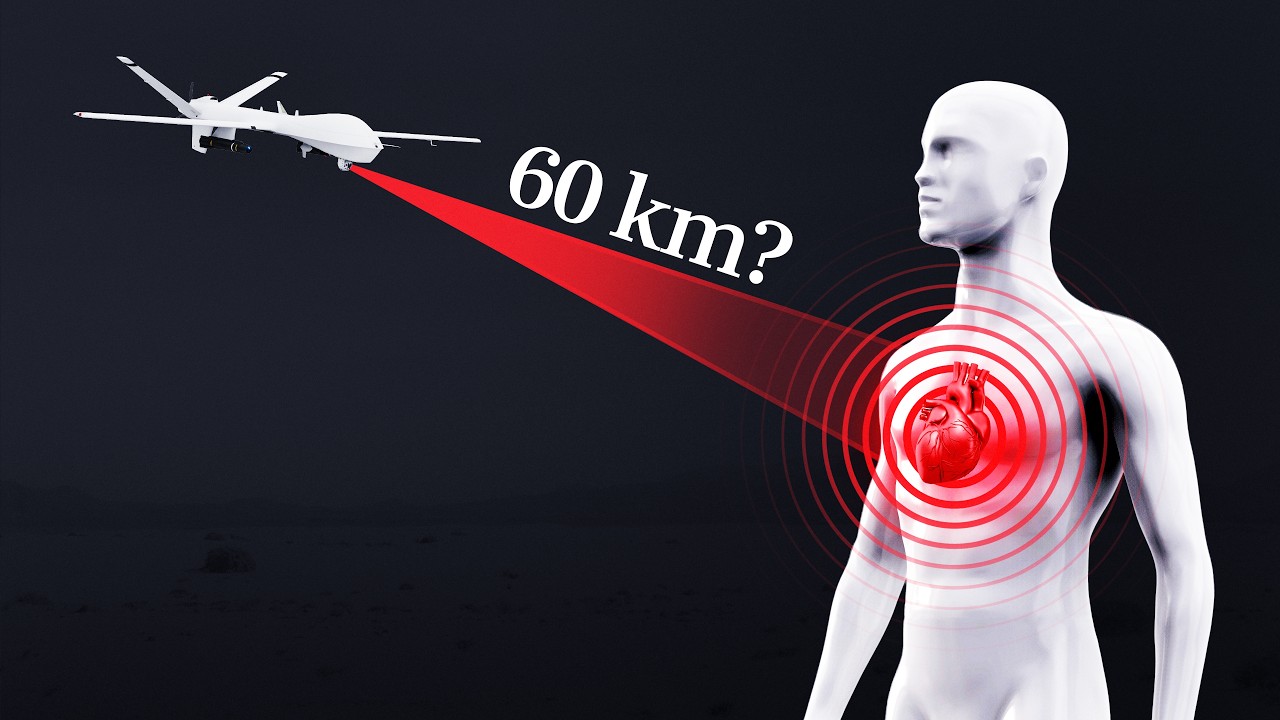 22 min
Can a quantum sensor detect your heartbeat from 60 km away?
 34 min
The disaster I never imagined having to worry about
 27 min
Can you steal $10,000 from a locked iPhone?
 59 min
Why Is CERN Making Antimatter?
Ask anything from this episode.
Save it, chat with it, and connect it to Claude or ChatGPT. Get cited answers from the actual content — and build your own knowledge base of every podcast and video you care about.
Get Started Free