Key Moments
AI Dev 26 x SF | Ankit Mathur: The Coding Agent Multiverse of Madness
 DeepLearning.AI
Want to know something specific about what's covered?
We've already dissected every moment. Ask and we will deliver (with timestamps).
Key Moments
Enterprises face AI governance nightmares when deploying coding agents, slowing innovation, but Databricks' new gateway aims to grant developer freedom while maintaining admin control and security.
Key Insights
Coding agents are used 10-100x more than other agents due to their application in fast-duration tasks and their ability to assist in various tasks beyond just coding, like debugging and email composition.
AI governance is the number one factor limiting AI agent success and rollout in enterprises, with concerns about sensitive data (like PII) being exposed and used for model training.
Developers often use multiple coding tools due to varying model strengths, leading to 'coding agent sprawl' with multiple vendors, admin panels, and cost centers if not managed centrally.
Databricks' Coding Tool Gateway aims to allow developers to use any coding tool and model while providing centralized governance, security, observability, cost controls, and privacy guarantees for enterprises.
Internal adoption at Databricks, with over 10,000 employees, highlights the necessity of a gateway for managing cloud code output, measuring everything, and providing a unified dashboard for executive reporting.
Code reviews and scaling CI/CD remain significant bottlenecks, with AI-generated code potentially introducing silent bugs if testing and validation processes do not also scale and shift left.
The explosive growth and broad utility of coding agents
Coding agents, far from being limited to software development, are experiencing unprecedented adoption across enterprises. Their usage is estimated to be 10 to 100 times greater than other types of AI agents due to their applicability in high-velocity, short-duration tasks. These agents are proving valuable not only for writing and debugging code but also for a wide array of personal assistant functions, including addressing production incidents and drafting emails. The rapid evolution of AI models, such as GPT-4.6 and the upcoming GPT-5.5, continuously enhances their capabilities, making them more effective at complex tasks. For businesses, leveraging these agents to increase innovation speed by 10-20% is no longer a competitive advantage but a necessity to avoid falling behind the market norm. This revolution is bottlenecking execution speed not by talent, but by ideas, code review capacity, and task parallelism, highlighting a significant shift in development paradigms.
Context is king: Why coding agents need privileged access
The effectiveness of any coding agent is directly proportional to the context it is provided. To perform optimally, these agents often require privileged access to a company's internal data, including Jira tickets, external APIs, internal communications, and cloud infrastructure logs. This necessity creates a direct conflict with enterprise security and governance policies. For instance, an agent debugging a production incident might need access to Kubernetes logs, but if a developer inadvertently includes Personally Identifiable Information (PII) in their service, that data could be ingested and retained by the AI model, creating significant liability for the enterprise. This makes AI governance the primary impediment to widespread, secure adoption of AI agents in corporate environments. The current reality is that governance concerns lead to delays, such as week-long evaluations of new tools, which is counterproductive given the immense productivity gains these agents offer. The ultimate goal is to achieve a 'zero-click' rollout of coding agents, balancing their utility with robust oversight.
The 'Coding Agent Sprawl' and the multi-AI imperative
The sheer number of available coding tools and AI models presents a significant challenge for enterprises. Developers naturally gravitate towards using the best tool for specific tasks, recognizing that different models exhibit unique strengths—some excel at large code refactors (like CodeX), while others are better for writing tests or performing code reviews. This leads to 'coding agent sprawl,' where an organization might utilize numerous vendors, manage multiple administrative consoles, and face fragmented cost centers without clear organizational visibility. From an IT or engineering leader's perspective, the mandate to roll out these tools is met with the dilemma of AI governance. The traditional IT approach of selecting a single vendor or standard is problematic because the landscape of AI models is rapidly changing; betting on a single model today could mean limiting developer productivity tomorrow as superior models like GPT-4.6 or Claude Opus emerge weekly. Therefore, enterprises must embrace a multi-AI strategy, allowing developers the freedom to choose the most effective tools and models without compromising overarching control.
Databricks' AI Gateway: Empowering developers, assuring admins
To address the dual needs of developer freedom and administrative control, Databricks has developed the Coding Tool Gateway. This platform enables enterprises to roll out a wide array of coding tools and models, including those from major providers like Anthropic, OpenAI, and Google, as well as increasingly capable open-source options. The ethos is to grant developers the autonomy to select their preferred tools and models without sacrificing governance, security, and privacy. For administrators, the gateway offers crucial observability, allowing them to track user adoption, identify power users, monitor rate limit usage (indicating innovative workflows), and manage costs centrally. It aims to consolidate administrative panels, provide a unified cost center, and even offer a single bill for all AI tool usage. Crucially, it addresses privacy concerns by ensuring model usage is private and that sensitive data is not retained for training, which is vital for enabling the use of highly sensitive internal data like Kubernetes logs.
Securing access and managing ML/API authentication
A critical aspect of secure AI agent deployment involves managing authentication for Managed Cloud Platforms (MCPs) or Managed APIs. Traditionally, developers store authentication tokens locally, often in plain text, which poses a severe security risk. Tokens may not be rotated, and in the event of a security incident, every token on every laptop becomes a vulnerability. The AI Gateway proposes a solution where authentication is managed centrally. Admins can configure whether authentication is user-specific or a company-level token. This includes options like shared principal authentication or per-user OAuth. The system allows for a single, short-lived local token for users, which is refreshed behind the scenes by the gateway. This not only enhances security by rotating tokens automatically but also provides a seamless user experience, ensuring developers have access to necessary MCPs (like Jira or log access) without manual token management.
Internal adoption: Measuring, unifying, and reporting AI usage
Databricks' own internal rollout to over 10,000 employees serves as a case study for the gateway's effectiveness. The company emphasizes 'measuring everything' as a fundamental practice for any successful project, especially in the current fast-paced AI revolution. Developers are encouraged to use any coding agent, with internal wrappers like 'Isaac' facilitating seamless connection to the gateway. Metrics such as lines of code generated and PRs created are funneled through the gateway into centralized usage tables within Unity Catalog. This data is then used to generate a weekly report for the CEO, demonstrating executive-level visibility into AI adoption and impact. This centralized data warehousing allows for custom dashboard creation and integration with BI tooling, providing comprehensive insights into how AI is being utilized across the organization and enabling informed decision-making regarding AI strategy and investment.
Persistent bottlenecks: Code reviews, CI/CD scaling, and shifted testing
Despite the advancements, significant bottlenecks persist in the AI-driven development lifecycle. Code reviews, even with AI assistance, remain a major challenge due to the high volume of inbound code. While newer models are more adept at code review, scaling this process effectively is an ongoing problem. Similarly, Continuous Integration (CI) needs to scale alongside code generation; if validation processes cannot keep pace with the speed of AI commits, it creates a risk of releasing software with silent bugs. The imperative is to 'shift left' testing, ensuring that agents can test their own code quickly and correctly for semantic correctness, performance, and other critical attributes. This requires robust testing infrastructure, potentially leveraging GPUs for performance testing, and the development of hermetic tests. The ultimate goal is to unblock AI agents by providing them with faster development loops, enabling them to improve autonomously and ensuring that enterprises can release safe, high-quality software at scale.
Mentioned in This Episode
●Software & Apps
●Companies
●People Referenced
Common Questions
Coding agents are a type of AI tool that goes beyond just writing code. They can debug production incidents, write emails, and are used at a much larger scale than other types of agents. For enterprises, they significantly boost innovation speed by 10-20%, making them crucial for staying competitive.
Topics
Mentioned in this video
A framework mentioned for building custom AI agents.
A large language model that necessitates a multi-AI approach due to rapid weekly updates and improvements.
A framework mentioned for building custom AI agents.
An earlier version of a large language model that showed a significant jump in productivity.
An updated version that provided a large boost in developer productivity.
A system for which logs agents might need access to debug production incidents, raising governance concerns.
A model family supported by the AI gateway for inference.
An open-source software that provides a user interface for running multiple coding agents.
An internal wrapper tool at DataBricks that connects coding tools to the AI gateway, enabling unified management and authentication.
A built-in tool available through the AI gateway's MCP catalog.
A framework mentioned for building custom AI agents.
A coding tool recommended for large code refactors and also used within the Isaac wrapper.
Models that can be used with Open Code for extremely fast latency.
A powerful model that has significantly improved the ability to handle complex tasks.
An example of a system accessible via MCP authentication managed by the AI Gateway, simplifying developer access.
Increasingly capable and low-latency models that can be integrated with the AI gateway.
A built-in tool available through the AI gateway's MCP catalog.
A platform where AI gateway data is stored, allowing for custom dashboard creation and BI tool integration.
A company whose models (e.g., Claude) can be used with the AI gateway.
A company whose models can be used with the AI gateway.
An example of software providing visibility into enterprise laptops, an analog for what is needed for coding agents.
The company where the speaker works on AI infrastructure and uses AI gateway solutions.
More from DeepLearningAI
View all 105 summaries 62 min
Full Course: Spec-Driven Development with Coding Agents
 26 min
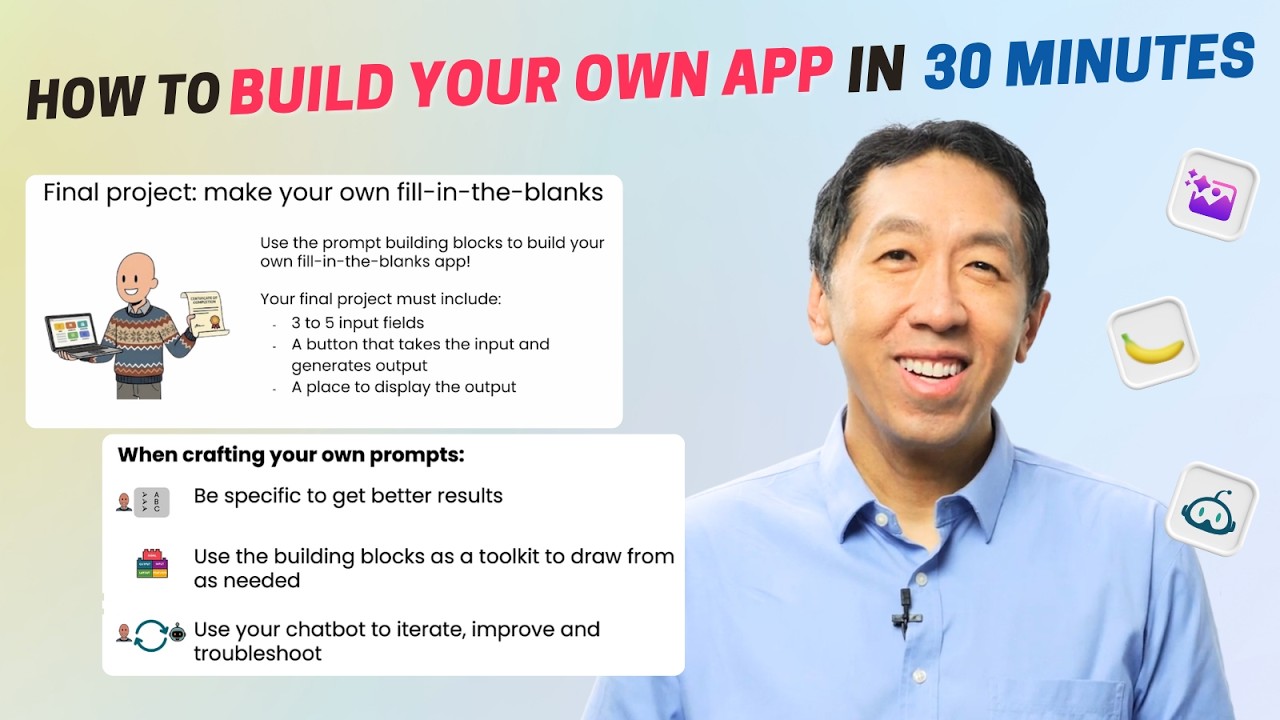
Build Your Own App In Just 30 Minutes! Full Course with Andrew Ng
 26 min
AI Dev 26 x SF | João Moura: Building Recurring, Governed, and Embedded Enterprise Workflows
 22 min
AI Dev 26 x SF | Andrew K. Davies: Deterministic Memory: How to Build an AI That Cannot Lie
Ask anything from this episode.
Save it, chat with it, and connect it to Claude or ChatGPT. Get cited answers from the actual content — and build your own knowledge base of every podcast and video you care about.
Get Started Free