Key Moments
A Conversation with Paul Bloom (Episode #183)
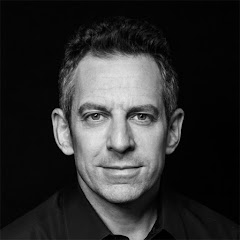 Sam Harris
Key Moments
Discussion on moral responsibility, celebrity death grief, and redemption, framed by Kobe Bryant's passing.
Key Insights
The public's intense grief over celebrity deaths like Kobe Bryant's can stem from a sense of personal connection and vicarious living.
Social media amplifies reactions to celebrity deaths, often leading to immediate judgment and public discourse on past controversies, even when grief is paramount.
The concept of redemption is complex, with varying public and personal thresholds for forgiving past wrongdoings, especially for public figures.
Moral luck significantly impacts perceived culpability, as similar irresponsible actions can lead to vastly different outcomes and societal judgments based on chance.
The effectiveness of apologies and the criteria for public redemption remain ambiguous, often influenced by external factors like family support and the timing of revelations.
Tribal loyalty and political polarization have eroded the immediate impact of accusations or scandals on public figures, particularly in the US political landscape.
THE IMPACT OF CELEBRITY DEATHS ON PUBLIC GRIEF
The sudden death of Kobe Bryant, along with his daughter and others, prompted an extraordinary outpouring of public grief, comparable to Princess Diana's passing. This intense reaction suggests a deep, almost personal connection people feel to celebrities, who often serve as figures of aspiration or fantasy. Their deaths can brutally penetrate societal defenses against mortality, making life feel precarious, especially when it involves young lives lost tragically and arbitrarily.
SOCIAL MEDIA'S ROLE IN PUBLIC ACCOUNTABILITY
In the wake of Kobe Bryant's death, social media immediately brought up past controversies, such as the unresolved rape allegations against him. This highlights how quickly online platforms can amplify judgment and debate past actions, sometimes seen as tactless or premature given the immediate personal grief. It raises questions about when and how to address a deceased person's flaws, with differing views on whether to prioritize kindness or immediate truth.
NAVIGATING REDEMPTION AND PUBLIC FORGIVENESS
The discussion delves into the complexities of moral redemption. While some figures achieve public forgiveness after significant transgressions—like Mike Tyson or potentially Kobe Bryant himself—the path is unclear. The effectiveness of apologies is debated, with social science data suggesting they can sometimes backfire. A crucial factor for redemption often appears to be the support of one's family and the perception of a genuine effort to change or atone, though even then, complete absolution remains elusive for many.
THE CHALLENGE OF UNSETTLED MORAL CLAIMS
When past accusations remain unsettled, as in Kobe Bryant's case, public discourse becomes fraught. The journalist who resurfaced the allegations faced significant backlash, illustrating the difficulty in balancing present-day moral standards with past events that may not have been fully adjudicated or understood. This scenario underscores the tension between a heightened awareness of sexual misconduct and the need for due process and sensitivity to immediate grief.
MORAL LUCK AND THE ARBITRARINESS OF FATE
The concept of moral luck, where chance plays a significant role in the outcomes of one's actions, is explored. The example of drunk drivers or those texting while driving illustrates this: similar irresponsible behavior can lead to devastating consequences for one person while others face no repercussions. This raises profound questions about fairness in punishment and the extent to which individuals are truly culpable when luck dictates the severity of the outcome.
POLITICAL POLARIZATION AND IMPUNITY
In the contemporary American political climate, there's a stark contrast in how public figures are held accountable. While past transgressions for figures like Bill Clinton were re-evaluated, Donald Trump seems largely immune to scandal, even serious accusations. This is attributed to intense tribal loyalty, where criticism of Trump is met with defensive solidarity from his base, suggesting a shift where political identity can supersede individual character or past conduct.
THE UNMET EXPECTATION OF ACCOUNTABILITY
The existence of unreleased tapes possibly containing Donald Trump using racial slurs is discussed. The producer's decision not to release them is framed not as inaction, but as a significant choice with profound implications for public knowledge. The podcast speculates whether hearing such tapes would even alter his support, suggesting that his brand might be more resilient or even enhanced by provocative behavior than by perceived deviations from his established persona.
Mentioned in This Episode
●Software & Apps
●Companies
●Concepts
●People Referenced
Common Questions
Celebrity deaths, like Princess Diana's or Kobe Bryant's, can cut through societal death denial due to the perceived personal connection people feel, treating them like fairytale characters or relatable figures whose experiences amplify feelings of life's precariousness.
Topics
Mentioned in this video
Basketball superstar whose recent death in a helicopter crash prompted widespread grief and discussion.
A conservative figure whose recent death also sparked debate about how to speak about the deceased, contrasting with how some approach controversial figures.
A journalist that the host contrasts with Hitchens, noting Greenwald's 'dancing on the grave' approach to some figures.
Mentioned as a parallel example to Kobe Bryant, as someone who faced public scrutiny over infidelity but seemingly regained public favor, partly due to spousal support.
Producer of 'The Apprentice', the existence of tapes where Trump allegedly uses the N-word is attributed to him.
His ability to withstand accusations and maintain support from his base is a central topic, contrasted with the perceived penalties for others.
Host of the Making Sense podcast, initiating a new, more freeform conversational format.
An author and commentator known for his direct critique of public figures, even after their death.
Mentioned as an example of a public figure who served time for a crime (rape) and has since achieved a form of public redemption.
Discussed as a case of public redemption and political strategy, particularly concerning his infidelity and accusations of rape, and Hillary Clinton's defense of him.
His tapes played during the O.J. Simpson trial are mentioned as a precedent for how hearing damaging private speech can impact public perception.
Guest on the podcast, agreeing to a more experimental conversation format.
A Washington Post writer who tweeted a link to an article detailing rape allegations against Kobe Bryant shortly after his death, leading to controversy and administrative leave.
A religious leader who was a subject of Christopher Hitchens' critiques.
Cited as a possible example of a celebrity who was 'cancelled' but has since regained some public acceptance.
Her role in defending Bill Clinton during accusations and its political ramifications in the 2016 election are discussed.
Philosopher credited with originating the concept of moral luck.
Philosopher whose essay on moral luck is prominently discussed.
A news outlet that published an article detailing rape allegations against Kobe Bryant.
The employer of Felicia Sonmez, who faced administrative leave after her tweet about Kobe Bryant.
A past event involving Donald Trump that was expected to end a politician's career but did not significantly impact his support.
A TV show where tapes exist of Donald Trump allegedly using the N-word extensively.
The process by which an individual can regain public trust and good graces after committing a transgression.
The movement's heightened awareness of sexual misconduct is contrasted with the pre-Me Too era, affecting how past allegations are viewed and judged.
A philosophical concept where the morality of an action is determined by luck, discussed in relation to culpability and punishment.
More from Sam Harris
View all 298 summaries 28 min
Michael Pollan on Consciousness, Psychedelics, and the Limits of Neuroscience
 22 min
Why the Stock Market Has Become a Casino
 61 min
UNRAVELING THE DREAM (A New Documentary Executive Produced by Sam Harris)
 20 min
Francis Fukuyama: The End of History Was Never What You Think
Ask anything from this episode.
Save it, chat with it, and connect it to Claude or ChatGPT. Get cited answers from the actual content — and build your own knowledge base of every podcast and video you care about.
Get Started Free