Key Moments
A Conversation with David Miliband (Episode #215)
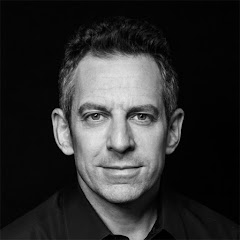 Sam Harris
Want to know something specific about what's covered?
We've already dissected every moment. Ask and we will deliver (with timestamps).
Key Moments
David Miliband discusses global humanitarian crises, refugee challenges, and the evolving role of diplomacy and international aid.
Key Insights
The International Rescue Committee (IRC) focuses on individuals affected by conflict and disaster, providing aid and resettlement.
A significant global crisis exists with over 80 million forcibly displaced people, primarily in low-income countries.
Effective refugee policies require clear definitions, proper vetting, and border control, which can be managed systemically.
Diplomacy must be supported by leverage (economic or political) and consider regional dynamics, not just individual nations.
The "withdrawal doctrine" is a flawed approach; global engagement is crucial for national security and prosperity.
Addressing global challenges like pandemics and climate change requires international collaboration and cannot be solved by individual nations.
THE INTERNATIONAL RESCUE COMMITTEE'S MISSION
David Miliband, President and CEO of the International Rescue Committee (IRC), details the organization's origins tracing back to Albert Einstein's efforts to aid Jewish refugees in the 1930s. Today, the IRC operates globally, assisting individuals displaced by conflict and disaster, while also being the largest refugee resettlement agency in the U.S. Miliband highlights the IRC's distinct focus on those shattered by crisis, its dual role as a humanitarian aid provider and a resettlement agency, and its commitment to research and evidence-based programs, employing a significant number of local staff.
THE SCALE AND COMPLEXITY OF THE GLOBAL REFUGEE CRISIS
The discussion emphasizes the immense scale of forced displacement, with over 80 million people uprooted from their homes due to conflict and violence. Miliband distinguishes between internally displaced persons (IDPs) within their own countries and refugees who cross international borders. He notes that the vast majority, 86%, of refugees are hosted in poor or lower-middle-income countries, challenging the myth that most refugees are in wealthier nations. Most refugees also live in urban areas, not camps, and face prolonged displacement due to ongoing conflicts.
NAVIGATING THE ETHICS AND POLITICS OF REFUGEE ADMISSION
The conversation addresses the complex debate surrounding refugee admission, acknowledging legitimate concerns about distinguishing refugees from economic migrants, security vetting, and border control. Miliband argues that well-established systems, like the 1951 Refugee Convention, provide frameworks for assessing claims. He stresses the importance of effective vetting processes, which are rigorous for refugees entering the U.S., often more so than for other visa types. The goal, he maintains, is to allow those who meet the criteria to integrate and to manage the process effectively.
THE LIMITS OF TRADITIONAL DIPLOMACY AND NATION-BUILDING
Miliband critiques the record of nation-building and traditional diplomacy in addressing civil wars, citing failures in Afghanistan and the ongoing conflicts in Syria and Yemen. He posits that military or diplomatic strategies alone are insufficient without a clear vision for political settlement and compromise among internal factions. The emphasis shifts to the need for diplomacy backed by leverage—economic or political—and a consideration of regional dynamics, rather than isolated bilateral negotiations, to achieve lasting peace.
AN AGE OF IMPUNITY AND THE RETREAT FROM GLOBAL ENGAGEMENT
A critical concern raised is the emerging 'age of impunity,' where international humanitarian laws are increasingly disregarded, leading to civilian casualties and attacks on aid workers. Miliband argues that the retreat of major powers, like the U.S. and U.K. (exemplified by Brexit), lowers the standards for the exercise of power globally, creating space for abuse. This decline in commitment to human rights and accountability is seen as dangerous, particularly as unstable states continue to produce refugees and exacerbate humanitarian crises.
CHALLENGING NATIONALIST SENTIMENTS WITH GLOBAL INTERDEPENDENCE
The discussion confronts the rise of nationalism and populism, which often advocate for a focus on domestic issues. Miliband counters that addressing international challenges does not preclude attending to domestic needs, as foreign aid constitutes a small percentage of national income. He emphasizes the interconnectedness of the world, arguing that issues like pandemics, climate change, and technological risks require global solutions. A 'retreat to the citadel' is unsustainable in a globalized economy and can lead to a dystopian future of isolated fortresses. International engagement, even for superpowers, is essential for long-term security and prosperity.
COLLABORATION AMIDST DIFFERING VALUES
Miliband addresses the challenge of collaborating with countries that have poor human rights records. He clarifies that collaboration should not mean enabling repression but rather engaging constructively. Speaking up for one's values, even with autocratic regimes, is crucial for self-respect and effectiveness. While ultimatums should be used sparingly, avoiding dialogue entirely on difficult issues is counterproductive. The focus should be on strategic engagement and pursuing shared interests, such as mitigating global risks, while remaining committed to universal values where possible.
Mentioned in This Episode
●Organizations
●People Referenced
Common Questions
The IRC helps people whose lives are shattered by conflict and disaster to survive, recover, and regain control of their lives. They focus on war zones, internally displaced people, and refugees, and are also a large refugee resettlement agency in the U.S.
Topics
Mentioned in this video
Country experiencing conflict, where the IRC works to provide education and where the U.S. has been involved in a long war.
Country from which Muslims have been ethnically cleansed, making it unsafe for them to return.
Country discussed in relation to the Yemen conflict and its human rights record.
Country where David Miliband served in various governmental roles, including Secretary of State for Foreign Affairs.
Constituency in Northeast England that David Miliband represented as a Member of Parliament for 12 years.
Country discussed in the context of global collaboration, human rights, and potential cyber warfare threats.
Country experiencing a severe humanitarian crisis, discussed as a failure of diplomacy and military strategy.
Country mentioned for its response to the refugee crisis, particularly Angela Merkel's policies.
Country facing conflict and civil war, where the IRC provides aid and where a significant refugee crisis originated.
Country where the IRC tackles issues like sexual violence.
British politician, later Prime Minister, involved in modernizing the Labour Party.
Refugee in New York in the 1930s who founded the International Rescue Committee.
Author of the 'withdrawal doctrine,' which president Trump inaugurated.
British politician involved in the project to modernize the Labour Party in the 1990s.
The IRC's first employee who deployed to Marseille in 1940 and helped issue 2,000 passports to help Jews and intellectuals escape occupied France.
Artist who escaped occupied France to the U.S. with the help of Varian Fry and the IRC.
U.S. President who admitted the most refugees in the early 1980s.
Author who discusses dystopian futures and the concept of a 'network of fortresses' in a globalized world.
Group potentially resurging in Afghanistan, posing a concern for female Afghans and U.S. strategic interests regarding havens for extremist groups.
An American humanitarian organization founded by Albert Einstein to help refugees. It works in war zones, assists internally displaced people and refugees globally, and is the largest refugee resettlement agency in the U.S.
U.S. presidential administration under which bipartisan support for refugee entry was significantly reduced.
British political party that David Miliband was part of and helped to reform in the 1990s.
Extremist group potentially finding haven in Afghanistan, a concern for U.S. strategic interests.
More from Sam Harris
View all 306 summaries 92 min
Is AI Already Conscious? (FULL EPISODE)
 25 min
Why Sam Harris Is Still Angry at Ezra Klein
 30 min
Can AI Cure Loneliness?
 25 min
Why Is Everyone So Unhappy?
Ask anything from this episode.
Save it, chat with it, and connect it to Claude or ChatGPT. Get cited answers from the actual content — and build your own knowledge base of every podcast and video you care about.
Get Started Free