Key Moments
Zeroism - Full Audiobook
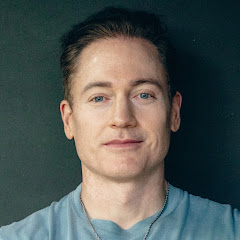 Bryan Johnson
Want to know something specific about what's covered?
We've already dissected every moment. Ask and we will deliver (with timestamps).
Key Moments
Bryan Johnson's 'Zeroism' advocates for embracing change, using algorithms, and future literacy to navigate an unknown future.
Key Insights
The future is already here, a constant game of recognizing it amidst rapid change.
Personal well-being and societal progress depend on adapting at the speed of science and technology.
Embracing 'Zeroism' involves navigating the unknown with a mindset of future literacy.
Algorithms and data-driven systems can manage health and societal challenges more effectively than humans alone.
The 'Autonomous Self' concept aims to align personal growth with technological advancement.
Confronting existential risks requires a shift from reactive to proactive, aligned decision-making.
THE DAWN OF ZEROISM AND THE REJECTION OF THE PAST
Bryan Johnson introduces 'Zeroism' as a philosophy for understanding and navigating the future. He contrasts the media's sensationalized portrayal of his anti-aging efforts with his core message: the future is constantly arriving, but we often fail to recognize or accept it. This resistance to new paradigms, he argues, is a historical pattern. His project, Blueprint, proposes a radical future where death may no longer be inevitable, a concept met with significant societal pushback, which he interprets as a collective confession of helplessness.
THE EVOLUTION OF INTELLIGENCE AND THE EMERGENCE OF SUPER INTELLIGENCE
Johnson traces the evolution of intelligence from the universe's beginning to the present, highlighting humanity's unique leap with fire, language, AI, and the impending creation of super intelligence. He suggests that this new form of intelligence, far beyond human capacity, will fundamentally rewrite reality and reveal dimensions currently beyond our comprehension. This momentous event is the backdrop against which 'Zeroism' and the concept of the 'Origin' (Zero) become significant, representing a step into a potentially magnificent new existence.
OVERCOMING PERSONAL LIMITATIONS THROUGH ALGORITHMIC MANAGEMENT
Johnson recounts his personal struggles with depression and self-destructive behaviors, personified by 'Evening Brian.' He realized that his various internal selves had distinct motivations and biochemical states, hindering his control. This led him to apply principles of technological advancement—systematic, methodical improvements—to his own life. He developed Blueprint, an algorithmic system that takes better care of him than he can himself, managing his health through hundreds of biomarkers and scientific data, effectively creating an 'autopilot' for his well-being.
BLUEPRINT, THE AUTONOMOUS SELF, AND FUTURE LITERACY
Blueprint's core objective is to enable humans to thrive by hitching a ride into the future. It operates on three key ideas: first, it's an algorithm superior to individuals in self-care, combating self-destructive tendencies; second, it fosters the 'Autonomous Self,' where individuals improve at the speed of science and technology; and third, it embodies 'Zeroism,' a mindset and toolkit for navigating the unknown future. This future literacy is crucial in an era of rapid technological and cultural shifts, where traditional survival instincts are insufficient.
ZEROISM AS A RESPONSE TO EXISTENTIAL RISKS AND THE UNKNOWN
Zeroism is presented as a response to humanity's existential risks, including biosphere collapse, misaligned AI, and mass destruction. Johnson questions humanity's capacity to cooperate and problem-solve on the necessary timescales. He posits that by embracing the unknown—what we cannot see or don't know—we can act courageously. Similar to revolutionary 'zero discoveries' in history that expanded understanding, Zeroism acknowledges that AI is accelerating the pace of these discoveries, demanding rapid adaptation and a shift from status quo preservation to embracing what's next.
THE 'FIRST SUPPER' AND EMBRACING A NEW REALITY
Johnson hosts 'First Supper' gatherings (formerly Blueprint brunches) to help individuals process the challenging ideas of Blueprint and Zeroism. Through thought experiments, guests confront their reliance on guesswork for health decisions and are presented with the choice of opting into an algorithmically managed life. Many initially resist, tied to their existing lifestyles, but Johnson shares his profound personal transformation—happier, healthier, and more intellectually alive—pitying his former self. This highlights the difficulty, yet necessity, of embracing radical change.
REIMAGINING EXISTENCE: FROM DEATH TO CONTINUED LIFE
Johnson challenges the inevitability of death, envisioning a future where Blueprint is applied to planetary health and human well-being, becoming a forgotten, seamless process. He argues that our current pursuit of temporary pleasure, driven by the belief in death's inevitability, is self-destructive. He advocates for an unconditional 'want to exist,' suggesting that aligning all intelligence—within self, with AI, and with Earth—is the central opportunity of our time. This requires a shift towards adaptability and proactive goal alignment, rather than reactionary responses to disaster.
THE IMPERATIVE OF ADAPTATION IN AN UNPREDICTABLE FUTURE
Looking towards the 25th century, Johnson imagines observers marveling at humanity's transition from inevitable death to 'don't die' through the adoption of AI and biological programmability. He stresses that the human mind, while once superior, is being surpassed by computational intelligence. He advocates for 'future literacy'—an agile approach not reliant on past maps but on engineering systems to navigate changing terrain. This means embracing adaptability and simple rules to emerge from complexity, as demonstrated by nature and advanced AI.
GOAL ALIGNMENT AS THE PATH FORWARD
Johnson details his personal journey of self-alignment using Blueprint, effectively removing self-destructive behaviors and reducing his biological aging velocity. He frames this personal success as a beta version for future humans. He emphasizes that while directly working on AI alignment is crucial, everyone can contribute by understanding that aligning all intelligence is the paramount task. This alignment begins internally, with a constant search for the most important information and insights to navigate a future fundamentally different from the past.
NAVIGATING UNCERTAINTY WITH NEW PREDICTIVE QUESTIONS
The future, Johnson argues, cannot be reliably modeled on the past due to AI's transformative potential. He urges caution with assumptions and recommends three questions for better decision-making: 'What must remain true for this to continue to be true?', 'What new thing would make this untrue?', and 'What wildly unexpected surprise would change the question?' This approach fosters adaptability and prevents living in the past, allowing for a mind that stays in sync with rapid technological advancements and the rejuvenation of society.
Mentioned in This Episode
●Software & Apps
●Organizations
●Books
●Concepts
●People Referenced
Common Questions
Zeroism is Bryan Johnson's personal philosophy for the future of humanity, emphasizing future literacy, embracing the unknown ('not knowing'), and aligning with scientific and technological progress, especially AI.
Topics
Mentioned in this video
Cited as a 'zero discovery' that revolutionized understanding by shifting the perspective on the Earth's place in the universe.
A personal philosophy for the future of being human, focusing on navigating a rapidly changing unknown future, embracing 'not knowing', and aligning with science, technology, and AI.
More from Bryan Johnson
View all 44 summaries 16 min
8 Steps to Reclaim Your Life
 23 min
How Bad Is Taco Bell REALLY?
 26 min
I Tried Psilocybin for Science (Livestream Highlights)
 51 min
So I Tried Ketamine… | Bryan Johnson Podcast
Ask anything from this episode.
Save it, chat with it, and connect it to Claude or ChatGPT. Get cited answers from the actual content — and build your own knowledge base of every podcast and video you care about.
Get Started Free