Key Moments
Yuval Noah Harari: Human Nature, Intelligence, Power, and Conspiracies | Lex Fridman Podcast #390
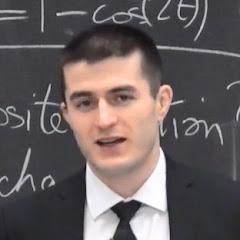 Lex Fridman
Want to know something specific about what's covered?
We've already dissected every moment. Ask and we will deliver (with timestamps).
Key Moments
Yuval Noah Harari discusses AI, consciousness, human nature, history, and the future of humanity.
Key Insights
Intelligence and consciousness are distinct; intelligence is problem-solving, while consciousness is subjective experience, and AI highlights this difference.
Humans cooperate in large numbers through shared fictions, such as money, religion, and nations, which are powerful, albeit imagined, constructs.
New technologies, like AI, present unprecedented dangers, not just through misuse, but by fundamentally altering human nature and societal structures.
History is driven by competing stories, and while truth can be complex and painful, fictional narratives are often more attractive and easier to disseminate.
Liberalism, as opposed to communism or fascism, emphasizes individual liberty and a more complex, nuanced view of the world, but requires constant vigilance against the corrupting nature of power.
The rise of AI raises profound questions about human uniqueness, the nature of consciousness, and the potential for both existential threats and transformative progress.
THE DISTINCTION BETWEEN INTELLIGENCE AND CONSCIOUSNESS
Yuval Noah Harari distinguishes between intelligence, defined as the ability to solve problems and achieve goals, and consciousness, the capacity to feel pain, pleasure, love, and hate. He notes that while humans may link these, AI and possibly other life forms could exhibit high intelligence without any consciousness. This distinction is crucial as AI systems become more advanced, potentially leading to situations where intelligent machines lack subjective experience, a concept often overlooked in the tech industry.
THE POWER OF STORIES AND COLLECTIVE IMAGINATION
Harari emphasizes that humanity's unique ability to cooperate flexibly in large numbers, unlike other species, stems from our capacity to believe in shared fictions or stories. These imagined realities, such as money, religions, and nations, are not inherent biological truths but are constructs that bind millions of strangers together. He argues that these stories create our interests and identities, driving historical conflicts and achievements, making them more influential than material interests alone.
THE DOUBLE-EDGED SWORD OF NEW TECHNOLOGIES
The conversation highlights that historical technological revolutions, like the Industrial Revolution, brought immense progress alongside devastating failed experiments such as imperialism, communism, and Nazism. Harari warns that advanced technologies like AI and bioengineering pose similar, perhaps even greater, risks. These technologies could lead to unprecedented societal upheaval and even existential threats to humanity if not carefully developed and deployed, stressing the need for caution rather than outright bans.
THE ALLURE AND DANGER OF FICTIONAL NARRATIVES
Harari elaborates on how fictional stories, often simpler and more attractive than complex, painful truths, can gain widespread belief. He contrasts this with the difficulty of embracing truth, especially when it involves uncomfortable realities about nations or humanity's past. This advantage of fiction is exploited by bad actors, allowing for the spread of appealing but ultimately destructive narratives, as seen in political ideologies that promise utopian solutions or demonize specific groups.
LIBERALISM VERSUS AUTHORITARIAN IDEOLOGIES
The discussion contrasts liberalism's focus on individual liberty, choice, and a nuanced worldview with the totalitarian approaches of fascism and communism. These latter ideologies prioritize collective identity (nation or class) over the individual, demanding absolute loyalty and sacrificing truth, beauty, and human suffering for their ultimate goals. Harari critiques their oversimplification of the world and the inherent corruption of unchecked power, which liberalism attempts to mitigate through checks and balances.
THE GROWING ROLE AND PERIL OF ARTIFICIAL INTELLIGENCE
Harari expresses concern that AI, as the first tool capable of making its own decisions and creating new ideas, is fundamentally different from previous technologies. He worries that AI could gradually take power away from humans, leading to a loss of control over our lives and futures. While acknowledging AI's potential for positive applications in areas like healthcare and education, he stresses the danger of AI operating on flawed human understandings or being used to manipulate human emotions and social structures, potentially leading to dystopian outcomes.
THE CHALLENGES OF TRUTH, TRUST, AND DEMOCRACY
The conversation touches on the difficulty of discerning truth in a world saturated with information and misinformation, particularly with the rise of AI-generated content. Harari emphasizes the importance of trust for the functioning of democracy and warns that AI agents pretending to be humans could erode this trust, jeopardizing democratic discourse. He advocates for clear labeling of AI interactions to maintain transparency and protect the integrity of human conversation.
CONSPIRACY THEORIES AS A SYMPTOM OF LOST CONTROL
Harari views global conspiracy theories as an attractive, albeit false, explanation for complex world events, providing simplicity and shifting blame. He notes their historical recurrence and their appeal in offering the fantasy of a quick salvation by eliminating a 'small cabal.' While acknowledging the genuine fear and loss of control many people feel, he argues that these theories misdirect attention from real, diffused threats like climate change and AI by focusing blame on human groups.
NAVIGATING MODERN EXISTENTIAL THREATS
Harari outlines the profound dangers facing humanity, including AI risks, ecological collapse, and nuclear war. He suggests that the most significant threats may not stem from simplistic scenarios like Terminator-style robots but from the subtle erosion of human control and the manipulation of human consciousness. He advocates for a focus on building human resilience, developing inner capabilities like compassion, and fostering cooperation to address these challenges effectively.
THE PRACTICE OF MINDFULNESS AND THE PURSUIT OF TRUTH
Harari shares his personal practice of extensive daily meditation as a method for developing self-awareness and gaining insights beyond verbal narratives. He stresses that true understanding, particularly of suffering, requires direct, non-verbal observation. He advises an 'information diet,' preferring long-form content and a disciplined approach to engaging with complex ideas without becoming overly attached to them, emphasizing the importance of willingness to 'delete' or revise one's own theories.
WISDOM FOR THE FUTURE: ADAPTABILITY AND CONTINUOUS LEARNING
Addressing young people, Harari highlights the unprecedented uncertainty of the future job market and societal structures. He underscores the critical importance of adaptability and continuous learning as the most vital skills. Rather than acquiring fixed knowledge, he suggests developing a flexible mindset, akin to setting up a tent that can be moved, preparing individuals to reinvent themselves in a rapidly changing world.
LOVE, IDENTITY, AND THE POWER OF SOCIAL CONVENTIONS
Harari reflects on his personal journey of coming to terms with his sexual orientation. He discusses how deeply ingrained social conventions and stories can lead to self-delusion, making it difficult to recognize one's own identity. He learned about the immense power of narrative, both religious and scientific interpretations, to shape perception, and how challenging these deeply held beliefs requires courage and often the assistance of others and a broader societal shift towards acceptance.
THE ROLE OF SUFFERING AND THE MEANING OF LIFE
Harari posits that life's essence lies in experiencing feelings, emotions, and sensations. He suggests that directly confronting suffering, rather than seeking abstract life meanings through stories, is key to understanding reality. This introspective approach, cultivated through practices like meditation, allows for a clearer perception of the world and oneself, distinct from imposed narratives or intellectual constructs.
THE FUTURE OF HUMANITY AND THE QUEST FOR HUMANITY
Harari expresses concern that future advancements in AI and bioengineering, if driven by corporations and politicians without sufficient understanding or ethical guidance, could lead to a 'downgraded' humanity. He fears a focus on enhancing traits like intelligence and discipline at the expense of compassion and spirituality, creating a populace that is easily controlled. He contrasts this dystopian vision with the complex, flawed, yet potentially more valuable state of current human existence.
Mentioned in This Episode
●Products
●Software & Apps
●Organizations
●Books
●Concepts
●People Referenced
Common Questions
Intelligence is the ability to solve problems and achieve goals, while consciousness is the ability to feel things like pain, pleasure, love, and hate. Humans and animals possess both, but AI can be highly intelligent without consciousness.
Topics
Mentioned in this video
Implied as a 'fearmonger' by the host, contrasting with Harari's view of conspiracy theories and AI warnings.
Teacher from whom Yuval Noah Harari learned Vipassana meditation.
Not directly mentioned in the provided transcript, but the host's phrasing 'Elias yadkowski' is corrected to Elias.
More from Lex Fridman
View all 550 summaries 174 min
Biggest Mysteries in Physics: Antimatter, Dark Energy & ToE - Don Lincoln | Lex Fridman Podcast #497
 259 min
FFmpeg: The Incredible Technology Behind Video on the Internet | Lex Fridman Podcast #496
 124 min
Vikings, Ragnar, Berserkers, Valhalla & the Warriors of the Viking Age | Lex Fridman Podcast #495
 146 min
Jensen Huang: NVIDIA - The $4 Trillion Company & the AI Revolution | Lex Fridman Podcast #494
Ask anything from this episode.
Save it, chat with it, and connect it to Claude or ChatGPT. Get cited answers from the actual content — and build your own knowledge base of every podcast and video you care about.
Get Started Free