Key Moments
Why Everyone Needs AI Skills
 DeepLearning.AI
Want to know something specific about what's covered?
We've already dissected every moment. Ask and we will deliver (with timestamps).
Key Moments
AI literacy becomes a basic life skill for everyone.
Key Insights
AI literacy is expanding from researchers to everyone, much like reading literacy did historically.
You don’t need advanced degrees to benefit from AI; practical, real-world uses exist for many professions.
Every role that handles data—teachers, marketers, nurses, parents, founders—can leverage AI to improve outcomes.
Writing AI prompts will evolve to feel as normal as texting, lowering barriers to experimentation.
Start small and learn iteratively; small AI experiments can have meaningful impact on operations and decisions.
The democratization of AI tools means demand forecasting, efficiency gains, and better customer experiences are within reach for many businesses.
AI IS A BASIC LITERACY FOR THE MODERN ERA
Learning AI today is akin to learning to read in eras past. For centuries, literacy was limited to a fortunate few, yet those who learned to read unlocked enormous social and technological progress. AI is positioned to follow the same arc: what is now a specialized capability will become a common life skill woven into daily work. You don’t need to be a researcher or hold a PhD to benefit from AI; practical applications exist across many fields. A pizza shop owner, for example, could deploy a simple model to forecast demand, optimize staffing, and reduce customer wait times. AI is not exclusive to engineers or scientists; it is relevant to teachers, marketers, nurses, parents, founders, and anyone who handles data—whether quantitative or qualitative. The future may normalize AI prompts as casually as texting a friend, so the best time to begin is now, with small, hands-on learning.
AI FOR EVERYONE, NOT JUST RESEARCHERS
The message is clear: AI does not belong only to researchers or tech elites. By design, AI tools are becoming more accessible, with interfaces that hide complexity behind simple inputs. This democratization means a broader workforce can experiment with models to address day-to-day challenges—from analyzing customer feedback to optimizing inventory. The example of a non-technical professional using AI to streamline operations illustrates the shift: the barrier to entry is lowering, and the potential benefits are widening. When AI becomes part of the toolkit for teachers, marketers, nurses, parents, and founders, it shifts expectations about what work looks like and who can contribute to data-driven decisions.
PRACTICAL USE CASES ACROSS JOBS
Across professions, AI can translate data into actionable outcomes. Educators can tailor learning experiences, marketers can optimize campaigns, nurses can triage patient data more efficiently, and founders can forecast market needs. Even qualitative data—like customer reviews or patient notes—can be structured by AI to reveal trends, sentiment, and priorities. The shared thread is that AI helps turn information into better decisions, faster. By highlighting concrete examples, the talk demonstrates that AI is not a distant future capability but a set of practical tools that can elevate performance, improve satisfaction, and reduce operational frictions in real-time.
PROMPTS WILL FEEL LIKE TEXT MESSAGES
A core implication is that communicating with AI will become as routine as sending a text message. Rather than needing specialized languages, users will craft prompts that are natural and concise, iterating based on outcomes. This lowers the mental hurdle: you don’t need perfect syntax or deep technical knowledge to start. Prompt development becomes a skill akin to composing clear questions or instructions. As people gain familiarity, prompts will grow more sophisticated, enabling more nuanced results while remaining approachable for beginners. The shift signals a cultural change in how work and problem-solving are approached, encouraging experimentation without fear of failure.
START SMALL: HOW TO BEGIN
The guidance centers on incremental progress. Begin with a single, low-stakes task that you want to improve—like forecasting demand, drafting messages, or summarizing large documents. Use available AI tools to test assumptions, measure outcomes, and refine prompts. Build a feedback loop: observe results, adjust inputs, and compare against baselines. This mindset—small experiments, measurable results, iterative learning—keeps momentum and demonstrates value quickly. The emphasis is on practical, observable gains rather than theoretical mastery. Over time, these small experiments accumulate into a robust personal toolkit for data-driven decision making.
DEMOCRATIZATION OF AI: NO PHD REQUIRED
A key takeaway is that AI’s democratization means more people can participate in meaningful outcomes. If a pizza shop owner or a classroom teacher can harness AI to predict demand or tailor instructions, the technology stops being a mysterious black box and becomes a practical collaborator. This shift redefines professional development—from rare, specialized training to continuous, on-the-job learning. Accessibility lowers the risk of adopting AI, encourages experimentation, and broadens the pool of contributors who can drive improvements in products, services, and processes.
THE FUTURE OF WORK WITH AI: EVERYDAY ENABLEMENT
Looking ahead, AI is not a futuristic luxury but a daily enabler. As grammar and literacy did for society, AI literacy will unlock more efficient workflows, smarter decisions, and more personalized outcomes. The forecast includes faster responses to customer needs, better interpretation of qualitative feedback, and more accurate forecasting of operational bottlenecks. The overall tone is optimistic: AI is becoming embedded in everyday tasks, making tasks that were once time-consuming more manageable and dependable. The promise is not to replace humans, but to augment capabilities—freeing time for higher-level thinking, creativity, and strategic planning.
ACTIONABLE TAKEAWAYS AND NEXT STEPS
To translate the talk into practice, set a clear, small objective for your first AI experiment, identify one everyday decision you want to improve, and choose a user-friendly AI tool to test a prompt. Track the impact: time saved, improvements in accuracy, or better outcomes for customers or students. Share learnings with colleagues to accelerate collective growth. Maintain curiosity and adopt a habit of continual refinement: as you gain comfort with prompts and data, introduce slightly more complex tasks, always evaluating results against real-world objectives. The overarching message is simple: start learning AI now, and grow your skills through consistent, practical use.
AI literacy starter cheat sheet
Practical takeaways from this episode
Do This
Avoid This
Common Questions
The speaker compares AI literacy to reading centuries ago, arguing that AI will become ubiquitous and mainstream, not just a niche skill. This shift means more people will be able to work with AI tools across various fields.
Topics
More from DeepLearningAI
View all 99 summaries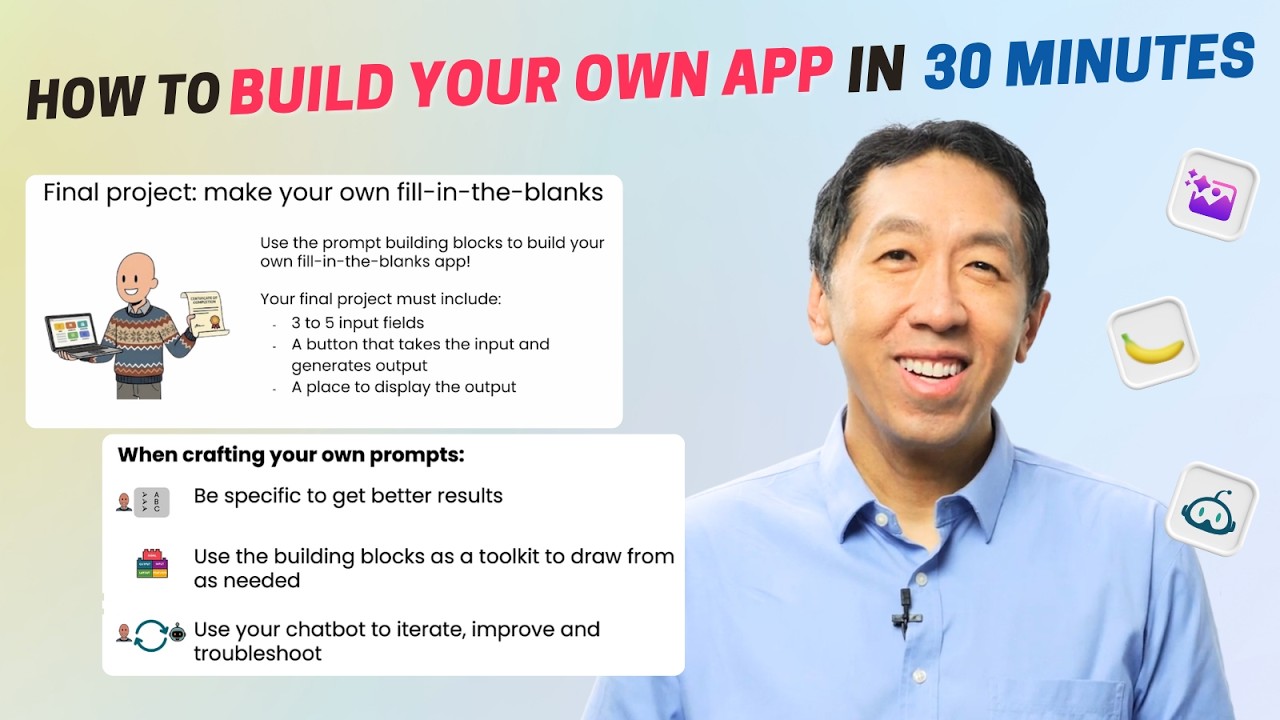 26 min
Build Your Own App In Just 30 Minutes! Full Course with Andrew Ng
 27 min
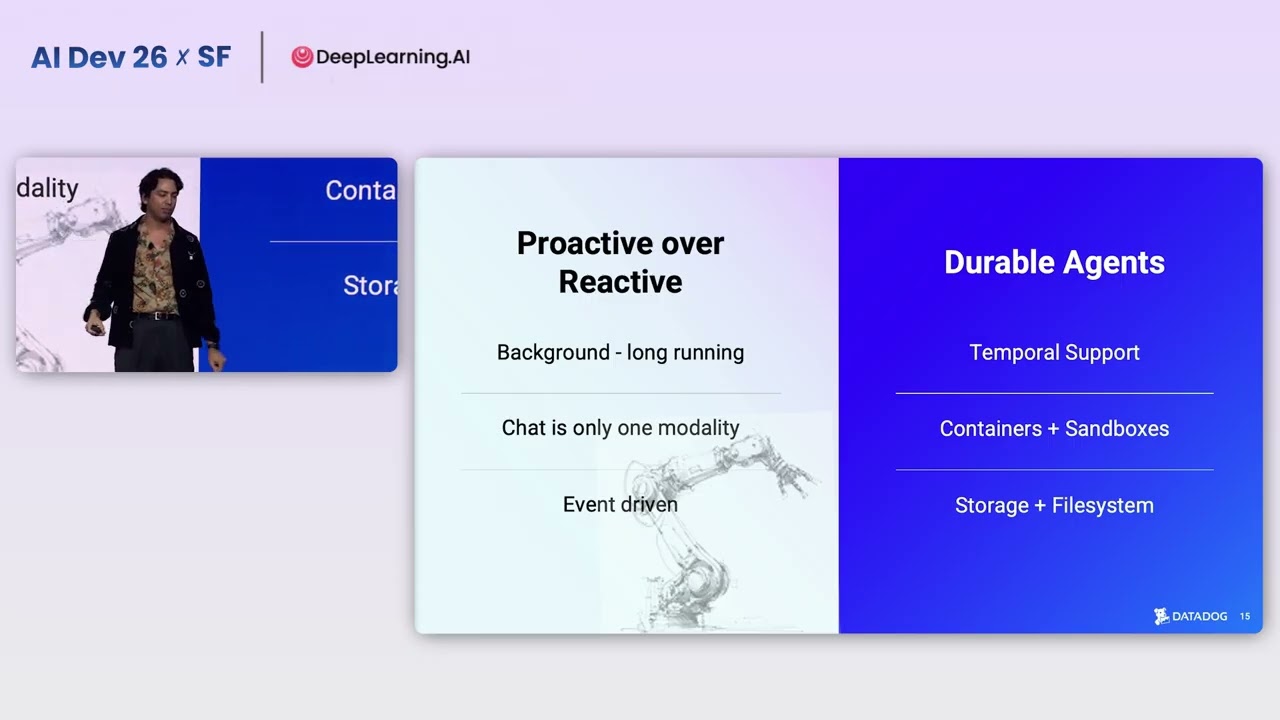
AI Dev 26 x SF | Diamond Bishop: The Next 100 Agents. Building the Agent Native Office
 26 min
AI Dev 26 x SF | João Moura: Building Recurring, Governed, and Embedded Enterprise Workflows
 22 min
AI Dev 26 x SF | Andrew K. Davies: Deterministic Memory: How to Build an AI That Cannot Lie
Ask anything from this episode.
Save it, chat with it, and connect it to Claude or ChatGPT. Get cited answers from the actual content — and build your own knowledge base of every podcast and video you care about.
Get Started Free