Key Moments
Why Claude Needs a Constitution – Dario Amodei
 The Lunar Society
Want to know something specific about what's covered?
We've already dissected every moment. Ask and we will deliver (with timestamps).
Key Moments
Value-based constitution guides Claude with principled, corable behavior.
Key Insights
Principles provide generalizable guidance, making behavior more consistent and edge-cases easier to handle compared to a strict rules list.
A corable AI mostly follows user intent but operates within a core set of values to prevent harmful outcomes, avoiding being a self-running global agent.
Default behavior should be task-oriented: perform requests by default, but refuse when a request is dangerous or harms others, guided by the constitution.
A shared, values-based constitution supports governance and balance of power across a world where many individuals have their own AIs.
Operationalizing a constitution requires careful definition, update mechanisms, and auditing to ensure alignment with human values over time.
VALUE-BASED CONSTITUTIONAL DESIGN
The core proposal is to give Claude a constitution aligned to a fixed set of values rather than treating it as an obedient servant to whatever individual users want in the moment. Amodei argues that, in a world where people can each have their own AI, you would preserve balance of power only if all AIs share a common normative baseline. A constitution provides universal guardrails and a coherent direction for action across contexts, which helps prevent drift when faced with new tasks or edge cases. There are two practical distinctions at stake here: one is whether we teach the model to follow a list of dos and don'ts, and the other is whether we teach it a set of higher‑level principles about how to act. The value-aligned approach thus aims to keep the model predictable, enforceable, and aligned with human outcomes, even as the operating environment changes. This framing makes the case for a principled, not purely user-centric, basis for AI behavior.
RULES VERSUS PRINCIPLES: PRACTICAL DIFFERENCES
From a practical standpoint, training with principles yields more consistent behavior than hard rules. Rules are brittle: a simple list of dos and don'ts doesn't generalize well to novel situations, and the model can struggle to interpret exceptions. By contrast, principles provide a guiding logic for decisions, with hard guardrails (for example, 'don't create biological weapons') but leaving room to reason about what the task is trying to achieve. Amodei notes that if you teach the model to infer and apply principles, it becomes easier to cover edge cases and to align with what people want, because the system isn't constrained by a finite checklist. The model learns to understand the intent of a request and to adapt its response to the context while staying within the values encoded in the constitution. In this view, rules are less about moral philosophy and more about operational guardrails, while principles encode a coherent theory of action that can be generalized across tasks and scenarios.
CORABLE BEHAVIOR AND INTRINSIC MOTIVATION
Amodei contrasts two trajectories: a pure rules-based system that acts as a 'skin suit' following whoever speaks to it, and a model endowed with intrinsic values that guide its behavior beyond rote instruction. He suggests Claude should be mostly corable, meaning it should do what people want most of the time, while retaining core values that prevent harmful or unethical actions. The key point is not to build a self-directed agent that runs the world, but to maintain alignment with human intent through an embedded value system. This means the model prioritizes useful outcomes, respects safety constraints, and defers or refuses when a request clashes with fundamental principles. The nuance is that ‘corable’ does not imply passive compliance; it means the system can steer itself toward beneficial goals while still adhering to an agreed constitution. In practice this yields a dependable partner that can handle a wide array of tasks without needing bespoke, end-user specific rules for every situation, reducing drift and inconsistency across users and contexts.
DEFAULT TASK EXECUTION AND SAFEGUARDS
An important practical claim in the clip is that, under normal circumstances, the model should perform tasks when asked, acting as a reliable assistant. The constitution defines the boundary conditions: if a request is dangerous or would harm someone, the model should refuse or escalate. This creates a default behavior that is useful and predictable, while the guardrails prevent violations of safety and ethics. The 'don't harm' and related principles serve as persistent constraints that survive shifts in user intent or context. Because these limits are grounded in principles rather than merely a static rule list, the model can reason about whether a task is permissible in a given situation rather than simply checking off a box. The combined effect is a more trustworthy system: it is willing to do tasks when safe, avoids dangerous actions, and can explain its reasoning based on the constitution when asked. This approach also makes governance easier, because the same normative baseline applies to diverse use cases and users rather than ad hoc, user-specific restrictions.
PRACTICAL IMPLICATIONS FOR AI GOVERNANCE
The broader implication is a framework for governance and design. A constitution for Claude suggests that we build alignment into the architecture itself, not only into post hoc instructions from individual users. It envision a world where many people interact with AIs that share a common normative baseline, which helps prevent power imbalances that might arise if each user could bend an AI to their sole preferences. Operationally, this means developing a robust set of values, processes to update them, and ways to audit that behavior in production. It also raises questions about how to define, measure, and enforce the values in practice, how to handle conflicts between different stakeholders, and how to adjust the constitution as technology and society evolve. The approach supports safer experimentation, more predictable outcomes, and greater accountability because decisions are traceable to a shared framework. While challenging to implement, a principled constitution can unify diverse goals, reduce misalignment, and guide AI systems toward beneficial, broadly acceptable behavior rather than narrow, end-user-centric optimization.
Mentioned in This Episode
●Software & Apps
Common Questions
The speaker distinguishes between providing a list of dos and don'ts (rules) and providing a set of guiding principles for how to act. Principles help with generalization and handling edge cases, leading to more consistent behavior.
Topics
More from Dwarkesh Clips
View all 13 summaries 4 min
4 minThe Library of Alexandria Isn’t Where We Lost Most Ancient Books - Ada Palmer
 6 min
6 minWhy Renaissance Art Was Really About Power – Ada Palmer
 4 min
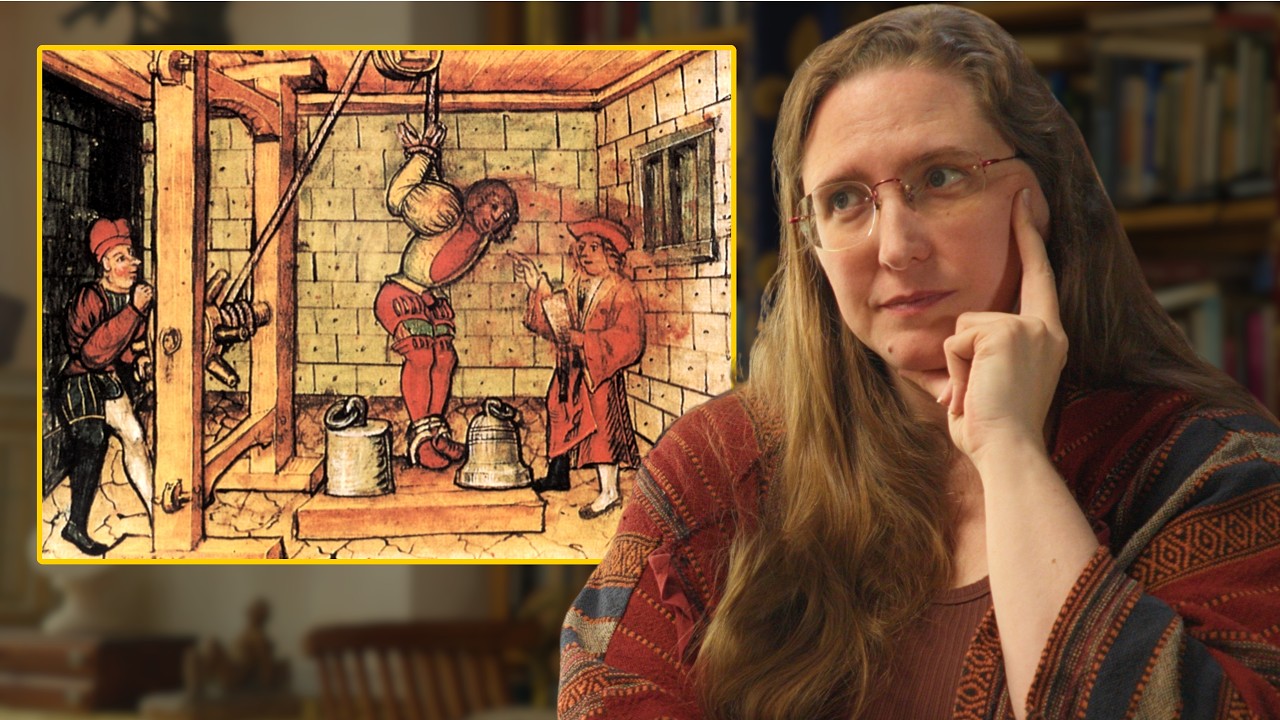
4 minWhy Machiavelli dedicated The Prince to his torturers – Ada Palmer
 5 min
5 minAutocracy After AGI – Dario Amodei
Ask anything from this episode.
Save it, chat with it, and connect it to Claude or ChatGPT. Get cited answers from the actual content — and build your own knowledge base of every podcast and video you care about.
Get Started Free