Key Moments
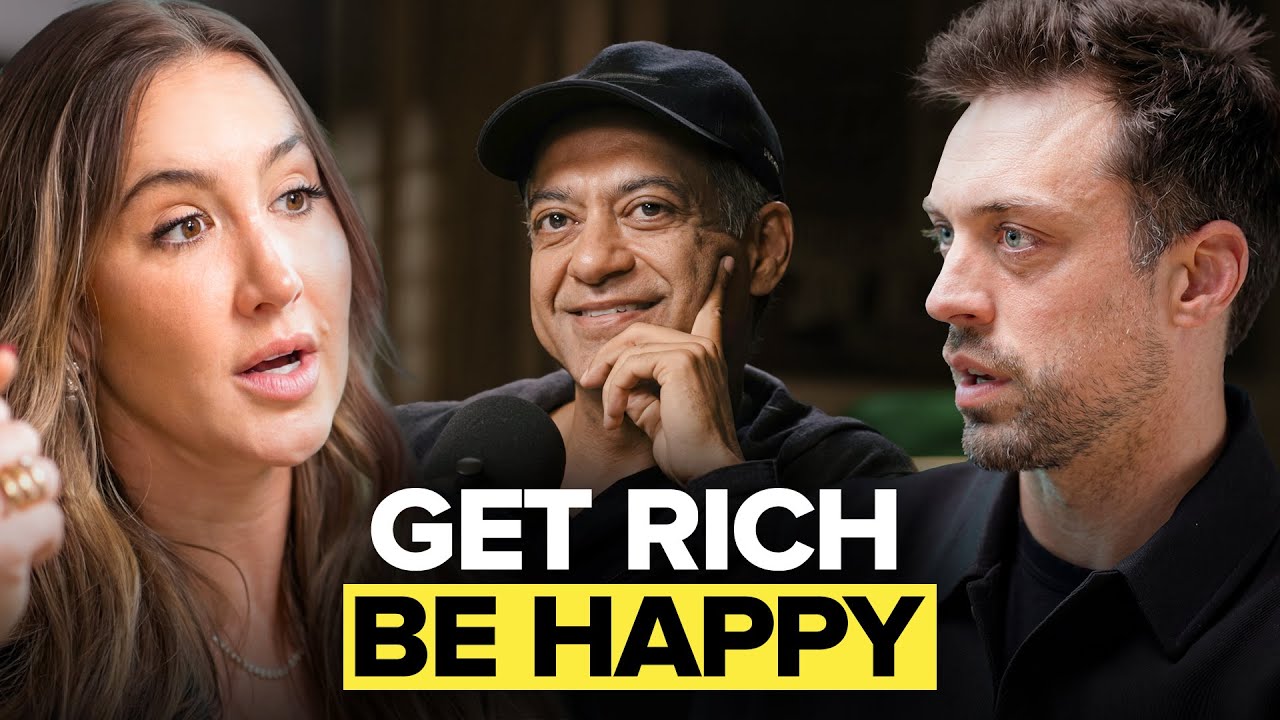
Wealth Expert: Do THIS Every Time You Get Paid | Morgan Housel
 Codie Sanchez
Want to know something specific about what's covered?
We've already dissected every moment. Ask and we will deliver (with timestamps).
Key Moments
Wealth is built on behavior, patience, and independence, not just IQ or luck.
Key Insights
True wealth-building is primarily driven by behavior and psychology, not just intelligence or financial acumen.
Patience, low ego, and long-term thinking are crucial for accumulating and retaining wealth.
The investment game is rigged against professionals focused on short-term gains, not against ordinary individuals with a long-term perspective.
Focusing money on personal happiness and independence, rather than external validation, leads to greater fulfillment.
Money can solve many problems and increase happiness up to a certain point, after which its impact diminishes significantly.
Many perceived 'passive income' streams require significant effort and psychological cost, challenging the notion of effortless wealth.
THE PRIMACY OF BEHAVIOR OVER INTELLECT
Morgan Housel emphasizes that financial success is less about intelligence or expertise and more about behavioral traits. He uses the contrasting stories of Ronald Reed, a janitor who amassed millions through patient stock investing, and Richard Fuld, a Wall Street executive who went bankrupt, to illustrate this point. Housel contends that ordinary individuals with good behavioral attributes like patience and a low ego can outperform highly intelligent people who lack emotional control. This highlights that financial acumen isn't exclusive to the highly educated or connected.
THE RIGGED GAME AND LONG-TERM INVESTING
The financial market, contrary to popular belief, is not necessarily rigged against ordinary investors but rather against professionals who are pressured by short-term performance metrics. For individuals investing consistently in diversified portfolios, like 401(k)s, over decades, the long-term compounding effect is far more significant than short-term market fluctuations. The key is to ignore peer performance and daily market noise, focusing instead on personal goals and patience, which is where true wealth is cultivated.
PURSUING INDEPENDENCE AND SELFISH HAPPINESS
Housel advocates for viewing savings not just as a future investment but as a way to buy independence and control over one's life. He suggests that money's primary utility is to enhance personal happiness and provide freedom, rather than to impress others. The desire for external admiration often leads to excessive spending, yet people rarely pay as much attention to others' possessions as we assume. Focusing on the happiness of oneself and immediate family, and using money as a tool for that, is seen as a more fulfilling pursuit.
THE DIMINISHING RETURNS OF WEALTH ON HAPPINESS
While money can significantly improve happiness by solving basic needs and providing comfort, its impact diminishes considerably after a certain income level. The belief that more money will solve all problems, from poor friendships to health issues, is often a fallacy. Beyond a point where foundational needs are met, additional wealth offers marginal increases in happiness. For extremely wealthy individuals, like Elon Musk versus Jeff Bezos, the lifestyle differences are negligible, underscoring that extreme wealth does not equate to proportional happiness.
THE MYTH OF PASSIVE INCOME AND THE REAL COSTS
The concept of 'passive income' often misleads people into believing it requires no work. Housel argues that most passive income streams, whether from real estate or investments, come with significant psychological costs, such as dealing with uncertainty, trusting others, and managing volatility. Even seemingly effortless income requires effort, whether it’s landlord duties or navigating stock market downturns. The true cost isn't always financial but can be psychological stress and time commitment, which are often underestimated.
HABITS OF SUCCESS: OBSESSION AND LONG-TERM THINKING
Common denominators among both wealthy and highly skilled individuals often include an intense obsession with their work and a commitment to long-term thinking. These individuals live and breathe their endeavors, dedicating decades to refining their craft. Wealth is primarily built through compounding, which requires sustained effort and 'merely good' returns over an extended period, rather than chasing the highest possible returns in short bursts. This sustained focus and patience are key differentiators.
THE DANGER OF GAMIFIED INVESTING AND THE VALUE OF HISTORY
Modern platforms often gamify investing, making it appealing but dangerous, especially for young people. Housel contrasts this with robust, long-term investment vehicles like Vanguard, which prioritize low fees and shareholder benefit. He suggests that learning investing should begin not with trading but with reading history, understanding human behavior regarding greed, fear, and copying others. History provides perspective, showing that current challenges, though seemingly unprecedented, often echo past human struggles, fostering a more rational approach to financial decisions.
REDEFINING FINANCIAL GOALS: INDEPENDENCE OVER STATUS
The ultimate ambition regarding money should be independence—the freedom to pursue one's talents and live authentically, rather than chasing material possessions or social status. Many societal pressures encourage spending for external validation, leading to a focus on possessions like designer clothes or luxury cars that others may admire, not for the person driving them. By understanding that most people are not paying close attention, individuals can shift their financial goals towards self-serving happiness and independence, which are more sustainable and rewarding.
THE DUALITY OF GETTING RICH VS. STAYING RICH
Housel highlights that the skills required to accumulate wealth are often different from those needed to maintain it. Figures like Jesse Livermore, a brilliant stock trader who made and lost fortunes multiple times, exemplify this. He possessed exceptional talent for getting rich but lacked the discipline to stop taking excessive risks. True financial success requires a balance between the boldness to take calculated risks and the paranoiac caution to protect what has been gained, a duality that many entrepreneurs and traders struggle to embody simultaneously.
OWNERSHIP VS. RENTING AND THE REALITY OF PASSIVE INCOME
While financial calculations may favor renting, Housel acknowledges the emotional and stability benefits of homeownership for family life. He cautions against viewing buying a house as purely a spreadsheet decision. Similarly, the notion of truly passive income is often a myth, as most ventures require effort and psychological resilience. The pursuit of financial independence through careful saving and a focus on personal well-being, rather than chasing fleeting external validation or effortless income streams, is presented as a more robust path.
Mentioned in This Episode
●Products
●Organizations
●Books
●People Referenced
Key Takeaways for Financial Well-being
Practical takeaways from this episode
Do This
Avoid This
Common Questions
The biggest lie is that you need high intelligence, connections, or elite education to succeed financially. In reality, behavioral attributes like patience, a low ego, and long-term thinking are often more critical than intellect alone. Ordinary people with good behavior can outperform highly educated individuals who lack emotional control.
Topics
Mentioned in this video
More from BigDeal by Codie Sanchez
View all 127 summaries 48 min
Mutli-Millionaire CEO: The Simple Steps to Self-Made Success | Everette Taylor
 21 min
How to Rewire Your Brain to Hate Procrastination
 63 min
Billionaire Founder: You Need THESE Business Skills to Become Rich | Ankur Jain
 62 min
How to Get Rich (Without Getting Lucky) | Eric Jorgenson on Naval Ravikant
Ask anything from this episode.
Save it, chat with it, and connect it to Claude or ChatGPT. Get cited answers from the actual content — and build your own knowledge base of every podcast and video you care about.
Get Started Free