Key Moments
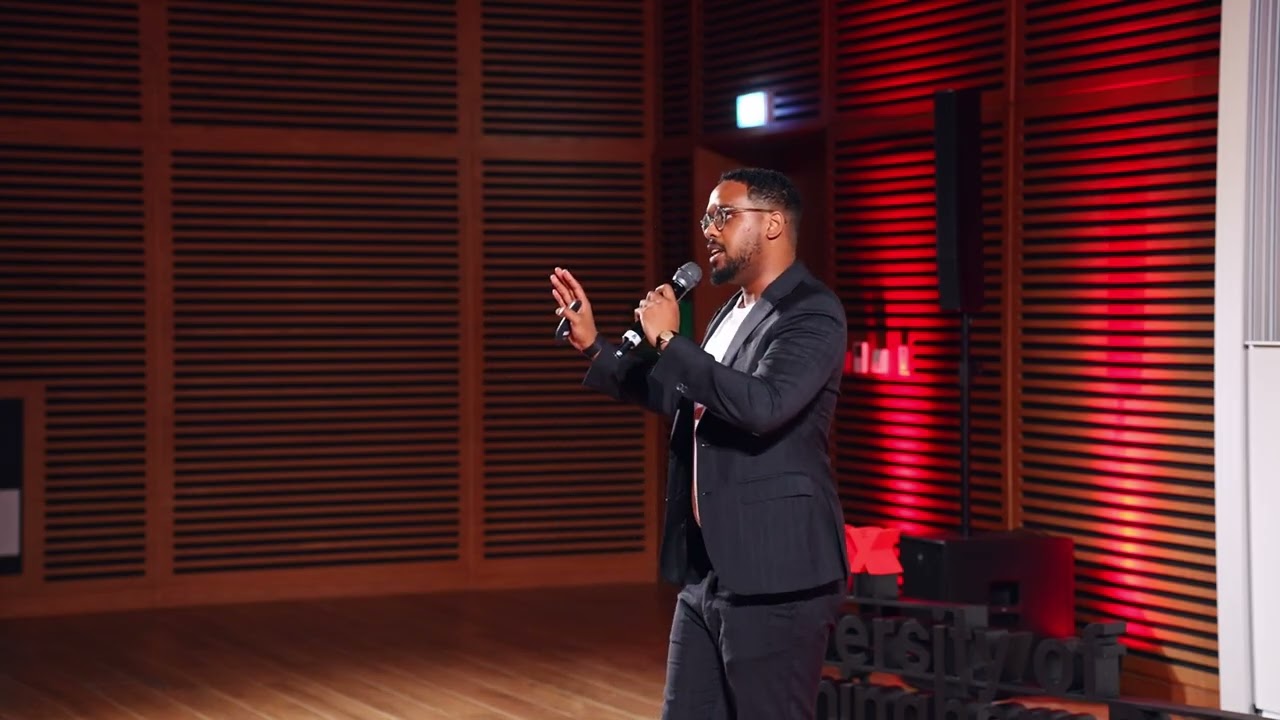
The power of instant influence | Markus Eilers | TEDxTUDarmstadt
 TED
TEDWant to know something specific about what's covered?
We've already dissected every moment. Ask and we will deliver (with timestamps).
Key Moments
Convincing others isn't about volume or credentials, but about tapping into their emotions and driving curiosity through empathy and focused questions, akin to a doctor diagnosing a patient.
Key Insights
The speaker's initial attempt to explain a technical idea to 'Ollie' using jargon like 'web services platform,' 'identity management,' 'distributed database,' and 'container app' resulted in confusion and a polite dismissal.
Most people fail to influence others because they focus on themselves and their ideas, rather than on the person they are trying to convince, often bombarding them with facts instead of engaging their emotional brain.
The speaker developed a framework called 'the undressing' (of the issue, not the person) which involves asking five key questions to deeply understand the other person's motivations, reality, consequences, existing ideas, and necessary checks.
Creating curiosity is the first ingredient for instant influence, achieved by speaking less and putting the other person on an 'information diet,' similar to how TikTok hooks viewers.
The speaker recounts a second encounter with 'Ollie' where, after keeping quiet and asking clarifying questions, Ollie became intensely interested and wanted to be involved, demonstrating the power of connection and empathy.
To move people to action after establishing curiosity and connection, it's crucial to show them the value, a clear path, and remove uncertainty, thereby providing the certainty needed to make a decision.
The cost of technical jargon and self-focus
The speaker, Markus Eilers, recounts a personal failure to influence a potential collaborator, 'Ollie.' As a science student, he attempted to explain a complex technical idea using terms like 'web services platform,' 'identity management,' 'distributed database,' and 'container app.' This approach, rooted in a self-centered focus on his idea, resulted in Ollie's complete confusion and polite dismissal. This experience highlights a common pitfall: assuming that technical detail and enthusiasm for one's own idea are sufficient for persuasion. Instead, it often leads to a 'flight reaction' because the audience's needs and understanding are ignored. This failure underscored the necessity of a different approach to influence, one that acknowledges how human brains actually make decisions.
Curiosity as the first ingredient for influence
The first critical ingredient for instant influence is curiosity. In today's world, attention spans are incredibly short, often estimated at around 8 seconds. To capture and hold attention, one must resist the urge to overwhelm the other person with information. Instead, the strategy should be to put them on an 'information diet' by speaking less and creating an opportunity for them to become curious. Eilers draws an analogy to platforms like TikTok, Reels, and Shorts, which excel at hooking viewers by posing intriguing questions or presenting surprising scenarios upfront. Applying this principle to conversations means using similar 'opening hooks' to spark interest, compelling the other person to want to learn more.
Engaging the emotional brain through connection
The human brain has two primary decision-making parts: the rational part, which likes data and facts but is lazy, and the emotional part, which thrives on stories, images, and emotion. Crucially, the emotional part makes all our decisions, even those we later struggle to rationalize. Influencing someone requires engaging this emotional brain, and a surprisingly effective way to do this is by focusing on the other person. People are most interested in themselves. By centering the conversation on them, asking brilliant questions, and listening with fascination, one can foster a sense of connection. This approach mirrors how doctors diagnose patients: they ask questions to understand the 'issue' deeply before offering a solution, making the patient feel heard and cared for, which is far more effective than a self-centered presentation.
The 'undressing' framework for deep connection
To achieve this deep connection, Eilers outlines a framework he calls 'the undressing' (of the issue, not the person). This involves delving into the other person's perspective through five key questions designed to uncover their motivations and needs. These questions are: 1. Motivation ('What has you thinking about this again?'), 2. Reality Check ('How does this show up today?' and 'What are you implementing?'), 3. Consequences ('What are you afraid will happen if you don't solve this?'), 4. Existing Options/Ideas ('What have you come up with so far?'), and 5. Necessary Checks ('What would an alternative need to look like to be successful?'). Through this process, the speaker learns precisely what the other person needs to hear, enabling them to tailor their subsequent message to resonate deeply and authentically, facilitating self-persuasion.
Revisiting Ollie and achieving influence
Eilers shares a pivotal moment where he encountered Ollie again, this time having learned his lessons. Instead of launching into his technical explanation, he remained quiet and empathetic, allowing Ollie to initiate the conversation and then used his developed questioning framework. This led to Ollie becoming intensely curious and wanting to be a part of Eilers's venture within 20 minutes. This success contrasted sharply with his earlier failure, demonstrating that by prioritizing the other person's perspective and engaging their emotions rather than their rational mind with dry facts, influence becomes achievable. The key was not to 'educate' Ollie about his problem, but to understand Ollie's problem from Ollie's perspective.
Securing action through certainty
Once curiosity and connection are established, the final ingredient for instant influence is to move people to action by investing them enough to make a decision. This involves revisiting the emotional brain but focusing on removing blocks that prevent decision-making. Three key steps are involved: 1. Reaffirm the value ('This is what you want to achieve, is that still correct?'), 2. Show a clear path ('There are only X steps needed, and others have done it.'), and 3. Remove uncertainty ('Here's how we will make sure it works and mitigate risk.'). Providing this certainty, rather than overwhelming detail, empowers the other person to act. By shutting up, being empathetic, and acting like a human, Eilers finally gave Ollie a fair chance to invest in his idea, leading to a successful outcome.
Ideas as invitations to purpose
The speaker concludes by emphasizing that our ideas are not meant to cause suffering but are clues to our true purpose and invitations to grow. When we successfully make others curious enough to care, connected enough to listen, and certain enough to act, we pave the way for them to convince themselves and support our ideas. This process not only leads to greater opportunities but also enriches our own lives, fulfilling the potential of our unique contributions.
Mentioned in This Episode
●Software & Apps
The Three Ingredients of Instant Influence
Practical takeaways from this episode
Do This
Avoid This
Common Questions
Instant influence is the ability to inspire and win people over to your ideas within a single conversation. It's not a rare talent but a skill that can be learned and applied by anyone.
Topics
Mentioned in this video
A professional networking platform where the speaker had been more visible, prompting Olly to recall their earlier connection and ask about his current venture.
A social media platform mentioned as an example of content that effectively captures and holds user attention through curiosity-driven hooks.
More from TEDx Talks
View all 91 summaries 21 min
The problem with leadership culture today | Vaney Hariri | TEDxSioux Falls
 23 min
0.4 | Faris Abubaker | TEDxUniversity of Birmingham Dubai
 25 min
A Journey from Snowboarding Boy to Olympic Champion | Yiming SU | TEDxCEIBS
 29 min
When Nobody Listened, I Learned to Speak | The Second Layer | Pranav Boxer Grover | TEDxSRCASW
Ask anything from this episode.
Save it, chat with it, and connect it to Claude or ChatGPT. Get cited answers from the actual content — and build your own knowledge base of every podcast and video you care about.
Get Started Free