Key Moments
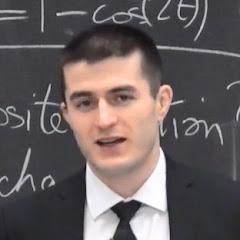
Stephen Kotkin: Stalin's Rise to Power | AI Podcast Clips
 Lex Fridman
Want to know something specific about what's covered?
We've already dissected every moment. Ask and we will deliver (with timestamps).
Key Moments
Stalin's rise to power was a mix of historical contingency, organizational skill, and ideological drive, not solely personal ambition.
Key Insights
Stalin's ascent was heavily influenced by historical circumstances like WWI and the fall of the Tsarist regime, rather than direct personal involvement in major events.
Lenin's creation of the General Secretary position, intended as a support role, became a crucial stepping stone for Stalin due to Lenin's subsequent illness.
Stalin was a 'true believer' in communism and a statist, driven by ideals to build a strong Soviet state, not just by a thirst for personal power.
His effectiveness as an organizer and his ruthless efficiency allowed him to consolidate power, turning the party apparatus into a personal dictatorship.
In the interwar period, communism offered an appealing alternative to the crises of capitalism (Great Depression, fascism, imperialism), though it ultimately proved disastrous.
Stalin's ability to combine ideological fervor with pragmatic, often brutal, methods of control was key to his enduring hold on power.
THE ROLE OF CIRCUMSTANCE IN STALIN'S EARLY LIFE
Stephen Kotkin emphasizes that Joseph Stalin was largely a product of historical circumstances rather than a prime mover in early 20th-century Russian events. Notably, he spent World War I in Siberian exile, unaffected by the conflict and the fall of the Tsarist regime in 1917. His physical disqualification from military service further removed him from direct wartime participation. This detachment from major historical upheavals, such as the peasant land seizures following the Tsar's abdication, shaped his early trajectory, placing him as an observer rather than a leader during formative periods.
THE OCTOBER COUP AND THE RISE OF THE BOLSHEVIKS
The Bolshevik seizure of power in October 1917, referred to by Kotkin as an 'October coup,' was primarily directed against the broader socialist left, not the failing Provisional Government. Lenin's group targeted other socialist factions and councils (Soviets) that represented popular power. While elections showed overwhelming socialist support, the Bolsheviks consolidated power by eliminating rivals. This event, followed by a civil war victory, entrenched the Communist Party and created an environment where figures like Stalin could rise within the new regime.
THE CREATION OF THE GENERAL SECRETARY POSITION
A pivotal institutional development was Lenin's creation of the General Secretary position in 1920, appointing Stalin to it. This role was designed to manage the Communist Party's day-to-day operations, serving as Lenin's right-hand man. Crucially, less than six weeks after Stalin's appointment, Lenin suffered a severe stroke that incapacitated him. This sequence of events transformed a role intended for party administration into a powerful platform for Stalin, especially as Lenin was unable to exercise his leadership effectively before his death.
STALIN'S ORGANIZATIONAL PROWESS AND LENIN'S ILLNESS
Lenin chose Stalin for the General Secretary role primarily due to his exceptional organizational skills and diligence. Stalin was known for carrying out assignments effectively without complaint, unlike potential rivals who might have been more brilliant but less practically capable. Lenin did not anticipate his own incapacitation, so his choice was based on operational effectiveness. The subsequent incapacitation and death of Lenin created a power vacuum, allowing Stalin, in his organizational capacity, to consolidate the party apparatus under quasi-personal control.
BUILDING A PERSONAL DICTATORSHIP WITHIN A DICTATORSHIP
Stalin masterfully leveraged the General Secretary position to establish a personal dictatorship within the broader Bolshevik state structure. His ruthlessness, cunning, diligence, and an exceptional memory for details allowed him to build a formidable bureaucratic machine. He systematically eliminated rivals, controlled information, and molded the party and state apparatus to his will. This personal consolidation of power, achieved through meticulous organizational control and brutal suppression, became the foundation of his absolute rule.
IDEOLOGY, STATISM, AND APPEAL IN A GLOBAL CONTEXT
Kotkin argues that Stalin was a 'true believer' in communism and a dedicated statist, aiming to build a powerful Russian state. This dual conviction – in communist ideology and in Russian state interests – won him significant support among various factions, including party loyalists and Russian patriots. While he wielded power for its own sake, his actions were also driven by the ideal of enacting communism and strengthening Russia. This ideological commitment, combined with his organizational skills and willingness to use manipulation and violence, formed the core of his appeal and ascendancy.
THE APPEAL OF COMMUNISM IN THE INTERWAR PERIOD
During the interwar period, communism presented a compelling alternative to the perceived failures of capitalism, marked by the Great Depression, rising fascism, and imperialism. Many across the world were disillusioned with the capitalist system. The Soviet Union, despite its own internal struggles, seemed to offer a path to address widespread hardship and inequality. Stalin's rule, therefore, resonated with those seeking a different model, even if communism ultimately proved to be a far more devastating system than the crises it purported to solve.
THE SHIFTING GLOBAL CONTEXT POST-WORLD WAR II
Following World War II, the global context underwent a significant transformation. The defeat of fascism and imperialism, coupled with decolonization and a post-war economic boom in capitalist nations, bolstered the image and reality of capitalism. It became a more successful and appealing system compared to its pre-war state. This drastically altered the competitive landscape for communism, making it increasingly difficult for the Soviet Union and its ideology to compete effectively against a revitalized and more prosperous capitalist world order.
Mentioned in This Episode
●Organizations
●Concepts
●People Referenced
Common Questions
Stalin's rise to power was a combination of circumstances and his own drive. Key factors included his appointment as General Secretary by Lenin, Lenin's subsequent strokes which incapacitated him, and Stalin's strategic use of his organizational position to build a personal dictatorship within the Soviet system.
Topics
Mentioned in this video
The leader of the Bolsheviks who seized power in October 1917 and later appointed Stalin as General Secretary.
Mentioned in the context of holding power due to qualities that allowed him to stay in power beyond initial contingent reasons, drawing a parallel to Stalin's ability to manage power.
The central figure discussed, analyzed for his rise to power and accumulation of power arguably exceeding any man in history.
Mentioned as an example of a historical figure whose rise to power was contingent and not inevitable, similar to Stalin's.
Mentioned as a negative association with capitalism during the interwar period, alongside Nazism and imperialism.
Mentioned as a negative association with capitalism during the interwar period and a defeated ideology after World War II.
Associated negatively with capitalism during the interwar period, including the existence of undemocratic colonies.
Discussed in contrast to communism, its image and reality between World War I and II were seen as problematic, making communism appealing to some.
The ideology that Stalin believed in and sought to enact, also used to justify his actions and consolidate power.
The successor to the Bolshevik Party, whose General Secretary position Stalin held and used to build his power.
The political party led by Hitler, whose rise to power is used as a historical comparator for understanding contingency.
The political group led by Lenin that seized power in the October Revolution and later became the Communist Party.
More from Lex Fridman
View all 553 summaries 193 min
Khabib Nurmagomedov: Dagestan, MMA, UFC, Islam, Conor, Fedor & Football | Lex Fridman Podcast #500
 227 min
Gary Gallagher: American Civil War, Slavery, Lincoln, Grant & Lee | Lex Fridman Podcast #499
 232 min
The Rise and Fall of the Roman Empire and the Byzantine Empire | Lex Fridman Podcast #498
 174 min
Biggest Mysteries in Physics: Antimatter, Dark Energy & ToE - Don Lincoln | Lex Fridman Podcast #497
Ask anything from this episode.
Save it, chat with it, and connect it to Claude or ChatGPT. Get cited answers from the actual content — and build your own knowledge base of every podcast and video you care about.
Get Started Free