Key Moments
Saagar Enjeti: Trump, MAGA, DOGE, Obama, FDR, JFK, History & Politics | Lex Fridman Podcast #454
 Lex Fridman
Want to know something specific about what's covered?
We've already dissected every moment. Ask and we will deliver (with timestamps).
Key Moments
Saagar Enjeti and Lex Fridman discuss Trump's victory, the evolution of American politics, and government efficiency.
Key Insights
Trump's 2024 victory signifies a dramatic realignment in American politics, fueled by anti-incumbent sentiment, popular dissatisfaction with inflation, and a broad rejection of cultural elitism rather than traditional class struggle.
The 'Great Awokening' of 2014 significantly shifted racial attitudes among college-educated whites, laying the groundwork for the anti-woke sentiment that galvanized Trump's base, distinct from traditional left-wing populism.
A key driver of Trump's support, especially among the white working class, is a deep distrust of elite institutions, a sense of cultural alienation, and a feeling of being discriminated against by the professional managerial class.
The immigration debate highlights a fundamental tension between legal, merit-based immigration and disordered mass migration, with Saagar arguing the latter strains social services and undermines the American character of assimilation.
Real government efficiency reforms, as proposed by initiatives like DOGE, face significant hurdles due to entrenched bureaucratic processes, legal statutes, and congressional appropriations, making systemic change difficult outside of major crises.
The media landscape is fundamentally broken, with traditional outlets acting as cartels and prioritizing self-serving narratives over informing the public, a problem exacerbated by short-form interviews and a lack of substantive engagement.
TRUMP'S RESOUNDING VICTORY AND POLITICAL REALIGNMENT
Donald Trump's 2024 presidential victory is analyzed as a pivotal moment in American politics, marking him as the most transformative figure since FDR. His win stemmed from a global wave of anti-incumbent sentiment, low approval for Joe Biden, and persistent inflation, a potent vote-swaying factor. More profoundly, Trump orchestrated a significant realignment by activating a multi-racial working-class coalition, bridging traditional racial divides and drawing voters away from the Democratic Party. This shift, particularly prominent among Latino and young men, reflects a deeper psychological chasm within America, fundamentally reshaping party affiliations and electoral dynamics.
THE GREAT AWOKENING: CULTURAL ELITISM VS. POPULIST BACKLASH
The discussion delves into the 'Great Awokening,' a term used to describe a radical shift in racial attitudes among college-educated whites around 2014, catalyzed by events like Ferguson and the Trayvon Martin case. This movement, often described as a secular religion by critics, emphasized race-first constructs and identity politics. Trump's victory is framed as a direct rejection of this cultural elitism and the social agendas propagated by Hollywood and academic elites. The anti-woke backlash is not merely about specific cultural issues but represents a broader anti-elitist sentiment, where ordinary Americans felt the professional managerial class disrespected their values and struggles.
THE AMERICAN DREAM AND THE IMMIGRATION DILEMMA
Immigration emerges as a central, often overlooked, factor in Trump's success. The dramatic changes to the immigration status quo under the Biden administration, marked by increased disorderly and illegal entry, alienated many American citizens who perceived the government as prioritizing non-citizens over native-born struggles. The historical context of mass migration, including the tumultuous nativist movements of the 19th century, illustrates the challenges of assimilation and societal strain. The current system, heavily reliant on family-based 'chain migration' and perceived abuses of asylum law, is criticized for not being merit-based and for fostering a non-citizen population that strains social services without contributing to the American economy or character. A candid discussion about the potential economic and social upheaval of mass deportation underscores the system's inherent dishonesty.
GOVERNMENT INERTIA AND THE LIMITS OF REFORM
The efficacy of initiatives like the Department of Government Efficiency (DOGE) is skeptically assessed against the backdrop of Washington's entrenched bureaucratic realities. Saagar emphasizes that DOGE, as a non-statutory body, lacks real power to compel change, relying instead on congressional will, which historically prioritizes local interests over efficiency. The vast majority of federal spending is tied to untouchable entitlements and military expenses, leaving a tiny fraction for discretionary cuts. True efficiency, it's argued, would require a radical overhaul of procurement systems and a challenging revision of legal statutes that impede effective governance. Historically, only major crises like wars have proven capable of sweeping away such systemic inertia.
THE ILLUSION OF INFORMED: MEDIA, BUBBLES, AND POLITICAL CHARACTER
The conversation critiques the breakdown of trust in institutions, particularly the media. Saagar contends that traditional news outlets operate as a cartel, prioritizing self-serving narratives and internal validation over genuinely informing the public. The preference for short, soundbite-driven interviews over substantive, long-form discussions fosters an environment where people want to 'feel informed' rather than actually be informed, contributing to partisan bubbles. The discussion also touches upon the long-standing debate about the role of a politician's personal character versus their judgment, with historical examples like JFK during the Cuban Missile Crisis suggesting the latter is paramount, often decoupled from personal foibles.
LESSONS FROM HISTORY: REFLECTING ON POWER AND PEOPLE
American political history, it's argued, is far crazier and more corrupt than is commonly understood. Examples like Lyndon Johnson's stolen 1948 Senate election and the contested 1876 presidential race highlight periods of blatant electoral fraud, making contemporary concerns about 'rigged' elections appear relatively mild. The 'high IQ' argument against the 2020 election focuses on changes to mail-in voting laws and the perceived media censorship of the Hunter Biden laptop story, raising questions about fairness rather than outright fraud. The deification of political figures like Trump and Obama is critiqued, with successful leaders often being ordinary individuals who connect with a collective mood, reminding listeners that great power doesn’t always equate to infallible character or intellect. The importance of direct citizen engagement and diverse media consumption for a healthy democracy is stressed, advocating for a future where New Media has greater access to decision-makers to foster more in-depth public discourse.
Mentioned in This Episode
●Organizations
●Books
●Concepts
●People Referenced
Common Questions
FDR was seen as a vigorous, fighting commander-in-chief, holding daily fireside chats and passing significant legislation, even when some programs were ruled unconstitutional. In contrast, Hoover was perceived as a 'do nothing joke' who dined on nine-course meals while people starved.
Topics
Mentioned in this video
A book by Bob Woodward detailing how the national security apparatus influenced Obama's decisions on Afghanistan, demonstrating the 'deep state's' ability to narrow presidential options.
A book by Charles Murray that explores the cultural milieu and social divisions in America, particularly along lines of education and class.
A book by Jim Webb that deeply explores the history and cultural impact of the Scots-Irish on American identity, individualism, and distrust of elites.
A book by Christopher Caldwell arguing that the Civil Rights Act of 1964 led to a 'new founding of America' with implications for race, government enforcement, and the modern understanding of discrimination.
A book from 1988 with a chapter on Joe Biden, describing his arrogance and belief in himself.
A book by David Kennedy about the Roosevelt years, highlighting that FDR's vigor and perceived action were more important than immediate material changes during the New Deal.
A book by Gabriel Sherman about Roger Ailes, which Sagar credits with helping him understand the media.
A foundational text in political science by Graham Allison that lays out theories of how government works, including organizational theory, bureaucratic politics theory, and great man theory, using the Cuban Missile Crisis as a case study.
A book by Richard Hanania that traces the historical roots of 'woke' ideology.
A book by Reihan Salam that explores the history of mass migration to the United States and argues for the importance of assimilation and an optimal rate of immigration.
A book by J.D. Vance that helped elites understand the lived experiences of the white working class who supported Trump.
A book by Robert Caro, part of his LBJ series, used to illustrate the Senate's institutional independence and immunity to public pressure.
A book recommended for understanding the tumultuous period after the Civil War (Gilded Age) and its lasting impact on American democracy, progressive reform, and the tension between power and the people.
A book by Jack Weatherford, mentioned as a 'deep dive' read for its historical insights.
Investigative journalist and UFO researcher, referred to as 'the OG' in the UFO community by Sagar.
U.S. Senator, endorsed by Elon Musk for Senate Majority Leader, but who received few votes, demonstrating the limits of external influence on Senate politics.
Pioneer of the podcast strategy for the Donald J. Trump campaign, credited with pushing for Trump's appearances on New Media platforms like Rogan's and Andrew Schultz's shows.
Former White House Chief of Staff and a 'UFO True Believer,' who attempted to get the Pentagon to release information on UFOs but was stonewalled, illustrating the power of the 'deep state.'
Co-host of Breaking Points with Sagar Enjeti, mentioned as a collaborator and having a theory about Kirsty Gnome's appointment.
Acclaimed film director, mentioned for his uncompromising approach and dealing with micromanagement, by way of analogy for dealing with PR and comms people.
Poet, whose quote 'Give me your tired, your poor, your huddled masses yearning to breathe free' on the Statue of Liberty is discussed in the context of immigration policy and its limiting principles.
Filmmaker and UFO enthusiast, described as Sagar's 'brother' and a respected figure in the UFO community.
Author of presidential biographies, quoted as stating the Iraq War was the 'single worst foreign policy mistake in all of American history.'
Singer-songwriter, mentioned as a celebrity whose endorsement was cut due to lack of funds, reinforcing Sagar's point about paying celebrities for endorsements.
Trump's initial National Security Advisor, whose short tenure and alignment with Trump's foreign policy is noted.
19th U.S. President, whose 1876 election is cited as a 'corrupt bargain' an example of an actual stolen election in U.S. history.
First Lady, quoted saying 'everything in this house revolves around my husband, whatever's left goes to the girls and I'll take the scraps,' illustrating the all-consuming nature of the presidency.
CNN White House correspondent, whose exchange with Stephen Miller about the Statue of Liberty quote is referenced in the context of immigration policy debate.
Media consultant and television executive, credited with the quote 'people don't want to be informed, they want to feel informed' and advising Ronald Reagan during a debate.
Co-host of The Realignmen podcast with Sagar Enjeti. Sagar mentions debating him about the importance of character in politicians.
Republican Congressman and Trump supporter, discussed as a potential National Security Advisor who may espouse views at odds with Trump's stated foreign policy.
From the Center for Immigration Studies, quoted with the phrase: 'We don't make immigration policy for the benefit of our grandparents, we make immigration policy for the benefit of our grandchildren.'
Former Senator and intellectual, author of 'Born Fighting' which is recommended for understanding the origins of Trump's support among the white working class and their feelings of discrimination due to affirmative action.
Actor, praised for his delivery of Roger Ailes' quote in a Showtime miniseries, enhancing its impact for Sagar.
Historian, whose books on African slavery and the slave trade Sagar bought after listening to Dan Carlin's episode on slavery.
Wife of John Adams, described as having a legendary relationship with him and offering valuable counsel.
A brand new blog at the time, whose reporter Barack Obama famously took a question from in 2009, indicating early recognition of New Media.
A non-statutory Blue Ribbon commission proposed by Donald Trump, to be advised by Elon Musk and Vivek Ramaswamy, aimed at advising the Office of Management and Budget on cutting government spending and increasing efficiency. Critiqued for its lack of statutory power and unrealistic goals given federal spending structure.
More from Lex Fridman
View all 552 summaries 227 min
Gary Gallagher: American Civil War, Slavery, Lincoln, Grant & Lee | Lex Fridman Podcast #499
 232 min
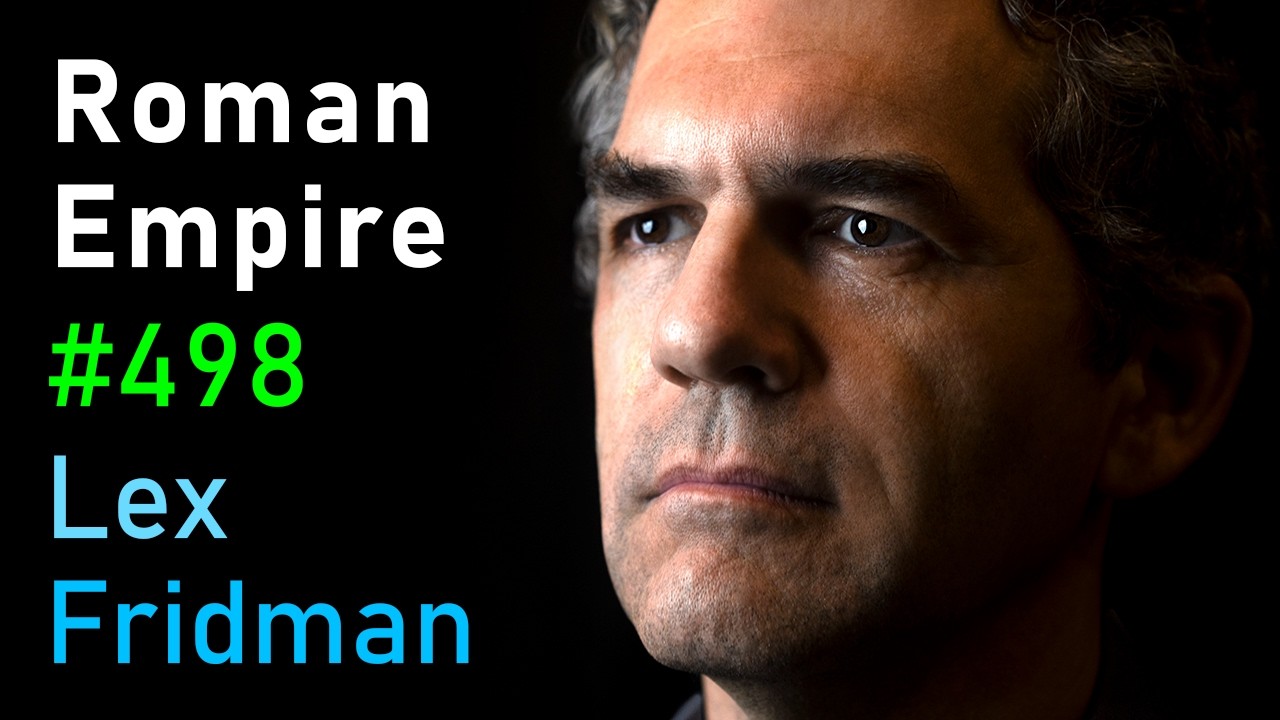
The Rise and Fall of the Roman Empire and the Byzantine Empire | Lex Fridman Podcast #498
 174 min
Biggest Mysteries in Physics: Antimatter, Dark Energy & ToE - Don Lincoln | Lex Fridman Podcast #497
 259 min
FFmpeg: The Incredible Technology Behind Video on the Internet | Lex Fridman Podcast #496
Ask anything from this episode.
Save it, chat with it, and connect it to Claude or ChatGPT. Get cited answers from the actual content — and build your own knowledge base of every podcast and video you care about.
Get Started Free