Key Moments
Robinhood CEO Calls Out the Banking Industry's "Stupid Tax"
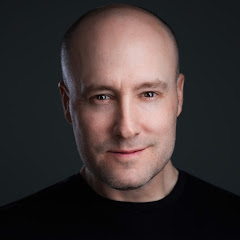 The Knowledge Project
Want to know something specific about what's covered?
We've already dissected every moment. Ask and we will deliver (with timestamps).
Key Moments
Robinhood CEO calls out banks' 'stupid tax' and the old guard's slow move.
Key Insights
Banks earn profits from checking via interest and fees, creating a 'stupid tax' on customers.
Legacy banks have been slow to adapt to a changing world, held back by old revenue models.
Regulatory shifts around paying interest on checking impacted profitability and risk perceptions.
Fintechs like Robinhood see an opportunity to differentiate by lowering costs for customers.
Lower profitability from reduced interest income could affect stock prices and perceived safety.
The discussion highlights tension between customer-centric disruption and traditional risk management.
THE STUPID TAX OF BANKING
Robinhood’s CEO reframes everyday banking fees as a so-called 'stupid tax' tied to how traditional banks monetize the flow of money in checking and the restrictions often placed on withdrawals from savings. He argues that the high spread and friction serve as revenue streams, even as customers face penalties for simple cash movements. The critique isn’t a blanket condemnation of banks, but a pointed reminder that this dynamic profits from customer inconvenience and can deter efficient, low-cost services.
LEGACY BANKS’ SLOW ADAPTATION
The conversation questions why incumbents fail to pivot quickly in a changing environment. Historically, banks were constrained by regulations and risk considerations that discouraged rapid experimentation with new revenue models. There is a fear that moving away from traditional fee-heavy structures could destabilize profits, affect earnings per share, and raise concerns about safety and soundness. As a result, legacy banks drift toward preserving established income streams rather than reimagining product economics.
INTEREST ON CHECKING: REGULATORY SHIFT AND PROFIT IMPLICATIONS
A key part of the discussion is about how policy changes around paying interest on checking accounts altered the banking calculus. Banks historically avoided paying high interest on everyday deposits to protect margins. Once such restrictions were relaxed, the incentive to offer more attractive checking products changed the competitive landscape. Banks faced the tension of shrinking core income while trying to maintain earnings visibility and stock market performance, complicating strategic decisions about balance sheets.
ROBINHOOD’S OPPORTUNITY TO DIFFERENTIATE
The speaker frames Robinhood as a catalyst for change, pushing toward a model that reduces customer costs and improves service by rethinking the bank-customer relationship. This includes challenging the entrenched incentive structures that reward customer friction and turnover. By offering simpler, cheaper access and potentially better terms, fintechs can attract deposits away from legacy institutions and push the market toward more customer-centric products.
IMPLICATIONS FOR THE FINANCIAL ECOSYSTEM
If banks revise profitability by passing savings to customers, there could be broader implications for the financial system. Profitability, stock prices, and perceived safety could be affected as institutions balance risk with growth. The shift would provoke regulatory attention and fortify competition from fintechs, compelling banks to innovate in product design, risk management, and funding models while consumers gain access to lower-cost services and greater flexibility.
Common Questions
The speaker argues banks repeatedly penalize customers who move money in and out of checking and savings, effectively extracting value through the high spread. He calls this a 'stupid tax' and suggests it creates an opportunity for competition and differentiation.
Topics
More from The Knowledge Project Podcast
View all 103 summaries 63 min
Harvey CEO: How a 31-year old Runs an $11B Company
 72 min
OpenAI Co-Founder on the AI Race, the Sam Altman Firing, and What Comes Next
 99 min
The Engineer Who Runs a $25B Company | Mario Harik
 132 min
Joe Liemandt: The Future of Education is Better Than You Think
Ask anything from this episode.
Save it, chat with it, and connect it to Claude or ChatGPT. Get cited answers from the actual content — and build your own knowledge base of every podcast and video you care about.
Get Started Free