Key Moments
Reading Mean Online Comments About Me
 Ali Abdaal
Want to know something specific about what's covered?
We've already dissected every moment. Ask and we will deliver (with timestamps).
Key Moments
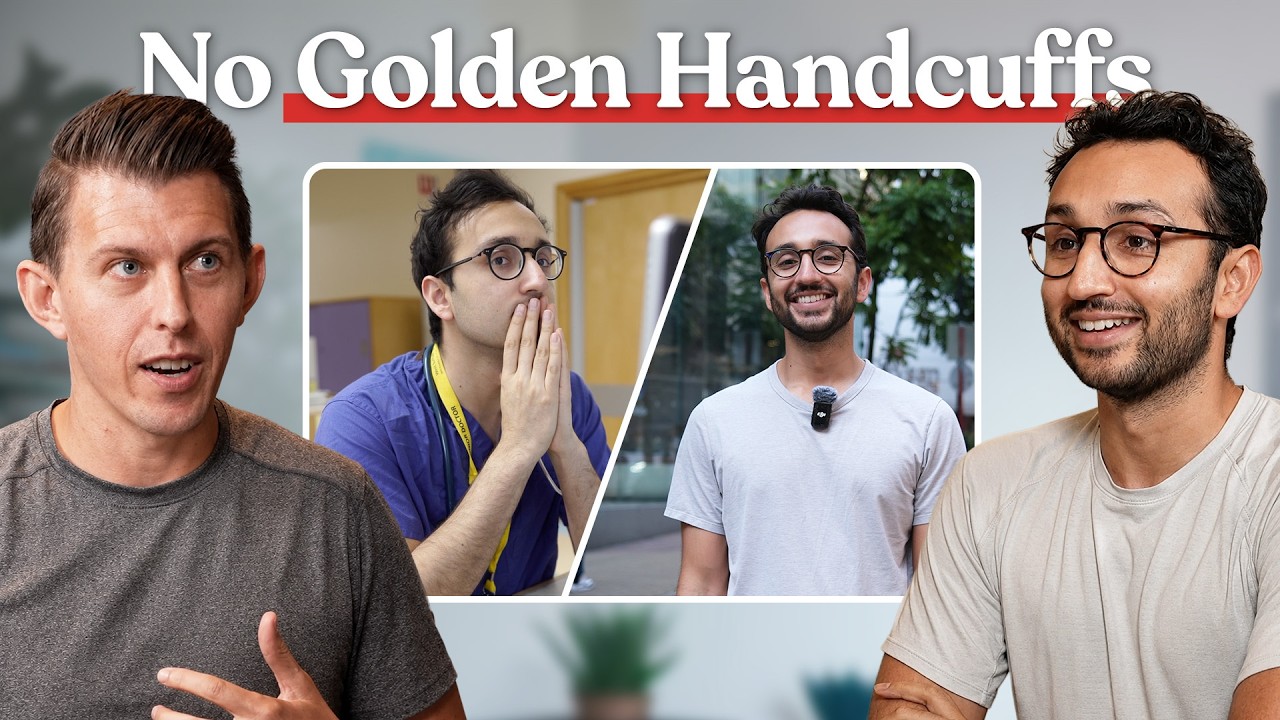
Ali Abdaal reacts to negative online comments, defending his career choices and advocating for sharing knowledge.
Key Insights
Criticism often stems from misunderstanding or projecting personal fears onto others.
The definition of 'teaching' is broad; sharing knowledge doesn't require formal qualifications.
Changing careers is valid and a significant part of personal growth and building a fulfilling life.
The pursuit of wealth, when tied to providing value, is a legitimate life goal.
Negative comments can be a learning opportunity, revealing personal ego defenses and societal 'crabs in a bucket' mentality.
Permission to create and share is not needed; the market ultimately decides value.
ADDRESSING THE ANONYMOUS CRITIC
Ali Abdaal initiates a video reacting to negative online comments, a practice he generally avoids. He frames this as a 'for science' endeavor, motivated by the common fear creators and aspiring entrepreneurs have about negative feedback. By confronting these comments, he aims to demonstrate that criticism, even when harsh, can be navigated and doesn't have to derail one's path. This meta-analysis of online discourse serves to validate the anxieties of his audience while showcasing a method for processing external judgment.
THE MISCONCEPTION OF PRODUCTIVITY AND HUSTLE CULTURE
Comments suggest Ali embodies 'hustle culture' and isn't truly productive, citing his book's release as contradictory. He counters by explaining his book is an antidote to hustle culture, emphasizing strategies for well-being alongside output. The specific example of watching anime at high speed is clarified as an efficiency technique, not a demand for constant work. He argues that making money as an entrepreneur is a natural outcome of providing value, debunking the idea that it's solely self-serving.
REDEFINING 'TEACHING' AND QUALIFICATIONS
A significant point of contention is whether Ali's content constitutes 'teaching.' Critics argue he's not a qualified teacher, merely summarizing books and sharing anecdotes. Ali disputes this, drawing a parallel to a guitar teacher who lacks formal qualifications but imparts valuable skills. He advocates for a broader definition of teaching, stating that sharing useful knowledge, regardless of formal credentials, is a valid form of education. This perspective encourages others to share their learnings without fear of lacking specific certifications.
THE VALIDITY OF CAREER CHANGES AND PERSONAL GROWTH
The criticism around wasting a medical spot is addressed directly. Ali acknowledges he did leave medicine but emphasizes that changing career paths is a reasonable and normal part of life. He didn't foresee his preference for online entrepreneurship when entering medical school at 14. This section serves as a broader message: individuals are allowed to evolve, change their minds, and pursue fulfilling careers, even if it deviates from initial plans or societal expectations. It reinforces that people aren't 'indentured' to past decisions.
THE PURSUIT OF MONEY AND FINANCIAL LITERACY
Ali confronts the label of being 'money-oriented,' unapologetically stating his appreciation for wealth. He views money as a tool for freedom, flexibility, and security, enabling him to control his time and pursue his passions. He also highlights his philanthropic efforts, donating 10% of his earnings to charity since 2019, demonstrating that financial success can coexist with altruism. The comments about charging significant fees for sponsorships are acknowledged, framing it as a byproduct of the value and reach he provides.
NAVIGATING CRITICISM AND THE 'CRABS IN A BUCKET' MENTALITY
Ali reflects on how his reaction to negative comments has evolved, attributing it to ego detachment, spiritual practices, and introspection. He uses comments as a tool to identify potential ego defenses and explore criticisms with curiosity. He identifies a prevalent 'crabs in a bucket' mentality online, where negativity from anonymous individuals attempts to pull down those who dare to pursue their own paths. This mentality, he argues, discourages others from starting their own ventures, even if the creators themselves are unaffected by the criticism.
THE ROLE OF A TEAM AND AUTHENTICITY
The idea that his current content is produced by a team is acknowledged, but Ali asserts it doesn't detract from authenticity. He differentiates between documenting his current journey (vlogs) and sharing accumulated knowledge (main channel videos). He maintains that his aim is to provide value, even on topics he might not be actively struggling with himself at that moment. He expresses a desire to remain consistent with his real-life persona, viewing comments stating he's the 'same person' as a compliment.
THE 'SELLOUT' ACCUSATION AND LIFE CHOICES
The accusation of being a 'sellout' for quitting medicine for a potentially more lucrative YouTube career is addressed. Ali links this to a societal expectation that altruistic careers (like medicine) should be pursued even at financial sacrifice. He reiterates his right to change careers and prioritize fulfillment, financial stability, and personal happiness. He draws parallels to past accusations of being a 'sellout' for considering moving to the US for medical practice for financial reasons, suggesting a broader societal pressure to conform to certain career paths.
THE POWER OF CONSISTENT VALUE AND MARKET VALIDATION
Ali touches upon the repetition some viewers feel in his content, likening it to graduating from a course. He believes that if content becomes repetitive for a viewer, it signifies they’ve absorbed the lessons and it’s time to move on. He stresses that for those still benefiting, his content remains relevant. The underlying principle is that creating and sharing does not require external validation or formal qualifications; individuals can simply start, and the market or audience will eventually determine the value and impact of their work.
Mentioned in This Episode
●Companies
●People Referenced
Navigating Online Criticism and Building a Creator Career
Practical takeaways from this episode
Do This
Avoid This
Common Questions
Critics argue that Ali's content, particularly his productivity advice, is inconsistent with his personal struggles (like motivating himself for the gym) and that his book ideas might stem from others. However, he counters that his strategies are based on research and aimed at addressing common audience struggles.
Topics
Mentioned in this video
More from Ali Abdaal
View all 194 summaries 119 min
The Dark Side Of Getting Rich On Youtube
 78 min
How to Quit Your Job (and Find Work You Actually Love)
 89 min
If You Want to Make Money From YouTube, Do This (Case Study)
 25 min
stop waiting, just hit record
Ask anything from this episode.
Save it, chat with it, and connect it to Claude or ChatGPT. Get cited answers from the actual content — and build your own knowledge base of every podcast and video you care about.
Get Started Free