Key Moments
Randall Kennedy: The N-Word - History of Race, Law, Politics, and Power | Lex Fridman Podcast #379
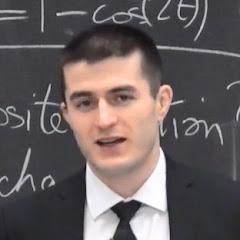 Lex Fridman
Want to know something specific about what's covered?
We've already dissected every moment. Ask and we will deliver (with timestamps).
Key Moments
Randall Kennedy discusses the history, power, and complex usage of the N-word, and broader issues of race, law, and free speech in America.
Key Insights
The N-word has a long and complex linguistic history, evolving from descriptive terms to a potent racial slur, and its usage continues to be debated.
While controversial, the deliberate and skillful use of the N-word can serve pedagogical and artistic purposes, but carries significant responsibility.
The legal system and academic institutions grapple with the N-word, often leading to disciplinary actions against educators for its use in historical or literary contexts.
The 'nigga' variation, often heard in contemporary popular culture like rap, carries different connotations and uses than the historically harsher 'nigger'.
Racial profiling in policing is a complex issue, with concerns about under-protection and discriminatory practices against Black Americans, despite its difficulty and importance.
Affirmative action, while intended to address historical injustices and promote diversity, carries potential downsides like stigma and resentment.
Despite persistent racism, there has been significant progress in race relations in the US, though optimism must be tempered with realism.
Critical Race Theory, often misrepresented, is a complex academic framework with valuable insights into systemic racism, but also with tenets some scholars disagree with.
Freedom of speech is paramount, even for controversial language, but its use must be considered within contexts of intent and potential harm.
THE TROUBLESOME CAREER OF THE N-WORD
Randall Kennedy opens the discussion by delving into the etymology and historical trajectory of the N-word, tracing its origins to Latin and Spanish roots meaning 'black.' He notes that while its exact evolution into a slur remains unclear, by the early 19th century, it was widely recognized as a derogatory term. Kennedy's book, provocatively titled 'Nigger: The Strange Career of a Troublesome Word,' uses the word deliberately to explore its historical weight and impact on American society, emphasizing the word's explosive and volatile nature due to its association with racial terrorism.
PEDAGOGICAL AND ARTISTIC USAGE
Kennedy addresses the controversy surrounding the use of the N-word, particularly in educational settings. He argues that teachers using the word to discuss literature like Mark Twain's 'Huckleberry Finn' or to explain historical contexts should not be disciplined. He believes educators must grapple with the word to help students understand American history. Similarly, he points to artists and entertainers like Dick Gregory and Richard Pryor who have used the word to hold a mirror to society, not to demean, but to confront uncomfortable truths and sparking dialogue.
THE NUANCES OF LANGUAGE AND CONTEXT
The conversation highlights that words carry different meanings and power depending on their context. Kennedy distinguishes between the harshness of 'nigger' and the more commonly heard 'nigga' in hip-hop, acknowledging that while sociologically they are perceived differently, both carry significant weight. He also discusses terms like 'negro' and 'colored,' noting their historical usage by respected figures and organizations like Martin Luther King Jr. and the NAACP, underscoring that language evolves and its impact is deeply tied to intent, audience, and historical background.
FREEDOM OF SPEECH AND CENSORSHIP
Kennedy firmly defends freedom of speech, arguing against the censorship of the N-word, even on social media platforms. He believes that removing the word would erase important historical and artistic works. Instead of suppression, he advocates for education and critical engagement with such words, enabling people to understand their power and history without being traumatized. He posits that a society that educates its citizens to confront symbols of hate, like the swastika or the N-word, is better equipped to foster love and understanding.
INSTITUTIONAL RACISM AND POLICING
Turning to broader societal issues, Kennedy discusses institutional racism, particularly within law enforcement. He highlights the dual problems of under-protection and discriminatory practices faced by Black Americans. He elaborates on how the subtle, often unrecorded, attitudes of police officers can foster contempt and escalate interactions, leading to negative outcomes. Kennedy stresses the need for police accountability and transparency, while also acknowledging the difficult and important nature of police work and the necessity of good policing for community safety.
AFFIRMATIVE ACTION AND MERITOCRACY
Kennedy examines affirmative action, distinguishing between racial affirmative action and other forms. He outlines its justifications: reparative justice for past wrongs, distributive justice to create representative institutions, and diversity for pedagogical enrichment. He also candidly discusses criticisms, including the stigma beneficiaries may face and the resentment it can breed. While acknowledging these downsides, Kennedy suggests the benefits of affirmative action often outweigh the burdens, though he concedes the potential for denialism in discussions about test scores and genuine achievement gaps.
PERSPECTIVES ON RACE AND PROGRESS
Reflecting on race relations in America, Kennedy shares his father's deeply pessimistic view of racial division, contrasted with his own evolving, though dampened, optimism. He acknowledges the persistent reality of racism but points to significant progress, citing the presence of Black leaders at the highest levels of government and institutions. He suggests that while the struggle for equality has been arduous, it has also fueled American greatness and the pursuit of justice, highlighting the complex interplay between division and the drive for human rights.
CRITICAL RACE THEORY AND ACADEMIC FREEDOM
Kennedy addresses Critical Race Theory (CRT), observing its transformation into a political 'boogeyman.' He defends CRT as a legitimate academic framework that highlights the deep-rooted nature of racism in American society, though he disagrees with certain tenets, such as the idea of the permanence of white supremacy. He criticizes efforts to ban CRT from educational programs, viewing them as dangerous encroachments on freedom of speech and learning. He also expresses concern over administrative growth and DEI statements in academia, advocating for a focus on academic freedom and intellectual rigor.
Mentioned in This Episode
●Organizations
●Books
●Studies Cited
●Concepts
●People Referenced
Common Questions
The N-word, 'nigger,' traces its origins back to the 16th-17th century from Latin and Spanish terms for 'black.' While initially potentially descriptive, by the early 19th century, it had firmly become a derogatory slur, despite the exact transition remaining unclear.
Topics
Mentioned in this video
A novel by Mark Twain that frequently uses the N-word, leading to debates about its inclusion in school curricula.
Michael Sandel's book that critically examines the concept of meritocracy and its societal implications.
Randall Kennedy's first book, published in 1997, examining the administration of criminal justice and its impact on African Americans.
Referenced by Randall Kennedy to research the historical appearance and usage of the N-word.
A book by John Hope Franklin, mentioned as representing the extraordinary story of black progress in America.
Randall Kennedy's book, the primary topic of discussion, exploring the history, usage, and impact of the N-word.
A book by Heather Mac Donald that discusses policing and crime statistics, often used to justify racial profiling.
A book by Thomas Jefferson expressing pessimistic views on the possibility of a multi-racial society in the United States.
Randall Kennedy's book on affirmative action, discussing its justifications and criticisms.
A magazine that featured 'black firsts,' illustrating historical progress and increasing visibility of Black achievement.
A historian whose book 'From Slavery to Freedom' encapsulates the narrative of progress in Black American history.
A colleague of Randall Kennedy's at Harvard, cited as an example of positive cross-racial relationships.
A conservative author of 'War on Cops,' who argues for racial profiling based on crime statistics.
Artist and activist, creator of the song 'Woman Is the Nigger of the World' with John Lennon, indicating use of the term to symbolize subjugation.
A legal scholar associated with Critical Race Theory.
The speaker's mother, a refugee from the Jim Crow South, whose experiences and willingness to change influenced his worldview.
A former teacher of Randall Kennedy's at Princeton who later became a colleague, illustrating enduring mentorship and positive cross-racial relationships.
A historian mentioned by Randall Kennedy as a positive figure that prevents him from blanket condemning white people.
The speaker's father, a refugee from the Jim Crow South and a thorough pessimist about race relations, whose views nonetheless informed the speaker's own development.
The head of Athletics at St. Albans School, mentioned as the only Black teacher during Kennedy's time there.
Cited as an organization that has retained 'Colored' in its name, highlighting different historical uses of racial terms.
A white supremacist hate group whose uniform is presented as a symbol that should be understood through education rather than suppressed or causing trauma.
Randall Kennedy's high school, which he credits as the most important school for his education due to influential teachers.
The institution currently considering challenges to affirmative action programs at Harvard and UNC, likely to impact their future.
A set of programs and initiatives common in universities, discussed in the context of academic hiring and promotion, and concerns about their mandatory nature.
The historical period and system of racial segregation and discrimination in the Southern United States, from which Kennedy's parents were refugees.
The idea that increased scrutiny of police following incidents like Ferguson leads to police pullback and increased crime rates.
More from Lex Fridman
View all 550 summaries 174 min
Biggest Mysteries in Physics: Antimatter, Dark Energy & ToE - Don Lincoln | Lex Fridman Podcast #497
 259 min
FFmpeg: The Incredible Technology Behind Video on the Internet | Lex Fridman Podcast #496
 124 min
Vikings, Ragnar, Berserkers, Valhalla & the Warriors of the Viking Age | Lex Fridman Podcast #495
 146 min
Jensen Huang: NVIDIA - The $4 Trillion Company & the AI Revolution | Lex Fridman Podcast #494
Ask anything from this episode.
Save it, chat with it, and connect it to Claude or ChatGPT. Get cited answers from the actual content — and build your own knowledge base of every podcast and video you care about.
Get Started Free