Key Moments
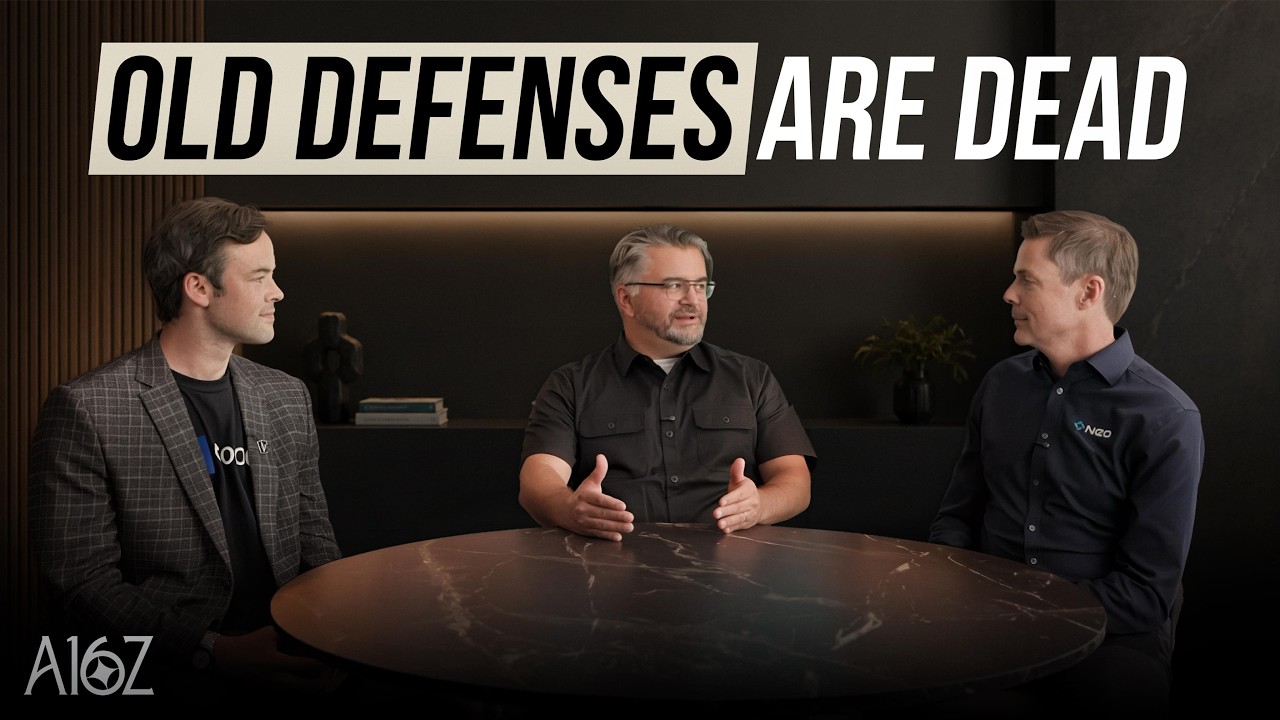
Privacy, Resilience, and Reinventing the Cellular Network | Cape CEO on a16z
 a16z
a16zWant to know something specific about what's covered?
We've already dissected every moment. Ask and we will deliver (with timestamps).
Key Moments
China has infiltrated major US cellular networks, enabling eavesdropping on all phone calls and data, despite only 5% of cyber experts being aware.
Key Insights
China has fully infiltrated major US telecommunications carriers, gaining control of lawful intercept points allowing them to listen to phone calls and data at will.
Cape offers a secure cellular network built on existing physical infrastructure but assumes all of it is hostile, mitigating risks like the Salt Typhoon breach.
The US Navy is transforming its technology adoption by running bootcamps for program managers to enable piloting commercial solutions in 3 months instead of years.
Cape's network is live in 190 countries and is designed to be more private, secure, and resilient by rotating phone identifiers and using a network of networks.
The Navy's shift from a 'build everything yourself' mentality to adopting commercial innovation is evidenced by a 42x increase in VC investments in defense tech over 7 years.
A significant vulnerability was discovered when a lawful intercept vendor used by multiple US telcos stored all client usernames and passwords in an unencrypted text file.
The pervasive threat of cellular network infiltration
The discussion highlights a critical national security vulnerability: China's extensive infiltration of major US telecommunications carriers. This infiltration allows Chinese actors, identified as the 'Salt Typhoon' group, to access lawful intercept points, effectively enabling them to eavesdrop on all phone calls and data. This threat is deeply concerning because nearly all aspects of modern life, including sensitive communications and operations, rely on cellular networks. The extent of compromised awareness was starkly illustrated at a cyber forum where, out of 60 cyber experts, only five were aware of the Salt Typhoon issue, underscoring the need for greater dissemination of information on such profound threats.
Cape's approach: Assume hostility, build resilience
Cape, a company founded by John Doyle, offers a radical solution: a commercial cellular network that operates on top of existing physical infrastructure but fundamentally assumes that infrastructure is hostile. This 'clean install' approach directly addresses the vulnerabilities exposed by breaches like Salt Typhoon. Cape's network is live in 190 countries and differentiates itself by being more private, secure, and resilient. Privacy is enhanced by rotating phone identifiers, akin to Apple's MAC address rotation. Security is bolstered by in-house development of security components when off-the-shelf options are insufficient, and it employs commercial cloud best practices. Resilience is achieved through its model as a Mobile Virtual Network Operator (MVNO), creating a 'network of networks' that avoids reliance on any single physical infrastructure provider, thus offering failover capabilities during outages.
The Navy's accelerated technology adoption initiative
Justin Finelli, the CTO of the Navy, details the service's significant push to modernize its technology adoption processes. Recognizing a historical slowdown, the Navy has implemented strategies to accelerate the integration of commercial solutions. Key initiatives include running 'bootcamps' for program managers and contracting officers, teaching them how to pilot technologies in as little as three months, a stark contrast to the years it previously took. This involves a paradigm shift from 'make everything yourself' to 'adopting innovation,' supported by a rapidly growing ecosystem where VC investment in defense tech has increased by 42x in seven years and the number of VCs has grown from four to 168. This transformation is crucial for the Navy to leverage cutting-edge private sector capabilities.
Bridging the gap: Navy-startup collaboration and success metrics
The partnership between Cape and the Navy, exemplified by a pilot on Guam, showcases this new collaborative approach. Conventional wisdom once suggested approaching the Navy last for technology adoption due to its slowness, but Justin Finelli's office actively sought and facilitated rapid vetting. Cape proposed deploying its network over known compromised infrastructure on Guam, treating it as hostile. The collaboration, supported by the Defense Innovation Unit (DIU), included a critical step emphasized by Finelli: defining rigorous, transparent 'world class alignment metrics' (WHAMs) — clear measures of success agreed upon by both parties. This pilot succeeded ahead of schedule and under budget, validating Cape's technology just as the Salt Typhoon threat became public knowledge, a prime example of the system working as intended.
Internal reforms and the 'gardener' approach
Finelli explains that the bottleneck in innovation adoption was often internal. The Navy is actively addressing this by fostering a 'gardener' mindset, where teams identify seeds of innovation and nurture their growth, rather than trying to 'build everything' themselves. This involves scouting for capabilities, connecting them with 'unleashed' individuals within specific communities, and leveraging networks. An 'innovation adoption kit,' now part of the defense authorization act, helps standardize the process. The goal is to move from a focus on process to a focus on measurable, results-driven outcomes, increasing value, impact, and deterrence.
Selling to the government: Navigating the landscape
For startups like Cape, selling to the government requires understanding the internal reforms and new collaborative models. John Doyle advises that while bad news travels fast in government contracting, positive, unclassified, and sharable technical evaluations are powerful tools. The Navy's use of DIU for unclassified reports on technologies like Cape's facilitates broader adoption across services and can even aid in fundraising. He stresses the importance of rigorous, agreed-upon success metrics (WHAMs) to ensure alignment between the startup and the government agency.
Expanding opportunities in manufacturing and software
Beyond secure communications, the Navy sees significant opportunities for the private sector in manufacturing and software. In manufacturing, the focus is on increasing speed and scale through additive and distributed manufacturing, as well as parts repair, to overcome bottlenecks. For example, 3D printing replacement parts can drastically reduce equipment downtime. On the software side, there's a critical need to address significant technical debt. The Navy encourages disruptive approaches to logistics and other government systems, emphasizing that new applications should consolidate or replace existing systems, following guidelines like its 'modern service delivery 3.0' framework. The key is to deliver value by taking out legacy systems rather than just adding new ones.
Navigating Salt Typhoon and the future of secure communication
The Salt Typhoon breach, involving Chinese hackers targeting cellular networks globally, underscores the urgent need for solutions like Cape. The broad infiltration means that not only critical infrastructure but also everyday citizens' data is at risk. Cape's strategy, of 'clean installing' a telco over existing infrastructure and assuming hostility, provides a resilient and private alternative. A specific incident revealed the vulnerability of lawful intercept processes themselves: a third-party vendor used by multiple telcos stored all client usernames and passwords in an unencrypted file, a discovery made by Cape's Security Response (SR) team. This incident, occurring just before the Salt Typhoon news broke, highlights the pervasive low security baseline in the industry and the critical need for solutions that prioritize security from the ground up.
Mentioned in This Episode
●Products
●Companies
●Organizations
●People Referenced
Navigating Defense Tech and Government Partnerships
Practical takeaways from this episode
Do This
Avoid This
Common Questions
Salt Typhoon is the name of a Chinese APT (Advanced Persistent Threat) group that has infiltrated major US telecommunications carriers. This infiltration allows them to listen to phone calls, access lawful intercept points, and potentially monitor all activities on a user's phone, posing a significant national security and privacy risk.
Topics
Mentioned in this video
Identified as the source of infiltration into major US telecommunications carriers, capable of compromising networks for surveillance purposes.
The country where major telecommunications carriers have been infiltrated by China, posing significant national security and privacy risks.
A global cellular network company that offers a more private, secure, and resilient service by operating as a mobile virtual network operator and building its own secure infrastructure.
The company where John Doyle worked for nine years, running the national security business, and where he learned about vulnerabilities in the commercial cellular network.
Mentioned as a company that rotates MAC addresses on iPhones, a privacy feature that Cape emulates for other phone identifiers.
A company that makes unmanned surface vessels, mentioned as an example of an investment opportunity for the private sector within the Navy.
The team that helped John Doyle start Cape in 2022.
An office within the Navy that John Doyle had the opportunity to brief on Cape's technology.
The US Naval branch undergoing technological transformation, focusing on adopting private sector innovation and improving acquisition processes for software and new capabilities.
Mentioned as an organization where Justin Finelli helped stand up new agencies, including one for healthcare.
The Department of Veterans Affairs, with whom Defense Health was working to connect health records during Justin Finelli's tenure.
The Defense Innovation Unit, which provided funding to help Cape's pilot program in Guam move faster and also paid for an unclassified tech evaluation report.
One of the two new agencies Justin Finelli helped stand up from scratch while at DARPA.
One of the two new agencies Justin Finelli helped stand up from scratch while at DARPA. It works with entities like the VA.
An organization that helps people transition from government service to the private sector, mentioned as a resource for aspiring entrepreneurs.
Mentioned for his 'OODA loop' concept and described as a 'warrior engineer', whose legacy is invoked by Justin Finelli.
His phone calls were reportedly listened to during the last presidential campaign, serving as an early indicator of Salt Typhoon's capabilities.
A Lieutenant Colonel in the Marine Corps who started an innovation challenge and is described as an amplifier and funnel for new ideas.
CTO of the Navy, who discusses the Navy's shift towards adopting private sector innovation, focusing on internal education, training, and a 'barbell strategy' for acquisition.
Founder and CEO of Cape, a former Green Beret and Palantir executive, who discusses the vulnerabilities in commercial cellular networks and Cape's approach to providing a secure alternative.
An entrepreneurship figure channeled by Justin Finelli to advise aspiring founders to 'go to where the problems are'.
More from a16z Deep Dives
View all 63 summaries 25 min
How Microsoft is Adapting to the AI Era
 22 min
Cybersecurity in the Agentic Era | Deep Dives with a16z
 23 min
Datadog CISO on Securing AI Agents at Scale | Deep Dives with a16z
 48 min
How AI Is Redefining What It Means to Be Creative | Deep Dives with a16z
Ask anything from this episode.
Save it, chat with it, and connect it to Claude or ChatGPT. Get cited answers from the actual content — and build your own knowledge base of every podcast and video you care about.
Get Started Free