Key Moments
Keyu Jin: China's Economy, Tariffs, Trade, Trump, Communism & Capitalism | Lex Fridman Podcast #477
 Lex Fridman
Want to know something specific about what's covered?
We've already dissected every moment. Ask and we will deliver (with timestamps).
Key Moments
Keyu Jin discusses China's economy, dispelling Western myths and highlighting its capitalist dynamism, socialist fabric, and unique 'mayor economy'.
Key Insights
China's economy is decentralized, driven by local officials ('mayor economy'), not a single entity.
The relationship with authority in China is nuanced, based on paternalism and an implicit contract of stability for deference.
China exhibits strong capitalist competition and ambition alongside a socialist fabric of communalism and state enterprise.
Meritocracy, rooted in Confucianism and historical exam systems, has been crucial for China's development but is now eroding.
China's economic reforms under Deng Xiaoping were pragmatic and decentralized, relying on incentivized local leaders.
The 'mayor economy' incentivizes GDP growth, leading to rapid expansion but also potential resource misallocation.
While Western countries focus on quarterly results, China balances long-term planning with entrepreneurial impatience ('short flat fast'), though this is evolving.
The 'innovate first, regulate later' approach fosters dynamism but carries risks.
Western misconceptions of China are significant, with a similar gap in understanding often existing in reverse.
Entrepreneurs in China face a unique environment balancing speed and scale with potential legal and competitive risks.
While Western models emphasize individual breakthroughs (0 to 1), China excels in scaling and diffusion (1 to N).
US-imposed export controls have inadvertently spurred China's domestic innovation, particularly in critical tech.
Tariffs are distortionary; strengthening domestic competitiveness is a more effective strategy for economic growth.
The one-child policy has had significant, often unintended, consequences on China's demographics, economy, and social fabric.
The real estate crisis highlights the interconnectedness of China's fiscal and financial systems and impacts consumption.
Taiwan's crucial role in semiconductor manufacturing makes it a focal point in US-China dynamics.
China's economic fundamentals remain strong despite current challenges, with potential for future growth.
DECENTRALIZED DYNAMISM AND THE 'MAYOR ECONOMY'
Keyu Jin challenges the Western misconception that China's economy is centrally controlled. Instead, she emphasizes its decentralized nature, highlighting the crucial role of local officials, termed the 'mayor economy.' These local leaders are incentivized to drive economic growth, innovation, and technological advancement, making the system far more decentralized than often perceived. This structure allows for dynamic local reforms and competition, crucial for China's economic trajectory.
THE NUANCED RELATIONSHIP BETWEEN AUTHORITY AND INDIVIDUALISM
Jin elaborates on the unique Chinese relationship with authority, which is neither blind submission nor outright rebellion. It's a paternalistic dynamic, akin to family relationships, where deference is exchanged for stability and prosperity—an implicit contract forged over centuries. This nuanced approach allows for individual ambition and entrepreneurship, essential for the country's dynamic economy, while maintaining social order.
CAPITALISM AND SOCIALISM: A HYBRID MODEL
China's economic system is a complex blend of robust capitalism and ingrained socialism. On the economic front, it exhibits fierce competition, ambitious individuals, and market-driven investment. Simultaneously, its social fabric remains highly socialist, with state-owned enterprises dominating key sectors, significant social welfare provisions, and a strong sense of communal belonging and harmony, particularly evident in organized social groups and care for the elderly.
MERITOCRACY AND ITS EROSION
Rooted in Confucianism, meritocracy has been a cornerstone of China's development, particularly through its rigorous examination system for selecting officials and access to education. This belief that children have a future through hard work and merit has historically fostered social harmony despite wealth disparities. However, Jin observes an erosion of this meritocracy, with connections increasingly influencing job prospects, posing a challenge to social stability and individual ambition.
DENG XIAOPING'S REFORMS AND PRAGMATIC GROWTH
The economic miracle post-Mao is attributed to Deng Xiaoping's pragmatic 'open up and reform' mandate. This was not a top-down command but a decentralized process involving incentivized local leaders to overcome political and practical barriers. Key reforms included the establishment of Special Economic Zones like Shenzhen and agricultural reforms, culminating in WTO accession, which unleashed decades of sustained growth, reiterating the importance of pragmatic, adaptive economic policies.
THE 'MAYOR ECONOMY': INCENTIVES AND CONSEQUENCES
The 'mayor economy' incentivizes local leaders primarily through GDP growth, fostering rapid industrialization, urbanization, and real estate development. While this fueled massive expansion, Jin notes it also led to negative consequences like the property bubble and potential over-investment in certain sectors. She suggests shifting measurement metrics towards consumption, environmental protection, and innovation to create more balanced and sustainable growth.
CHINESE INNOVATION: SCALE, SPEED, AND DIFFUSION
While the West often leads in '0 to 1' breakthroughs, China excels in scaling, diffusion, and cost-cutting innovations ('1 to N'). The country's vast consumer base, robust digital infrastructure, and readily available talent enable rapid implementation and market feedback. This approach, driven by problem-solving and extrinsic motivation, allows for widespread adoption of technology, even if fundamental, disruptive inventions are less common.
THE EVOLVING ENTREPRENEURIAL LANDSCAPE
Entrepreneurship in China offers incredible speed and market access. However, it also presents challenges such as weaker IP protection, potential for ruthless competition, and the need for close relationships with local governments. The culture is shifting from a 'short, flat, fast' mentality towards a greater emphasis on quality and sustainability, influenced by economic downturns and younger generations seeking work-life balance.
TRADE, TARIFFS, AND INTERNATIONAL RELATIONS
Jin views tariffs as a distortionary and ineffective tool, arguing that strengthening domestic competitiveness is a better strategy for economic growth than punishing foreign entities. She criticizes the US withdrawal from global trade networks, suggesting it weakens its influence. Harmonious global trade requires mutual respect, reciprocity, and a focus on shared economic progress rather than dominance or isolation.
THE 'INNOVATE FIRST, REGULATE LATER' APPROACH
China's regulatory approach often prioritizes innovation by allowing new technologies and business models to emerge before implementing regulations. This contrasts with Western models that regulate first. While this fosters dynamism, it can lead to financial instability and unintended consequences, as seen with P2P lending platforms. The approach aims not to hinder innovation, reflecting a different philosophy of economic development.
THE DEEP DIVE INTO TAIWAN AND SEMICONDUCTORS
Taiwan, particularly TSMC, is strategically vital due to its dominance in semiconductor manufacturing, making it a focal point in US-China relations. While unification is a patriotic dream for many young Chinese, Jin suggests strategic patience and economic development are China's best strategies, as military action would be detrimental. The global dependence on TSMC highlights the urgency for countries to build domestic chip manufacturing capabilities, though this is a slow and complex process.
ONE-CHILD POLICY: UNINTENDED CONSEQUENCES AND ADAPTATIONS
The strict one-child policy had profound, often unintended, consequences. It empowered women economically and educationally, leading more families to prefer daughters. However, it also contributed to an aging population and a skewed gender ratio. The subsequent relaxation has encouraged larger families, but the high cost of raising children and intense competition persist, influencing young people's decisions about having children and altering family dynamics.
DEMOGRAPHIC SHIFTS AND ECONOMIC PROSPECTS
While aging demographics are a concern globally, Jin argues that aging economies can become richer by adopting new technologies and automation. For China, the more pressing issues are skill gaps and adapting education to future technological needs. She believes the Chinese economy's fundamentals—human capital, physical capital, and stability—remain strong, offering potential for future growth despite current challenges like the real estate crisis.
THE REAL ESTATE CRISIS AND ECONOMIC IMPLICATIONS
China's crackdown on real estate speculation, aimed at making housing more affordable and aligning with socialist principles, significantly impacted the economy. This sector was integral to local government finances and household wealth. The crisis has affected investment, financing, and consumer spending, underscoring the need for China to transition away from property dependence, a process that can take years and requires careful management.
BEYOND THE BIG CITIES: EMERGING OPPORTUNITIES
Jin encourages visitors to explore China beyond Beijing and Shanghai, highlighting the dynamism and growth in second and third-tier cities. These areas are becoming hubs for new industries and consumer trends, driven by a younger generation seeking fulfilling lifestyles, better work-life balance, and unique entertainment experiences. Localism is increasingly important, offering significant economic opportunities and showcasing China's diverse development.
THE BEAUTY OF CHINESE SOCIETY AND CULTURE
Beneath the surface of intense competition and ambition, Jin finds genuine warmth, humor, and authenticity in Chinese people. Despite a controlled society, individuals find ways to be authentic and social, countering the loneliness often seen in more individualistic Western societies. This warmth extends to foreigners, reflecting a deeply social and community-oriented culture that values harmony and connection.
Mentioned in This Episode
●Software & Apps
●Companies
●Organizations
●Books
●Concepts
●People Referenced
Common Questions
The biggest misconception is that China's entire economy is run by a small group of people or even one person. In reality, it is a highly complex and decentralized economy, with local mayors playing a significant role in reforms and technological innovation.
Topics
Mentioned in this video
Economist at the London School of Economics specializing in China's economy, international macroeconomics, global trade imbalances, and financial policy.
Prime Minister of India, mentioned as having a similar diplomatic style to Xi Jinping where a desire for de-escalation is implied with a warning against provocation.
A real estate company mentioned as an example of private firms given too much latitude to invest in non-core businesses such as soccer clubs and EVs, leading to consequences.
A Taiwanese company that is vitally important for the global economy due to its advanced semiconductor manufacturing capabilities, creating a critical choke point.
A company originating from China's second-tier cities, indicative of the new generation's focus on fun, entertainment, and local economies.
More from Lex Fridman
View all 550 summaries 174 min
Biggest Mysteries in Physics: Antimatter, Dark Energy & ToE - Don Lincoln | Lex Fridman Podcast #497
 259 min
FFmpeg: The Incredible Technology Behind Video on the Internet | Lex Fridman Podcast #496
 124 min
Vikings, Ragnar, Berserkers, Valhalla & the Warriors of the Viking Age | Lex Fridman Podcast #495
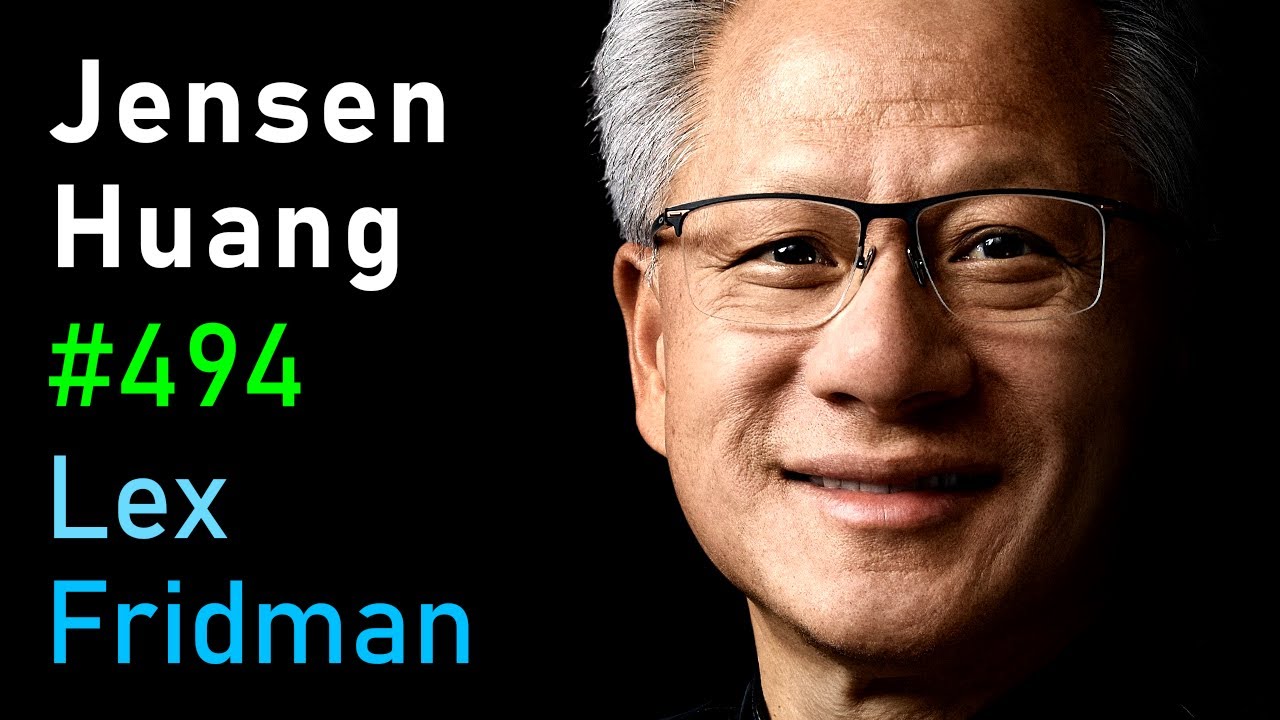 146 min
Jensen Huang: NVIDIA - The $4 Trillion Company & the AI Revolution | Lex Fridman Podcast #494
Ask anything from this episode.
Save it, chat with it, and connect it to Claude or ChatGPT. Get cited answers from the actual content — and build your own knowledge base of every podcast and video you care about.
Get Started Free