Key Moments
Jonathan Sacerdoti | This House Believes Israel is an Apartheid State Responsible for Genocide | 2/8
 Oxford Union
Key Moments
Israel's claims of not committing genocide or apartheid hinge on intent, contrasting with Hamas's genocidal plans and Palestinian education for hate, yet it's accused of war crimes.
Key Insights
The speaker argues that accusations of genocide and apartheid against Israel hinge on proving specific intent, which he claims is absent, unlike Hamas's documented genocidal plans.
Israel reportedly provides an average of 3,200 calories per person per day to Gaza, exceeding NHS recommendations, which the speaker contrasts with Hamas's alleged hijacking of aid.
Arab citizens in Israel hold positions of power, including a judge who jailed a former prime minister, which the speaker uses to refute the apartheid claim.
The speaker asserts that Palestinian society, as evidenced by UN textbooks and their own statements, educates children for hatred and Jihad against Jews, unlike Israeli children who are taught about coexistence.
The speaker claims that alleged Palestinian attacks, such as the one on October 7th, were religiously motivated 'Jihad' rather than calls for peace or a two-state solution.
The speaker contrasts Israel's efforts to avoid civilian casualties, including canceling airstrikes and issuing warnings, with Hamas's alleged use of civilian infrastructure for military purposes.
Weaponizing language of justice into hate speech
Jonathan Sacerdoti begins by framing the motion as an attempt to twist the language of justice into a weapon of hate, asserting that claims of genocide and apartheid against Israel are not genuine critiques but rather appeals to prejudice. He argues that these allegations defame Israel and insult the memory of true victims of genocide and apartheid. Sacerdoti positions himself as an opponent of such falsehoods, aiming to appeal to the audience's sense of reason and openness to different views. He recounts a personal experience from his time as a student at the Oxford Union, where he encountered antisemitism, setting a tone of confronting what he perceives as hostility directed at Jews and Israel within the institution.
Legal definitions and the crucial role of intent
To counter the accusations, Sacerdoti delves into the legal definitions of genocide and apartheid, referencing the 1948 Genocide Convention and the 1973 Apartheid Convention. He emphasizes that both crimes hinge on specific, documented, and unmistakable intent. He claims that there is no policy of racial discrimination or intent to destroy any group within Israel, and crucially, no documentation of Israeli government meetings planning such actions, unlike the documented plans of the Nazis. In contrast, he points to minutes of meetings from Hamas and their Iranian backers planning genocidal attacks, exemplified by the October 7th events, as evidence of the required genocidal intent.
Contrasting Israeli and Hamas actions regarding civilian safety and aid
Sacerdoti asserts that Israel takes extraordinary measures to avoid civilian deaths in Gaza, citing instances of canceling airstrikes when there's a risk of excessive civilian casualties and issuing prior warnings. He contrasts this with Hamas, alleging they hide weapons and command centers in schools, mosques, universities, and hospitals. Furthermore, he claims Israel has provided 700,000 tons of food to Gaza during the war, averaging 3,200 calories per person daily, which he states is above NHS recommended amounts. He attributes any food shortages in Gaza to Hamas stealing the aid, citing UN reports of hijacked trucks.
Arab representation and legal authority in Israel
The speaker directly challenges the apartheid claim by highlighting the presence and rights of Arab citizens within Israel. He states that Arab citizens vote, hold office, and serve as judges, even citing the case of Arab judge Salim Duan who sent a former Jewish prime minister to jail. This, he argues, demonstrates that Israel is not an apartheid state. He also touches upon the application of different laws in disputed territories, suggesting that this is standard under occupation law and not indicative of apartheid, particularly in areas like Judea and Samaria, where agreements with the Palestinian Authority led to differing governance.
Gaza's self-governance and its tragic choices
Sacerdoti uses Gaza as an example to argue against the apartheid and genocide claims. He describes Gaza as the closest representation of a self-governing Palestinian state, noting the absence of Israelis and Jews. He contends that the society built in Gaza reflects tragic choices made by its people and leadership, educating their children for hatred and fostering complicity in atrocities, as evidenced by the events of October 7th. He likens this to genocidal regimes throughout history and points to graphic examples of violence, including a video of a Gazan civilian attempting to decapitate a Thai worker.
Palestinian education for hatred versus Israeli teaching of coexistence
A significant point made by Sacerdoti is the alleged difference in societal education. He claims that Palestinian society, through UN textbooks and cultural norms, instills hatred from childhood, citing an example of a textbook problem involving killing Jews. In contrast, he states that Israeli children are taught about a future of coexistence with their Arab neighbors and do not necessarily need to serve in the army forever. He contrasts this with Palestinian-controlled lands where, he asserts, Jews are not allowed to live, which he considers a form of apartheid and deeply rooted hatred.
The motivation behind the October 7th attacks
Sacerdoti attributes the genocidal acts of October 7th to a deliberate choice for hatred and apartheid among Palestinians, rather than territorial or political disputes. He asserts that the attackers were motivated by religion, quoting statements like 'even if a thousand of us die for Islam... the time of the Jihad nation has arrived.' He emphasizes that this was a call for Jihad, a holy war aimed at Jews, not for peace or coexistence. He concludes that this religiously motivated hatred constitutes apartheid and genocide, and it was not perpetrated by Israel.
Rejecting slander for truth and genuine peace
In his closing remarks, Sacerdoti urges the audience to think critically and look beyond ingrained beliefs and prejudices. He asks them to dig deeper and reject the weaponization of justice for inflaming and dividing. He argues that true discussion and collaboration are only possible among people of goodwill who seek peace and coexistence. Sacerdoti concludes that Israel's story is not one of apartheid and genocide but of survival against relentless hostility, and that seeing this clearly is standing for truth, justice, and the possibility of peace.
Mentioned in This Episode
●Organizations
●People Referenced
Common Questions
The Genocide Convention defines genocide as acts intended to destroy a group, in whole or in part. The Apartheid Convention defines it as inhuman acts by one racial group to dominate another. Both crimes hinge on specific, documented intent.
Topics
Mentioned in this video
Referenced in comparison to current allegations against Israel, specifically their planning of the 'final solution' and racial laws. The speaker contrasts their actions with Israel's efforts to avoid civilian casualties and its vaccination programs.
The speaker claims to have held UNRWA textbooks that teach Palestinians mathematics problems involving killing Jews.
Mentioned in the context of agreements regarding areas A, B, and C in Judea and Samaria (West Bank), aiming to seed some level of autonomy.
The National Health Service is mentioned in comparison to the amount of food provided by Israel to Gaza citizens, stating Gaza receives more calories per day than the NHS recommended amounts for men.
Accused of planning genocidal attacks, hiding weapons in civilian infrastructure, stealing food aid, and instilling hatred in children. Their actions on October 7th are highlighted.
Cited as a source for minutes of meetings planning genocidal attacks by Hamas and its backers.
Mentioned as an Iranian backer planning genocidal attacks alongside Hamas.
Mentioned as a legal definition crucial for understanding the crime of apartheid, requiring intent to establish domination by one racial group over another.
Mentioned as a legal definition crucial for understanding the crime of genocide, requiring specific intent to destroy a group.
The state of Israel is accused of apartheid and genocide. The speaker argues these accusations are false and that Israel is a state of survival against hostility. The speaker highlights coexistence between Jews and Arabs in Israel and its provision of aid to Gaza.
Used as an example of genocide where radio broadcasts directed civilians to murder neighbors, resulting in 800,000 deaths in 100 days. Also used as a comparison for horrific acts.
The speaker states Israel has no aim or plan to destroy Gaza. Israel provides significant food aid to Gaza, and efforts have been made to vaccinate the population. The speaker contrasts this with Hamas stealing aid and using civilian infrastructure for military purposes.
More from OxfordUnion
View all 57 summaries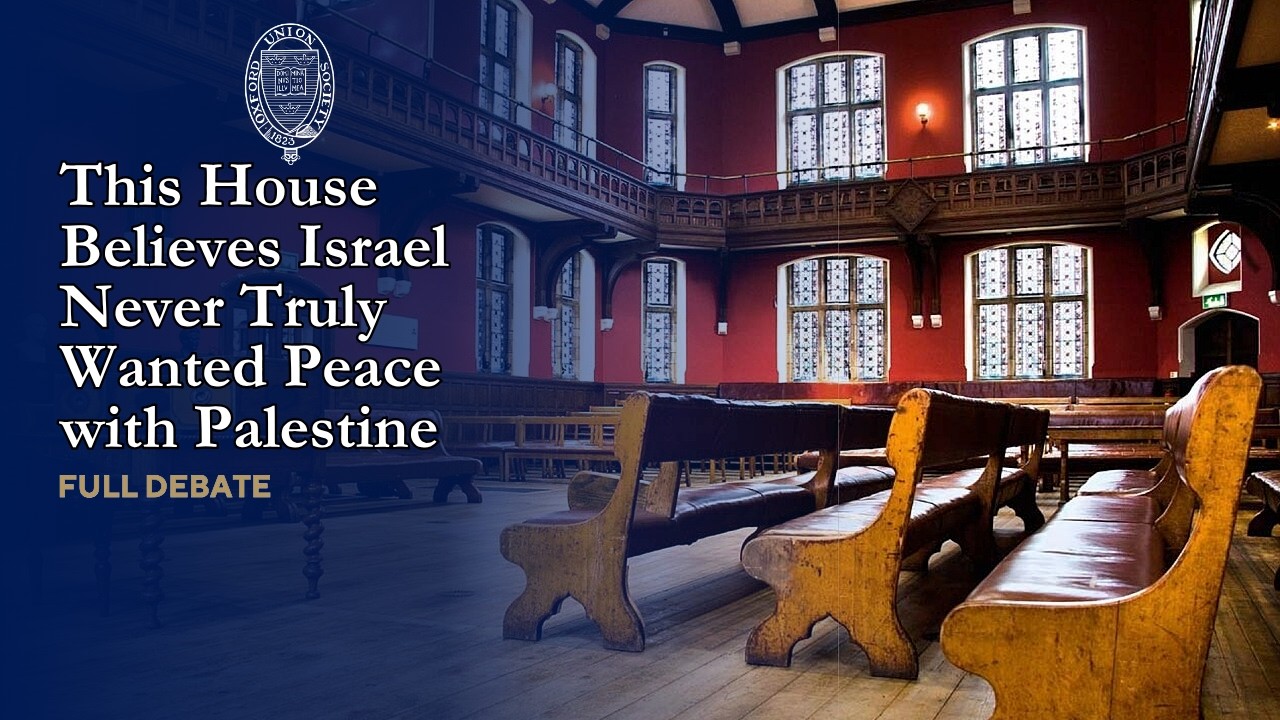 154 min
THB Israel Never Truly Wanted Peace with Palestine - Full Debate
 110 min
THB Trump has Betrayed Conservatism - Full Debate
 80 min
This House Hopes that Hell Exists - Full Debate
 89 min
THB that the Monarchy Died with the Queen - Full Debate
Ask anything from this episode.
Save it, chat with it, and connect it to Claude or ChatGPT. Get cited answers from the actual content — and build your own knowledge base of every podcast and video you care about.
Get Started Free