Key Moments
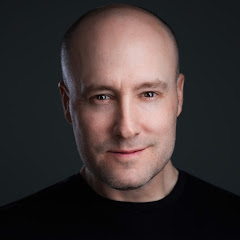
John Mackey: What I Got Right and Wrong Building Whole Foods
 The Knowledge Project
Want to know something specific about what's covered?
We've already dissected every moment. Ask and we will deliver (with timestamps).
Key Moments
Whole Foods founder John Mackey shares entrepreneurial lessons, from early struggles and a near-fatal flood to the Amazon acquisition and the power of love.
Key Insights
Entrepreneurship requires resilience and a willingness to learn from mistakes, as initial ideals often need to adapt to market realities.
Stakeholder capitalism, focusing on customers, employees, suppliers, and investors, is crucial for long-term business success.
The early struggles of Whole Foods, including a devastating flood, were overcome by the support of stakeholders, highlighting the importance of these relationships.
Growth is essential, but an optimal rate is key to maintaining company culture; too fast can dilute it, too slow can lead to stagnation.
The Amazon acquisition was a strategic move to address competitive pressures and financial challenges, ultimately benefiting all stakeholders.
Love, purpose, and personal well-being are the ultimate measures of a successful life, transcending wealth and fame.
THE BIRTH OF A VISION: FROM SAFER WAY TO WHOLE FOODS
John Mackey's entrepreneurial journey began with a personal awakening that shifted his focus from a conventional path to natural foods. Inspired by a psychedelic experience and a co-op living environment, he developed a passion for healthy eating. This idealism translated into 'Safer Way,' a vegetarian store with strict principles, which initially struggled. Recognizing the need to meet the market where it was, the venture evolved into Whole Foods Market, a more inclusive natural foods supermarket that quickly became a national success, demonstrating the critical balance between ideals and market realities.
NAVIGATING CRISES AND THE POWER OF STAKEHOLDERS
The early days of Whole Foods were marked by significant challenges, most notably a devastating flood that nearly bankrupted the company months after opening its first major store. This crisis, however, illuminated the profound importance of stakeholders. Neighbors, customers, and suppliers rallied to help, with a banker even personally guaranteeing a loan. Mackey learned that businesses are ecosystems where people invested in the venture's success are crucial for survival and growth, fostering a sense of community and mutual support beyond mere transactional relationships.
THE ART OF RETAILING: CUSTOMERS, EMPLOYEES, AND DETAILS
Mackey emphasizes that customers are the paramount stakeholders in any business, as they always have choices. Success hinges on consistently meeting their needs regarding price, quality, service, and convenience. This requires a dedicated and well-motivated team, as happy employees are essential for delivering excellent customer service. The intricacies of retail, especially in perishables, demand meticulous attention to detail, balancing freshness with availability, pricing strategies, and inventory management to maintain a competitive edge.
GROWTH, CULTURE, AND MANAGING AMBITIONS
The pursuit of growth is a defining characteristic of entrepreneurship, but Mackey stresses the importance of finding an optimal pace. Rapid expansion can dilute a company's culture, while stagnation can lead to losing talent. He identified a sweet spot for Whole Foods between 15-25% annual growth, beyond which cultural integrity began to fray. This journey also involved navigating internal dissent, such as a co-founder's opposition to expansion, and facing multiple coup attempts, which Mackey attributed to the corrupting influence of power, fame, and money, and his own competitive drive.
FINANCING STRATEGIES AND THE AMAZON ACQUISITION
Securing capital is vital, and Mackey learned the value of self-generated profits while also engaging with venture capitalists. He often viewed VCs as 'hitchhikers' with their own exit agendas. The decision to go public via an IPO provided the company with its own currency for growth and acquisitions, enabling an exit for early investors. Facing activist shareholders like Jana Partners, Whole Foods ultimately pursued an acquisition by Amazon. This strategic move, driven by a desire for a win-win-win solution for all stakeholders, allowed for price reductions, wage increases, and continued investment in the business.
THE PHILOSOPHY OF CONSCIOUS CAPITALISM
Mackey advocates for 'conscious capitalism,' a business model that recognizes responsibilities to all stakeholders—customers, employees, suppliers, communities, and investors. This philosophy prioritizes creating value for everyone involved, fostering long-term sustainability and ethical practices. He contrasts this with the failures of socialism, highlighting capitalism's role in lifting humanity out of poverty and improving lifespans. The win-win-win approach guides ethical decision-making, emphasizing cooperation and shared success over zero-sum competition.
THE QUEST FOR HEALTH AND PURPOSE
Beyond business, Mackey's philosophy extends to personal well-being, emphasizing the profound importance of love, attitude, and purpose. His new venture, Love Life, integrates healthy eating, fitness, and mindfulness, aiming to promote holistic health. He believes that while diet and exercise are crucial, a positive mindset and a sense of meaning are paramount. Mackey's life journey underscores a commitment to authenticity, exploration, and living a life rich in love and positive relationships.
DEFINING 'WHOLE FOODS' AND NUTRITIONAL LITERACY
Mackey defines 'Whole Foods' as food in its most natural state, minimally processed, emphasizing fruits, vegetables, lean proteins, and whole grains. He critiques the modern food system for promoting calorie-dense processed foods that contribute to widespread health issues. While acknowledging the complexities of nutritional science and the potential for information to be gamed, he stresses the critical need for improved nutritional education in schools and medical training to empower individuals to make healthier choices.
Mentioned in This Episode
●Products
●Tools
●Companies
●Organizations
●Books
●Concepts
●People Referenced
Common Questions
The idea for SaferWay, the precursor to Whole Foods, came after John Mackey had a psychedelic experience and a 'food awakening' while living in a vegetarian co-op. He learned about healthy food, became the food buyer for the co-op, and then worked at a small natural food store before deciding to open his own.
Topics
Mentioned in this video
The precursor vegetarian natural food store in Austin, Texas, co-founded by John Mackey, which later became Whole Foods Market.
The natural food supermarket chain founded by John Mackey, initially named SaferWay, and later became a major grocery retailer.
A natural food store chain in LA that inspired John Mackey and was later acquired by Whole Foods.
A natural food store in Boston that inspired John Mackey, which Whole Foods later acquired.
A mail-order supplement company acquired by Whole Foods that failed because its customer base was slow to adopt the internet.
A natural food store in Florida that was part of the informal network of natural food entrepreneurs, later acquired by Whole Foods.
A company acquired by Whole Foods, which required another public offering to cash out its venture capitalists.
John Mackey's new venture, an integrated health and wellness membership club with a healthy restaurant, fitness center, spa, pickleball courts, and a medical center.
A natural food store in Colorado that was part of the informal network of natural food entrepreneurs, later acquired by Whole Foods.
An activist investor firm that targeted Whole Foods, leading to potential hostile takeover attempts before the Amazon acquisition.
The bank that initially denied a loan to Whole Foods after the 100-year flood.
A co-founder of Whole Foods who left the company due to disagreements over growth strategy, preferring to keep it a single successful store.
A friend of Elon Musk who helped him during crisis situations.
Physician and author whose work on nutrient density inspired Whole Foods' 'Andi scores' for rating food.
A banker from City National Bank who personally guaranteed a $100,000 loan to Whole Foods after the 100-year flood.
John Mackey's Chief Financial Officer, who had a strong ability to identify weaknesses in potential hires, complementing Mackey's focus on potential.
A conference where John Mackey first met Jeff Bezos and they formed a rapport.
A recovery equipment offered at Love Life to enhance health.
A recovery equipment offered at Love Life to enhance health.
A recovery equipment offered at Love Life to enhance health.
More from The Knowledge Project Podcast
View all 108 summaries 46 min
Roblox Founder: Destroy Bureaucracy Before It Destroys You
 54 min
$4.6B CEO: Excellence Is the Capacity to Take Pain
 55 min
Microbiome Expert: Revealing the Biggest Myths About Your Gut, Diet, and Health
 62 min
Mental Models That Change How You Think | Bill Gurley
Ask anything from this episode.
Save it, chat with it, and connect it to Claude or ChatGPT. Get cited answers from the actual content — and build your own knowledge base of every podcast and video you care about.
Get Started Free