Key Moments
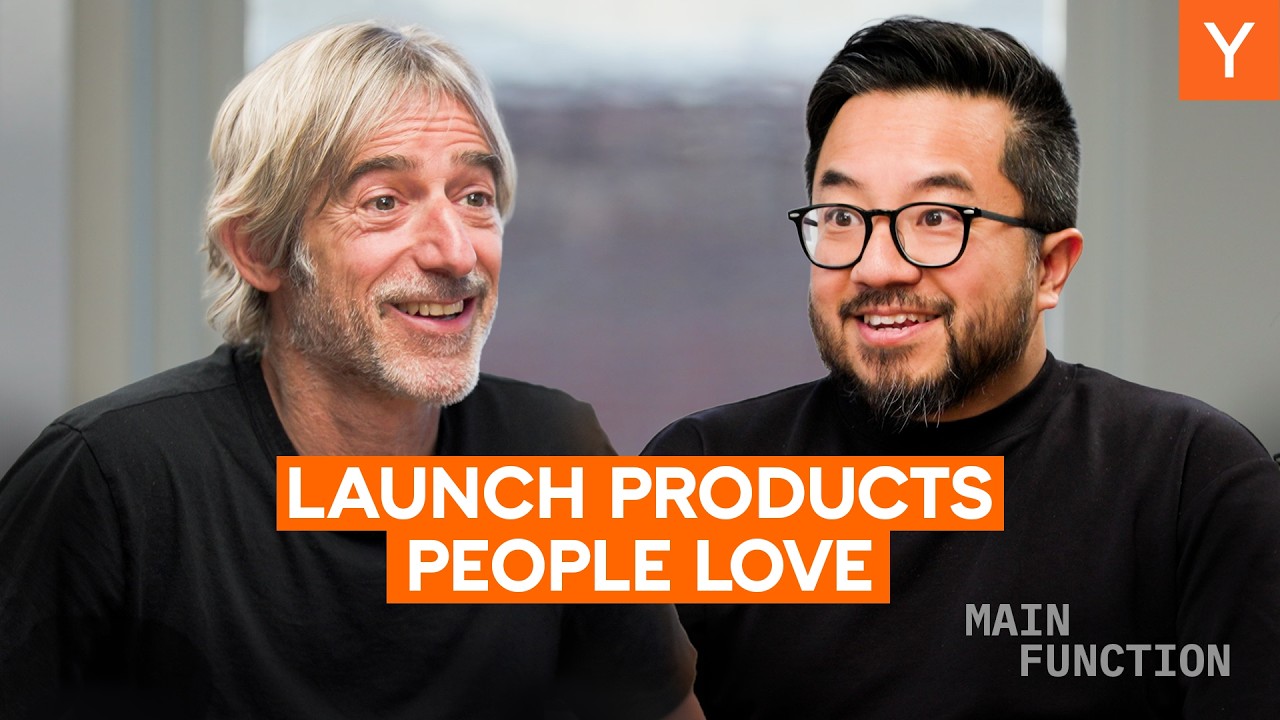
Jessica Livingston on Cofounder Disputes and Making Something People Want
 Y Combinator
Want to know something specific about what's covered?
We've already dissected every moment. Ask and we will deliver (with timestamps).
Key Moments
Most startups fail because founders don't know each other well enough or they fail to make something people actually want, requiring significant pivots.
Key Insights
Founder disputes are the second most common reason for startup failure, often stemming from a lack of deep understanding or trustworthiness between co-founders.
The primary cause of startup failure is not making something people want, which necessitates continuous user feedback and significant idea adjustments.
Companies like Airbnb and Order Ahead demonstrate the need for multiple pivots, with Airbnb evolving from renting airbeds to entire places, and Order Ahead being the founders' sixth idea.
Execution and attention to detail are critical for success, as exemplified by Dropbox which required 'a thousand and one details' to be perfected.
Red flags in co-founder relationships should be addressed immediately, as they signal potential issues with trustworthiness, work ethic, or competence.
The critical importance of co-founder relationships
Jessica Livingston emphasizes that co-founder relationships are paramount to a startup's success, and underestimating their significance is a common mistake. She has witnessed numerous founder breakups, which can be devastating to a company. Livingston strongly advises extreme caution when choosing a co-founder, advocating for starting a business only with someone you know intimately, ideally through prior work or academic collaboration. Simply partnering with someone available or seemingly adequate is a recipe for regret. Crucially, she highlights that 'red flags'—such as doubts about a co-founder's trustworthiness, work ethic, or competence—should be addressed immediately and not ignored, as they rarely resolve themselves. These relationship breakdowns significantly impact a startup's productivity and morale, especially when a two-person team loses a co-founder, leaving one person to carry the entire burden.
Founder disputes crush startups
The failure of a startup due to co-founder disputes can be catastrophic. If a three-person team experiences one departure, the impact is less severe. However, when a two-person founding team dissolves, it leaves the remaining founder in a precarious position, essentially becoming a solo founder. This highlights the fragility of partnerships and the need for robust, well-vetted collaborations from the outset.
Making something people want is the ultimate challenge
The most significant hurdle for most startups is creating a product or service that people genuinely want and will use. Livingston identifies this as the primary cause of failure, even surpassing founder disputes. The process of discovering product-market fit is inherently difficult because it often involves building something unprecedented. Success requires more than just brilliance and determination; it demands active engagement with potential users to gather feedback and iterate on the idea. This feedback loop frequently leads to substantial changes in the initial concept, sometimes requiring a near-complete overhaul.
Pivoting as a path to product-market fit
Companies like Airbnb and Order Ahead illustrate the necessity of pivoting. Airbnb's journey began with a much narrower focus: renting out airbeds to travelers during conferences. It evolved through several stages—renting airbeds generally, then rooms or couches with the host present, before finally discovering the demand for renting entire places. Similarly, the founders of Order Ahead, which enables ordering takeout via cell phone, went through six different ideas before hitting on their successful concept. Even the first idea, for which Y Combinator funded them, and their third idea presented on Demo Day, were not the breakthrough. This evolution underscores that a startup's initial vision may need significant adjustment, and multiple attempts are often required to find the right market approach.
Dropbox's success through meticulous execution
Even when a startup has a clear and necessary idea, like Dropbox, the path to success is paved with relentless execution. Co-founders Drew Houston and Arash were working on a product that was evidently needed, but the challenge lay in differentiating themselves in a competitive space. Winning required perfecting 'a thousand and one details,' a process that took considerable time and effort. The journey from the early stages, captured in a photograph, to becoming a widely recognized company featured on Forbes' cover involved numerous unglamorous but essential steps and significant ups and downs. This emphasizes that exceptional execution and a granular focus on detail are as vital as the core idea itself.
Mentioned in This Episode
●Software & Apps
●Companies
●Organizations
●People Referenced
Startup Success Essentials: Co-founders & Product
Practical takeaways from this episode
Do This
Avoid This
Common Questions
Founder disputes are a significant cause of startup failure. When co-founders break up, it severely impacts the startup's productivity and morale, especially if there are only two founders to begin with.
Topics
Mentioned in this video
The sixth idea from the founders of a company, which allowed users to order takeout on their cell phones, and was their big breakthrough.
Used as an example of a company that succeeded through extensive refinement and execution, despite a competitive landscape.
Initially started as a site for renting air beds to travelers for conferences, evolving through several iterations to finally include renting out entire places.
More from Y Combinator
View all 602 summaries 33 min
India Can Create The Largest AI Companies
 41 min
Zynga Founder: Consumer Is Not Investible Right Now - Thats Why You Should Build It
 43 min
The Age Of The 40-Year-Old Solo Founder Is Here
 31 min
Groww: If Your Customers Don't Love It or Hate It, You've Already Lost
Ask anything from this episode.
Save it, chat with it, and connect it to Claude or ChatGPT. Get cited answers from the actual content — and build your own knowledge base of every podcast and video you care about.
Get Started Free