Key Moments
Javier Milei: President of Argentina - Freedom, Economics, and Corruption | Lex Fridman Podcast #453
 Lex Fridman
Want to know something specific about what's covered?
We've already dissected every moment. Ask and we will deliver (with timestamps).
Key Moments
Argentina's President Milei discusses economic reforms, fighting corruption, and the fight for freedom.
Key Insights
Milei transitioned from anarcho-capitalism as an ideal to minarchism in practice, prioritizing state minimization and deregulation.
Argentina achieved its first fiscal surplus in 16 years and significantly reduced inflation through radical free-market reforms.
The fight against corruption is multifaceted, targeting political elites, media manipulation, and public works.
Milei emphasizes fighting on economic, political, and cultural fronts to achieve lasting societal change.
He views intellectual and cultural battles as crucial, citing the failure of socialism to deliver prosperity.
Milei admires Elon Musk and Donald Trump for their unconventional approaches and commitment to freedom.
THE EVOLUTION OF ECONOMIC PHILOSOPHY
Javier Milei traces his intellectual journey from an initial understanding of economic growth to a deep dive into Austrian economics, inspired by thinkers like Murray Rothbard. He explains how encountering the work of Rothbard, Mises, and Hayek challenged his prior understanding of market structures, leading him to embrace an ideal of anarcho-capitalism. However, he clarifies that in practice, due to real-world constraints, his approach is minarchist, focusing on minimizing the state's size and eliminating regulations.
RADICAL ECONOMIC REFORMS AND ACHIEVEMENTS
Upon taking office, Milei faced hyperinflation, debt, and widespread poverty. His administration implemented sweeping reforms, including a drastic reduction in government ministries, layoffs of public employees, and elimination of economic subsidies and public works projects. These measures resulted in Argentina's first fiscal surplus in 16 years and a significant decrease in inflation, moving from rates of thousands of percent annually to much lower levels.
THE FIGHT AGAINST CORRUPTION AND ESTABLISHMENT
A central theme of Milei's presidency is the battle against a deeply entrenched corrupt political establishment, which he refers to as 'the cast.' He has taken concrete actions to dismantle corrupt systems, such as eliminating intermediaries in social programs ('poverty managers'), ending discretionary transfers to provinces, and pursuing legal action against corrupt officials. This fight often involves challenging powerful vested interests, including media outlets he accuses of corruption and manipulation for demanding advertising revenue.
THE NECESSITY OF MULTIFRONT BATTLES
Milei argues that achieving lasting change requires fighting on multiple fronts: economic, political, and cultural. He critiques liberals for often neglecting the cultural battle, allowing socialist ideas to infiltrate education and media. He emphasizes that economic success alone is insufficient if the cultural narrative is not aligned with free-market principles, citing Chile as an example of potential collapse due to a neglected cultural front.
PERSONAL PHILOSOPHY AND COMMITMENT TO FREEDOM
Deeply influenced by his faith and belief in God, Milei views God as the Creator and the 'Invisible Hand' of the market as being in sync with divine principles. His personal philosophy centers on an unwavering commitment to freedom in all aspects of life. He draws inspiration from historical figures like Moses and modern figures like Elon Musk and Donald Trump, whom he admires for their courage and fight against prevailing ideologies.
CHALLENGES AND THE VALUE OF THE MARKET
Milei contends that 'market failures' are a construct within neoclassical economics and do not exist in reality. He posits that the free market, based on voluntary exchange and private property, is the most effective mechanism for resource allocation. He advocates for free markets, free from state intervention, and stresses that success in capitalism comes from serving others. He uses his experience and economic theory to argue that any middle ground between capitalism and socialism is unstable and ultimately leads to socialism.
ADVICE AND VISION FOR THE FUTURE
Milei's advice to those challenging powerful establishments, like Elon Musk, is to 'cut to the chase' and push reforms to the limit without giving up. He emphasizes that denouncing privileges being taken away from certain groups is a necessary part of the process. His vision for Argentina is to become the freest country in the world, leading to significant increases in well-being and prosperity, with projections of substantial GDP growth. He also expresses a desire for closer ties with the United States and sees the current wave of freedom as a global phenomenon.
THE PERSON BEHIND THE PRESIDENCY
Milei reflects on his personal life, mentioning his 'four-legged children' (dogs) as teachers of unconditional love and loyalty. He acknowledges the personal toll of constant attacks and defamation but remains resolute in his fight for freedom. His past as a rock singer and goalkeeper has shaped his approach, fostering passion, discipline, and the ability to handle pressure. He sees a connection between the solitary nature of being a goalkeeper and the isolation of leadership.
Mentioned in This Episode
●Software & Apps
●Organizations
●Books
●Concepts
●People Referenced
Javier Milei's Principles for Economic and Political Reform
Practical takeaways from this episode
Do This
Avoid This
Common Questions
Javier Milei identifies as an anarcho-capitalist, despising the state and violence, advocating for unrestricted respect for others' life projects based on non-aggression, life, liberty, and property. In practice, he describes himself as a minarchist, seeking to minimize state size and maximize deregulation.
Topics
Mentioned in this video
British economist from the 19th century whose idea about overpopulation and limited resources Milei refers to as a 'murderous idea' that failed.
An Austrian-British economist and philosopher known for his defense of classical liberalism and free-market capitalism, considered a minarchist by Milei.
An Austrian economist who made important contributions to capital theory and the theory of interest, among those whose writings challenged Milei's former thinking.
Former President of Argentina, whose administration (especially the convertibility plan) is referenced by Milei as having the largest structural reform before his own, and as a historical success.
Argentinian Professor cited by Milei, who tells a joke illustrating how price controls can lead to empty shelves.
An 18-year-old boy who was shot and killed while attempting to cross the Berlin Wall in 1962, whose story is recounted by Milei to emphasize the value of freedom.
Argentine economist and current Minister of Deregulation, instrumental in carrying out Milei's deregulation reforms, specifically mentioned for displaying a counter of regulations removed.
Argentine general and primary leader of the southern and central parts of South America's successful struggle for independence from the Spanish Empire, who was called 'crazy' for his plan to cross the Andes.
Economist and Chairman of the President's Advisory Council, who studied at Harvard and was mentored by Kenneth Rogoff, working with Milei on issues of market failure and intervention.
Former President of Argentina, described by Milei as the 'most feminist president in Argentine History' who 'used to beat his wife,' highlighting hypocrisy.
Legendary Argentinian football player, whose talent Milei immensely enjoyed, but ultimately ranks Messi as superior.
A contemporary Spanish economist of the Austrian School whose works have been influential on Milei's ideas of freedom.
American economist who contributed significantly to contestable markets theory, mentioned for his understanding of competition.
Austrian economist and founder of the Austrian School of economics, whose book 'Principles of Political Economy' was a profound influence on Milei.
A Spanish economist, also linked to the Austrian School, among those whose writings inspired Milei.
German economist of the Austrian School, cited by Milei as an inspirational figure.
American economist and a prominent figure in the Austrian School of economics, whose understanding of competition Milei recommends.
American philosopher, whose work on minarchism is cited as fitting philosopically into that category.
Argentinian economist and intellectual, whose definition of liberalism Milei uses as his foundational concept.
Argentinian economist working at the Federal Reserve, whose recent work demonstrates that Milei's fiscal reforms could double Argentina's GDP per capita in 10 years.
American singer and "King of Rock and Roll", whom Milei identifies as the 'most amazing rock singer in history of mankind'.
An American economist of the Austrian School who Malay cites as a key influence. His article 'Monopoly and Competition' significantly altered Malay's understanding of market structure.
An American anarcho-capitalist economist and author associated with the Austrian School, mentioned by Milei as inspirational.
Italian Marxist philosopher, whose ideas were used by socialists at the São Paulo Forum to design a strategy for cultural infiltration after the fall of the Berlin Wall.
An American economist of the Austrian School, author of 'Money and Time', which Milei initially read.
Milei mentions him as a key figure whose works, specifically his definition of liberalism, provided a foundation for his ideas of freedom.
Italian composer, whose arias, like 'O Mio Babbino Caro' (from Gianni Schicchi) and 'Nessun Dorma' (from Turandot), are cited by Milei as examples of human creations that vibrate closer to God.
Milei's latest book, which discusses why there is no middle ground between capitalism and socialism, and how neoclassical economics contributed to increased intervention and government failure.
A book by Ludwig von Mises that Milei references for condemning the lack of private property and prices, leading to resource misallocation.
A book by Carl Menger mentioned by Milei as 'truly eye-opening' and a significant influence leading him to question his previous economic thinking.
A seminal book by Ludwig von Mises that Javier Milei read, describing it as a 'true revolution' in his thinking, leading him to intensively study Austrian economics.
A quote from this book is referenced by Milei, stating that victory in battle 'doesn't depend on the size of the army but on the forces of Heaven', reflecting his faith and the victory of the Jewish people.
A book by Roger Garrison, which was the only Austrian School text Milei had read previously, and which he later realized was 'rather poor' compared to deeper works.
Iconic British rock band, Milei's favorite band, whom he dreams of meeting and playing with.
Political movement in Argentina, described negatively by Milei, who states they would have organized lootings and attempted to oust him if he hadn't implemented his reforms immediately.
More from Lex Fridman
View all 550 summaries 174 min
Biggest Mysteries in Physics: Antimatter, Dark Energy & ToE - Don Lincoln | Lex Fridman Podcast #497
 259 min
FFmpeg: The Incredible Technology Behind Video on the Internet | Lex Fridman Podcast #496
 124 min
Vikings, Ragnar, Berserkers, Valhalla & the Warriors of the Viking Age | Lex Fridman Podcast #495
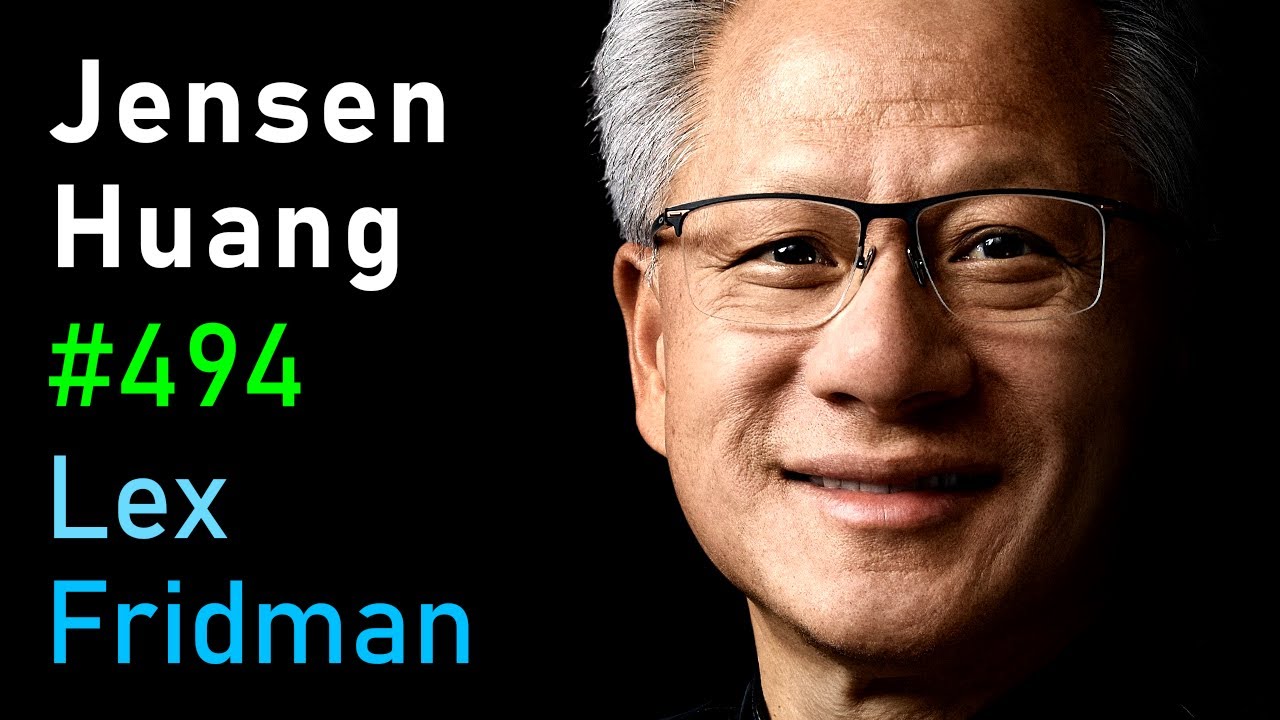 146 min
Jensen Huang: NVIDIA - The $4 Trillion Company & the AI Revolution | Lex Fridman Podcast #494
Ask anything from this episode.
Save it, chat with it, and connect it to Claude or ChatGPT. Get cited answers from the actual content — and build your own knowledge base of every podcast and video you care about.
Get Started Free