Key Moments
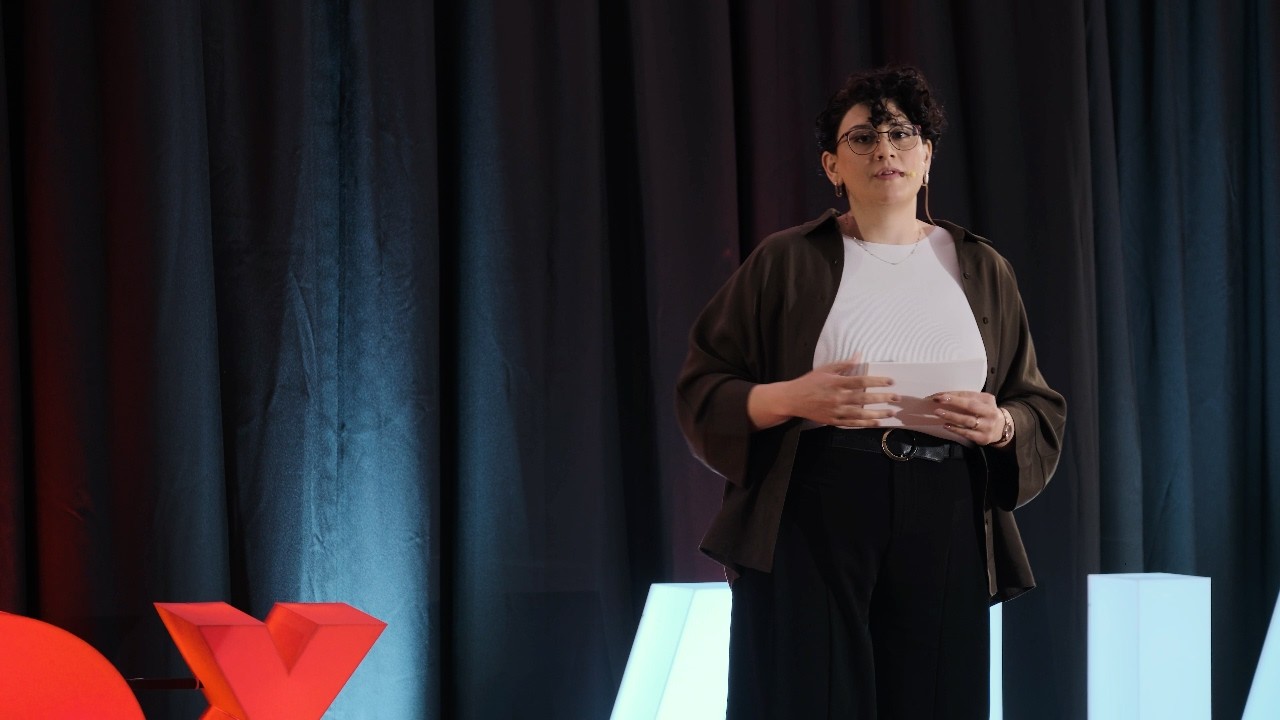
If organizational change was like shark week | Dr. Rebecca Shively | TEDxOmaha
 TED
TEDWant to know something specific about what's covered?
We've already dissected every moment. Ask and we will deliver (with timestamps).
Key Moments
Organizational change needs empathy, understanding motivations, involvement, communication, and belief.
Key Insights
Organizations can be compared to sharks: some are like Great Whites (always moving), others like Zebra Sharks (pausing to adapt).
Understanding the root motivation behind employee behavior is crucial for successful change, as assumptions can lead to solving the wrong problem.
Involving employees in shaping change fosters a sense of ownership and pride, similar to the 'Ikea effect,' making them more likely to support it.
Clear and consistent communication, even when the decision is made, is vital; making people feel heard fosters respect and cooperation.
Building belief is fundamental for overcoming fear of change, achieved through gradual steps, safe environments, encouragement, and familiarity.
Effective organizational change prioritizes human behavior, empathy, and fostering belief, leading to resilience and improved lives, not just performance.
THE SHARK ANALogy FOR ORGANIZATIONAL CHANGE
The presentation begins by introducing the complexity of organizational change, likening it to rewiring or rebuilding a house, rather than a simple light bulb replacement. This complexity is explored through an analogy with sharks. Some organizations are characterized as 'Great White Sharks,' constantly moving and pursuing opportunities. In contrast, others are like 'Zebra Sharks,' which pause, reflect, and evolve. The key differentiator for success in either model lies not in the organizational structure itself, but in the adaptability and readiness of its people for change. Dr. Rebecca Shively, an industrial-organizational psychologist, emphasizes that her work focuses on helping leaders connect human behavior directly to organizational success, framing change management as a science.
UNDERSTANDING EMPLOYEE MOTIVATION IS PARAMOUNT
A critical factor in navigating change is understanding what truly motivates people. An example is provided of a forestry company losing over $1 million annually due to theft. Management discovered that the motivation wasn't financial gain, but the thrill of the 'game' – stealing items for bragging rights. Once the underlying motivation was understood, the company shifted its approach from punitive measures to a system similar to a library, where equipment could be checked out, and amnesty days were offered for returns. This effectively removed the 'fun' component, drastically reducing theft. This illustrates that behavior is often driven by context and culture, not just character, and solving the wrong problem leads to ineffective solutions.
THE POWER OF INVOLVEMENT AND THE IKEA EFFECT
Involving employees in the change process is essential for fostering buy-in and ownership. This is explained through the 'Ikea effect,' where people tend to value items more when they have invested effort in creating them. Similarly, when employees help shape a change, even in small ways like naming a new initiative or testing a prototype, they develop a sense of pride and ownership. While this ownership can sometimes make it harder to let go of the familiar old ways, actively involving people early helps transfer that sense of ownership from the past towards the future they are helping to build. Even minimal involvement can significantly impact an employee's willingness to embrace change.
EFFECTIVE COMMUNICATION BUILDS TRUST AND ACCEPTANCE
Communication is vital, especially when not everyone can be involved in every decision. Research shows that people who have a voice, even if they lack influence, are more accepting of decisions simply because they feel heard. This feeling of being heard leads to respect and greater cooperation. However, leaders often overestimate how clearly they've communicated, a phenomenon known as the 'illusion of transparency.' To combat this, leaders must ensure messages land effectively through follow-up Q&A sessions, listening tours, or check-ins, rather than assuming clarity. Repetition, through the 'mere exposure effect,' also builds comfort and familiarity with new concepts, making them seem safer and more acceptable over time.
BUILDING BELIEF TO OVERCOME FEAR OF CHANGE
Fear of change is a significant barrier, and simply telling people to 'get over it' is ineffective. Drawing parallels to overcoming phobias, psychologist Albert Bandura's work highlights that belief in one's ability to change is built in layers. This is facilitated by creating calm, safe environments for experimentation, offering encouragement, and observing relatable others succeed. In the workplace, leaders must actively build belief rather than just issue directives. This involves creating safe spaces for trying new things, offering pilot programs or low-risk trials, and reinforcing the vision through repeated communication. Familiarity and repeated positive exposure also contribute to growing belief and reducing resistance.
EMPATHETIC LEADERSHIP FOSTERS RESILIENCE AND WELL-BEING
Ultimately, change is a deeply personal and often messy human process, not merely an organizational system or strategy. Organizations can make change easier and more effective by leading with empathy. This means understanding employee motivations, involving them in the process, communicating openly, and fostering belief in their capacity to adapt. By turning resistance into resilience, leaders not only improve organizational performance but also enhance the quality of people's lives, especially considering the significant time spent at work. Employee well-being and meaningful work are direct outcomes of making change more human-centered, leading people to change not when told, but when they believe they can.
Mentioned in This Episode
●Concepts
●People Referenced
Leading Organizational Change: Dos and Don'ts
Practical takeaways from this episode
Do This
Avoid This
Common Questions
Organizations can be compared to sharks like great whites (always moving and chasing opportunities) or zebra sharks (pausing, reflecting, and evolving). Both can be successful, but the key is adaptable people.
Topics
Mentioned in this video
The psychological tendency to prefer things that are more familiar, suggesting repetition builds comfort and acceptance during change.
The psychological theory that explains how people try to understand the causes of behavior, often incorrectly assuming character over context.
A shark species that transforms from striped juveniles to spotted adults, symbolizing adaptation and evolution in organizational change.
A shark species that must constantly swim to survive, symbolizing organizations that are always moving and chasing opportunities.
More from TEDx Talks
View all 107 summaries 23 min
Nurturing Nature | Rumit Walia | TEDxAIS Gurgaon 46 Youth
 27 min
Future Industries: Connected, Lean, and Sustainable Mobility | Ajesh Saklecha | TEDxKVEG
 23 min
Why Knowing What’s Healthy isn’t Enough for Behavior Change | Astghik Atanyan | TEDxAUA
 21 min
Raise Your VOICE, Whenever It NEEDS | ROKSANA ANZUMAN NICOLE | TEDxKhulna University
Ask anything from this episode.
Save it, chat with it, and connect it to Claude or ChatGPT. Get cited answers from the actual content — and build your own knowledge base of every podcast and video you care about.
Get Started Free