Key Moments
Howard Marks | The Knowledge Project #53
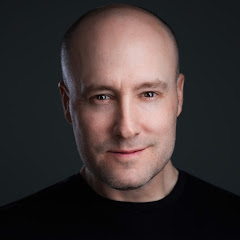 The Knowledge Project
Want to know something specific about what's covered?
We've already dissected every moment. Ask and we will deliver (with timestamps).
Key Moments
Howard Marks discusses investing, risk, cycles, and the importance of independent thinking and learning from experience.
Key Insights
Crises stem from excesses that lead to painful corrections, requiring a suspension of disbelief and over-reliance on risky assets.
Investor psychology often leads to buying at the top and selling at the bottom due to emotional responses to market swings.
True investing success requires "second-level thinking": diverging from the crowd and being demonstrably right.
Risk is best defined as the probability of bad outcomes, including both loss and missed opportunities, rather than just volatility.
Understanding economic reality is crucial, as politicians often make promises that contravene fundamental economic principles.
Technological advancements and automation pose significant challenges to job markets, potentially displacing more workers than globalization has.
NAVIGATING FINANCIAL CRISES AND MARKET PSYCHOLOGY
Howard Marks begins by explaining that financial crises, like the 2008 event, arise from excesses where belief in certain assets, like mortgage-backed securities, becomes overly fervent. This leads to risky investments by financial institutions, culminating in dramatic failures. Marks highlights how investor psychology plays a critical role, with emotions driving people to buy enthusiastically at market tops and panic-sell at bottoms, often acting contrary to rational decision-making. He emphasizes that overcoming these emotional biases is crucial for successful investing.
THE ESSENCE OF 'MARKETS' AND CONTRARIAN INVESTING
Marks challenges the notion of a 'market' as an abstract entity, instead defining it as the sum total of people transacting based on their views and feelings. This perspective underscores why market behavior is so often driven by emotion. He explains that successful investing, particularly in distressed debt, requires a contrarian approach. This involves taking action against prevailing sentiment, a difficult feat that he and his partner Bruce Karsh managed during the 2008 crisis by investing heavily when others were fearful, demonstrating that intellect and dispassionate observation can override emotional responses.
DISTINGUISHING DECISIONS FROM OUTCOMES AND MANAGING RISK
A core tenet of Marks' philosophy is the distinction between a good decision and a good outcome. He stresses that in an uncertain world, even sound decisions can lead to poor results due to probabilities, and vice versa. His firm prioritizes risk control, operating under the motto: "If we avoid the losers, the winners take care of themselves." While this is refined for aspirational strategies, the consciousness of risk control remains paramount. This approach, coupled with a culture that avoids blame for understandable mistakes, fosters an environment conducive to learning and sustained performance.
THE ROLE OF CYCLES, GOVERNMENT, AND ECONOMIC REALITY
Marks elaborates on cycles, explaining they occur because people commit excesses, usually driven by enthusiasm, which then necessitate overshooting corrections. He notes that governments and central banks play a significant role through monetary policy, tax decisions, and regulatory actions, often aiming to balance growth with inflation control—a challenging task with opposing goals. He stresses adherence to 'economic reality,' warning that policies ignoring fundamental economic principles, such as unsupportive tax rates or price controls, are destined to fail, as demonstrated by examples like companies relocating to avoid high taxes.
THE IMPACT OF GLOBALIZATION AND TECHNOLOGICAL DISRUPTION
Globalization, Marks argues, maximizes global economic output through specialization. However, it creates winners and losers at the individual and industry levels. He contends that technological advancement and automation, rather than just globalization, are the primary drivers of job displacement, potentially impacting far more people. He points to manufacturing output doubling with fewer workers as evidence of productivity gains reducing labor demand. The rise of AI and self-driving technology presents unprecedented challenges, threatening jobs across multiple sectors and potentially exacerbating income inequality.
SECOND-LEVEL THINKING AND THE DARE TO BE DIFFERENT
Marks champions 'second-level thinking' as the key to superior investment performance. This involves thinking differently from the consensus and being right. He explains that simply agreeing with the crowd guarantees average results, as market prices often reflect popular opinion. To achieve above-average returns, one must identify where the crowd is wrong and hold a unique, correct viewpoint. This necessitates daring to be different, daring to be wrong, and daring to look wrong in the short term, a mindset that is counterintuitive and challenging to cultivate but essential for exceptional achievement.
UNDERSTANDING RISK AND THE UNCERTAINTY OF THE FUTURE
Risk, for Marks, is not solely volatility but the probability of bad outcomes. These outcomes encompass not only financial loss but also missed opportunities. He draws on Peter Bernstein's idea that risk arises because the future is a range of possibilities, and sometimes we don't even know what lies within that range. Making sound decisions requires analyzing this probability distribution, acknowledging that even with perfect knowledge of probabilities, actual outcomes remain uncertain. This understanding guides conservative choices, such as avoiding activities with survivable negative outcomes, independent of their potential high expected value.
RAISING CHILDREN WITH FINANCIAL RESPONSIBILITY AND GOOD CHARACTER
Marks advocates for teaching children about money responsibly from an early age, emphasizing its finiteness and the importance of making thoughtful choices rather than insulating them from financial discussions. He advises against letting children dictate spending based on their peers' possessions, stressing that character is built through facing limitations and making decisions. Allowing children to make choices, even if they make mistakes, is crucial for their development. He also highlights instilling values of respect, kindness, and contributing to a team effort, advocating for the Golden Rule and the importance of being well-regarded for the right reasons.
Mentioned in This Episode
●Products
●Companies
●Organizations
●Books
●Concepts
●People Referenced
Common Questions
Howard Marks and Oaktree Capital took a contrarian stance during the 2008 financial crisis. Despite fears of a system meltdown, they decided it was their responsibility to invest if the world didn't end. They invested an average of $650 million a week for 15 weeks, totaling $10 billion, and the financial world did not melt down.
Topics
Mentioned in this video
Co-chairman and co-founder of Oaktree Capital Management, known for his investment memos and contrarian philosophy.
Former Federal Reserve Chairman, cited as a great example of Fed independence for his actions in controlling runaway inflation in the 1970s and 1980s.
A New York Times columnist whose article on the polarization of the extreme left and right is referenced, highlighting the communication breakdown in politics.
A physicist quoted by Marks stating that physics would be much harder if electrons had feelings, illustrating the role of emotion in human-driven markets.
Former Federal Reserve Chairman, whose accommodating policies were suggested to have contributed to the global financial crisis by fostering a belief in endless growth (the 'Greenspan put').
A psychologist known for his theory on the stages of man, referenced when discussing how one is perceived and how one perceives oneself later in life.
Former President of France who imposed a 75% tax rate on the wealthiest citizens, leading to some moving away as an example of economic reality.
A renowned investor who famously stated that he reads Howard Marks's memos first when they arrive.
The business school at the University of Pennsylvania, where Howard Marks learned that the quality of a decision cannot be judged solely by its outcome.
A bipartisan organization that Howard Marks supports, aiming to promote collaboration and agreement in American politics.
A newspaper that featured an article by David Brooks on political tribalization.
The institution where academic investment theories like the efficient market hypothesis were developed in the early 1960s.
Referenced in a quote by a person from there who believes success is never accidental, contrasting with Marks's view on luck.
A country whose economic policies, such as price controls on toilet paper, are cited as an example of ignoring economic reality and leading to shortages.
A design and development firm that has helped build apps for major companies like Slack, Coinbase, and Facebook Messenger.
An investment bank whose bankruptcy in September 2008 marked a critical point in the financial crisis, leading to widespread fear about a systemic meltdown.
More from The Knowledge Project Podcast
View all 108 summaries 46 min
Roblox Founder: Destroy Bureaucracy Before It Destroys You
 54 min
$4.6B CEO: Excellence Is the Capacity to Take Pain
 55 min
Microbiome Expert: Revealing the Biggest Myths About Your Gut, Diet, and Health
 62 min
Mental Models That Change How You Think | Bill Gurley
Ask anything from this episode.
Save it, chat with it, and connect it to Claude or ChatGPT. Get cited answers from the actual content — and build your own knowledge base of every podcast and video you care about.
Get Started Free