Key Moments
How to Set & Achieve Massive Goals | Alex Honnold
 Andrew Huberman
Want to know something specific about what's covered?
We've already dissected every moment. Ask and we will deliver (with timestamps).
Key Moments
Alex Honnold discusses setting massive goals, embracing mortality, and the mental process of free solo climbing.
Key Insights
Massive goals are achieved through consistent small daily steps and rigorous preparation.
Embracing one's own mortality can be a powerful motivator for living a fuller, more intentional life.
Free soloing requires extensive memorization for difficult sections, but relies on practiced fluidity for easier parts.
Climbing develops a deep kinesthetic sense and can lead to moments of surprising self-exceedance.
The perception of risk in free soloing is often misunderstood; experienced climbers are highly conservative when ropeless.
Climbing offers significant longevity as a sport, promoting physical and cognitive health across a wide age range.
THE PSYCHOLOGY OF MASSIVE GOALS
Alex Honnold emphasizes that seemingly impossible goals, like his free solo of El Capitan, are achieved through relentless dedication to small, consistent daily steps. This involves meticulous preparation and a deep understanding of oneself, not just the physical aspects of the challenge. The process requires breaking down monumental tasks into manageable actions, fostering intrinsic motivation by focusing on the love of the activity itself, while acknowledging but not being driven by extrinsic factors like fame or financial reward.
EMBRACING MORTALITY AND LIVING INTENTIONALLY
A profound insight shared by Honnold is the power of confronting one's own mortality. Instead of shying away from this reality, acknowledging it can serve as a potent catalyst for living a more intentional and fulfilling life. This philosophical perspective influences how individuals approach their goals, encouraging them to act decisively and appreciate the present, rather than deferring dreams or living smaller lives out of fear or complacency.
THE PROCESS OF FREE SOLO CLIMBING
Honnold details the mental and physical preparation for free solo ascents, noting it's not always about constant hyper-vigilance. The hardest sections of a climb are meticulously memorized, while easier parts are handled with practiced ease, akin to automaticity or 'flow state.' This level of mastery allows the body to move intuitively, reducing the cognitive load and minimizing errors by avoiding overthinking, which is crucial in high-consequence environments.
KINESTHETIC AWARENESS AND THE JOY OF SURPRISE
Climbing, particularly at an elite level, is described as a deeply kinesthetic experience, akin to dancing or swimming. It involves a profound connection with the rock, feeling the body's movements and sequences. Honnold finds immense satisfaction in moments of surprise during training, where he exceeds his own expectations, highlighting that mastery can lead to self-discovery and pushing personal boundaries. This contrasts with free soloing, where surprise is generally not desired.
PERCEPTION OF RISK AND THE VALUE OF EXPERIENCE
The perceived danger of free soloing is often misconstrued by observers. Honnold explains that experienced climbers are highly conservative when ropeless, meticulously managing risks that are not always visually apparent. Ironically, many of his most dangerous experiences have occurred while climbing with ropes because the safety net can encourage pushing into unknown or compromised terrain. Easy free solos, when approached with expertise, can be safer than difficult roped climbs in precarious situations.
CLIMBING'S LONGEVITY AND CULTURAL EVOLUTION
The sport of climbing offers remarkable longevity, with practitioners maintaining physical and cognitive health well into older age due to its low-impact nature and focus on technique. Honnold observes that climbing's recent inclusion in the Olympics signifies mainstream adoption, which is beneficial for the industry and accessibility. He champions that climbing's inherent nature ensures it remains somewhat niche and counter-cultural, regardless of its growing popularity, and encourages anyone to engage with it for its numerous health and lifestyle benefits.
AGING AND THE EVOLUTION OF CLIMBING PERFORMANCE
While elite athletic performance in climbing often peaks in young adulthood, the sport allows for significant engagement and achievement across a wider age spectrum. Honnold notes that while surprise moments may diminish with age, the ability to perform challenging climbs persists, with many older climbers continuing to push boundaries. He highlights the importance of technique and movement over pure strength, contributing to climbing's suitability for long-term participation compared to more impact-heavy sports.
TRAINING METHODOLOGIES AND RECOVERY
Honnold touches upon various training strategies, including the importance of technique over brute strength for beginners, emphasizing leg drive and mobility. He discusses recovery, relying on basic principles like sleep and nutrition, and spending time with his children. While not a proponent of extreme recovery methods, he values consistent movement and a balanced lifestyle. His approach underscores that while climbing is demanding, it can be integrated sustainably into life, especially with family.
THE ROLE OF TECHNOLOGY AND MENTAL ENGAGEMENT
In an era dominated by smartphones and social media, Honnold feels fortunate to have come up in climbing before such pervasive technology. He advocates for disengaging from constant connectivity to allow for deeper focus and mental engagement with the activity itself. He believes that true progress in climbing, and in any pursuit, comes from dedicated practice and meaningful real-world effort, rather than conflating online presence with actual accomplishment or skill development.
DISCIPLINE, EFFORT, AND THE 'WHY'
Honnold articulates that the core of achieving great feats lies not just in the monumental accomplishment itself, but in understanding and valuing the immense effort, discipline, and incremental progress required. He emphasizes that the process, the 'training montage' of life, is often more inspiring than the final outcome. This dedication to effort is what fuels his continued pursuit of challenging goals and finds resonance with his philosophy on life, where passion drives action and meaning.
LEAVING A LEGACY: THE IMPACT OF EFFORT AND LOVE
Ultimately, Honnold's journey is a testament to pursuing what one loves with unwavering dedication. He believes that finding something that excites you enough to commit fully, whether it's climbing or another pursuit, is the key to a richer life. This philosophy, rooted in his personal experiences, including the profound impact of his father's early death, underscores the importance of living with intention, making the most of finite time, and finding joy in the process, not just the destination.
THE INTERPLAY OF BIOLOGY, ENVIRONMENT, AND SPIRITUALITY
Honnold expresses a strong atheistic view, finding ample wonder and spirituality in the natural world and the principles of biology. He describes awe-inspiring experiences in nature that he characterizes as spiritual, differentiating them from organized religion. His engagement with climbing on massive rock faces exposes him to diverse ecosystems, where he observes other creatures thriving, reinforcing his appreciation for nature's resilience and complexity, and the balance found within it.
THE POWER OF EFFORT AND PASSION
Honnold consistently returns to the idea that effort is the most inspiring aspect of any great feat, whether it's climbing El Capitan or a less publicly known but personally significant challenge. He observes that audiences connect with the visible dedication, the training, and the overcoming of fear. This resonates with his core belief that pursuing passions with intense effort leads to a more vibrant existence, where achievements are secondary to the personal growth and fulfillment derived from the journey.
Mentioned in This Episode
●Supplements
●Products
●Companies
●Concepts
●People Referenced
Common Questions
Alex states that climbing is always intrinsically motivated for him, stemming from a childhood love for the movement. However, as a professional climber, there's also extrinsic motivation from making a living, which he carefully parses, especially in high-risk free soloing, to avoid being pushed into unprepared situations.
Topics
Mentioned in this video
A famous daredevil known for his dangerous jumps, mentioned as a parallel to impressive physical feats.
An elite sprint coach who trains Olympians and gold medalists, known for his insights on safe and effective sprint training.
A photographer and friend of Alex Honnold and Andrew Huberman.
A famous rally car driver and founder of DC Shoes, who tragically died in a snowmobiling accident.
A Canadian climber, Alex Honnold's childhood hero, known for his incredible soloing and still climbing actively in his 50s/60s.
A professional climber who was the first woman to free climb Golden Gate on El Capitan in a day, featured in the film 'A Girl Climber'.
The national park where El Capitan is located, frequently visited by Alex Honnold for climbing.
A prominent peak in Yosemite National Park, which Andrew Huberman has run and rucked multiple times, and Alex Honnold ran from the Valley Floor.
A national park with incredible scenery, recommended by Andrew Huberman.
More from Andrew Huberman
View all 400 summaries 34 min
Essentials: How to Become Resilient, Forge Your Identity & Lead Others | Jocko Willink
 105 min
Your Top Health Questions Answered
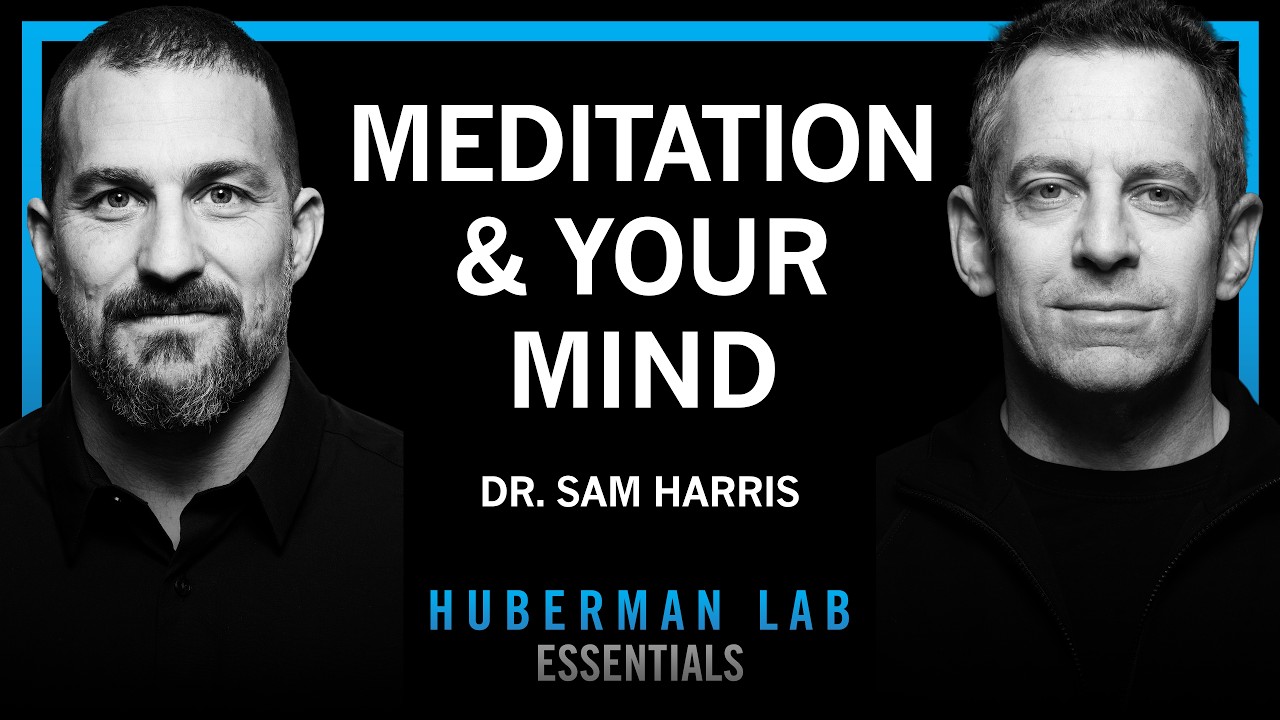 38 min
Essentials: Using Meditation to Focus, View Consciousness & Expand Your Mind | Dr. Sam Harris
 162 min
Accelerate Learning & Increase Cognitive Capacity | Dr. Tommy Wood
Ask anything from this episode.
Save it, chat with it, and connect it to Claude or ChatGPT. Get cited answers from the actual content — and build your own knowledge base of every podcast and video you care about.
Get Started Free