Key Moments
How to Close More Leads
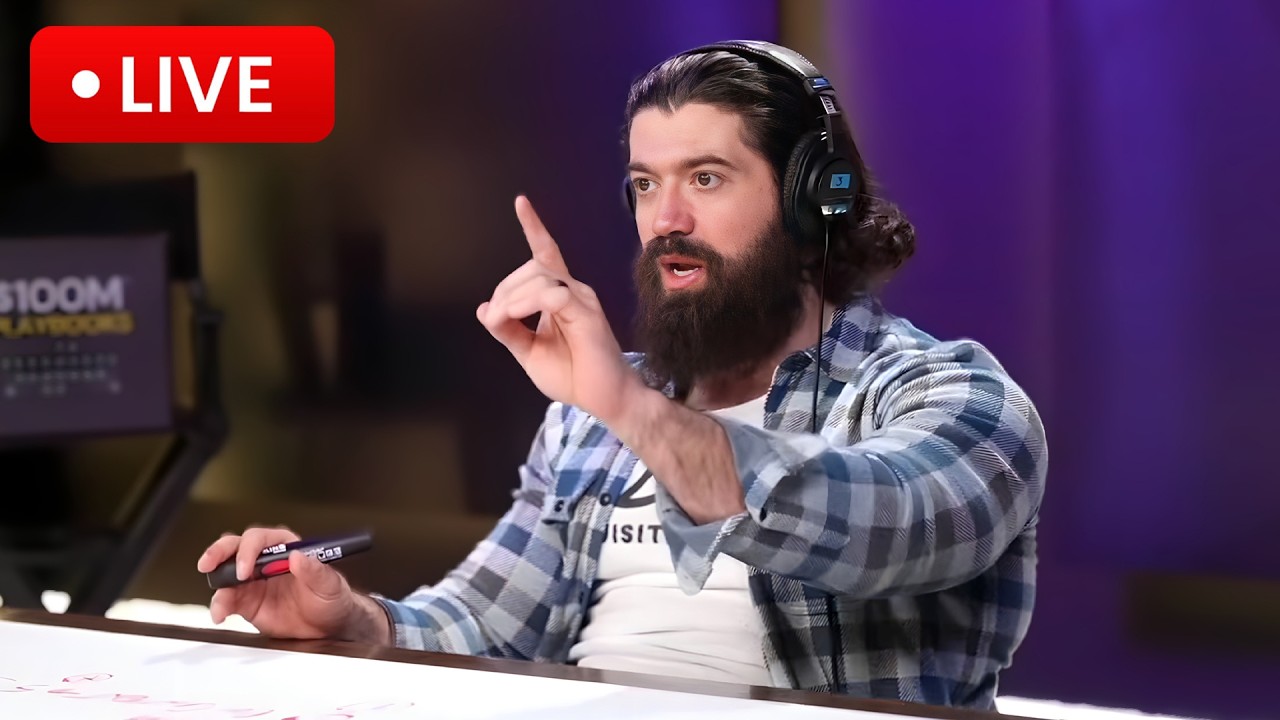
 Alex Hormozi
Want to know something specific about what's covered?
We've already dissected every moment. Ask and we will deliver (with timestamps).
Key Moments
Close more leads by calling within 60 seconds; hire one full-time caller.
Key Insights
Immediate lead contact dramatically increases conversion rates.
A 60-second response can boost sales by up to 391% (almost 5x).
A single dedicated caller is a cost-efficient way to improve lead closure.
Timeliness matters more than sheer lead volume; leads vs shows differ in value.
Implement SLAs and track timing-based metrics to sustain improvement.
IMMEDIATE FOLLOW-UP DRIVES RESULTS
Immediate follow-up is the core lesson from the anecdote. The business owner who closes 55% of his leads contrasts with the typical 10% closing rate, illustrating how speed converts interest into revenue. He achieves this by employing one full-time person whose sole job is to call leads as soon as they come in. The principle is simple: when a lead is hot, a timely, personal contact dramatically increases the likelihood of converting them into a customer. This shows why reducing friction between inquiry and contact matters.
THE 60-SECOND RULE: 391% INCREASE IN SALES
Within sixty seconds of a lead entering the system, sales rise dramatically. The transcript notes a 391% increase in sales when contact happens within 60 seconds—nearly a fivefold improvement. This isn't just about being fast; it's about grabbing the lead while their interest is highest and before competition or doubt sets in. The practical implication is clear: invest in rapid response to leverage the initial impulse behind a lead. The cost of achieving this is relatively modest—a single person focused on answering and dialing immediately.
A SINGLE FULL-TIME OPERATOR: COST-EFFICIENT LEAD CONVERSION
Rather than a large call center, the strategy relies on one dedicated person whose only task is to reach inbound leads immediately. This approach reframes staffing costs as an investment in speed. The anecdote describes paying 'one girl full-time' as the lever that unlocks higher close rates, implying a strong ROI if the revenue lift offsets salary. In practice, the tactic is scalable: start with one dedicated caller, ensure their service level agreement is a 60-second target, and measure how rapid contact changes your conversion rate compared with your current average.
LEADS VS SHOWS: WHY TIMING MATTERS
Leads are not automatically equal to appointments or sales. The speaker compares closing 55% of leads to the more typical 10% closure rate, underscoring that a lead’s value is amplified by prompt contact. The key distinction is not just the quantity of leads but the speed of follow-up that converts interest into commitment. When you contact leads quickly, you reduce the chance they lose interest, forget, or switch to a competitor. Timing becomes a differentiator that turns raw inquiries into revenue.
PRACTICAL STEPS FOR IMPLEMENTATION AND METRICS
To apply this, designate a single dedicated caller for inbound leads and set a 60-second contact window. Use automation to alert the team when a new lead arrives and ensure the caller has a ready script and a simple qualification path. Track metrics such as lead-to-contact time, contact-to-appointment rate, and lead-to-close rate to quantify the impact. Start with a pilot, then scale up if results exceed your baseline. Be mindful of compliance and avoid over-contact; balance speed with quality and personalization.
Lead Response Cheat Sheet: Do's and Don'ts
Practical takeaways from this episode
Do This
Avoid This
Common Questions
The video states the owner was closing 55% of his leads, which is far higher than the typical 10% rate and illustrates the potential impact of fast follow-up. (starts at 1s)
Topics
More from Alex Hormozi
View all 29 summaries 21 min
What Makes The Perfect Business (5 Things)
 34 min
Helping 6 Business Owners Scale in 33 Minutes
 91 min
Alex Hormozi Answers Your Questions (Ask Me Anything)
 27 min
If I Wanted to Scale An Online Store, Here's What I'd Do
Ask anything from this episode.
Save it, chat with it, and connect it to Claude or ChatGPT. Get cited answers from the actual content — and build your own knowledge base of every podcast and video you care about.
Get Started Free