Key Moments
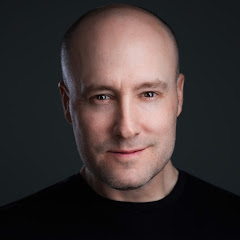
How Brent Beshore Transformed 15 Companies Through Self Mastery
 The Knowledge Project
Want to know something specific about what's covered?
We've already dissected every moment. Ask and we will deliver (with timestamps).
Key Moments
Brent Beshore shares his journey from controlling entrepreneur to compassionate leader, transforming businesses and relationships through self-awareness and genuine care.
Key Insights
Self-mastery and inner growth are crucial for transforming both personal relationships and business leadership.
True generosity is about recognizing and respecting the agency and dignity of others, not just providing resources.
Operating from a place of love and abundance, rather than fear and scarcity, leads to more sustainable and fulfilling success.
Debt amplifies returns but also magnifies risks, and a lack of debt provides crucial flexibility, especially in uncertain times.
Investing in deeply understanding people's motivations and personalities, beyond financial incentives, is key to effective leadership and hiring.
Stewardship, rather than ownership, fosters a long-term perspective focused on the well-being of all stakeholders in a business.
THE REVELATION OF INNER BROKENNESS
Brent Beshore recounts a pivotal moment three years prior where a stranger's direct feedback revealed deep-seated shame and fear impacting his relationships. This led him to question his perception of his own marriage and friendships, realizing they were far from optimal compared to what was possible. This realization served as a warning shot, prompting a profound shift towards self-examination and a willingness to confront uncomfortable truths about himself and his behaviors.
EMBRACING VULNERABILITY AND SURRENDER
The journey from awareness to healing was challenging, marked by a period of intense discomfort as hidden issues surfaced. Beshore emphasizes that self-reliance was not the path; instead, it was an act of surrender and a conscious choice to take the risk of looking at his own imperfections, even the 'ugly' truths. This willingness to be vulnerable, admit wrongdoing, and seek healing, often through counseling, was fundamental to his transformation, leading to a slow but significant shift in his inner life and approach to relationships.
REDETERMINING RELATIONSHIPS THROUGH ACTIVE CARE
Beshore shares a specific example of his unconscious need for control, revealed through his consistent habit of always paying the bill in social settings. His counselor pointed out that this behavior, while seemingly generous, exerted control and hindered true friendship by preventing mutual vulnerability and agency. This insight led to a redefinition of how he engages in relationships, now seeking genuine connection and respecting the other person's autonomy, understanding that true care involves empowering others rather than solely controlling interactions.
THE HERO TRAP AND THE PRINCIPLE OF STEWARDSHIP
He elaborates on the 'hero' archetype, where well-intentioned actions without true understanding of needs can inadvertently create victims by removing agency. This is exemplified by an act of anonymously donating $30,000 in Christmas gifts, which, despite good intentions, caused unintended negative consequences. This led him to embrace the concept of stewardship over ownership, viewing businesses as entrusted responsibilities rather than personal possessions, which clarifies decision-making towards benefiting all stakeholders and fostering long-term health.
OPERATING FROM ABUNDANCE AND WELL-BEING
Beshore contrasts operating from fear and scarcity versus operating from love and abundance. While fear-driven actions can yield short-term results, they are ultimately unsustainable and damaging. He advocates for a focus on 'clean fuel'—acting out of genuine love and care for oneself and others—which fosters peace and well-being, leading to more sustainable success. This philosophy extends to business, where treating people well and fostering win-win relationships, rather than engaging in zero-sum competition, creates higher long-term returns.
RETHINKING DEBT AND LONG-TERM BUSINESS STRATEGY
In business, Beshore questions the pervasive reliance on debt, viewing it primarily as an amplifier of risk rather than a source of return. He advocates for minimal to no debt, believing that businesses, especially smaller ones, are inherently unpredictable and volatile. By eschewing debt, companies preserve optionality, enabling them to navigate downturns, invest strategically, and build resilience, as demonstrated by their aerospace business during the pandemic. This long-term, stewardship-focused approach prioritizes stability and sustainable growth over short-term financial gains.
INCENTIVIZING ALIGNMENT AND TRANSPARENCY
Beshore describes his firm's unique incentive model, eschewing traditional fees and reimbursements to ensure perfect alignment between investors, the firm, and the companies they operate. This model incentivizes reinvestment for long-term growth rather than short-term gains. He emphasizes that true alignment means everyone 'eats at the same table,' focusing on sustainable free cash flow and high-probability, high-return projects, fostering a culture where everyone benefits from the company's long-term success.
THE POWER OF UNDERSTANDING HUMAN BEHAVIOR
A significant leap forward in Beshore's approach, particularly in hiring and leadership, has been a deeper understanding of personality testing and human behavior. He stresses that predicting people's actions, understanding their motivations beyond financial incentives, and cultivating empathy are crucial. By recognizing that individuals act rationally within their own context, and by utilizing frameworks like Myers-Briggs and Enneagram, leaders can foster better prediction, reduce personalizing conflicts, and build more effective, harmonious teams attuned to individual strengths and needs.
THE DIFFICULTIES OF LEADERSHIP AND ACCOUNTABILITY
Beshore candidly admits the challenges in leadership accountability, acknowledging past tolerance for underperformance out of a desire to be kind. He distinguishes between being 'nice' and being 'kind,' with the latter sometimes requiring difficult decisions for the individual's and the company's long-term benefit. This ongoing struggle highlights the complexity of human dynamics in business and the continuous effort required to balance relationships with performance and growth.
BUILDING A SUSTAINABLE LEGACY THROUGH STEWARDSHIP
Ultimately, Beshore's philosophy centers on the idea of stewardship—caring for businesses as entrusted responsibilities—rather than pure ownership. This perspective fosters a long-term vision that prioritizes the well-being of employees, customers, and communities alongside financial returns. He believes that creating an environment where everyone can win, and treating people with honor and care, is the most sustainable path to success, not just for the businesses but for the individuals involved, leading to a more fulfilling and impactful career.
Mentioned in This Episode
●Software & Apps
●Companies
●Books
●Concepts
●People Referenced
Common Questions
A gentleman on a walk candidly pointed out Brent's underlying shame and fear, affecting his relationships. This 'warning shot' prompted Brent to deeply self-assess his friendships, marriage, and physical health, realizing he was willing to settle for an 'interior life filled with anxiety and shame'. This led him to seek counseling and embark on a journey of self-discovery and healing, uncovering deeper issues he was unaware of. The realization was that his relationships and well-being were not as good as he perceived when compared to what was truly possible, opening his eyes to a better way of living.
Topics
Mentioned in this video
A personality testing system used by the speaker's firm in recruiting, focusing on understanding underlying insecurities and primary drives.
A personality testing framework used by the speaker's firm in recruiting to understand different ways people gather energy, process information, make decisions, and approach lifestyle.
More from The Knowledge Project Podcast
View all 105 summaries 62 min
Mental Models That Change How You Think | Bill Gurley
 70 min
The Hidden Pattern Behind Winning Products | Farmville creator Mark Pincus
 63 min
Harvey CEO: How a 31-year old Runs an $11B Company
 72 min
OpenAI Co-Founder on the AI Race, the Sam Altman Firing, and What Comes Next
Ask anything from this episode.
Save it, chat with it, and connect it to Claude or ChatGPT. Get cited answers from the actual content — and build your own knowledge base of every podcast and video you care about.
Get Started Free