Key Moments
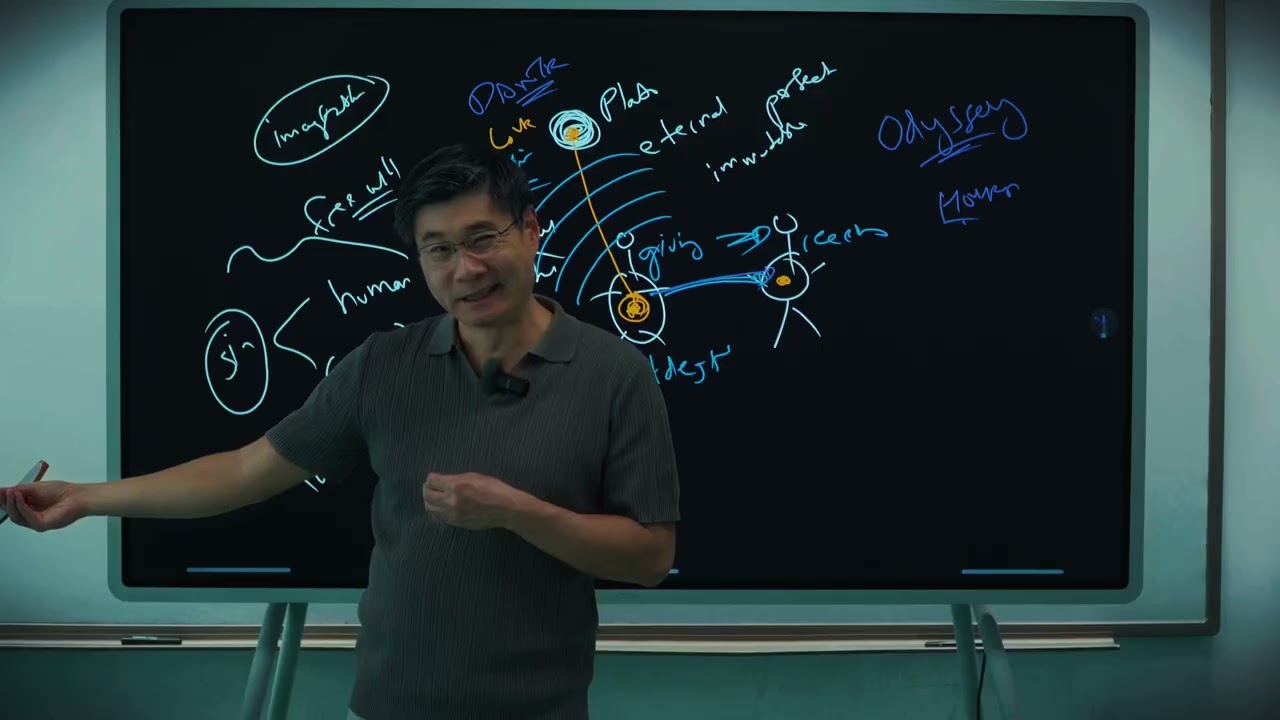
Game Theory #26: The Holy Empire of AI
 Predictive History
Key Moments
Modern AI surveillance states are a continuation of a centuries-old secret society project to establish a 'holy empire of reason' by perfecting humanity into obedient, AI-controlled 'cubes.' Despite lacking evidence, this esoteric
Mentioned in This Episode
●Companies
●Organizations
●Books
●Concepts
●People Referenced
Common Questions
The theory posits that secret societies, originating from groups like the Knights Templar and Freemasons, have manipulated history to establish a one-world government, an AI surveillance state, and potentially summon interdimensional beings for eternal life.
Mentioned in this video
A deity or idol accused of being worshipped by the Knights Templar, often associated with heresy and esoteric practices.
A proposed one-world government controlled by artificial intelligence, central to conspiracy theories about future world order.
Referred to as an interdimensional being or entity that secret societies allegedly communicate with to gain secrets and power, often through ritual sacrifice.
An esoteric tradition mentioned as being integrated into Freemasonry's comprehensive philosophy aimed at explaining everything.
A set of religious ideas and systems that emerged in the early Christian era, mentioned as being incorporated into Freemasonry's philosophy.
A philosophical tradition described as being engaged in by the Knights Templar and later integrated into Freemasonry.
Presented as a 'virtual and creative stage' in humanity's vision, representing a victory of reason over belief and man's capacity to shape his destiny, and linked to the ultimate goal of the AI surveillance state (techno-Marxism).
A branch of Freemasonry speculated by some to be the re-emerged Knights Templar, believed to have influenced major historical revolutions and the modern financial system.
Mentioned as an institution created by Freemasons that established the modern financial system.
A fraternal organization discussed in the context of its historical roots from the Knights Templar, its ideological goals of creating order and perfection, and its alleged influence on world events and modern ideology.
A specific rite within Freemasonry, noted for its 33 ranks and its role in teaching new ways of understanding the world to climbers of its hierarchy.
An organization founded by Zbigniew Brzezinski and funded by David Rockefeller, aimed at implementing American grand strategy in the world, discussed in the context of societal control.
Historical figure cited as an agent or figure promoted by secret societies to push forward a particular agenda.
Considered the 'grand architect of American Freemasonry,' whose work 'Morals and Dogma' is analyzed for its influence on Masonic ideology and their pursuit of power, order, and control.
Former National Security Advisor to Jimmy Carter and founder of the Trilateral Commission, whose book 'Between Two Ages' is discussed for its insights into technological managerialism and societal control.
A wealthy and powerful American figure who funded the Trilateral Commission, mentioned as a powerful individual whose influence is tied to concepts of global strategy.
Founder of Oracle, discussed for his company's early role in database technology and government contracts, and his connection to the development of the AI surveillance state.
An influential figure in tech and venture capital, a mentor to Mark Zuckerberg and Sam Altman, who advocates for monopolies over competition and sees secrets as key to business success; discussed for his philosophy aligning with cult-like startups and his speeches about the Antichrist and the AI civilian state.
Co-founder of Facebook, mentioned as a mentee of Peter Thiel, whose approach to founding companies aligns with Thiel's philosophy of pursuing a mission akin to religion.
CEO of OpenAI and mentee of Peter Thiel, mentioned for his views on founders having missions akin to religion and for seeing no difference between training AI and humans, viewing them as energy to be exploited.
The standard textbook of American Freemasonry, cited as a source for understanding Masonic ideology related to creating order out of chaos and perfecting society.
A book by Zbigniew Brzezinski that discusses technological managerialism and societal control, found to be remarkably predictive of current American societal trends.
Peter Thiel's book on building companies, which advocates for monopoly and secrets, and suggests that great companies are conspiracies of change.
A database company founded by Larry Ellison, initially incompetent but supported by the CIA and Navy, discussed for its role in data collection and its association with the AI surveillance state.
An AI surveillance company co-founded by Peter Thiel, which analyzes data to predict behavior and aims to create a technocracy and an AI surveillance state.
More from Predictive History
View all 147 summaries 74 min
Game Theory #25: Trump Visits China
 65 min
Game Theory #24: The AI Apocalypse
 61 min
Game Theory #23: The WWIII Chessboard
 48 min
Great Books #10: Dante's Hierarchy of Hell
Ask anything from this episode.
Save it, chat with it, and connect it to Claude or ChatGPT. Get cited answers from the actual content — and build your own knowledge base of every podcast and video you care about.
Get Started Free