Key Moments
E18: Inauguration talk, breaking down the $1.9T stimulus, the case for recalling Gavin Newsom & more
 All-In Podcast
Key Moments
Biden's inauguration, stimulus package, tech platform regulation, and California recall discussed.
Key Insights
Biden's inauguration brought a perceived sense of relief and de-escalation, but underlying political divisions and anger remain.
The proposed $1.9 trillion stimulus package includes significant funding for state and local governments, COVID-19 relief, and vaccination efforts.
Debates surrounding tech platform regulation, the de-platforming of individuals, and the creation of oversight boards highlight the complex challenges of free speech in the digital age.
China's growing influence and potential espionage through tech companies like TikTok are serious concerns, requiring a comprehensive counterintelligence strategy.
The potential political fallout of Trump's future in the Republican party, including the possibility of a third party, could significantly alter the political landscape.
California's recall election against Governor Newsom is gathering momentum due to dissatisfaction with his handling of the COVID-19 pandemic, taxes, and the state's business climate.
The discussion on wealth inequality and participation in the new economy highlights the need for broader ownership and educational opportunities.
THE BIDEN INAUGURATION AND POLITICAL SENTIMENT
The podcast opens with a discussion of Joe Biden's inauguration, marked by a general sense of relief and a desire for de-escalation after the Trump presidency. While some expressed emotional release, recognizing it as a 'sea change' in basic humanity, others cautioned that this relief is primarily felt by those on the winning side. A significant portion of the population remains dissatisfied, and the tone of reconciliation needs to be more than just rhetoric to address the lingering anger and division.
THE $1.9 TRILLION STIMULUS PACKAGE AND ECONOMIC POLICY
The conversation shifts to the proposed $1.9 trillion stimulus package. A substantial portion is allocated to state and local governments to bridge revenue gaps, a crucial step to prevent wider economic ripples. Significant funds are also designated for COVID-19 relief, vaccinations, testing, and personal protective equipment. However, concerns are raised about the efficiency and forward-thinking nature of some spending, suggesting a need for investment in future biomanufacturing infrastructure rather than solely addressing past needs.
TECH PLATFORMS, FREE SPEECH, AND REGULATION CHALLENGES
A major segment delves into the role of tech platforms, particularly regarding free speech and content moderation. The de-platforming of Donald Trump and the establishment of Facebook's Oversight Board are central to this discussion. Concerns are raised about the power of private companies to act as arbiters of speech, the potential for political bias in content decisions, and the lack of transparency. The concept of applying First Amendment standards and the challenges of global governance for these platforms are debated.
CHINA'S INFLUENCE AND NATIONAL SECURITY CONCERNS
The podcast explores the significant threat posed by China, particularly regarding espionage and intellectual property theft through tech companies. The case of a data scientist stealing code for the Chinese government serves as a stark example. Concerns about TikTok being a potential vector for data collection and the broader implications of 'civil-military fusion' policy are discussed, emphasizing the need for a comprehensive counterintelligence strategy beyond just targeting individual apps. The framing of China as a bipartisan concern is highlighted, with continuity of policy expected under the Biden administration.
THE IMPENDING RECALL OF GAVIN NEWSOM
The discussion turns to the recall effort against California Governor Gavin Newsom. The hosts detail the signature-gathering process and the high likelihood of the recall qualifying for the ballot. Reasons cited for the dissatisfaction include Newsom's handling of the COVID-19 pandemic, perceived hypocrisy (e.g., attending a dinner at French Laundry while imposing restrictions), the state's high taxes, perceived infrastructure and educational failures, and the creation of an inhospitable climate for innovation. The hosts express concern about companies relocating to more business-friendly states.
WEALTH INEQUALITY AND PARTICIPATION IN THE NEW ECONOMY
The conversation addresses the growing wealth inequality exacerbated by technology's winner-take-all dynamics. The limited participation of the average worker in the burgeoning tech economy is a key concern. Ideas for increasing broad-based ownership, such as universal basic stock options or educational reforms to equip individuals with monetizable skills, are proposed as potential solutions to bridge the gap between labor and capital. The facilitators agree on the necessity of fostering a sense of ownership and providing accessible education for future economic participation.
THE FUTURE OF THE REPUBLICAN PARTY AND TRUMP'S POLITICAL FUTURE
The potential fracturing of the Republican Party, especially if Donald Trump forms a new 'Patriot Party,' is examined. Such a move could significantly realign the political landscape, potentially pushing the Republican party to rely more on centrist voters and the Democratic party to move further left. The impeachment trial of Donald Trump is viewed as a pivotal moment that could force Republicans to choose between loyalty to Trump and the party's broader future, with historical parallels like Teddy Roosevelt's departure from the party being drawn.
THE CHALLENGES OF CANCEL CULTURE AND FREE SPEECH ON THE RIGHT
The hosts discuss the case of writer Will Wilkinson, who was 'canceled' by a right-wing mob for a poorly landed joke about hanging Mike Pence. This incident prompts a debate about cancel culture, its pervasiveness by both the left and the right, and the manufactured outrage often associated with it. The hosts express disapproval of using economic cancellation as a tool for political disagreement, emphasizing the need for open dialogue and personal accountability rather than mob-driven reactions, regardless of political alignment.
Mentioned in This Episode
●Software & Apps
●Companies
●Organizations
●Concepts
●People Referenced
Common Questions
Many felt a sense of relief and a lowering of political tension after the Trump administration, though some also expressed lingering anger and disappointment.
Topics
Mentioned in this video
Its past mistakes are referenced in the context of tech companies creating independent platforms.
Acquired the company 'Climate' in 2013, relevant to a story about industrial espionage.
Mentioned for making Android open-source as an example of creating independence in platforms.
Discussion around potential data security risks and whether the Biden administration will take action against it.
Its existence is linked to the Chinese Communist Party's largesse, highlighting the government's influence over businesses.
Its oversight board and moderation policies are discussed, along with comparisons to other tech companies and potential regulatory futures.
Its potential to become an application layer on top of Blue Sky is discussed, focusing on decentralized social media protocols.
Mentioned as one of the flashpoints impacting tech company valuations, alongside other societal events.
Head of the FBI, his policy continuity regarding China cases after the change in administration is discussed.
Outgoing Secretary of State who determined China is committing genocide and crimes against humanity.
Mentioned as having left office, his political actions and their potential impact on the Republican party are discussed.
Her laptop theft by a 22-year-old is mentioned as an interesting reconciliation moment with the justice system.
His concept of Donald Trump as a 'change agent' is mentioned as a reason for his political rise.
Initiator of Blue Sky, a social media protocol system, discussed in comparison to Facebook's approach.
The push to recall him is discussed extensively, focusing on his COVID-19 policies, vaccine rollout, and impact on California's business and innovation climate.
The Mayor of Miami is praised as an impressive centrist leader with strong fiscal management and economic growth in his city.
His resurfacing and appearance on video are discussed in the context of Chinese government control over entrepreneurs.
President of China, his policies like civil-military fusion and control over entrepreneurs are discussed.
A liberal writer fired for a tweet, discussed in the context of cancel culture and manufactured outrage, even from the political right.
His inauguration speech is discussed as a moment of relief, though concerns are raised about his initial approval ratings and ability to unite the country.
His role in setting the stage for Donald Trump's impeachment is highlighted.
Quoted for his line that disruption is created by disruptive people, applied to Donald Trump's political impact.
His company, Facebook, has privatized the 'town square,' giving him control over speech rights.
Mentioned as a California politician proposing bills related to equity thresholds, drawing a parallel to minimum wage.
A former law professor who proposes applying common carrier regulation to tech monopolies.
Discussed in relation to state budget shortfalls, COVID-19 response, business environment, and the recall of Governor Gavin Newsom.
The massacre there, live-streamed on Facebook, is cited as an event impacting tech valuations.
Mentioned as a city receiving funds from the stimulus package due to revenue decline.
Mentioned as a state with a more open economy and a potential destination for businesses leaving California.
Mentioned as a city that has seen revenue decline and is receiving funds from the stimulus package.
Its COVID-19 response, vaccine rollout, and open economy are compared favorably to California's policies.
Mentioned for an alert about lifting the travel ban, which brought personal relief regarding family in Canada.
Where Richard Epstein, who proposed common carrier regulation for tech monopolies, was a former law professor.
Where Christopher Wray gave a speech about FBI counterintelligence efforts against China.
The proposed $1.9 trillion stimulus bill and its allocation are discussed, including funds for COVID-19 fighting and vaccinations.
Mentioned in the context of a company having to fire an employee due to mob pressure.
More from All-In Podcast
View all 409 summaries 77 min
Trump-Xi Summit, Benioff: "Not My First SaaSpocalypse," OpenAI vs Apple, Multi-Sensory AI, El Niño
 96 min
How We Grew Koch Inc. to $150 Billion Without Going Public: Charles & Chase Koch
 72 min
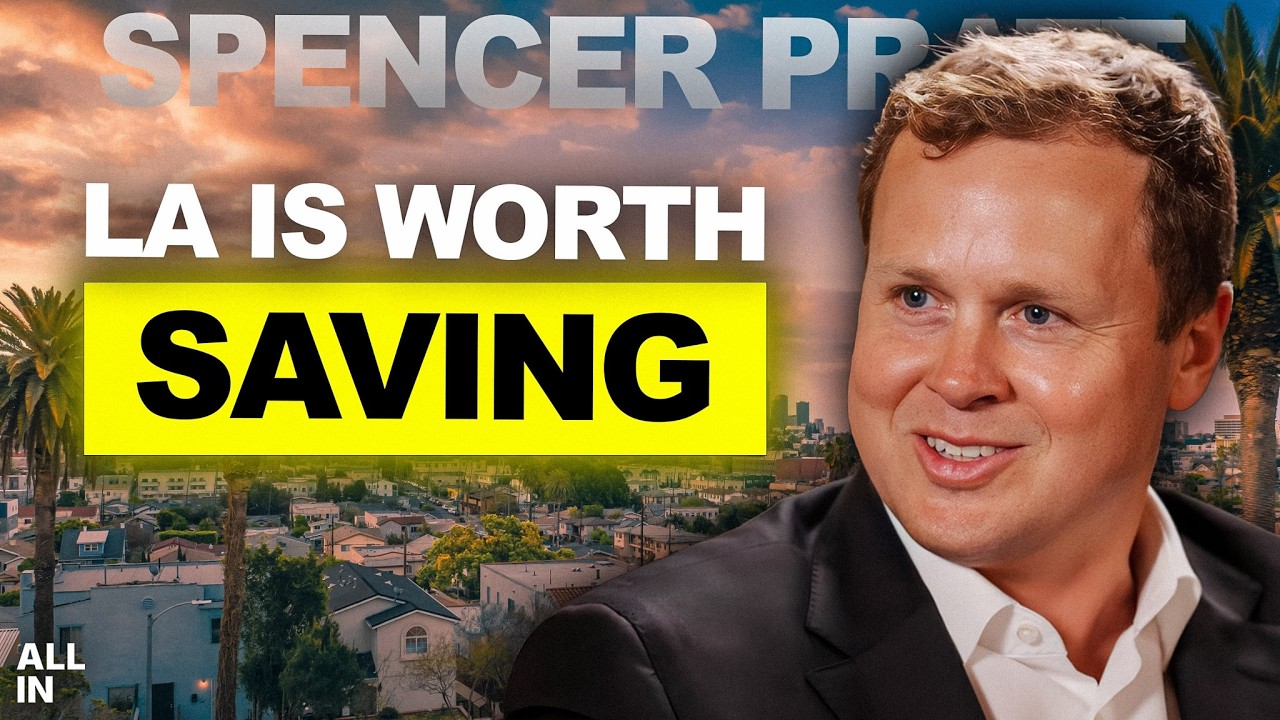
Spencer Pratt on Fixing LA: Wildfires, Homelessness, Corruption & the Fight to Take It Back
 83 min
Elon’s Anthropic Deal, The Next AI Monopoly?, “FDA for AI” Panic, Trading the AI Boom
Ask anything from this episode.
Save it, chat with it, and connect it to Claude or ChatGPT. Get cited answers from the actual content — and build your own knowledge base of every podcast and video you care about.
Get Started Free