Key Moments
1929 vs 2025: Andrew Ross Sorkin on Crashes, Bubbles & Lessons Learned
 All-In Podcast
Want to know something specific about what's covered?
We've already dissected every moment. Ask and we will deliver (with timestamps).
Key Moments
Andrew Ross Sorkin discusses the 1929 crash, comparing it to 2025, and lessons learned about speculation, regulation, and human nature.
Key Insights
The 1929 crash stemmed from a lack of regulation, widespread speculative excess fueled by easy credit, and a 'democratization of finance' without proper risk management.
Technological advancements and a cultural shift towards aspiring to wealth amplified the speculative fever in the 1920s, similar to how media and AI influence perceptions today.
While regulations like the SEC and FDIC exist today, the human tendency for 'more' and the search for regulatory loopholes mean speculative manias can still occur, albeit in different forms.
Key figures like Charlie Mitchell (representing unchecked expansion) and Carter Glass (representing regulatory oversight) played pivotal roles in the lead-up and aftermath of the 1929 crash.
Today's market dynamics are influenced by AI, private credit, and government fiscal/monetary policies, presenting a complex bubble potential different from 1929 but with shared underlying themes of leverage and speculation.
The debate between capitalism and socialism, intensified after the 1929 crash and the New Deal, continues today, with discussions around government spending, social contracts, and the role of regulation versus market forces.
THE APPEAL OF 1929: A CHARACTER-DRIVEN NARRATIVE
Andrew Ross Sorkin was drawn to write about the 1929 stock market crash not just for its economic significance, but to uncover the human stories behind it. Unlike many historical accounts, Sorkin sought to explore the motivations, relationships, and decisions of the individuals involved, believing that understanding the characters is key to understanding the events. This character-driven approach, inspired by books like 'Den of Thieves,' aims to provide a more engaging and relatable narrative of a complex historical period.
THE ECONOMIC SETUP: EASY CREDIT AND SPECULATIVE FRENZY
The period leading up to the 1929 crash was characterized by a fundamental shift in American financial behavior, beginning around 1919. Companies like General Motors and Sears initiated consumer credit, making it easier for people to purchase goods. This concept extended to the stock market, with banks and brokerage houses offering significant leverage, allowing individuals to buy stocks with very little of their own money. This 'go-go era' lacked robust risk underwriting and regulation, with no SEC or similar oversight bodies in place, creating an environment ripe for unchecked speculation.
TECHNOLOGY AND THE DEMOCRATIZATION OF FINANCE
Technological advancements, akin to AI today, played a crucial role in the 1920s. Companies like RCA, representing the new 'radio' revolution, were highly sought after, similar to today's tech giants. More significantly, there was a cultural push to 'democratize finance,' making investing accessible to the 'ordinary investor.' This was amplified by media, with new publications like Time and Forbes featuring business leaders on their covers, creating a new kind of celebrity. This shift fostered a belief that everyone could get rich, fueling a speculative appetite.
THE ROLE OF INSTITUTIONS AND REGULATORY FAILURES
Even the newly formed Federal Reserve recognized the dangerous speculative excess but was hesitant to raise interest rates, fearing economic contraction. Instead, they resorted to less effective measures like sending letters asking banks to curb lending to speculators. Banks themselves, and even corporations, were overextended, using depositor funds and corporate balance sheets to invest in the stock market. The absence of clear rules meant rampant manipulation and insider trading, with no legal repercussions, as such activities were not yet prohibited.
MARKET CHARACTERS: MITCHELL VERSUS GLASS
Two central figures in Sorkin's narrative are Charlie Mitchell, head of National City Bank, and Carter Glass, a prominent senator. Mitchell, dubbed 'Sunshine Charlie,' embodied the era's expansionary credit policies, supporting speculation and lending to brokerage houses. He even defied the Federal Reserve's guidance. In contrast, Glass, representing regulatory concern, vigorously opposed 'mitchellism,' warning of economic disaster. Their conflict and actions, including Mitchell's eventual arrest and the subsequent Glass-Steagall Act (whose origins were more about inter-bank competition than pure consumer protection), shaped the regulatory landscape.
MODERN PARALLELS AND THE ENDURING HUMAN ELEMENT
Sorkin acknowledges similarities between 1929 and today, particularly the existence of leverage and speculative bubbles, though he notes the forms differ. While the SEC and regulations are in place, the human desire for 'more' and the tendency to find loopholes persist. Today's market is influenced by AI, private credit, and complex monetary policies. The conversation around financial crises often leads to debates about capitalism versus socialism, as seen with Occupy Wall Street and discussions around the New Deal, highlighting the ongoing tension between market freedom and government intervention. The challenge remains balancing innovation and speculation with systemic stability.
AI'S POTENTIAL IMPACT AND THE FUTURE OF EMPLOYMENT
The current obsession with AI raises questions about its potential to cause widespread unemployment, reminiscent of the 25% unemployment rate in 1932. While AI promises significant productivity gains, Sorkin suggests these gains might initially manifest as cost-cutting, impacting jobs. However, he also posits that as AI matures, particularly in fields like life sciences, it could shift focus from speed to quality, leading to more profound and potentially job-enhancing productivity improvements by allowing humans to focus on higher-level tasks.
THE EVOLUTION OF THE AMERICAN DREAM AND SOCIAL CONTRACT
The concept of the 'American Dream' has evolved. In 1929, it was about moving from agrarian to industrial life, with new access to city living. Later, particularly post-WWII, it solidified around homeownership, education, and stable employment, often fueled by periods of American industrial dominance. Today, there's a tension between individual aspiration and the perceived failure of capitalism to deliver universally on these promises. Discussions about increased government spending, social programs, and wealth taxes reflect a continuing debate about the social contract and how to ensure broader prosperity.
REGULATORY AGILITY AND THE UNSOLVED CHALLENGES
The existing regulatory framework, such as the 1940 Act designed for a simpler era, struggles to keep pace with financial innovation like crypto and private credit. Rewriting these rules faces legislative inertia, often driven by the fear of what mistakes might be made. The discussion also touches on tariffs and national security resilience, arguing that prioritizing domestic control over cheaper, foreign-made goods might be a necessary cost for strategic flexibility, even if it means paying a premium for less advanced products in the short term.
INVESTMENT STRATEGIES AND THE JOURNALIST'S DILEMMA
Sorkin, by profession, cannot invest in individual stocks, leading to a unique position of observing markets without direct participation. He largely invests in broad market indexes but acknowledges the intellectual challenge of having insights without the ability to act. This position highlights the distinction between being a market observer and a market participant, while also underscoring the evolving landscape of media and the potential to engage in public discourse through platforms like podcasts.
Mentioned in This Episode
●Products
●Companies
●Organizations
●Books
●Concepts
●People Referenced
Common Questions
Sorkin was motivated to write '1929' because people often asked about the era after his book on the 2008 crisis, and he found a lack of character-driven narratives that explored the motivations and decisions behind the crash.
Topics
Mentioned in this video
Mentioned for his role in democratizing finance and his outspokenness.
Mentioned in an example of a leader from the past.
Described as the 'Elon Musk of his era', who ran General Motors, created its credit program, and aimed to create the first mutual fund.
Mentioned as one of the most powerful players in the traditional banking world.
More from All-In Podcast
View all 441 summaries 56 min
Mass Surveillance, Police Misuse, and Who Controls Your Flock Cameras with Flock CEO, Garret Langley
 100 min
Anthropic's $2T IPO, Zuck's AI Manifesto, Nvidia's $500B AI Bet, Grok's Comeback
 72 min
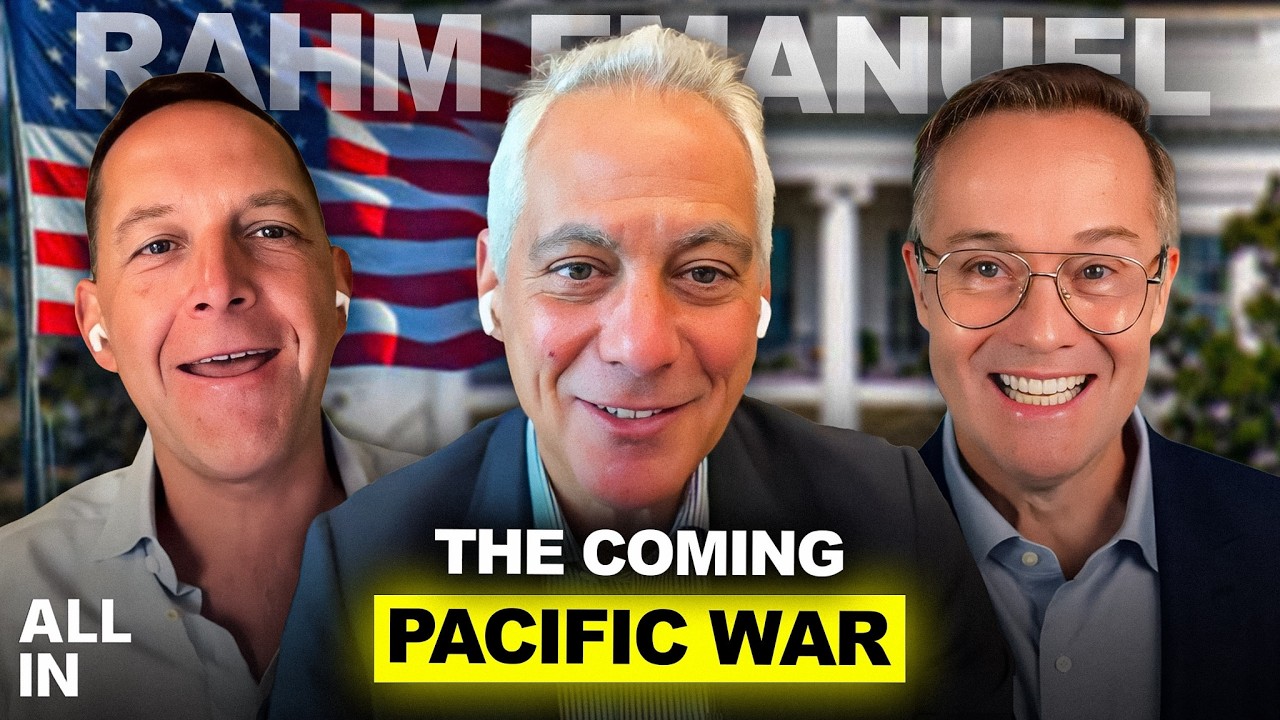
Rahm Emanuel: Trump's Foreign Policy, China, Europe's Decline, Immigration & DSA vs Democrats
 76 min
Google’s AI Brain Drain, SpaceX's Huge Quarter, Airtable’s 90% Collapse, US Data Fuels China AI
Ask anything from this episode.
Save it, chat with it, and connect it to Claude or ChatGPT. Get cited answers from the actual content — and build your own knowledge base of every podcast and video you care about.
Get Started Free