Key Moments
202 - Peter on nutrition, disease prevention, and more — looking back on the last 100 episodes
 Peter Attia MD
Want to know something specific about what's covered?
We've already dissected every moment. Ask and we will deliver (with timestamps).
Key Moments
A podcast retrospective on evolving views on cancer, heart disease, Alzheimer's, nutrition, exercise, and F1.
Key Insights
My views on cancer indicate immunotherapy's promise for eradicating metastatic cancers within 10 years and the high efficacy of screening for GI cancers, particularly colon cancer.
Aggressive reduction of ApoB to below 60 mg/dL is crucial for preventing atherosclerotic cardiovascular disease.
Genetic research beyond ApoE is vital for understanding Alzheimer's risk.
Time-restricted feeding's benefits are primarily due to caloric restriction, not the timing itself.
Exercise, particularly strength and cardiorespiratory training, is paramount for longevity and healthspan.
Trazodone is a more effective and less dependency-inducing sleep aid than previously thought.
Formula 1 strategy hinges on driver skill, tires, engine, chassis, and race strategy, with new regulations promoting more competitive racing.
EVOLVING PERSPECTIVES ON CANCER SCREENING AND THERAPEUTICS
Peter's thinking on cancer has evolved significantly, particularly regarding immunotherapy. He highlights the remarkable potential of immunotherapy, suggesting that within a decade, designer immunotherapies could eradicate most metastatic solid organ cancers. This optimism stems from the discovery that 80% of cancers have neoantigens recognized by the immune system. He also advocates for aggressive screening for gastrointestinal cancers, emphasizing that no one should die from colon cancer due to the visibility of precancerous polyps and the effectiveness of regular colonoscopies.
AGGRESSIVE STRATEGIES FOR CARDIOVASCULAR AND NEURODEGENERATIVE DISEASE PREVENTION
In cardiovascular disease, Peter now advocates for much earlier and more aggressive reduction of ApoB levels, aiming for levels below 60 mg/dL, akin to infantile levels, to prevent atherosclerotic cardiovascular disease. Regarding Alzheimer's, his focus has shifted to understanding the complex interplay of genes beyond ApoE, recognizing that other genetic factors can significantly modify an individual's risk, even with high-risk ApoE4 variants. This area requires more accessible and cost-effective genetic testing.
NUANCES IN NUTRITION: TIME-RESTRICTED FEEDING AND PROTEIN INTAKE
Peter's perspective on time-restricted feeding (TRF) has shifted; he now believes most of its benefits, like weight loss and improved insulin sensitivity, are primarily driven by caloric restriction rather than the feeding window itself. He cautions against TRF regimens that lead to significant lean mass loss, emphasizing the importance of adequate protein intake for muscle protein synthesis. He suggests the Recommended Daily Allowance (RDA) for protein is likely too low for optimal health, advocating for higher intake, closer to 1-2 grams per kilogram of body weight.
THE UNDISPUTED IMPORTANCE OF EXERCISE FOR LONGEVITY
Exercise remains a cornerstone of Peter's philosophy, with an even stronger emphasis on its profound impact on lifespan and healthspan. He highlights the significant mortality reduction associated with improving cardiorespiratory fitness and strength. He notes that strength is more critical than muscle mass alone, and grip strength serves as a valuable proxy for overall longevity and functional capacity. His recent shoulder surgery underscores the immediate impact of reduced physical capability and the importance of a comprehensive recovery plan.
REASSESSMENT OF SUPPLEMENTS AND SLEEP AIDS
Peter expresses continued skepticism regarding the scientific evidence supporting NAD+ precursors (NR and NMN) for longevity benefits outside of pathological states, finding the current data uninspiring. In contrast, his view on sleep aids has evolved. While phenibut has become difficult to access, he now finds trazodone, an older antidepressant used off-label at low doses (25-100mg), to be a remarkably effective sleep aid that preserves sleep architecture without significant dependency issues, unlike many other sleep medications.
PSYCHEDELICS AS TOOLS, NOT CURES, AND THE COMFORT CRISIS
While acknowledging the potential of psychedelic therapies like psilocybin and MDMA, Peter cautions against viewing them as standalone cures. He posits they are powerful tools that create vulnerability, but their lasting benefits depend on rigorous psychotherapy before and after. He also touches on Michael Easter's book, 'The Comfort Crisis,' highlighting the detrimental effects of excessive comfort on physical and mental health, and the need to intentionally incorporate discomfort to regain benefits.
FORMULA 1: STRATEGY, COMPETITION, AND RECENT RULE CHANGES
The podcast concludes with a deep dive into Formula 1. Peter explains the sport's complexity, involving driver skill, tire strategy, engine performance, and chassis aerodynamics. He details the evolution of F1 regulations, particularly the recent changes aimed at increasing wheel-to-wheel racing and competitiveness by reducing downforce. The discussion covers the importance of qualifying, tire compounds, pit stop strategy, and the growing intrigue of the current season with multiple competitive teams like Ferrari, Red Bull, and Mercedes.
Mentioned in This Episode
●Supplements
●Companies
●Books
●Drugs & Medications
●Concepts
●People Referenced
APOB Percentile Equivalents (Framingham Offspring Study)
Data extracted from this episode
| Percentile | APOB (mg/dL) |
|---|---|
| 5th percentile | 62 (approx 60) |
| 10th percentile | 70 |
| 20th percentile | 78 (approx 80) |
| 50th percentile | 97 (approx 100) |
| 80th percentile | 118 (approx 120) |
| 95th percentile | 140 |
Common Questions
This philosophy, attributed by Peter Attia to financier John Griffin, means forming strong beliefs based on current evidence but being open to updating them with new information. It's crucial in science and medicine to prevent digging in one's heels and to continuously evolve one's understanding, unlike in politics where changing positions is often viewed negatively. Peter applies this to his evolving viewpoints on health and longevity.
Topics
Mentioned in this video
The location of an F1 race where multiple pit stops are common due to high tire degradation.
An F1 track in Japan and one of Peter Attia's favorites, known for its many high-speed corners requiring maximum downforce, making passing difficult.
An F1 track known as the 'Temple of Speed,' where cars use very little downforce to achieve maximum straight-line speed.
The shortest F1 circuit on the grid and one of Peter Attia's favorites, used as an example to explain the significant time difference between qualifying laps and race laps due to car tuning for qualifying.
An F1 team that uses Renault engines. Renault only makes engines for Alpine.
An engine manufacturer that left Formula 1 in 2021, but Red Bull Racing preserved the rights to use their engine, which is still used by Red Bull and AlphaTauri.
The exclusive tire manufacturer for Formula 1 for at least the past six years, providing five dry and two wet weather tire compounds for races.
A tire manufacturer that historically provided tires for some F1 teams when multiple manufacturers were allowed.
A Formula 1 team that is a 'sister team' to Ferrari and uses Ferrari engines.
A fuel supplier in Formula 1, whose e10 fuel mixture might be causing issues with Honda engines based on early season failures.
The publishing house that is working with Peter Attia on his upcoming book. Their editor is helping to significantly cut down the manuscript's length.
Mentioned humorously in the context of a 'greatest commercial ever made' about protein, highlighting the importance of protein intake.
A tire manufacturer that historically provided tires for some F1 teams when multiple manufacturers were allowed.
An F1 team that manufactures its own engines and chassis, also supplying Alfa Romeo and Haas. Showed incredible strength in early 2022 season testing and the first race.
An engine manufacturer in Formula 1, only supplying engines to the Alpine team.
A 'sister team' to Red Bull, using Honda engines (under Red Bull's rights) for reliability in the new season.
An F1 team that uses a Mercedes engine but designs its own chassis, facing challenges in matching the performance of a factory Mercedes team.
A tire manufacturer that historically provided tires for some F1 teams when multiple manufacturers were allowed.
A dominant F1 team, especially during the hybrid turbo era (2014 onwards), known for great drivers and chassis design optimized for their engines. Predicted to remain competitive despite early season challenges.
An F1 team that uses Mercedes engines, whose cars are not assumed to have the exact same engine or performance as the Mercedes factory team.
An F1 team that has historically been the worst, but showed surprising competitiveness in the first race of the new season with Kevin Magnussen finishing fifth.
A dominant F1 team during the 2011-2013 era with Sebastian Vettel, and a strong contender in 2021. Despite engine failures in the first 2022 race, they are expected to be competitive.
A Haas F1 driver who achieved a surprising fifth-place finish in the first race of the new season, indicating a significant improvement for the team.
A friend of the host who ran a successful hedge fund and shared the philosophy of 'strong convictions loosely held' in an investment context, which Peter applied to science and medicine.
A past podcast guest with whom Peter discussed diffusion-weighted imaging MRI for cancer screening, specifically mentioned in the context of screening for pancreatic cancer.
Author of 'The Comfort Crisis,' a book Peter Attia is currently reading and enjoying, prompting him to reach out to Michael Easter for a podcast interview.
A Formula 1 driver for Ferrari, considered an early favorite for the driver's championship based on early season performance and strong team dynamics.
A Mercedes F1 driver, statistically one of the greatest F1 drivers of all time, known for his comeback ability and competitive spirit, especially in the 2021 season.
An 'amazing driver' for McLaren, whose performance is not blamed for the team's perceived step backward in the early 2022 season.
A legendary F1 driver, mentioned for his statistical record, though not as dominant in pole positions compared to Ayrton Senna.
A past podcast guest who provided an amazing episode (185) on APOB and managing risk, highlighted as a key resource for listeners interested in APOB metrics.
A scientist with whom Peter previously discussed concerns about the isolated focus on psychedelics as a 'cure-all' for every problem.
Mentioned as a past guest (episode 182) with whom Peter Attia discussed the setting and preparation needed for psychedelic therapy, especially if drugs like psilocybin and MDMA become legal.
A Formula 1 driver for Ferrari, mentioned alongside Charles Leclerc as a strong driver on a potentially competitive team.
A Red Bull Racing driver, whose points, along with Max Verstappen's, were insufficient for Red Bull to win the Constructors' Championship in 2021 despite Verstappen winning the Driver's Championship.
An 'amazing driver' for McLaren, whose performance is not blamed for the team's perceived step backward in the early 2022 season.
The Red Bull team principal, known for intense rivalry with Toto Wolff (Mercedes team principal) and a humorous incident involving a charity auction for a tour of Mercedes' facility.
Mentioned as a past podcast guest whose dedication to refining his writing style was impressive, especially in complex subjects.
Regarded as the best qualifying driver of all time in F1, with an unmatched record of pole positions relative to race starts, despite a shortened career.
A new Mercedes F1 driver, viewed as the 'heir apparent' within the team and a future contender for the championship, expected to provide intense competition with Lewis Hamilton.
Peter Attia's co-author for his book, working together to refine the manuscript and reduce its length by 'killing babies' (cutting unnecessary content).
A significant professional mentor to Peter Attia and a remarkable scientist and human being. His research on immunotherapy and neoantigens deeply impressed Peter.
Mentioned in the context of his passing, which prompted a weekly email discussion on colorectal cancer screening, an important topic for early detection.
A person Peter Attia is working with on a paper about genes that modify APOE4 risk for Alzheimer's disease.
A past guest who will return for a follow-up conversation in a future episode, diving deeper into time-restricted feeding, protein, and workout routines for middle-aged women.
A past guest who will return for a future AMA episode to provide a deep dive into research on NAD+, Metformin, and Rapamycin.
A sleep expert who has been a frequent guest on Peter Attia's podcast, highlighting the podcast's focus on sleep, though not discussed in detail in this episode.
A Red Bull Racing driver, crucial in the 2021 F1 championship win, mentioned for his driving skill and competitive interactions, despite his team's early engine failures in the current season.
A Formula 1 driver who dominated the sport with Red Bull Racing from 2011-2013.
A former Mercedes F1 driver, described as an 'amazing wingman' to Lewis Hamilton, but replaced by George Russell due to Mercedes' future strategy.
The Mercedes team principal, whose interpersonal dynamics with Christian Horner (Red Bull team principal) are a compelling storyline in Formula 1.
A molecule for which Peter Attia is increasingly unoptimistic about its precursors (NR and NMN) as keys to longevity for normal or normally aging individuals, despite their ability to increase NAD+ levels.
A common NAD+ precursor that has been shown to increase NAD+ levels, but Peter Attia remains unconvinced of its phenotypic benefits for normal aging individuals.
A form of GABA that was previously available over-the-counter and was an amazing sleep supplement, but has since become legally impossible to acquire in the US due to safety concerns after misuse in Australia.
A common NAD+ precursor that has been shown to increase NAD+ levels, but Peter Attia remains unconvinced of its phenotypic benefits for normal aging individuals.
A sleep aid that, unlike phenibut, requires limited and infrequent use due to potential concerns.
A checkpoint on immune cells, targeted by checkpoint inhibitor drugs to block the 'brakes' on the immune system, allowing it to better fight cancer.
A programmed death receptor on immune cells, targeted by checkpoint inhibitor drugs to block immune system 'brakes,' helping the immune system attack cancer cells.
A drug that will be discussed in a future AMA episode with Matt Kaeberlein regarding its role in longevity alongside Rapamycin and NAD+ precursors.
A psychedelic molecule that Peter Attia believes is an incredible tool to create vulnerability for deep therapeutic work, but not a standalone solution. Phase three data is promising for PTSD, and it may soon be mainstream as an adjunct to therapy.
An old-school antidepressant that has emerged as a great, regular maintenance sleep drug for most people at low doses (25-100mg nightly) because it preserves sleep architecture and lacks dependency issues.
A drug that will be discussed in a future AMA episode with Matt Kaeberlein regarding its role in longevity alongside Metformin and NAD+ precursors.
A sleep medication that renders users unconscious but does not promote sleep architecture, actually reducing deep sleep and causing memory alteration and other challenges.
A cytokine used to prompt T-cells to eradicate cancer, effective in a subset of patients with high mutagenic burden cancers like melanoma and renal cell cancer.
A psychedelic molecule that Peter Attia believes is an incredible tool to create vulnerability for deep therapeutic work, but not a standalone solution, and may soon be mainstream as an adjunct to therapy.
Used as an example to critique the legal removal of Phenibut; Peter argues that Tylenol, despite being lethal in overdose, remains legal, highlighting an inconsistency in regulatory decisions.
A Netflix series about Formula 1, recommended as a good starting point for new viewers to understand the sport, despite some mixed reviews from Peter Attia regarding specific seasons.
Compared to Formula 1, IndyCar has more standardized engines and chassis, making driver skill and strategy play a relatively larger role, which Attia views as a positive aspect.
More from Peter Attia MD
View all 337 summaries 118 min
Building strength and muscle mass: optimize training & nutrition for longevity (AMA #71 rebroadcast)
 121 min
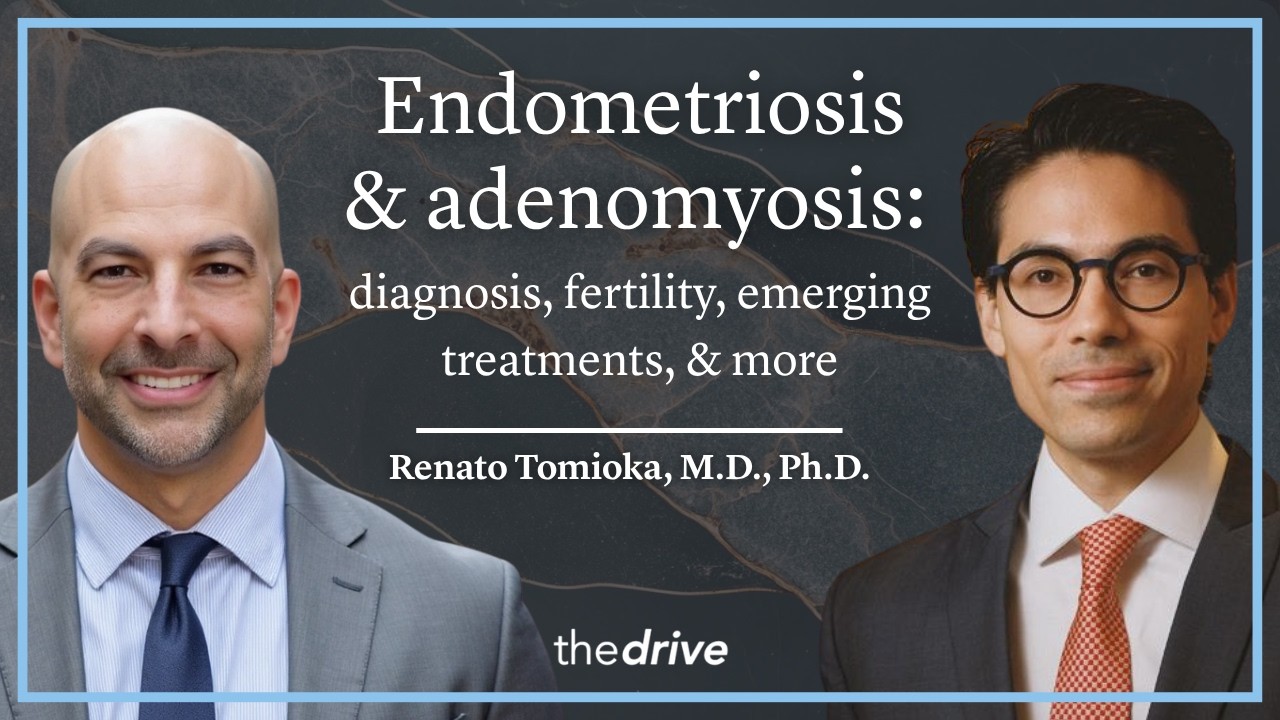
397 - Endometriosis and adenomyosis: diagnosis, fertility, reproductive aging, & emerging treatments
 51 min
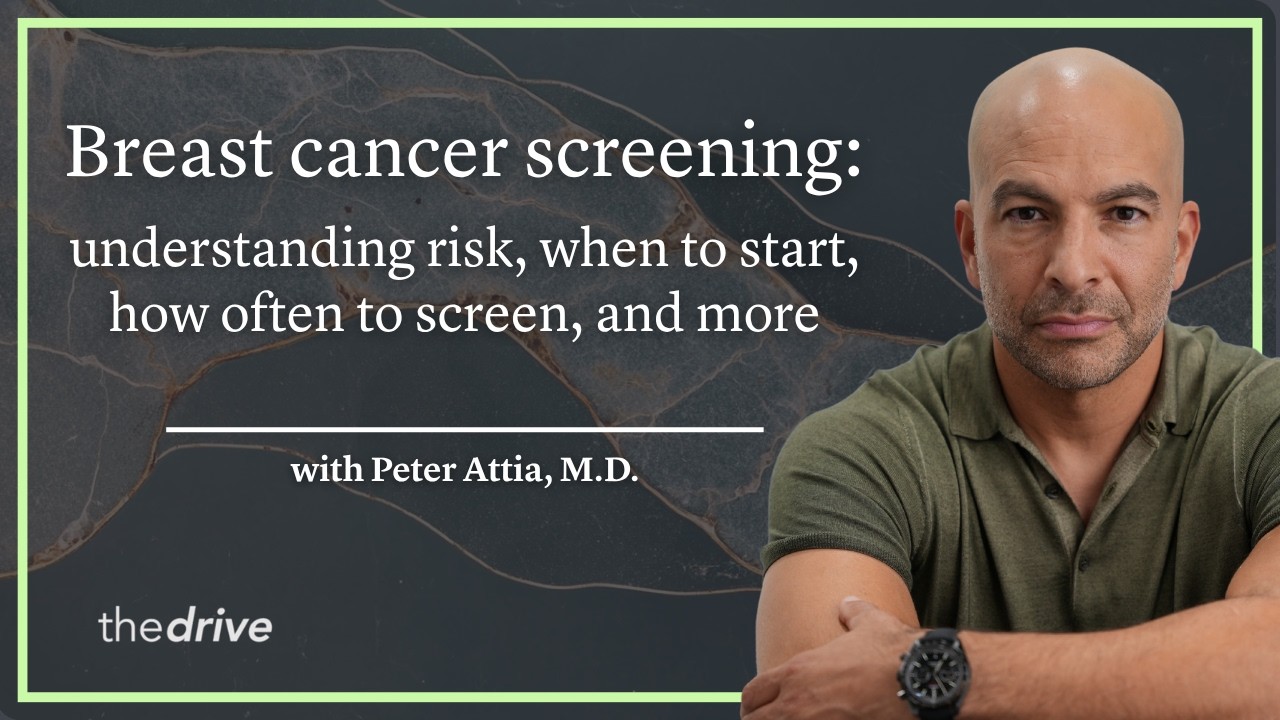
396 – Breast cancer screening: understanding risk, deciding when to start, and more
 105 min
395 – Brain lipidology: understanding APOE, cholesterol homeostasis, Alzheimer’s disease, & more
Ask anything from this episode.
Save it, chat with it, and connect it to Claude or ChatGPT. Get cited answers from the actual content — and build your own knowledge base of every podcast and video you care about.
Get Started Free