Key Moments
LIVE EVENT Q&A: Dr. Andrew Huberman Question & Answer in Los Angeles, CA
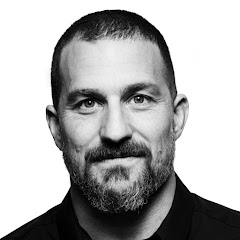 Andrew Huberman
Key Moments
Dr. Andrew Huberman answers audience questions on ADHD, neuroplasticity, stress, confidence, psychedelics, and more.
Key Insights
Non-medication approaches for ADHD include visual focus exercises and meditation, which train cognitive focus by improving visual focus and attention regulation.
Space-time bridging is a perceptual exercise that expands awareness by shifting focus from internal sensations to external environments, thereby altering perception of time and stress.
Building confidence involves managing stress, developing a calm state to access better decision-making, and reframing failures as opportunities for growth.
EMDR uses bilateral eye movements to reduce amygdala activity and desensitize the threat detection system, pairing a calm state with trauma recall for psychological healing.
Health and wellness advancements will focus on 'modulation' (general improvement of systems) versus 'mediation' (direct cause-effect), highlighting interventions like sleep, gut health, and sunlight.
Achieving dreams involves identifying an intrinsic 'delight' or positive energy towards an activity, interacting with the world to recognize these signals, and iterating based on this innate guidance.
ADDRESSING ADHD WITHOUT MEDICATION
Dr. Huberman discusses attention deficit hyperactivity disorder (ADHD), noting that medication is effective but non-medicinal strategies also exist. He highlights that individuals with ADHD often possess a high capacity for focus when engaged with intrinsically interesting tasks. Practices like visual focus exercises, commonly used in China, involve short periods of sustained visual attention to improve cognitive focus. Additionally, meditation, such as focusing on breath for 10-13 minutes daily, has been shown to significantly enhance focus. These methods aim to train the brain's attentional systems by leveraging neuroplasticity, offering alternatives or complements to pharmacological treatments.
THE PRACTICE OF SPACE-TIME BRIDGING
Space-time bridging is presented as a perceptual exercise rather than traditional meditation. It begins with closing the eyes and focusing on a point behind the forehead, an area devoid of sensation, thus focusing solely on thought. Then, eyes are opened to focus on a nearby object, with attention split between internal breathing and the external point. This external focus gradually expands outward, from near to far, culminating in imagining oneself within a larger cosmic landscape. This practice is neurobiological, altering visual and cognitive perception to reduce the perceived significance of immediate stressors by contextualizing them within a broader temporal and spatial framework.
CULTIVATING CONFIDENCE AND STRESS MANAGEMENT
Confidence, especially in intimidating situations, is linked to the ability to manage stress and maintain prefrontal cortex dominance. When stressed, the brain's resourcefulness and creativity diminish as the body's threat-response system takes over. Dr. Huberman advises learning real-time stress modulation techniques to raise one's stress threshold, thereby keeping the higher cognitive functions active. He also emphasizes "registering wins," which involves reframing perceived failures. By interpreting challenges as opportunities for internal chemical wins (e.g., dopamine release), individuals can foster a positive feedback loop that leads to tangible external successes and a greater sense of capability.
UNDERSTANDING EMDR AND PSYCHOLOGICAL TRAUMA
Eye Movement Desensitization and Reprocessing (EMDR) is discussed as an approved behavioral treatment for psychological trauma, particularly single-event traumas. The core mechanism involves bilateral eye movements, which repeatedly shift focus side-to-side. This action reduces the activity of the amygdala, the brain's threat detection center. The process pairs this calmed state with the recounting of a traumatic memory, effectively desensitizing the individual to triggers through a form of behavioral conditioning. While hypnotized states might play a role, the primary effect is quieting the fear response to allow for processing of distressing experiences.
MODULATION VERSUS MEDIATION IN HEALTH AND WELLNESS
Dr. Huberman highlights the emerging focus on distinguishing between tools that 'modulate' and those that 'mediate' health outcomes. Mediation implies a direct cause-and-effect, whereas modulation suggests a general improvement of systems. Examples include how good sleep doesn't directly mediate stress but modulates the system, making one less easily triggered. Similarly, gut health, influenced by the microbiome and fermented foods, doesn't cure depression directly but modulates neurotransmitter systems. This distinction is crucial for understanding the interconnectedness of basic health pillars like sleep, sunlight, nutrition, exercise, and social connection in creating an overall optimal internal environment.
IDENTIFYING AND PURSUING DREAMS AND MOTIVATION
Achieving one's dreams is rooted in identifying an intrinsic 'delight' or positive energy, often experienced early in life, rather than waiting for passion to strike. This involves interacting with the sensory world to recognize subtle signals of what feels right and magnetic. Sustained motivation and discipline are best fueled by this sense of delight and love for the activity, a hybrid model that accesses dopamine and serotonin, rather than solely relying on grit, which is depletable. Learning to tune into these inner signals, course-correcting as needed, and taking action is key to navigating life's path and finding fulfilling endeavors.
INSIGHTS ON COLD EXPOSURE AND NEUROCHEMISTRY
Deliberate cold exposure, like using cold water, triggers adrenaline, and waiting for the 'get me out of here' feeling before safely exiting offers significant lessons. The discomfort experienced during cold exposure directly predicts the pleasure wave afterward, including a substantial dopamine increase lasting hours, acting as an antidepressant. Dr. Huberman also touches on the appetite-suppressing effect of saunas, speculating it might be due to dynorphin release, which can cause temporary agitation followed by a rebound effect on opioid receptors and appetite regulation. These practices offer powerful, safe, and accessible ways to modulate internal neurochemistry.
PERSPECTIVES ON PSYCHEDELICS AND PALMER COOLING
Regarding psychedelics, Dr. Huberman notes that while still largely illegal, clinical trials show promise, particularly for single-session macro-doses of psilocybin in treating depression and PTSD, with lasting relief reported in two-thirds of participants. He cautions against micro-dosing due to less robust data and emphasizes the importance of therapeutic guidance to avoid 'attractors' that can distract from meaningful rewiring. He also mentions Palmer cooling, a technique using cold on extremities to quickly cool the body's core, which can dramatically increase exercise endurance and cognitive work capacity, citing the work of Dr. Craig Heller.
Mentioned in This Episode
●Supplements
●Products
●Software & Apps
●Companies
●Organizations
●Books
●Drugs & Medications
●Concepts
●People Referenced
Common Questions
Non-medication approaches for ADHD include visual focus exercises, where mental focus follows visual focus. Mindfulness practices like meditation for 10-13 minutes daily have also been shown to improve focus significantly.
Topics
Mentioned in this video
New York University, where Wendy Suzuki is the Dean of Arts and Sciences and conducted research cited in the video.
The research facility where Richard Feynman worked during the development of the atomic bomb, known for his safe-cracking exploits there.
California Institute of Technology, where Richard Feynman performed stunts like bongo drumming naked on the roof.
A colleague of Andrew Huberman at Stanford and an expert in clinical hypnosis, whose work on fear and stress was mentioned.
A colleague at Stanford and an expert in dog genetics, who also raises warm-blooded horses, discussed in relation to animal temperament and autonomic regulation.
This year's Nobel Prize winner in chemistry, a colleague at Stanford, cited as an example of someone who pursued her passion for organic chemistry from a young age.
A colleague at Stanford and head of the Dual Diagnosis Addiction Clinic, who discusses directed cold water therapy in her book 'Dopamine Nation'.
Host of the podcast where Rick Rubin was interviewed about creative processes.
A researcher whose lab at NYU collected data on the benefits of daily meditation for focus.
A figure whose views on psilocybin micro-dosing data were cited, suggesting the data is not robust.
A Nobel Prize-winning physicist known for his curiosity, unconventional methods (safe cracking, writing in strip clubs), and emphasis on understanding fundamental principles.
A photographer and friend within the skateboarding community, mentioned for his insights on standards and acceptance.
A Stanford-based neurologist and psychiatrist, mentioned for his expertise and research on psychedelics.
A colleague at Stanford whose work on using cold for performance enhancement (Palmer cooling) was highlighted.
Author whose concept of identifying a childhood 'seed message' or early delight is discussed as a way to find one's dreams and passion.
A music producer whose podcast interview on Joe Rogan's podcast discussed creative processes and sensing energetic fluctuations.
Mentioned implicitly through the reference to Richard Feynman's father's advice about identifying principles rather than just naming things, akin to Einstein's approach to physics.
Mentioned in the context of psychedelics, noting its potential to alter the chemical landscape and serve as attractors during therapeutic sessions if not guided.
A prescription medication used for ADHD.
A prescription medication used for ADHD.
Another name for adrenaline, mentioned in relation to cold water and stress responses.
A prescription medication used for ADHD.
Discussed in the context of its potential therapeutic benefits for depression, PTSD, and eating disorders, particularly single macro doses, with considerations for legality and safety.
A collection of anecdotes by and about physicist Richard Feynman, highlighting his playful and curious nature.
A book by Dr. Anna Lembke discussing how directed cold water therapy can help individuals manage addiction and depression.
Another popular book by or about Richard Feynman, focusing on his unconventional approach to life and science.
A learning process where a neutral stimulus is associated with a naturally occurring stimulus to elicit a response, used as an analogy for behavioral desensitization.
A neurotransmitter discussed in relation to gut health, mood elevation, and motivation.
A brain structure, also known as the threat detection center, whose activity is reduced by bilateral eye movements during EMDR.
Non-Sleep Deep Rest, mentioned as a technique for relaxation and recovery.
Eye Movement Desensitization and Reprocessing, a behavioral therapy for trauma involving bilateral eye movements.
More from Andrew Huberman
View all 369 summaries 141 min
Cultivating Awe & Emotional Connection in Daily Life | Dr. Dacher Keltner
 35 min
Essentials: How to Build Strength, Muscle Size & Endurance | Dr. Andy Galpin
 132 min
How Hormones Shape Sexual Orientation & Behavior | Dr. Marc Breedlove
 34 min
Using Salt to Optimize Mental & Physical Performance | Huberman Lab Essentials
Found this useful? Build your knowledge library
Get AI-powered summaries of any YouTube video, podcast, or article in seconds. Save them to your personal pods and access them anytime.
Get Started Free