Key Moments
LIVE EVENT Q&A: Dr. Andrew Huberman Question & Answer in Chicago, IL
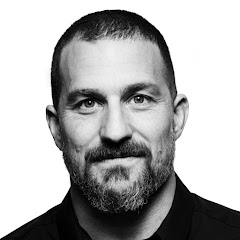 Andrew Huberman
Key Moments
Dr. Huberman discusses brain health, sleep, hypnosis, psychedelics, meditation, and future health trends.
Key Insights
Prioritize cardiovascular and strength training for brain health in aging.
Optimize sleep for shift workers through light exposure and consistent schedules.
Hypnosis, or self-directed focus and relaxation, enhances neuroplasticity.
Psychedelics show promise for mental health but require caution and expert guidance.
Meditation can improve focus and memory, but may interfere with sleep if done too close to bedtime.
Non-sleep deep rest (NSDR) is a valuable tool for sleep recovery and stress management.
Daylight Saving Time is detrimental to health and should be eliminated.
Educating youth on brain and body function offers foundational life skills.
Personal 'fun' often lies in curiosity, learning, and embracing one's unique interests.
Non-protein amino acids are a potential future area of health research.
OPTIMIZING BRAIN HEALTH ACROSS THE LIFESPAN
For maintaining brain health in aging, Dr. Huberman emphasizes the critical role of cardiovascular health and ensuring adequate blood flow to the brain. This includes recommended Zone 2 cardio for about 150-200 minutes per week. Load-bearing exercise is also highlighted for its hormonal benefits that can cross the blood-brain barrier. Furthermore, strength training is crucial, with data showing a strong correlation between physical strength and cognitive function. Maintaining grip strength and control over extremities are indicators of neurological health and can be improved through resistance training.
NAVIGATING SLEEP CHALLENGES FOR SHIFT WORKERS
Shift work presents significant sleep challenges due to its disruption of our natural circadian rhythms. Dr. Huberman advises shift workers to maintain a consistent sleep-wake schedule for at least two weeks, avoiding swing shifts whenever possible. Bright light exposure to the eyes, ideally from sunlight but artificial bright light can suffice, is essential for waking the nervous system and suppressing melatonin. When sleep loss is unavoidable, getting whatever sleep is possible is generally recommended over strictly adhering to a disrupted cycle, especially for acute or temporary situations.
UNDERSTANDING HYPNOSIS AND ITS NEURAL UNDERPINNINGS
Clinical hypnosis, distinct from stage hypnotism, is a state akin to self-directed focus and deep relaxation. Dr. Huberman explains that this state allows the brain to enter a more plastic condition, facilitating neuroplasticity. The Spiegel eye roll test, a simple neurological assessment, can indicate hypnotizability by observing the interplay of cranial nerves associated with alertness and drowsiness. This state, characterized by heightened attention and profound relaxation, can accelerate learning and improve outcomes for issues like pain relief and smoking cessation.
THE PROMISE AND PERILS OF PSYCHEDELICS
Psychedelics, such as LSD and psilocybin, primarily work by stimulating serotonin receptors, which can enhance neuroplasticity. While clinical trials show potential benefits for treatment-resistant depression when used in a therapeutic setting with preparation and integration, caution is essential. Dr. Huberman warns against unsupervised use, especially for adolescents whose brains are still developing, and for individuals with predispositions to mental health conditions like bipolar disorder or schizophrenia. The data on microdosing is less compelling, and the long-term effects and potential for addiction, particularly with high-THC cannabis, warrant careful consideration.
MEDITATION, NSDR, AND SLEEP QUALITY
Meditation, particularly practices like focusing on breath or internal states, can improve memory and focus. However, engaging in meditation too close to bedtime may hinder sleep due to its activating nature. For those experiencing sleep difficulties or loss, Non-Sleep Deep Rest (NSDR) practices, like yoga nidra, are highly recommended. NSDR can help individuals fall back asleep and offset the effects of sleep deprivation, making it a valuable tool for military personnel and others with demanding schedules. The key is to manage stress and optimize rest, even when ideal sleep duration is not achievable.
FUTURE FRONTIERS IN HEALTH AND CONSCIOUSNESS
Dr. Huberman identifies non-protein amino acids as a potential area of future health research, noting their presence in seeds and nuts and the theoretical risk of protein misfolding if consumed in abundance. He also highlights the importance of understanding higher-level cognitive functions such as creativity and abstract reasoning, and expresses fascination with spirituality and aspects of existence beyond current scientific explanation. Balancing scientific understanding with embracing life's mysteries is key to a richer experience, emphasizing that not everything needs to be controlled or explained.
THE VALUE OF CURIOSITY AND SELF-AWARENESS
Balancing a passion for neuroscience with personal 'fun' often involves embracing curiosity, learning, and engaging with the world in unique ways. Dr. Huberman finds joy in observing nature, learning new subjects, and following trails of interest, much like esteemed scientists like Oliver Sacks. He stresses the importance for young adults, like a 19-year-old, to focus on learning how to learn, how to focus, and how to rest. Developing self-awareness through practices like journaling is crucial for navigating life's challenges and making choices aligned with one's inner compass.
REFORMING EDUCATION AND COMBATING DAYLIGHT SAVINGS
Dr. Huberman advocates for an education system that begins with teaching fundamental concepts about the brain and body, providing practical tools for managing stress, sleep, and emotional states. These zero-cost, biology-anchored tools can transcend socioeconomic and linguistic barriers. He also strongly criticizes Daylight Saving Time, describing it as anti-health and biologically nonsensical, citing increased accidents and health issues. Maximizing early morning light exposure from the sun is recommended for overall well-being, regardless of seasonal time changes.
Mentioned in This Episode
●Supplements
●Products
●Software & Apps
●Companies
●Organizations
●Drugs & Medications
●Studies Cited
●Concepts
●People Referenced
Common Questions
Focus on improving cardiovascular health and tissue perfusion, as the brain relies heavily on these systems. Engaging in approximately 150-200 minutes of Zone 2 cardio per week and incorporating some form of load-bearing or resistance training several times a week is highly beneficial.
Topics
Mentioned in this video
Mentioned as a friend whose advice on cardiovascular health, specifically around Zone 2 cardio, is influential for brain health.
Director of the Chronobiology Unit at the National Institutes of Mental Health, described as a brilliant scientist and friend who considers Daylight Saving Time a 'stupid idea' that is anti-biology.
A researcher whose data shows that even short durations of meditation can improve memory and focus. She is currently the Dean of Arts and Sciences at NYU.
A brilliant scientist at Stanford who passed away and conducted discussions about non-protein amino acids and their potential link to neurodegeneration.
A neurologist and writer known for his compassionate case studies, who once imagined experiencing life as a bat, inspiring Huberman's thoughts on empathy and perspective-taking.
Host of a podcast where Andrew Huberman appeared, recalling an instance where Fridman's questioning about his dog made him emotional.
A Nobel Prize winner at Columbia University who, despite not smoking, used Nicorette gum for its potential protective effects against Parkinson's and Alzheimer's due to nicotine's impact on acetylcholine and dopamine.
A friend and author of the book 'Determined', who believes in determinism (lack of free will) and is highly respected for his intellect.
His lab collaborated on a recent paper showing a strong correlation between cognitive health and strength, emphasizing the importance of resistance training.
Associate Chair of Psychiatry at Stanford and a world expert in hypnosis, whose work on its clinical applications, including the Spiegel eye roll test, was discussed.
A sleep expert who advocates for prioritizing sufficient sleep, with whom Andrew Huberman has friendly disagreements on the nuances of sleep duration and its impact.
New York University, where Wendy Suzuki is the Dean of Arts and Sciences.
A research institution where clinical trials on psilocybin have been conducted, showing enhancements in neuroplasticity.
The institution where David Spiegel is the Associate Chair of Psychiatry and where significant research programs on psychedelics are now active.
Mentioned as the institution where Andy Galpin's lab is located, which published research on cognitive health and strength.
University of California, San Francisco, where clinical trials on psilocybin have been conducted and where Ed Rubenstein's son is a neuroscientist.
The National Institute of Mental Health, where individuals in government positions were noted for not discussing certain biological tools during the pandemic, prompting Huberman to share information.
The psychoactive compound found in 'magic mushrooms,' discussed for its potential in treating depression and stimulating serotonin receptors, with research showing promise but also caution advised.
Selective Serotonin Reuptake Inhibitors, commonly used antidepressants. The video suggests their efficacy might stem from promoting neuroplasticity rather than directly addressing serotonin deficiency.
Mentioned as a drug sometimes lumped with psychedelics, though technically not one, it is discussed in the context of altering neuromodulators.
Lysergic Acid Diethylamide, mentioned as a drug that can exacerbate pre-existing mental health conditions like bipolar disorder or schizophrenia if not used with proper support.
A compound discussed for its potential neuroprotective effects, though it also increases blood pressure and causes vasoconstriction.
Methylenedioxymethamphetamine, a substance discussed for its role in assisted psychotherapy for PTSD, with promising data suggesting eventual legalization or decriminalization.
Mentioned as a supplement that is similar to serotonin and can activate certain receptors, often discussed in relation to microdosing psilocybin, though data on its effects is not compelling.
An all-in-one vitamin, mineral, and probiotic drink that Andrew Huberman has been taking since 2012, used to cover foundational nutritional needs and ensure optimal mental and physical health.
A high-speed psychedelic for which there is less available data compared to LSD or psilocybin.
Discussed in relation to psychedelics, noting that while it has uses, high THC concentrations can be problematic, especially for those predisposed to psychosis, and it can be addictive.
Sleep hygiene refers to practices that promote good sleep. Huberman suggests that becoming overly neurotic about sleep hygiene can be counterproductive.
The belief in things beyond current conscious understanding, discussed as a fascinating area that complements scientific understanding and is inherent to the human experience.
Topics for an upcoming podcast episode, highlighting their importance in personal development and achievement.
Amino acids that are not part of proteins, discussed as a potential future area of health focus, with research suggesting they might incorporate into human tissues and potentially lead to protein misfolding and neurodegeneration.
A philosophical concept that Andrew Huberman considers a 'career ender' for discussion, though he acknowledges his friend Robert Sapolsky's book 'Determined' on the topic assumes a lack of free will.
A traditional yoga practice involving deep relaxation, which Huberman has partially renamed 'non-sleep deep rest' to make it more accessible and less associated with mystical connotations.
Therapeutic use of psilocybin, discussed in clinical trials for treatment-resistant depression, showing positive outcomes when combined with preparatory and integration sessions.
The title of the lecture given at the live event in Chicago, preceding the Q&A session.
The brain's ability to reorganize itself by forming new neural connections throughout life. It's highlighted as crucial for learning and is enhanced by focus and rest, or specific practices like hypnosis and psychedelics.
A practice, also associated with yoga nidra, that induces a state of deep relaxation and can be used to offset sleep loss and improve function.
Moderate-intensity cardiovascular exercise, recommended at 150-200 minutes per week for improved brain and cardiovascular health.
A neurotransmitter discussed in relation to cognitive decline and the potential benefits of certain drugs that increase its levels.
The degree to which a person can be hypnotized, assessed through tests like the Spiegel eye roll test, which correlates with the ability to enter a relaxed yet focused brain state.
A system of advancing clocks during warmer months. Huberman strongly criticizes it as anti-health, citing increased car crashes, heart attacks, and depression, and considers it an unsubstantiated idea.
Psychotherapy utilizing MDMA, particularly for treating PTSD, with research indicating robust data and potential for legalization.
A TV show whose narrative is compared to 'Chimp Empire,' suggesting viewers can gain unique insights by interleaving the two.
The movie 'Barbie', which Andrew Huberman admits he has not seen, acknowledging it as a cultural phenomenon.
A Netflix documentary mentioned as a source of inspiration for using NSDR, with parallels drawn between its narrative and that of the TV show 'Succession'.
A podcast by Andrew Hickey about rock and roll, recommended for its in-depth exploration of music, history, and related cultural elements.
The prompt mentioned specific countries like USA, Canada, EU, and Australia for Eight Sleep shipping. Detroit is not mentioned in the transcript.
Mentioned as a travel destination where one might adjust to a local schedule rather than focusing on catching up on sleep immediately.
Mentioned in the context of Switzerland where some psilocybin trials have been conducted.
The venue in Chicago, Illinois, where the live event featuring the lecture 'The Brain Body Contract' and a Q&A session was held.
More from Andrew Huberman
View all 368 summaries 35 min
Essentials: How to Build Strength, Muscle Size & Endurance | Dr. Andy Galpin
 132 min
How Hormones Shape Sexual Orientation & Behavior | Dr. Marc Breedlove
 34 min
Using Salt to Optimize Mental & Physical Performance | Huberman Lab Essentials
 33 min
Essentials: Tools for Setting & Achieving Goals | Dr. Emily Balcetis
Found this useful? Build your knowledge library
Get AI-powered summaries of any YouTube video, podcast, or article in seconds. Save them to your personal pods and access them anytime.
Get Started Free