Key Moments
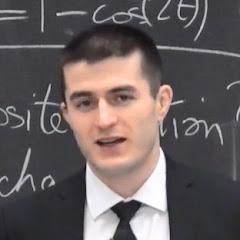
Jamie Metzl: Lab Leak Theory | Lex Fridman Podcast #247
 Lex Fridman
Key Moments
Jamie Metzl argues the COVID-19 lab leak from Wuhan is 85% likely, citing circumstantial evidence and a Chinese cover-up.
Key Insights
The pandemic's origin is most likely an accidental lab incident in Wuhan, due to substantial circumstantial evidence and lack of natural origin proof.
The Chinese government engaged in an extensive cover-up, hindering investigation, destroying data, and silencing scientists, making transparency crucial.
The Wuhan Institute of Virology's 2018 DARPA proposal to engineer bat coronaviruses with furin cleavage sites is a significant "smoking gun."
The World Health Organization's initial investigation into COVID-19 origins was deeply flawed, compromised by Chinese influence and a limited mandate.
Gain-of-function research, despite its controversial nature, lacks sufficient transparency and oversight, especially in international collaborations.
Public figures like Anthony Fauci, while respected, have a greater responsibility for transparency and humility when communicating complex scientific issues to the public.
THE LAB LEAK HYPOTHESIS: A LOGICAL ARGUMENT
Jamie Metzl, an author specializing in genetic engineering and geopolitics, posits an 85% probability that COVID-19 originated from an accidental lab incident at the Wuhan Institute of Virology (WIV). This estimation is based on deductive reasoning and a significant body of circumstantial evidence. While acknowledging the possibility of a natural origin, Metzl emphasizes the absence of definitive proof for such a scenario, unlike previous outbreaks where viral evolution could be traced. The virus appeared 'fully adapted' to humans, lacking the typical evolutionary experimentation seen in zoonotic jumps.
CHALLENGING THE NATURAL ORIGIN NARRATIVE
The natural origin hypothesis, often suggesting a jump from bats via an intermediate host at a wet market in Wuhan, faces considerable challenges and lacks supporting evidence. Metzl debunks the idea that the Huanan Seafood Market was the epicenter, arguing it was more likely an amplification point. Early cases linked to the market were not the earliest known strains, and the infected individuals were not in sections selling likely intermediate species. Furthermore, a systematic search by Chinese authorities of over 80,000 animal samples yielded no evidence of the expected viral evolution, strongly undermining the natural origin theory.
THE CHINESE GOVERNMENT'S COVER-UP
A critical piece of evidence supporting the lab leak theory is the extensive cover-up initiated by Chinese authorities. The WIV's public database of 22,000 viral samples, a crucial resource for understanding viral evolution, went offline in September 2019, months before the pandemic gained global attention. The official explanation of cyberattacks is widely considered suspect. Metzl draws parallels to the Chernobyl disaster, suggesting local and national officials prioritized concealing potential incompetence, leading to destroyed samples, hidden records, imprisonment of whistleblowers, and a gag order on scientists discussing pandemic origins. This lack of transparency severely hampered early investigations.
THE WUHAN INSTITUTE OF VIROLOGY: HISTORY AND CONCERNS
The WIV, China's largest BSL-4 facility, was built with French assistance but faced concerns from its inception. French intelligence privately warned U.S. counterparts about safety issues and dual-use potential, and a 2018 U.S. Embassy cable highlighted unsafe conditions for dangerous bat coronavirus research. Dr. Shi Zhengli, known as 'Batwoman,' a prominent WIV virologist, collaborated extensively with Peter Daszak's EcoHealth Alliance. This collaboration, partially funded by the NIH, involved collecting and studying bat coronaviruses, leading to questions about the safety and true nature of the research conducted at the WIV.
THE DARPA PROPOSAL: A SMOKING GUN
A pivotal piece of evidence is the 2018 unaccepted DARPA proposal from EcoHealth Alliance, in partnership with WIV, for a $14 million grant. The proposal outlined plans to collect dangerous bat coronaviruses and genetically engineer them to insert a furin cleavage site. The SARS-CoV-2 virus, which emerged a year and a half later, possesses such a site, unlike other SARS-like coronaviruses. While DARPA rejected the proposal, and the work at Ralph Baric's UNC lab was not funded, the WIV possessed the expertise and the original proposal's blueprint, raising the strong possibility that they proceeded with similar research independently. This proposal, combined with the emergence of a virus with the proposed modification, constitutes a significant "smoking gun" for the lab leak theory.
PETER DASZAK AND THE LACK OF TRANSPARENCY
Peter Daszak, president of EcoHealth Alliance and a key collaborator with Dr. Shi, is criticized for actively suppressing the lab leak hypothesis. Despite having knowledge of the DARPA proposal and WIV's gain-of-function capabilities, Daszak authored the influential February 2020 Lancet letter that dismissed the lab leak theory as a conspiracy, without disclosing his conflicts of interest. Metzl suggests Daszak's actions, while possibly motivated by a desire to preserve international scientific collaboration (a "benign interpretation"), ultimately contributed to a "fraudulent" lack of transparency, undermining public trust and delaying a proper investigation into the pandemic's origins.
GAIN-OF-FUNCTION RESEARCH AND U.S. FUNDING
The debate over whether Anthony Fauci and the NIH funded gain-of-function research at WIV is complex and hinges on semantic definitions. While a strict interpretation of NIH guidelines might allow for denial, Metzl argues that a common-sense understanding suggests likely funding of research that could enhance pathogen transmissibility or virulence. The core issue, however, extends beyond a binary 'guilty' or 'not guilty' verdict; it concerns the lack of transparency from U.S. government bodies regarding the work conducted and the partnerships maintained with foreign labs. Metzl advocates for full access to records and a comprehensive examination of U.S. involvement.
THE ROLE OF LEADERSHIP AND COMMUNICATION
Metzl expresses frustration with the communication styles of scientific leaders during the pandemic. He criticizes Dr. Fauci for claiming to 'represent science,' arguing that true scientific leadership requires humility, acknowledging uncertainty, and transparently presenting complex possibilities rather than asserting definitive authority. The political weaponization of scientific discourse, exemplified by figures like Rand Paul, further complicates matters, pushing scientific leaders towards cautious, less informative statements. Metzl advocates for leaders who can transparently admit mistakes, express vulnerability, and inspire action by laying out all complexities, foster trust and informed public discourse.
FLAWED WHO INVESTIGATIONS
The World Health Organization (WHO), while indispensable for global health, was initially compromised in its COVID-19 origin investigation. China deliberately withheld crucial information, including the virus's genome sequence for two critical weeks and details about human-to-human transmission. The WHO's initial 'joint study,' negotiated with Chinese support, had a limited mandate to investigate only zoonotic (natural) origins and granted China veto power over international experts and access to raw data. The team, including Peter Daszak, concluded a lab leak was "extremely unlikely" after a chaperoned tour, a conclusion later partially rescinded by Peter Ben Embarek, the team lead, who admitted to political pressure from China. This deeply flawed process necessitated a strong push from external experts to demand a credible, independent investigation.
PATIENT ZERO AND THE MYSTERY OF THE FIRST INFECTION
The identity of "patient zero" (the first infected human) or "infectee zero" (the first to show symptoms) remains elusive, largely due to China's obstruction. Metzl outlines several possibilities beyond natural animal-to-human transmission, including WIV researchers becoming infected during fieldwork in southern China or through laboratory accidents (e.g., waste disposal issues, infected lab animals being sold). The discovery of the RATG13 virus and other similar bat coronaviruses from the Mojang mine in Yunnan, sampled by WIV, suggests a repository of relevant viruses. The lack of access to WIV's viral repository, lab notes, and personnel prevents a definitive identification of the initial infection source, despite China possessing the world's best virus trackers.
CHINA'S GEOPOLITICAL IMPLICATIONS AND SOVEREIGNTY
Metzl acknowledges the immense geopolitical challenges for China if it were to admit to a lab leak, given the potential for demands for reparations and global condemnation. He speculates on Xi Jinping's motivation to establish China as a global leader, often at odds with the existing post-war international order. The strict censorship, persecution of dissenters, and systematic repression of ethnic minorities are hallmarks of an authoritarian regime prioritizing control. However, Metzl argues that the cost of continued obfuscation is far greater, impacting global trust and preventing effective future pandemic preparedness. He calls for a hypothetical scenario where China acknowledges an accidental leak and commits to international transparency and reparations, emphasizing long-term global stability over short-term political preservation.
EVOLVING THE WORLD HEALTH ORGANIZATION
To prevent future pandemic failures, Metzl stresses the need for a stronger, more independent WHO. He argues that the WHO's current structure, reliant on member states for funding and information, makes it vulnerable to political influence. He advocates for an expanded WHO mandate, including the authority to deploy emergency teams without state approval and potentially refer non-compliance to the Security Council. While recognizing the complexities of national sovereignty, Metzl posits that global health security necessitates some pooling of sovereignty, allowing international bodies to effectively respond to transnational threats without being undermined by individual state interests.
GENETIC ENGINEERING AND THE FUTURE OF HUMANITY
Shifting to the broader implications of genetic engineering, Metzl's book 'Hacking Darwin' explores a future where humans increasingly control reproduction. Processes like in vitro fertilization (IVF) and pre-implantation genetic testing (PGT) already allow for screening embryos. Future advancements, including induced pluripotent stem cells (IPS) for large-scale egg creation and advanced genome editing (CRISPR), will enable unprecedented embryo selection based on traits beyond disease, such as height, IQ, and even personality. This scientific capability raises profound ethical questions about diversity, equity, and the very definition of humanity, as humans gain the power to program their own evolution, moving beyond natural selection.
ETHICAL DILEMMAS OF GENETIC SELECTION
The prospect of selecting traits like IQ presents deep ethical dilemmas. While IQ correlates with societal advantages, solely optimizing for such traits could diminish genetic diversity, making humanity vulnerable to unforeseen environmental changes (the 'T-Rex' fallacy). Equity concerns are paramount, as access to advanced genetic selection could exacerbate societal divisions, creating classes of 'designer babies.' Metzl emphasizes the need for humility in wielding "god-like powers" of genetic engineering, acknowledging that our understanding of biology is limited. He advocates for open, public conversations about the values and ethics that should guide humanity's choices in shaping its future, recognizing that such foundational decisions are too important to be left solely to scientific experts or government officials.
THE VALUE OF HUMOR AND TRANSPARENCY
Metzl highlights the importance of humor and authenticity in communicating complex, controversial topics. He praises Jon Stewart's ability to distill the logical common sense of the lab leak theory through comedy, making it accessible to a wider audience. He also acknowledges the value in public figures like Joe Rogan or Elon Musk using humor and self-deprecation, as it fosters openness and frees individuals from the pressure of always saying the "proper thing," allowing for more genuine thought and discussion. This approach, Metzl believes, can help bridge divides in a fragmented information landscape and encourage much-needed, empathetic conversations, repairing relationships and facilitating a more honest quest for truth.
Mentioned in This Episode
●Products
●Software & Apps
●Companies
●Organizations
●Books
●Drugs & Medications
●Concepts
●People Referenced
Common Questions
Jamie Metzl believes there is an 85% probability that the COVID-19 pandemic originated from an accidental lab incident in Wuhan. He bases this on circumstantial evidence that significantly weighs towards a lab incident when all available information is considered.
Topics
Mentioned in this video
The pandemic discussed throughout the conversation, with a focus on its origins.
A deadly single gene mutation disorder, used as an example of a severe condition that could be screened out using pre-implantation genetic testing.
The virus responsible for COVID-19, extensively discussed regarding its natural origin vs. lab leak hypotheses, genetic evolution, and adaptation to humans.
Former director of NIH, whose previous podcast interview with Lex Fridman sparked critical discussion regarding COVID-19 origins.
A Chinese virologist at the Wuhan Institute of Virology, known as 'Batwoman,' whose scientific integrity and role in the lab leak theory are questioned due to suspected cover-ups.
Co-author of the book 'Viral: The Search for the Origin of Covid-19,' which argues for the lab leak hypothesis.
A U.S. Senator known for his public questioning and criticism of Anthony Fauci regarding gain-of-function research and COVID-19 origins.
A political scientist whose interview with Sam Harris on IQ sparked significant debate, highlighting the controversial nature of intelligence measurement.
An American author whose book about the interconnectedness of everyday objects (like a cup of coffee) is referenced in the context of Jamie Metzl's cacao ceremonies.
A Nobel laureate physicist, whose quote on specialization and the discussion of broad problems is used to conclude the podcast.
A scientist whose perspective arguing for the natural origin of the virus, specifically linking early cases to the Huanan market, is discussed and critically examined.
President of EcoHealth Alliance, criticized for his role in funding research at WIV, his advocacy for natural origin, and his alleged manipulation of scientific discourse regarding COVID-19 origins.
Co-author of 'Viral: The Search for the Origin of Covid-19' and a scientist at the Broad Institute, who used a unicorn analogy to illustrate the improbability of the natural origin hypothesis.
Host of The Joe Rogan Experience podcast, praised by Lex Fridman for his ability to ask hard questions and engage in open dialogue, despite occasional personal disagreements.
An American journalist who invested time to live in China and learn the culture, but was eventually expelled, highlighting challenges in reporting on China.
Former U.S. President, mentioned in the context of a meme comparing him and Xi Jinping to Winnie the Pooh, which became a symbol of Chinese censorship.
An Italian writer whose book 'Invisible Cities' is referenced to explain the philosophical idea of alternate lives and decisions creating different futures.
A comedian praised for his wit and brilliance, particularly for a segment on the lab leak theory that distilled complex concepts into easily understandable humor.
A close friend of Jamie Metzl and a CNN medical correspondent, whose appearance on Joe Rogan's podcast regarding vaccines is analyzed for its communication strategy and public reception.
Former Chief Counsel of the United Nations, who helped One Shared World translate young people's plans into an official UN resolution on water, sanitation, and hygiene.
Former Deputy National Security Advisor, who used Jamie Metzl's website on pandemic origins to encourage investigation within the U.S. and allied governments.
A podcaster and biologist, mentioned as one of the early voices raising concerns about the lab leak hypothesis and other controversial COVID-19 topics.
Author of 'The Long Game,' currently working in the White House, whose book details China's articulated goal to subvert the post-war international order.
The current leader of China, whose government's actions and policies regarding the pandemic's origin and broader geopolitical ambitions are critiqued.
A leading expert on coronaviruses at the University of North Carolina, whose lab was part of a DARPA proposal with EcoHealth Alliance and WIV, but did not perform the proposed gain-of-function work.
A prominent Chinese businessman who 'disappeared' from public view after a minor criticism of the Chinese government, exemplifying censorship and control.
A leading Chinese movie star who 'vanished' after being seen as not loyal enough to the government, illustrating the severe consequences of dissent.
A U.S. Senator from Kansas, described as Jamie Metzl's close friend despite political differences, who shares a commitment to asking tough questions about COVID-19 origins.
A professor at Columbia Medical School, praised for his regular, smart updates on COVID-19 and his willingness to engage with vaccine concerns, despite differing views on the lab leak.
Director of NIAID and Chief Medical Advisor to the President, whose role in funding gain-of-function research and communication during the pandemic is a central point of discussion and critique.
A neuroscientist, philosopher, and podcast host, whose 'Twitter feud' with Brett Weinstein is discussed as an example of fractured dialogue during COVID-19.
A Chinese citizen journalist imprisoned for reporting from Wuhan during the early days of the pandemic, currently on a hunger strike and near death, highlighting the severe consequences of censorship.
A Japanese Nobel laureate who developed the process for creating induced pluripotent stem cells (IPS cells).
Host of a late-night talk show, whose apparent discomfort during Jon Stewart's lab leak segment is noted as reflecting broader scientific community reactions.
CEO of Tesla and SpaceX, admired for his communication style, humor, and willingness to say 'ridiculous shit' which fosters freedom of thought.
An American ultramarathon runner, ultra-distance cyclist, triathlete, public speaker, and author, mentioned as the inspiration for a 4x4x48 challenge.
An ultramarathon runner whose story of overcoming drug addiction through running is highlighted as an example of pushing limits and discovering inner resources.
Jamie Metzl's brother, a doctor specializing in functional strength, whose website 'Iron Strength' is recommended for exercises to prevent injuries in endurance sports.
A young climate activist, whose 'blah blah blah' critique of COP26 is mentioned, prompting a discussion on leveraging young people's empowerment for change beyond traditional activism.
A brilliant mathematician and polymath, mentioned as someone whose intellectual contributions build upon past 'giants' and contribute to future technology.
A foundational figure in physics and mathematics, mentioned as someone whose intellectual contributions build upon past 'giants' and contribute to future technology.
A programming language mentioned by the host as one of the few languages he understands, highlighting his technical background.
Jamie Metzl's personal website, described as an extensive and updated resource on COVID-19 origins, which played a crucial role in early discussions.
A programming language mentioned by the host as one of the few languages he understands, highlighting his technical background.
A wet market in Wuhan, initially believed to be the epicenter of the COVID-19 outbreak by proponents of the natural origin hypothesis.
A country with extreme authoritarian control and poverty, used as an example to illustrate the destructive extent of excessive crackdowns and lack of freedom.
The capital of North Korea, where Jamie Metzl gave a speech advising the government on special economic zones and witnessed a bizarre banquet and karaoke.
A wellness resort in Mexico, where Jamie Metzl has performed his self-declared role as a 'chocolate shaman' during cacao ceremonies.
A U.S. non-profit organization that received NIH funding and collaborated with the Wuhan Institute of Virology on research, including controversial gain-of-function studies.
The Defense Advanced Research Projects Agency, a U.S. defense department agency that rejected a 2018 proposal from EcoHealth Alliance and WIV to genetically engineer coronaviruses.
A biosafety level 4 laboratory in Wuhan, China, heavily implicated in the lab leak hypothesis as the potential origin of SARS-CoV-2.
A news channel, mentioned by Jamie Metzl as a platform where he sometimes appears to engage with different audiences.
A news channel, mentioned in the context of its potentially disingenuous coverage of Ivermectin as a COVID-19 treatment.
The U.S. Centers for Disease Control and Prevention, criticized for its Q&A page not genuinely addressing public vaccine concerns but instead framing responses from its own perspective.
An Indian non-profit organization partnered with One Shared World for global debates and consultations on issues affecting human civilization.
A U.S. government agency that provided funding through EcoHealth Alliance for viral research, some of which is argued to be gain-of-function research.
A prestigious medical journal that published a controversial letter in February 2020, orchestrated by Peter Daszak, dismissing the lab leak hypothesis as a conspiracy theory.
A hypothetical institute in Montana, used in a thought experiment to illustrate how a lab leak from it would be covered up by the US government.
An organization founded by Jamie Metzl, dedicated to addressing global collective action problems by creating an empowered global constituency demanding better leadership.
A medical school where Daniel Griffin is a professor, whose role in providing COVID-19 updates is noted.
A non-profit international development organization, partnered with One Shared World for global debates and consultations on issues affecting human civilization.
An organization focused on exponential technologies, where Jamie Metzl is on the faculty and gave a foundational talk that led to 'One Shared World.'
An international organization created post-WWII to transcend national sovereignties and address global problems, though often underperforming its potential.
An educational simulation where students learn about diplomacy and international relations, partnered with 'One Shared World' for global debates and consultations.
A group of the world's major economies, whose leaders incorporated 'One Shared World's' language on vulnerable populations into their final summit communique.
A book by Rush Doshi about China's strategic goal of becoming the lead country in the world.
A book by Italo Calvino, used as a literary reference to discuss the concept of alternate lives and futures in the context of genetic possibilities.
A book co-authored by Matt Ridley and Alina Chan, presented as an excellent resource for understanding the lab leak theory.
Jamie Metzl's non-fiction book exploring the broad implications of human genetic engineering and the future of human reproduction.
Adolf Hitler's autobiographical manifesto, mentioned by Lex Fridman as a book he reads to understand the minds of people who do terrible things, emphasizing empathy in understanding evil.
An American company operating in India that caused a devastating leak, used as an example of a company admitting responsibility and paying reparations.
A chocolate company, used in Jon Stewart's metaphor about a 'chewy goodness' outbreak near the Hershey factory to illustrate the common sense of the lab leak theory.
A disease that has been eradicated due to vaccination efforts, cited as one of the great successes in human history and an example of effective public health intervention.
A historical vaccine hailed as a major public health success that saved millions of lives, demonstrating the positive role of central government and scientific collaboration.
An over-the-counter pain reliever, used as an example to discuss the risk-benefit calculations in public health and regulation.
An mRNA vaccine for COVID-19, developed rapidly and praised for its effectiveness, highlighting the success of public-private partnerships in vaccine development.
A classic 8-bit home computer from the 1980s, mentioned as a nostalgic example of hardware increasingly overshadowed by the importance of software.
A fictional character whose image was censored in China due to perceived resemblance to Xi Jinping, becoming a symbol of absurd censorship.
A film referenced to illustrate the value of human flaws and quirks, suggesting they are essential to identity and beauty, in the context of genetic optimization.
A podcast criticized by Jamie Metzl for its coverage of COVID-19 origins, despite featuring Daniel Griffin, whom Metzl respects.
More from Lex Fridman
View all 547 summaries 146 min
Jensen Huang: NVIDIA - The $4 Trillion Company & the AI Revolution | Lex Fridman Podcast #494
 311 min
Jeff Kaplan: World of Warcraft, Overwatch, Blizzard, and Future of Gaming | Lex Fridman Podcast #493
 154 min
Rick Beato: Greatest Guitarists of All Time, History & Future of Music | Lex Fridman Podcast #492
 23 min
Khabib vs Lex: Training with Khabib | FULL EXCLUSIVE FOOTAGE
Found this useful? Build your knowledge library
Get AI-powered summaries of any YouTube video, podcast, or article in seconds. Save them to your personal pods and access them anytime.
Get Started Free