Key Moments
Jack Kornfield — How to Find Peace Amidst COVID 19 | The Tim Ferriss Show
 Tim Ferriss
Key Moments
Jack Kornfield discusses finding peace amidst anxiety, using Buddhist wisdom and practical tools.
Key Insights
Transforming fear into compassion and steadiness is possible during difficult times.
Balancing practical, sensible actions with a broader, accepting perspective is key.
Human beings possess inner resources to navigate suffering and maintain inner freedom.
Trauma can be understood and healed on physical, emotional, and narrative levels.
Sacred medicines and meditation can offer profound insights into consciousness and interconnection.
Spiritual practice is about perfecting love, not necessarily perfecting the self.
EMBRACING THE PRESENT MOMENT AMIDST GLOBAL ANXIETY
Jack Kornfield addresses the widespread anxiety surrounding the COVID-19 pandemic, drawing parallels to collective challenges. He offers a reframing perspective, suggesting that difficult circumstances can be seen not as happening *to* us, but *for* us, serving as an opportunity for deepening compassion, self-care, and wisdom. This involves training oneself in steadiness and trust, cultivating a vaster perspective, and developing a sense of common humanity and care for others, essentially turning one's heart into a zone of peace.
THE DUALITY OF PRACTICAL ACTION AND INNER ACCEPTANCE
Kornfield emphasizes the importance of a balanced approach, integrating practical, sensible actions like hygiene and social distancing with an inner capacity for acceptance. He distinguishes between a 'developmental view,' focused on problem-solving and self-improvement, and a 'fruitional view,' which involves changing one's lens to relate differently to circumstances. This synthesis allows individuals to navigate external challenges while maintaining internal equanimity, recognizing that one's identity is not solely defined by difficulties but by an underlying awareness.
NAVIGATING SUFFERING THROUGH THE FOUR DIMENSIONS OF FREEDOM
The conversation delves into four dimensions of freedom accessible through inner training: the ability to be present with the content of one's experience (both joys and sorrows), recognizing one's common humanity, realizing awareness itself as the core of identity, and finally, experiencing oneself as loving awareness. These dimensions offer a path to hold life's challenges, from personal pain to collective suffering, with a wise, spacious, and compassionate heart, transforming the experience of hardship.
FACING MORTALITY WITH PEACE AND PRESENCE
Addressing the fear of death and mortality amplified by the pandemic, Kornfield shares a personal story of meditating with his dying twin brother. He illustrates how by paying attention to physical sensations and emotional states without resistance, one can access a deeper sense of peace and connection. This practice helps to shift identity from the personal self to vastness and awareness, facilitating a more profound acceptance of life and death, and offering solace to those grappling with these existential concerns.
TRIAGE PRACTICES FOR MANAGING ANXIETY AND FEAR
For those struggling with anxiety, Kornfield suggests practical 'triage' practices: placing a hand on the heart to offer tender compassion, reminding oneself and loved ones that they are 'okay for now,' connecting with nature by standing near a tree to feel grounded, and visualizing placing worries on an altar. These techniques help to externalize fears, foster self-kindness, and return to a centered state, allowing individuals to act from courage rather than panic.
UNDERSTANDING AND HEALING TRAUMA THROUGH PRESENCE
Kornfield discusses trauma as an experience of suffering where the body's survival responses become 'locked in.' He explains that healing involves releasing this held tension through physical, emotional, and narrative dimensions. By telling stories in a safe, witnessed space and allowing emotions to be expressed and released, individuals can begin to integrate their experiences, recognizing that the trauma is not their core identity. This process fosters a return to the community and a re-establishment of self, even after profound hardship.
THE ROLE OF MEDICINES AND MYSTICAL EXPERIENCES
The dialogue explores the use of 'sacred medicines' like psychedelics in various spiritual traditions. Kornfield notes their potential to shift identity, foster a sense of mystery and vastness, and aid in releasing stored traumas. He emphasizes the importance of approaching these substances with respect, in a controlled setting, and ideally, with prior meditation practice. This can complement inner training, providing glimpses into deeper consciousness that can be further explored and integrated.
TRANSCENDING THE EGO AND EMBODYING LOVE
Drawing on Ram Dass and Stanislav Grof, the conversation touches upon the idea that practices like meditation and certain psychedelic experiences can facilitate an 'ego death' – a temporary or profound release from self-centeredness. This is seen as a path to healing, reducing anxiety, and fostering a deep sense of interconnection. The ultimate aim is not necessarily perfecting oneself, but perfecting one's love and capacity to embody that loving awareness in the world.
THE MYSTERY OF CONSCIOUSNESS AND SPIRITUAL HERITAGE
The conversation underscores that our true nature is consciousness itself, a vast, timeless awareness. Practices like meditation, engaging with nature, or even the mystery of sleep, serve as invitations to remember this deeper identity. These experiences, whether profound mystical events or the daily practice of presence, are part of a rich human heritage, offering us the potential to live with greater freedom, love, and connection to all beings.
DEDICATION TO TEACHING AND HUMANIZING TECHNOLOGY
Kornfield shares his current focus on training meditation teachers alongside Tara Brach, aiming to disseminate wisdom and compassionate practices globally. He also mentions involvement in humanizing the future of technology and AI. These endeavors reflect a commitment to bringing presence, wisdom, and care into diverse aspects of modern life, continuing his lifelong work of guiding others toward inner peace and awakening.
Mentioned in This Episode
●Software & Apps
●Companies
●Organizations
●Books
●Drugs & Medications
●Concepts
●People Referenced
Coping with Anxiety and Trauma during Challenging Times
Practical takeaways from this episode
Do This
Avoid This
Common Questions
Jack Kornfield suggests reframing your circumstances as a 'retreat' to deepen compassion, self-care, and wisdom. Drawing inspiration from Thích Nhất Hạnh, he advises that if even one person remains calm and centered, it can guide others. Acknowledge your anxiety, thank it for trying to protect you, and then visualize setting it aside, perhaps on a mental altar, allowing a centered spirit and compassionate heart to emerge.
Topics
Mentioned in this video
A practice developed by Stanislav Grof, often used in retreats to open individuals to deep dimensions of their being and navigate intense emotions.
A philosophy that Tim Ferriss reads, even though he admits to still struggling with anxiety despite his studies.
A Bodhisattva representing universal compassion, depicted with a thousand arms to respond to the needs of the universe, and a symbol of forgiveness and tenderness.
A book for which Tim Ferriss used 99designs for high-end illustrations, which turned out better than he could have hoped.
A book by Jack Kornfield that includes a chapter on sacred medicines and their role in spiritual cultures.
A book by Tara Brach highly recommended by Tim Ferriss, which has had a significant impact on many people.
Tim Ferriss's book for which he was doing a revision in 2009, leading him to discover FreshBooks.
One of Jack Kornfield's books, noted by Tim Ferriss as a favorite title.
Jack Kornfield's favorite book by Stanislav Grof, summarizing deep insights from thousands of psychedelic and holotropic breathing sessions, offering a framework for understanding consciousness.
One of Jack Kornfield's books.
Jack Kornfield's most recent book at the time of the recording, with the subtitle 'Finding Freedom Love and Joy Right Where You Are'.
A character who states, 'trouble life is trouble only death is nice', to express the common humanity of experience.
Michael Pollan's book on psychedelics and their therapeutic potential, contributing to renewed research interest.
A meditation teacher who co-founded Insight Meditation Society with Jack Kornfield.
Author of 'How to Change Your Mind', a book that contributed to the resurgence of psychedelic research.
A team member at the Johns Hopkins psychedelic research program, noted for her incredible contributions.
A colleague with whom Jack Kornfield led retreats for veterans, helping them process trauma through storytelling.
A Buddhist monk, clinical psychologist, author, and meditation teacher who co-founded Insight Meditation Society and Spirit Rock Center. He is a primary guest on the podcast.
Mentioned as 'the Buddha', a wise figure or spiritual inspiration one can visualize placing worries with on an altar.
A meditation teacher who co-founded Insight Meditation Society with Jack Kornfield.
A meditation teacher with whom Jack Kornfield co-leads an online training program, and who Tim Ferriss also has a high opinion of.
A meditation master in Thailand who taught Jack Kornfield, emphasizing witnessing experiences without attachment and focusing on the 'one who knows'.
A revered spiritual figure whose image can be placed on a mental altar as a sacred inspiration for holding worries.
An author who wrote 'Already Free', distinguishing between developmental and fruitional views of psychology.
A great elder in the psychedelic movement and a colleague with whom Jack Kornfield worked for over 40 years, often leading retreats with holotropic breathwork.
A researcher at Johns Hopkins who directs a center for psychedelic research, carrying on the work of Stanislav Grof and studying the effects of psychedelics on mystical experiences and healing.
A great trauma expert known for his work in somatic experience, with videos demonstrating how animals release trauma.
A meditation teacher mentioned in a story where she compassionately advised a woman whose partner committed suicide, highlighting common humanity in suffering.
The former identity of Ram Dass, associated with early psychedelic research at Harvard.
Jack Kornfield's teacher in India who said, 'Wisdom tells me I am nothing, love tells me I am everything; between these two my life flows'.
A revered spiritual figure whose image can be placed on a mental altar as a sacred inspiration for holding worries.
A prominent figure in American psychedelia and spiritual teacher, initially Richard Alpert, who influenced many spiritual teachers of Jack's generation.
A scientist and researcher at the Johns Hopkins psychedelic research program, noted for his incredible contributions.
A West African medicine man who collaborated with Jack Kornfield on retreats for veterans, facilitating trauma healing.
A great meditation master who told Ajahn Chah that his experiences were 'just like movies on a screen' and the true point was to turn attention to the 'one who knows'.
A revered spiritual figure whose image can be placed on a mental altar as a sacred inspiration for holding worries.
A famous musician known for chanting in yoga studios, and a colleague and friend of Ram Dass, who shared a story about Ram Dass's transformation.
The active compound in 'magic mushrooms', capable of inducing purification, release of trauma, and a sense of joy and connection to consciousness.
A sacred plant medicine used in African cultures, assisting in spiritual remembrance and healing.
A sacred plant medicine used in Amazonian cultures, capable of inducing deep spiritual insights and purification.
A meditation center in Woodacre, California, co-founded by Jack Kornfield.
A university mentioned as conducting renewed psychedelic research alongside Johns Hopkins.
A meditation center in Barre, Massachusetts, co-founded by Jack Kornfield, Sharon Salzberg, and Joseph Goldstein.
Native Americans whose poetic way of expressing a bigger perspective ('sometimes I go about pitying myself when all the while I'm being carried by great winds across the sky') is shared by Jack Kornfield.
A university mentioned as conducting renewed psychedelic research alongside Johns Hopkins.
An Indian culture known for using peyote as a sacred medicine.
A university where psychedelic research has seen a resurgence, with studies on psilocybin for end-of-life anxiety and depression.
An organization of famous explorers, of which Jack Kornfield's twin brother was a member, but which does not recognize 'inner explorers'.
A global creative platform that helps people find and work with graphic designers online for various projects like logos, website design, and illustrations.
An all-in-one invoicing, payments, and accounting solution that helps entrepreneurs and freelancers save time on bookkeeping tasks.
More from Tim Ferriss
View all 690 summaries 184 min
Daredevil Michelle Khare — How to Become a YouTube Superstar
 81 min
Q&A with Tim — The Upcoming AI Tsunami and Building Offline Advantage
 91 min
The Random Show, Couch Edition! — Supplements, Breathing and Balance Training, and Much More!
 76 min
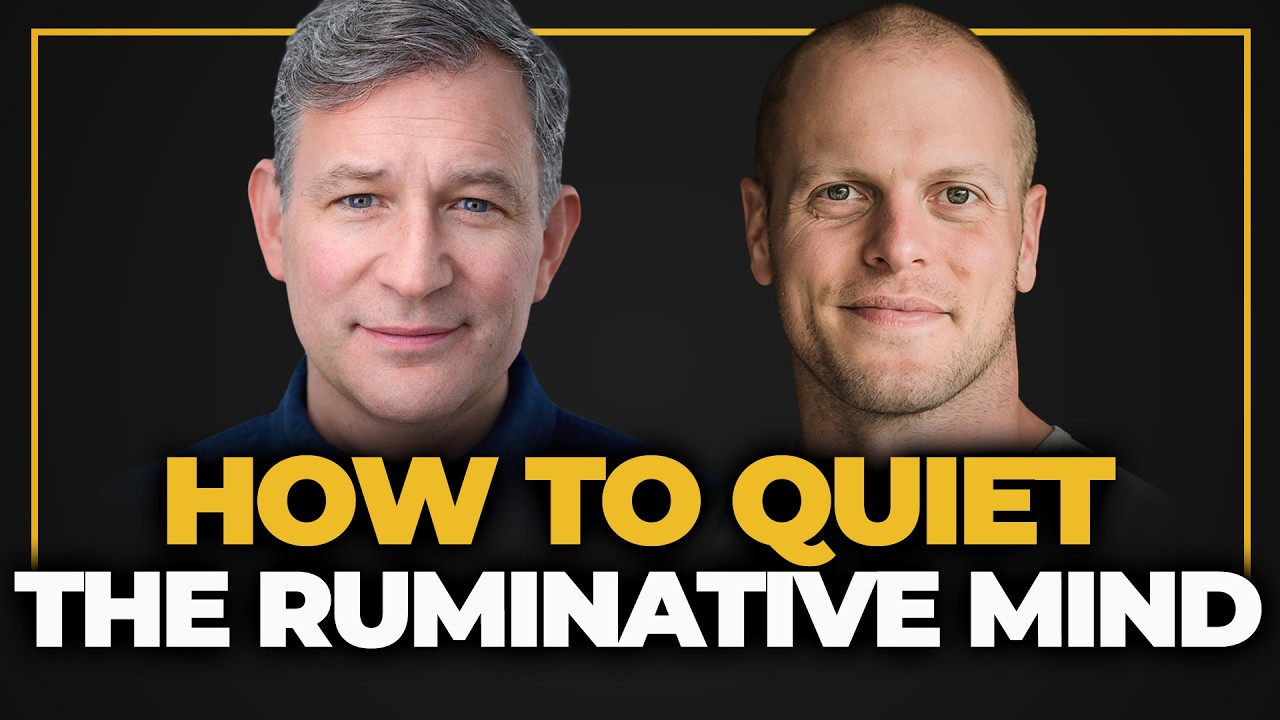
How to Quiet the Ruminative Mind and Avoid The Traps of Self-Help — Tim Ferriss
Found this useful? Build your knowledge library
Get AI-powered summaries of any YouTube video, podcast, or article in seconds. Save them to your personal pods and access them anytime.
Get Started Free